Japan scores 7 out of 10 on the Prepared Travel difficulty scale — hard, the band the scale anchors at Japan, above EU-FIC Europe and below India — and the difficulty is structural, not hostile. Japan runs a split system: packaged food is governed by the Food Labeling Act (2015) with one of Asia’s most rigorous allergen regimes, while restaurants, izakayas, and stalls carry no disclosure law at all. The through-line is dashi — a fish-and-kelp stock (usually bonito or sardine, with shellfish/seafood variants) that is the invisible base of nearly all savory cooking, present in miso soup, simmered vegetables, and broths that taste entirely plant-based; kitchens no more think of it as ‘fish’ than they think of salt as an ingredient. Shoyu (soy sauce) carries soy and usually wheat; soba is buckwheat that shares boiling water with wheat udon; goma is everywhere. The signature experience, the ryokan kaiseki stay, is a fixed seasonal menu you negotiate only at booking, in writing, in Japanese. A Japanese card naming だし (dashi), 醤油 (shoyu), and そば (soba) in the actual script is the single highest-leverage prep step.
🇯🇵 Food & Culture
Japanese savory cooking rests on one invisible foundation: dashi. A stock simmered from katsuobushi (dried, smoked, fermented bonito shaved into flakes) and kombu (kelp), or from niboshi (dried sardines), dashi is the umami base of miso soup, simmered dishes, noodle broths, dipping sauces, savory custards — the backbone the way stock is in French cooking, except it is fish, and except it is in the ‘vegetable’ dishes too. The one traditional exception is shojin ryōri, the Buddhist temple cuisine that builds dashi from kombu and dried shiitake by religious rule — the rare setting where the stock is structurally fish-free. Layered on top are the soy ferments — shoyu and miso, soy and wheat — and soba, the buckwheat noodle that is a frequent cause of severe reactions. And the signature stay is the ryokan kaiseki: a multi-course seasonal set menu, planned days ahead, dashi running through every course, beautiful and fixed. Japan is a country whose deepest culinary virtue — the invisible, umami-rich base — is exactly the thing an allergic traveler cannot see.
Core Safety Metrics — hover each for full explanation
Overall Allergy Travel Difficulty
7/10
Hard — dashi is everywhere and restaurants carry no allergen-disclosure law
Japan is the diff-bar’s 7 anchor — harder than EU-FIC Europe, easier than India. The difficulty is not hostility; it is structure. Dashi (a fish-and-kelp stock, with shellfish/seafood variants) is the invisible base of nearly all savory cooking, including dishes that taste entirely plant-based, and kitchens do not register it as an allergen any more than they register salt. Restaurants, izakayas, and food stalls carry zero legal allergen-disclosure obligation — the opposite of Europe. Packaged food, by contrast, is labeled rigorously. Language is a real barrier outside major hotels and chains, and the signature ryokan kaiseki format is a fixed menu you cannot adjust at the table. The combination — a hidden structural allergen, no restaurant law, and a language gap — is why a Japanese-language card is not optional here.2
Allergen Labeling Law Strength
5/10
Rigorous on packaged food (9 mandatory allergens); zero requirement for restaurants
Japan runs a split system, which is why this scores mid-band despite excellent packaging law. Packaged processed food is governed by the Food Labeling Act (食品表示法, 2015) and the Consumer Affairs Agency (CAA): as of April 2026, nine allergens are mandatory — egg, milk, wheat, buckwheat, peanut, shrimp, crab, walnut, and the newly added cashew (moved from recommended, with a two-year transition) — plus roughly twenty recommended items including soy, sesame, and fish. Labeling on konbini and supermarket goods is meticulous and standardized. But restaurants, izakayas, and street vendors have no legal disclosure requirement whatsoever. Your Japanese card and written confirmation are the only tools at the table. Note the trap: soy and sesame are only recommended, so they can be absent from the allergen summary box — read the full ingredient list.1
Kitchen Awareness
5/10
Rising in chains and Tokyo/Kyoto; low at traditional counters and rural izakaya
Awareness runs bimodal. Major chains (Mos Burger, CoCo Ichibanya, Saizeriya, Sukiya) and Tokyo/Kyoto hotel restaurants increasingly publish detailed allergen charts — use them. Traditional counters, neighborhood izakaya, and rural kitchens operate on craft and habit, and the concept of cross-contact is far less established than the concept of an ingredient being present. The specific blind spot is dashi: a cook asked about ‘fish’ will think of the fillet on the plate, not the stock the ‘vegetable’ side was simmered in. ‘Vegetarian’ (ベジタリアン) does not imply dashi-free. A written card naming だし (dashi) directly closes the gap that verbal disclosure leaves open.6
Hidden Allergen Vehicle Density
8/10
Very high — dashi, shoyu, miso, and soba flour saturate the cuisine
Among the highest on the platform. Dashi (だし) is in miso soup, chawanmushi, simmered vegetables (nimono), noodle broths, dipping sauces, tamagoyaki, and countless dishes that present as plant-based — katsuodashi (bonito) and niboshidashi (sardine) are the usual sources; kombu-only dashi is the rare safe exception. Shoyu (醤油, soy sauce) carries soy and usually wheat and is on nearly every table; miso is fermented soybean; mirin and most prepared sauces are soy-based. Soba (そば) is buckwheat and shares boiling water and surfaces with wheat udon — a structural cross-contact risk, not an incidental one. Sesame (ごま) appears as oil, paste, and whole seed across dressings and goma-dare. Portugal’s own page rates Japan above itself for exactly this reason.2
Emergency Response Quality
8/10
Excellent infrastructure; the English-language barrier with dispatch is the friction
Japan’s emergency medicine is world-class. 119 reaches fire and ambulance dispatch (‘kyuūkyū desu’ = it’s an emergency); 110 is police. Urban response is fast, and epinephrine is available in hospital emergency departments. The friction is language: dispatch operators may have limited English, so a prepared Japanese phrase (‘arerugī shokku desu — kyūkyūsha o yonde kudasai’) matters. Major cities have hospitals with international desks, and the AMDA International Medical Information Center provides multilingual medical guidance and interpreter support. Rural and mountain areas (the ryokan/onsen belt) have meaningfully longer transport times. Carry your diagnosis and EpiPen instructions written in Japanese.7
Difficulty in context — how Japan compares globally7 / 10 Hard
🇩🇰 Denmark 2🇦🇺 Australia 3🇵🇹 Portugal 4🇯🇵 Japan 7🇮🇳 India 9
🇯🇵
On the Ground
Japan is, in many ways, the most considerate food culture a traveler will meet — which is exactly what makes the dashi problem dangerous. Say ‘I’m allergic to fish’ and a server will earnestly steer you away from sashimi and grilled mackerel, then bring you miso soup, a simmered-vegetable side, and a dipping sauce — all built on a fish-and-kelp stock — usually bonito or sardine — nobody at the table thinks of as fish. The gap is not care; Japanese kitchens have care in abundance. The gap is that dashi is structural and invisible, the way salt is, and there is no law that forces a restaurant to tell you it’s there. A traveler who hands over a Japanese card naming だし (dashi), 醤油 (shoyu), and そば (soba) turns sincere goodwill into accurate avoidance. The same traveler relying on spoken English turns it into a polite, well-meant mistake.
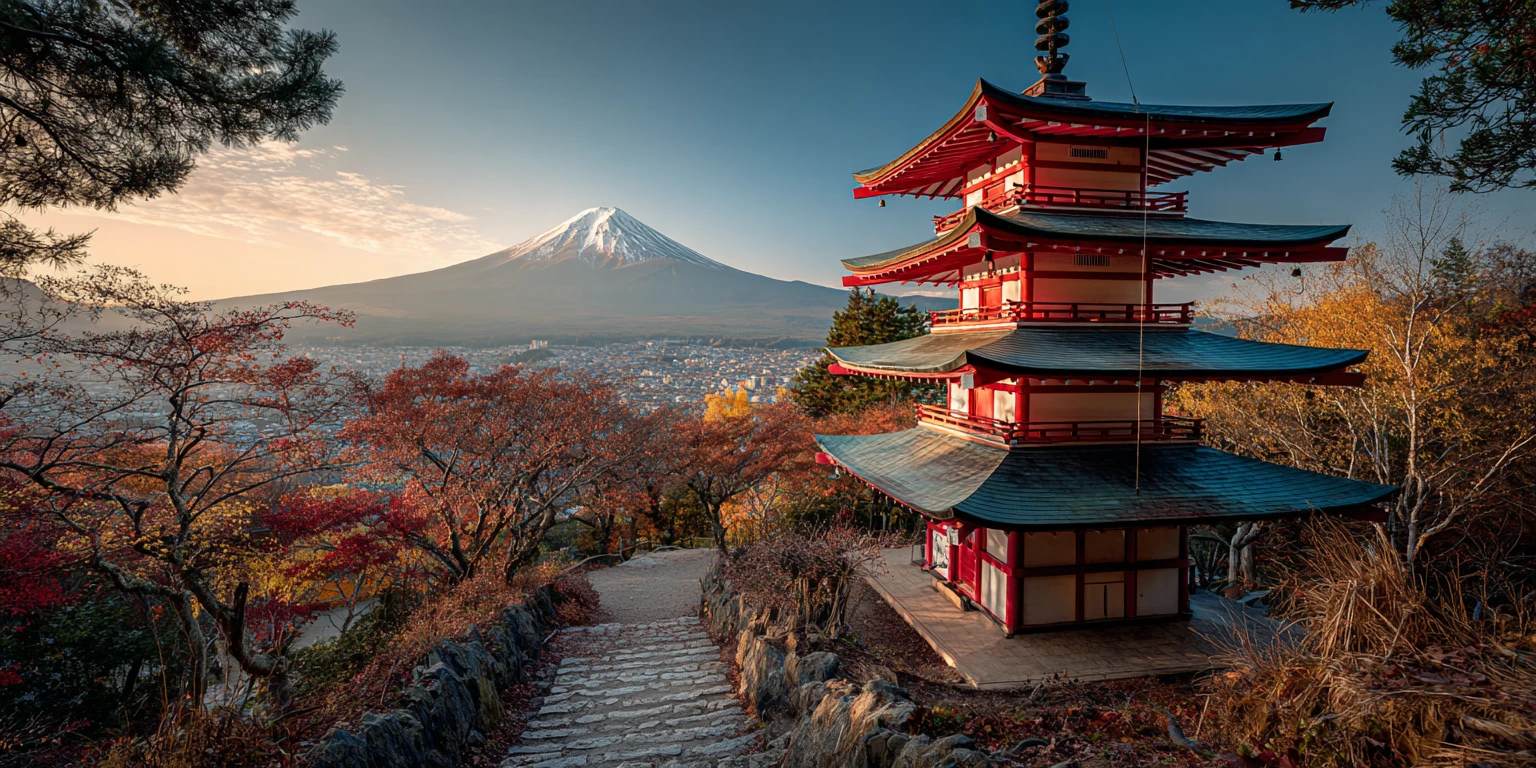
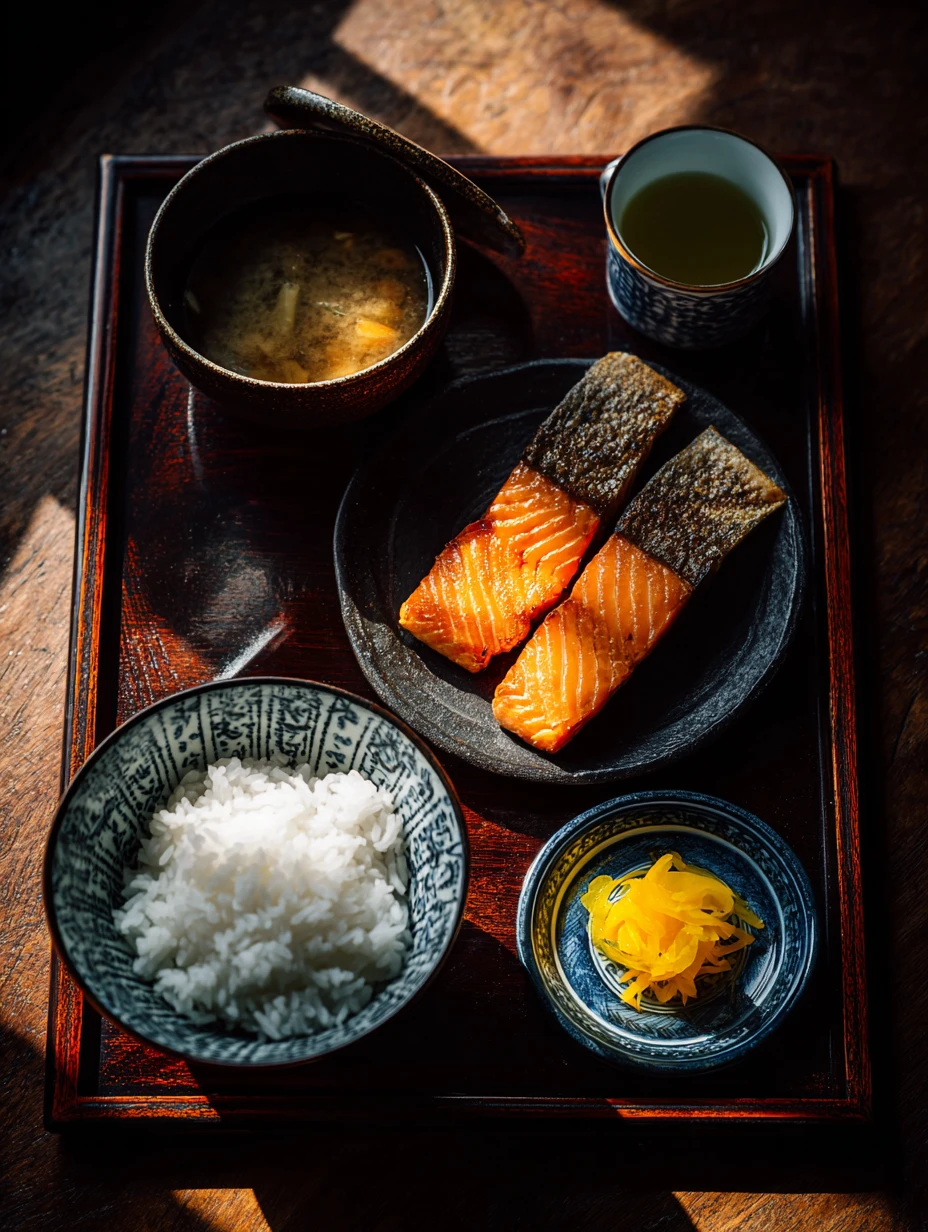
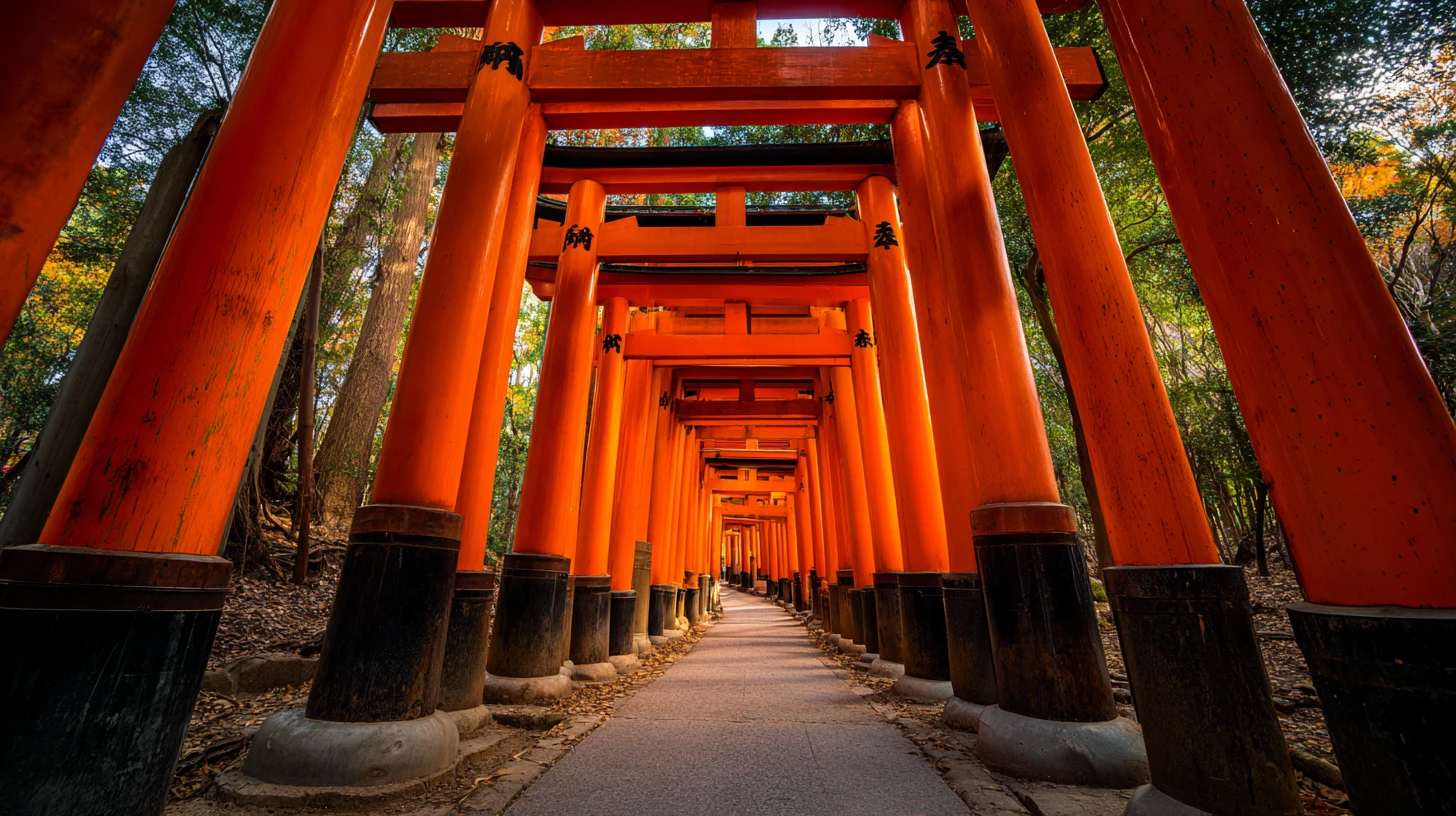
🗻 Mount Fuji & Chureito Pagoda · Tap to read🍜 Ramen · Tap to read⛩️ Fushimi Inari · Tap to read
Geography
Regional Allergen Risk Map
Japan’s allergy map splits on two axes: a constant and the variables. The constant is dashi-and-soy — present everywhere, in every region’s kitchen. The variables are buckwheat density (Nagano and the north), seafood and dairy (Hokkaido), street-food cross-contact (Osaka), pork and the unusual peanut appearance (Okinawa), and English availability (high in the Kanto/Kansai tourist corridors, low in rural Tohoku). The card is the same Japanese card nationwide; the venue mix is what changes.
Loading region map…
↑ Hover a region for detail
🗼
Kanto (Tokyo) · 関東
MODERATE
Highest English fluency and the densest network of allergen-chart chains and international-friendly restaurants. Also the densest izakaya and ramen culture in Japan — dashi, shoyu, and wheat everywhere, fast counter service, ticket-machine ordering. Tokyo is where a written card and a chain-with-a-chart strategy work best, and where the most English-capable hospitals (St. Luke’s) are.
Two faces. Kyoto is the home of kaiseki and of shojin ryōri (Koyasan temple lodgings nearby) — the most reliable fish-free traditional dining in Japan if sought out. Osaka is street-food capital: okonomiyaki and takoyaki stack wheat, egg, dashi, and shellfish on shared griddles — high cross-contact, minimal disclosure. The same trip can hold the safest and riskiest venues in the country.
Soba heartland. Nagano is famous for buckwheat noodles, and soba flour is everywhere — airborne in mills and shops, structural on menus. For buckwheat allergy this is the hardest mainland region. Mountain cuisine also leans on miso, freshwater fish, and wild vegetables simmered in dashi. Wasabi is fresh and genuine here.
Seafood-forward and, unusually for Japan, dairy-forward — Hokkaido is the country’s dairy region, so milk and butter appear in ramen, soup curry, and confections more than elsewhere. Crab, uni (sea urchin), salmon, and scallops are signature; miso ramen is the local style. Shellfish density is high; the dairy presence is a milk-allergy note specific to this region.
Rural and traditional, with the lowest English availability of the main regions. Rice, soba, fermented foods (natto, miso, pickles), and freshwater/coastal fish. The soy and buckwheat load is high and the disclosure infrastructure is thin — a written Japanese card matters most here, and konbini are the reliable fallback in smaller towns.
Hiroshima city is well-equipped for visitors — Peace Memorial and Miyajima tourism brings English menus and allergen awareness to the center — but the regional food is allergen-dense. Hiroshima-style okonomiyaki layers fried noodles (wheat), egg, cabbage, and pork, finished with okonomi sauce and an aonori-and-bonito dusting — structurally wheat-and-egg with a seafood top. The region is Japan’s oyster capital (kaki), so shellfish runs heavy along the Seto coast. Onomichi ramen rides a fish-and-soy dashi; Izumo soba in Shimane is buckwheat served in stacked rounds; Okayama leans to fruit and barazushi. English fluency drops inland in Shimane and Tottori.
The four-province island runs on the same dashi-and-soy base as the mainland, with two sharp local signatures. Kagawa has rebranded itself ‘Udon Prefecture’ — Sanuki udon is the daily staple, structurally wheat and served at high-turnover self-serve counters. Kōchi is katsuo country: katsuo no tataki (seared bonito) is the signature dish, and katsuo is the same bonito that makes dashi, so here fish is front-and-center rather than hidden. Ehime is Japan’s citrus heartland (mikan, yuzu, sudachi) and adds jakoten fish cakes; Tokushima brings Naruto wakame and a pork-and-soy ramen. English fluency is low across the rural island; the 88-temple pilgrimage circuit does surface shojin (temple) meals — the reliably fish-free traditional option.
Tonkotsu (pork-bone) ramen country — the broth is pork-based but frequently blended with fish dashi, so it is not a safe assumption for fish allergy. Mentaiko (spicy cod roe) is a Fukuoka signature (fish). Soy sauce here is sweeter (amakuchi). Yatai (open-air food stalls) are a Fukuoka institution and carry the usual street-food cross-contact.
A distinct Ryukyuan cuisine: pork-forward (rafute, soki), goya (bitter melon), and — unusually for Japan — structural peanut in jimami tofu (peanut ‘tofu’), a genuine surprise for peanut-allergic travelers. Dashi leans more on kombu and pork than bonito but bonito still appears. Less soba, more Okinawa soba (which is wheat, not buckwheat, despite the name).
↑ ['peanut' (jimami tofu — peanut, not soy), 'animal_proteins' (pork-forward), 'wheat' (Okinawa soba is wheat)]
Allergen Prevalence
Allergen Prevalence Index
Japan’s allergen landscape is dashi-dense, soy-dense, and wheat-dense, and its defining feature is a regulatory inversion: three of the most prevalent structural allergens — fish, soy, and sesame — are only recommended, not mandatory, on Japanese labels. Dashi (bonito/sardine stock) is the highest hidden-risk vehicle on the platform, present in dishes that read as plant-based. Shoyu and miso carry soy and wheat across nearly every plate. Buckwheat (soba) is statistically smaller but causes severe reactions and shares equipment with udon. Sesame is heavy and under-labeled. The rows below order by structural supply prevalence across Japanese cuisine.
Tap an allergen chip to filter the table below
Filter:
Allergen
Supply Prevalence
Hidden Risk
Cross-Contact
Restaurant Risk
Fish (incl. dashi)⚠dashi · katsuodashi · niboshi · 魚 · 鮭 (salmon) · さば (mackerel) · mentaiko · Recommended only (CAA) — not mandatory
The regulatory inversion — why Japan is different from Europe: in the EU, fish and soy are mandatory-label allergens. In Japan, fish, soy, and sesame are only on the recommended tier — so three of the cuisine’s most structural allergens can be legally absent from a packaged product’s allergen summary box. The mandatory nine are egg, milk, wheat, buckwheat, peanut, shrimp, crab, walnut, and cashew. For a soy-, fish-, or sesame-allergic traveler, the lesson is concrete: read the full ingredient list, never just the allergen box, and treat any restaurant dish as unlabeled by law.
Clinical allergen prevalence in Japan: egg, milk, and wheat dominate pediatric food allergy; the national surveys driving the 2026 law change show a sharp, sustained rise in tree-nut reactions — walnut and cashew especially — which is why walnut became mandatory in 2023 and cashew in 2026. Buckwheat (soba) is a classic cause of severe, sometimes fatal anaphylaxis in Japan and is taken very seriously clinically.8
Regional variance within Japan: these scores are national. A Nagano or Tohoku soba region pushes buckwheat cross-contact toward 9/10; Hokkaido concentrates shellfish (crab, uni) and dairy; Osaka’s street food (okonomiyaki, takoyaki) stacks wheat + egg + dashi + shellfish in single items; Okinawa surfaces peanut via jimami tofu, an unusual structural appearance. The nine regions below surface these gradients.
What’s safer than expected in Japan:peanut is far less structural than in Southeast Asian cuisine (Okinawan jimami tofu is the notable exception). Shojin ryōri (Buddhist temple cuisine) is genuinely fish-free — kombu/shiitake dashi by rule. Konbini and depachika packaged food is rigorously labeled. Plain steamed rice (白ご飯), fresh fruit, and sashimi (for non-fish-allergic travelers, it avoids the dashi/soy cooking entirely) are among the cleanest choices.
Languages
Languages Spoken
Japan is the structural opposite of a Latin-script country: the kitchen language is uniform, but the writing system is the barrier. Japanese (日本語) is the single kitchen language nationwide — Hokkaido to Okinawa — so one Japanese card works everywhere. The difficulty is that menus, packaging, and allergen documentation are in kanji and kana, and English reaches the tourist-corridor waiter far more reliably than it reaches the cook. A romaji or English menu in a tourist area does not mean the kitchen reads English. One Japanese card, written in the script, naming だし (dashi), 醤油 (shoyu), and そば (soba) by their actual terms, is the tool — not a transliteration the line cook still has to decode.
~99% — standard Japanese (標準語) is the kitchen and written language of every region, including Hokkaido and Okinawa. Menus, ingredient labels, allergen summary boxes, and regulatory notices are all in kanji and kana. Regional dialects (Kansai-ben, Hakata-ben, etc.) are spoken variation only — the written language a kitchen reads is uniform, so a single Japanese card is operative nationwide.
Nationwide — the kitchen language of every Japanese regional cuisine and every island
~30% front-of-house in Tokyo, Kyoto, and Osaka tourist corridors and international hotels; far lower at neighborhood counters, izakaya, and rural kitchens. English reaches the waiter who takes the order, rarely the itamae or line cook. Japan ranks low on English proficiency for a high-income country, and signage English (romaji menus, picture menus) overstates real comprehension at the pass.
Tokyo/Kyoto/Osaka tourist corridors, international hotels, major chains, airport areas
Ryukyuan language group spoken by older generations in Okinawa Prefecture; UNESCO-listed as endangered. Okinawan cuisine differs meaningfully (more pork, gōyā, less katsuo-dashi reliance — bonito and kombu dashi still appear), but the written and service language is standard Japanese. An Okinawan card would not improve kitchen reach.
Indigenous language of Hokkaido, critically endangered, recognized as indigenous by the 2019 Ainu Policy Promotion Act. Effectively no operative use in food service; standard Japanese is universal in Hokkaido kitchens. Listed for completeness — the Japanese card is the tool in Hokkaido as everywhere else.
Hokkaido (heritage/cultural use)
Standard Japanese in kitchens
One language, every kitchen — in the script: Generate one Japanese card and use it nationwide. Because the writing system is the barrier, the card must carry the actual kanji/kana, not romaji the cook has to sound out. Name だし (dashi) for the fish/shellfish stock, 醤油 (shoyu) and 大豆 (soy) for the soy-and-wheat sauce, and そば (soba) separately from 小麦 (wheat). For shellfish-sensitive travelers, list えび (shrimp) and かに (crab) by name; the collective seafood word 魚介 (gyokai) is ambiguous.
Reading Labels
Japanese Label & Menu Guide
Japan is the opposite of Portugal here: the script is the barrier. A soy-allergic traveler who cannot read 醤油 or 大豆, or a buckwheat-allergic traveler who cannot pick out そば, is unprotected even when the label is honest — and Japanese packaged labels usually are. The cards below give the kanji and kana to recognize for each allergen, where each one hides, and which terms are only ‘recommended’ and therefore easy to miss.
Japanese labeling is governed by the Food Labeling Act (食品表示法, 2015) and the Consumer Affairs Agency, and it is unusually good — for packaged food. Konbini and supermarket products carry a standardized allergen declaration, often in a dedicated box marked ‘アレルギー物質’ (allergen substances) or after the ingredients with ‘含む’ (contains) / ‘使用’ (uses). As of April 2026, nine allergens are mandatory: egg (卵), milk (乳), wheat (小麦), buckwheat (そば), peanut (落花生), shrimp (えび), crab (かに), walnut (くるみ), and the newly added cashew (カシューナッツ). About twenty further items — including soy (大豆), sesame (ごま), and fish — are recommended only, which means they can be absent from the allergen summary box even when present. Read the full ingredient list, not just the box. And remember the ceiling of all this: none of it applies to restaurants, izakayas, or food stalls, which have no disclosure requirement at all. For unpackaged food, the card and a written answer are your label.
だし · 出汁
Dashi · stock ⚠
The fish-and-kelp stock under nearly all savory cooking — miso soup, nimono, sauces, even ‘vegetable’ dishes. Made from かつお (katsuo, bonito) or 煮干し (niboshi, sardine). 昆布 (kombu, kelp) dashi is the rare plant-only exception. Name it on the card AS its own term.
魚
Sakana · fish ⚠
General word for fish. Recognize it, but it will not appear in dishes built on dashi — that’s the whole trap. Common menu fish: 鯖 (saba, mackerel), 鮪 (maguro, tuna), 鮭 (sake, salmon), 鯛 (tai, sea bream).
醤油
Shoyu · soy sauce ⚠
Soy sauce — carries soy and usually wheat, and it is on every table. たまり (tamari) is brewed with little or no wheat but confirm the label. Appears in marinades, dipping sauces, simmered dishes, and dressings.
味噌
Miso · soy ⚠
Fermented soybean paste — structural soy. The base of miso soup and many glazes (田楽, dengaku) and marinades. Often simmered with dashi, so a single bowl can carry soy and fish.
大豆
Daizu · soybean ⚠
Soybean itself — tofu (豆腐), edamame (枝豆), natto (納豆), yuba (湯葉). On packaging, soy is only on the recommended list, so it can be missing from the allergen summary box. Read the full ingredient list.
小麦
Komugi · wheat ⚠
Wheat — mandatory on packaged labels. In udon, ramen noodles, tempura batter, gyoza wrappers, and the wheat in standard shoyu. グルテン (guruten) is the imported word for gluten but is not the legal category.
そば · 蕎麦
Soba · buckwheat ⚠
Buckwheat — mandatory, and a frequent cause of severe reactions in Japan. Soba noodles, soba-flour confections, and dishes dusted with buckwheat flour. Shares boiling water and surfaces with wheat udon — a structural cross-contact risk, not incidental.
卵 · たまご
Tamago · egg ⚠
Egg — mandatory. Tamagoyaki, chawanmushi, tempura batter, mayonnaise (マヨネーズ), and the raw egg served with many rice and sukiyaki dishes. Often bound with dashi in savory custards.
乳
Nyū · milk
Milk and dairy — mandatory. Less pervasive than in Western cuisine but present in Western-style bakery, cream croquettes (クリームコロッケ), and some curry roux. バター (batā) = butter.
えび · かに
Ebi · kani ⚠
Shrimp (ebi) and crab (kani) — both mandatory and listed separately. In tempura, dashi made with shellfish, surimi, and countless garnishes. Severe-shellfish travelers should treat any seafood-broth claim with caution.
ごま · 胡麻
Goma · sesame ⚠
Sesame — heavy and structural: sesame oil (ゴマ油), sesame paste, whole seed, and ごまだれ (goma-dare) dressing. On packaging it is only recommended, so check the full ingredient list, not just the allergen box.
落花生
Rakkasei · peanut ⚠
Peanut — mandatory. Less central than in Southeast Asia, but in some sauces, snacks, and confections. Also written ピーナッツ (pīnattsu).
くるみ · カシュー
Walnut · cashew ⚠
Walnut (kurumi) and cashew (kashūnattsu) are both now mandatory — cashew was added in April 2026. In Western-style baking, confections, and an increasing range of snacks. Other tree nuts (almond, アーモンド) remain recommended-only.
How allergens appear on Japanese packaging: Look for the boxed declaration ‘アレルギー物質’ or the words ‘含む’ (contains) and ‘使用’ (uses). The nine mandatory allergens are reliably listed; 大豆 (soy), ごま (sesame), and fish are recommended-only and may not appear in the box — always read the full ingredient list. ‘同じ製造ライン’ / ‘を含む製品と同じ設備で製造’ is a voluntary cross-contact warning, common but not required.
How dashi hides:だし (dashi) is a fish-and-kelp stock — usually bonito or sardine, with shellfish/seafood variants — but on a restaurant plate there is no law requiring it to be named and no dish title that signals it — miso soup, simmered vegetables (にもの, nimono), chawanmushi, noodle broths, and dipping sauces all read as something other than fish. Even packaged dashi powder should be checked for かつお (katsuo, bonito) or 魚介 (gyokai, seafood). And 醤油 (shoyu) means soy and usually wheat together — two allergens in the one bottle on every table.
Cuisine
Dish Allergen Map — 12 Japanese Dishes
Japanese dishes sort into three structural profiles — dashi-built (a fish/shellfish stock under food that reads as plant-based), soy-and-wheat-seasoned (shoyu, miso, and sauces on nearly every plate), and shared-surface (soba/udon water, festival griddles, fryers). Dashi runs through most of the list — that is the point. The menu name almost never signals it.
The default accompaniment to almost every meal, often served unrequested. STRUCTURAL dashi (fish) and STRUCTURAL soy (miso) — neither removable. The clearest example of Japan’s hidden-fish problem: it tastes like a simple soybean broth. Kombu-only miso soup exists but must be confirmed.
Noodles are structural wheat and the tare is commonly soy + wheat; most broths use a fish/seafood dashi, and even tonkotsu (pork-bone) is frequently blended with it — though not always, so fish-allergic travelers must ask about dashi, niboshi, katsuobushi, and gyokai (seafood). Marinated egg and sesame are common add-ons. ‘Just noodles’ is among the densest single bowls in Japan.
STRUCTURAL buckwheat. Most soba is a ni-hachi 80/20 buckwheat-wheat blend — so it is also structural WHEAT, not buckwheat-only. The dipping/broth tsuyu is dashi + shoyu. Shares boiling water and surfaces with udon: cross-contact for both buckwheat and wheat allergy. A frequent severe-anaphylaxis trigger in Japan.
Wheat-and-egg batter (structural), shrimp tempura is structural shellfish, and the tentsuyu dipping sauce is dashi + shoyu. Shared frying oil carries shellfish across all items even for vegetable tempura. Sesame oil is sometimes in the fry blend.
Modifiable: Navigable: raw fish is visible; the hidden layers are the dip, the egg, and simmered toppings. Fish is obvious and avoidable for non-fish travelers; the traps are the shoyu dip (soy + wheat), tamago nigiri (egg + dashi), simmered eel/anago and kanpyo (dashi/soy), and surimi crab sticks. Counter sushiya disclose well if asked in advance; kaiten (conveyor) is harder.
Modifiable: Sauce and panko are the allergen load, not the pork. Panko (wheat) and egg binder are structural; tonkatsu sauce is soy-based; ground sesame is the standard table garnish. The cutlet itself is simple pork — the breading and sauce are the risk.
Wheat-egg batter mixed with dashi, topped with katsuobushi (bonito flakes) and a soy-based sauce — four structural allergens. Seafood variants add squid/shrimp. Cooked on a shared teppan griddle with everything else. Hiroshima-style layers noodles (more wheat).
Wheat-and-dashi batter around octopus (a mollusc — structural shellfish), topped with bonito flakes, sauce, and often mayonnaise. A festival/street staple with shared griddles and no labeling.
Structural egg, and the common dashimaki version folds dashi into the egg — so a ‘plain omelette’ carries fish stock. Lightly seasoned with shoyu/mirin. Appears at breakfast, in bento, and as sushi tamago.
Modifiable: Wrapper and dipping sauce are the fixed allergens. Wheat wrapper is structural; the dipping sauce is shoyu (soy + wheat) often with sesame oil and rice vinegar. Pan-fried in shared oil. Filling is usually pork and cabbage.
Modifiable: Cleaner than soba for buckwheat allergy, but watch shared water. Wheat noodles in a dashi broth (fish) seasoned with shoyu. For buckwheat allergy the risk is cross-contact: shops that also serve soba boil both in the same water. Confirm a separate pot.
FISH (dashi) — STRUCTURALSOY — STRUCTURALFISH — STRUCTURALSHELLFISH — INCIDENTAL
Modifiable: Fixed menu — modifiable only in advance, in writing, never at the table. The signature experience and the planning problem in one dish: a multi-course seasonal set menu, dashi running through nearly every course, prepared in advance with no table-side substitution. Premium ryokan rebuild it around a written allergy brief — but only with advance notice. See the Ryokan Kaiseki section.
HIGH
Cleanest Japan options depend on your trigger.Fish/shellfish/dashi-allergic: shojin ryōri (kombu/shiitake dashi), plain steamed rice (白ご飯), onigiri checked at a konbini, and fresh fruit. Non-fish-allergic: sashimi and plain grilled fish avoid the soy-and-dashi cooking entirely. Soy-allergic: hardest profile — shoyu and miso are nearly universal; lean on labeled konbini food and dishes you can confirm are sauce-free. Everyone: a chain restaurant with a published allergen chart beats an unlabeled neighborhood spot for a reliable meal.
The dashi-saturation pattern: assume any savory, simmered, or broth-based dish contains dashi unless told otherwise — miso soup, nimono, chawanmushi, noodle soups, oden, tamagoyaki, nabe. ‘Vegetable’ and ‘plain’ do not mean dashi-free. The single question that protects you is ‘dashi wa konbu dake desu ka?’ (is the dashi kombu-only?). If the answer is no or unsure, treat it as fish.
The konbini and depachika fallback: when a kitchen can’t confirm, packaged food is the reliable alternative — 7-Eleven, Lawson, FamilyMart, and department-store food halls carry full allergen labeling on onigiri, bento, salads, and bread. Read the allergen box, then the full ingredient list for soy, sesame, and fish (recommended-tier items that may not appear in the box).
Where to Eat
Venue Safety Profile
Japanese venues sort by how much of the meal is fixed in advance and how much dashi runs through it. Shojin ryōri (Buddhist temple cuisine) is the genuine safe tier — dashi is kombu/shiitake, not fish. Konbini and depachika are the labeled fallback. Chain restaurants increasingly publish allergen charts. Ryokan kaiseki can be excellent if negotiated in writing at booking — but it is a fixed menu with no table-side substitution. Ramen shops, izakaya, and soba/udon counters are the high-risk core: dashi broth, soy-and-wheat sauces on every plate, and shared boiling water make verbal disclosure unreliable. Street food and festivals are open cross-contact.
Higher Risk
Most Reliable
🍜Ramen shop
Most broths use a fish/seafood dashi, and even tonkotsu (pork-bone) is frequently blended with it, plus a soy-and-wheat tare; shellfish appears in some seafood ramen, so ask about it separately. Counters are fast, small, cash/ticket-machine ordered, rarely English. The bowl that reads as ‘just noodles’ is one of the densest single-dish allergen vehicles in Japan.
Hand the Japanese card before buying the ticket. Ask ‘dashi wa sakana desu ka?’ If buckwheat-allergic, note many ramen shops also serve or share equipment with soba/udon.
HIGH
🍶Izakaya
Many small shared plates, fast pace, sociable. Almost everything passes through dashi, shoyu, miso, or goma; the otoshi (compulsory appetizer) arrives unrequested and unlabeled. Shared frying oil and grills add cross-contact across orders.
Decline the otoshi if you can’t confirm it. Hand the card on arrival, order dish by dish with the kitchen confirming each, and treat ‘probably fine’ as a no.
HIGH
🍚Soba / udon counter
Soba is buckwheat; udon is wheat; they share the same boiling water, surfaces, and often airborne flour. Broth is dashi. For buckwheat or wheat allergy this is a structural cross-contact venue, not an incidental one.
Buckwheat-allergic travelers should avoid soba shops entirely, including ones that ‘also make udon.’ The shared kama (boiling pot) is the problem.
HIGH
🍣Sushi counter (sushiya)
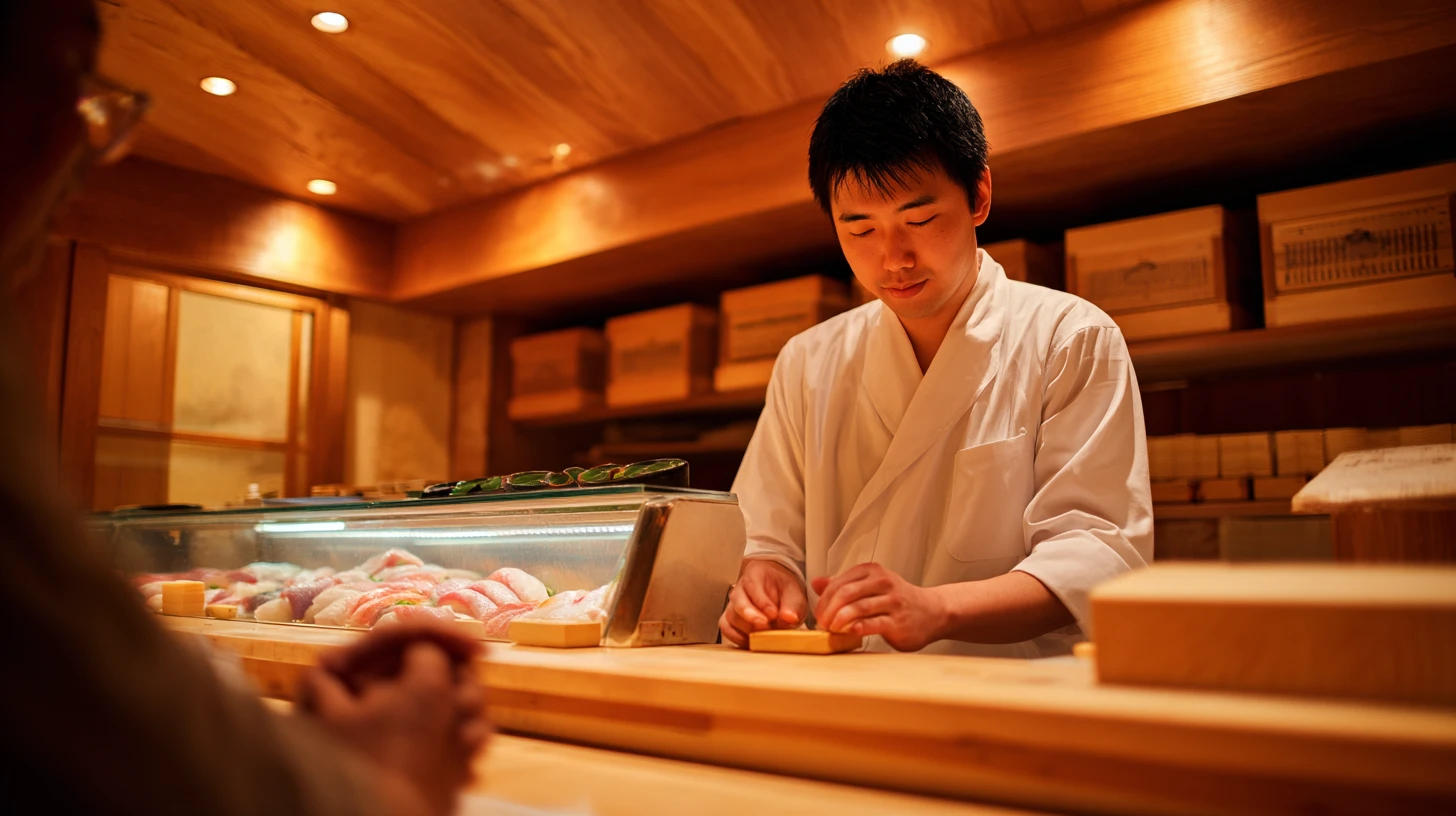
Raw fish is visible and easy to navigate; the hidden layers are shoyu (soy/wheat), the egg in tamago, dashi in the accompanying soup and simmered toppings (anago, kanpyo), and shellfish surimi. A good itamae will engage precisely if asked in advance.
Book and disclose ahead at a counter sushiya — the itamae can build the course around your card. Conveyor-belt (kaiten) sushi is harder: shared soy dishes and unlabeled mixed plates.
MOD
🏯Ryokan kaiseki
The signature experience and the central planning problem: a fixed, multi-course seasonal menu the chef prepares in advance, with no substitution at the table. Course after course is built on dashi. Premium ryokan accommodate allergies extremely well — but only with written advance notice, never on the night.
Negotiate at booking, in writing, in Japanese — name dashi, shoyu, soba, and your allergens, and confirm the kitchen can rebuild the kaiseki. Re-confirm at check-in. This is the one venue where advance work fully determines safety.
MOD
🏪Konbini & depachika
7-Eleven, Lawson, FamilyMart, and department-store food halls sell packaged food under Japan’s rigorous labeling law — nine mandatory allergens declared, often in a summary box. The reliable everyday meal when a kitchen can’t confirm.
Read the allergen box, then the full ingredient list for the recommended-tier items (soy, sesame, fish) that may not appear in the box. Onigiri, salads, and bento carry full labels.
LOWER
🌿Shojin ryōri (temple cuisine)
Buddhist vegetarian cuisine served at temples and specialist restaurants (Koyasan, Kyoto). Dashi is made from kombu (kelp) and dried shiitake, not fish — the one traditional Japanese setting where the stock is structurally fish-free. No meat, no fish, no five pungent roots (allium varies).
Still confirm sesame and soy (heavily used) and wheat in fu/seitan. But for fish/shellfish/dashi allergy, shojin ryōri is the most reliable traditional meal in Japan.
BEST
🍢Street food & festivals (matsuri)
Takoyaki (octopus + dashi batter), okonomiyaki (wheat + dashi + often seafood), yakisoba, taiyaki — cooked on shared griddles with shared sauces (okonomi/soy). No written disclosure, minimal English, ambient cross-contact across every stall.
Treat festival stalls as unverifiable for severe allergy. Visual confirmation only; when in doubt, eat from a labeled konbini instead.
HIGH
‘Vegetarian’ does not mean dashi-free: the single most dangerous assumption in Japan. A vegetable side, a ‘plain’ broth, or a tofu dish is routinely simmered in katsuodashi (bonito stock). ベジタリアン (vegetarian) and even some ‘vegan’ labels do not reliably exclude fish stock. Ask specifically: ‘dashi wa konbu dake desu ka?’ (is the dashi kombu-only?).
The shojin ryōri exception: for fish, shellfish, and dashi allergy, Buddhist temple cuisine is the most reliable traditional option in Japan — the dashi is kombu and shiitake by religious rule, not fish. Koyasan temple lodgings (shukubo) and Kyoto shojin restaurants are the places to seek it. Confirm sesame, soy, and wheat (fu) separately.
Chain restaurants are an underrated tier: major chains (CoCo Ichibanya curry, Mos Burger, Saizeriya, Sukiya, Ootoya) publish detailed allergen charts, often per-menu-item online and in-store. For a quick reliable meal in an unfamiliar city, a chain with a published chart beats an unlabeled neighborhood spot.
The otoshi / tsukidashi pattern: izakaya serve a small compulsory appetizer you didn’t order (and pay a cover for). It arrives before you’ve shown your card and is frequently dashi- or seafood-based. Decline it (‘otoshi wa kekkō desu’) or confirm its contents before eating — it is the most common unflagged first exposure of an izakaya meal.
The signature experience
Ryokan Kaiseki — the fixed seasonal menu that defines a Japanese stay
Japan’s signature experience is not a landmark — it is a meal: the multi-course kaiseki served at a ryokan, planned around the season and the chef’s hand, dashi running through nearly every course. It is the experience the deliberate traveler comes for, and the one that most rewards preparation, because it is fixed: there is no ordering around it at the table. Every layer carries an allergen pattern — dashi beneath the courses, shoyu and miso across the seasoning, the occasional shellfish or buckwheat course — and the only place to address all of it is the reservation. Master the booking, and the most rigid format in Japan becomes the safest.
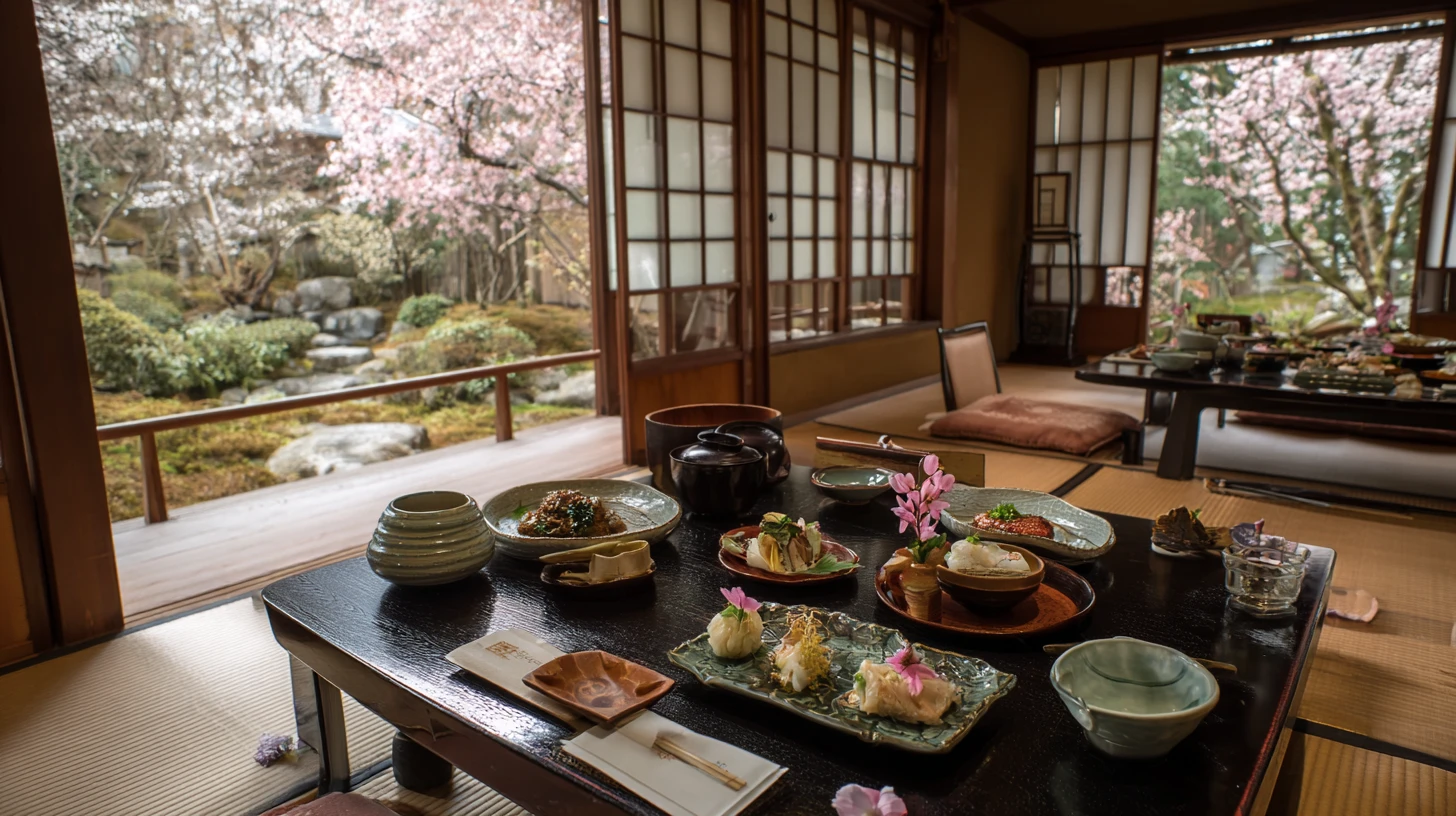
A spring kaiseki at a ryokan — the menu is fixed to the season and planned days ahead, which is exactly why the allergy conversation has to happen at booking, not at the table.
🏯
The one rule that governs the whole stay
Settle the allergy at booking, in writing, in Japanese — not at the table. Kaiseki is a fixed seasonal menu prepared in advance; once the courses are planned, the kitchen cannot improvise around dashi on the night. A written brief sent with the reservation is what turns the most rigid dining format in Japan into the most reliable one.
🍱
The fixed-menu reality — negotiate at booking, not the table
Kaiseki is a multi-course seasonal set menu the chef plans and preps days ahead. There is no ‘hold the dashi’ at the table — the course is already made. The only window to remove dashi, substitute a course, or flag soy is at booking, in writing, in Japanese. Premium ryokan do this superbly; the night itself is too late.
🐟
Dashi runs through every course
The through-line made literal: the clear soup, the simmered course (nimono), the savory custard (chawanmushi), the dressed vegetables — most are built on katsuodashi. A kaiseki can look like a vegetable-forward meal and still be fish stock end to end. Ask whether the kitchen can run the menu on kombu-only dashi or in a shojin (temple-cuisine) style.
🍶
Shoyu, miso, mirin — the seasoning layer
Above the dashi sits the soy layer: shoyu and miso glaze the grilled course, dress the vegetables, and season the rice course, carrying soy and usually wheat. Mirin and many finishing sauces are soy-based too. For a soy- or wheat-allergic guest this is the harder negotiation than dashi, and the one most worth putting in writing.
🌸
The ryokan is the safest set menu — if you prepare
Counterintuitively, a fixed kaiseki you negotiated weeks ahead is safer than an improvised izakaya order, because the kitchen has time to rebuild it around your card. The deliberate, high-prep traveler — the person who books a ryokan and builds an allergy card — is exactly who this format rewards. Confirm at booking, re-confirm at check-in, and name dashi, shoyu, and soba explicitly.
Ask for shojin ryōri or kombu-only dashi. Many ryokan, especially around Koyasan and Kyoto, can serve a Buddhist temple-cuisine kaiseki whose dashi is kombu and shiitake by religious rule — structurally fish-free. It is the single most reliable way to keep the kaiseki experience without the dashi risk; request it when you book.
Communication norms
Dining Etiquette & Cultural Norms
Japanese hospitality (omotenashi) is intense and sincere, which creates a specific risk: a host or server may not want to refuse or disappoint you, and ‘we will do our best’ can mask a kitchen that cannot actually guarantee dashi-free. The allergy-critical moment is the booking and the written card, not the table. Be clear and specific rather than accepting reassurance. There is no tipping in Japan — it is not a service-leverage tool and can cause confusion. Communal izakaya plates and the unrequested otoshi appetizer both require flagging up front.
The itamae behind the counter — in a sushiya the chef is right in front of you, which is exactly why disclosing at the start, in writing, lets him build your course rather than work around it.
💬
How to raise an allergy in Japanese culture
Polite, specific, and early. Hand the Japanese card with ‘arerugī ga arimasu’ (I have an allergy) and let the written script do the work. The cultural trap is omotenashi: staff want to please and may say ‘daijōbu’ (it’s fine) to avoid disappointing you, even when they can’t confirm dashi. Don’t accept a general reassurance — ask the specific question (‘dashi wa konbu dake desu ka?’). Being precise is not rude; it is how a serious kitchen wants to be asked.
📝
Written beats verbal — because of the script
More than anywhere, the card is the tool in Japan, because the barrier is the writing system. A line cook reads kanji and kana, not romaji or English. A card in the actual script naming だし, 醤油, and そば communicates instantly and travels from server to kitchen without translation loss.
🍱
Advance notice — essential for kaiseki, walk-in for the rest
Ryokan kaiseki and counter sushiya: negotiate in writing days ahead — fixed menus cannot be changed on the night. Izakaya, ramen, soba: walk-in, hand the card on arrival. Chains: check the published allergen chart before you go. Matching the disclosure method to the venue is half the work.
🥢
Decline the otoshi, and flag shared plates
Izakaya serve an unrequested otoshi (compulsory appetizer) before you’ve shown your card — often dashi- or seafood-based. Decline it (‘otoshi wa kekkō desu’) or confirm it first. Izakaya dining is communal and shared from the center; if cross-contact is a risk, say so before the plates are built, not after.
Tipping in Japan: there is no tipping culture — attentive, high-quality service is standard and a tip can cause confusion or be politely refused. It is neither a way to get allergy attention before a meal nor a remedy after. Clear written disclosure is the only lever; money is not.
Communication
Essential Safety Phrases
Six scenarios cover the working Japanese an allergic traveler needs. The card carries the formal declaration in script; these phrases handle the spoken follow-up. The decisive one is the dashi question — a cook will steer you off visible fish but not off the stock under the ‘vegetable’ side, so you have to ask. Phonetics use standard Hepburn with macrons for long vowels.
Scenario 01
Declaring your allergy
JP
私は[allergen]に重篤なアレルギーがあります。これがアレルギーカードです。
Watashi wa [allergen] ni jūtoku na arerugī ga arimasu. Kore ga arerugī kādo desu.
I have a severe [allergen] allergy. Here is my allergy card.
JP
だし(かつおだし・にぼしだし)にも反応します。昆布だしだけなら大丈夫です。
Dashi (katsuodashi / niboshidashi) ni mo hannō shimasu. Konbu-dashi dake nara daijōbu desu.
I also react to dashi (bonito/sardine stock). Kombu-only dashi is okay.
Scenario 02
Asking about hidden dashi and shoyu
JP
この料理にだしは使われていますか?魚や貝のだしですか?
Kono ryōri ni dashi wa tsukawarete imasu ka? Sakana ya kai no dashi desu ka?
Is dashi used in this dish? Is it fish or shellfish dashi?
JP
醤油や味噌は入っていますか?(大豆・小麦)
Shōyu ya miso wa haitte imasu ka? (daizu / komugi)
Does it contain soy sauce or miso? (soy / wheat)
Scenario 03
Asking about soba cross-contact
JP
このお店ではそば(蕎麦)を使っていますか?うどんと同じ釜で茹でていますか?
Kono o-mise de wa soba o tsukatte imasu ka? Udon to onaji kama de yudete imasu ka?
Do you use buckwheat (soba) here? Is it boiled in the same pot as the udon?
Scenario 04
Confirming the kitchen and asking for exclusions
JP
厨房(シェフ)にこのカードを見せていただけますか?
Chūbō (shefu) ni kono kādo o misete itadakemasu ka?
Could you show this card to the kitchen (chef)?
JP
[だし / 醤油 / ごま] を抜いてもらえますか?
[Dashi / shōyu / goma] o nuite moraemasu ka?
Could you leave out [dashi / soy sauce / sesame]?
Scenario 05
Replacing an EpiPen
JP
アドレナリン自己注射薬(エピペン)が必要です。処方箋があります。
Adorenarin jiko-chūsha-yaku (epipen) ga hitsuyō desu. Shohōsen ga arimasu.
I need an adrenaline auto-injector (EpiPen). I have a prescription.
Scenario 06
Emergency
JP
アレルギーショックです。エピペンを使いました。救急車を呼んでください。
Arerugī shokku desu. Epipen o tsukaimashita. Kyūkyūsha o yonde kudasai.
This is anaphylaxis. I have used my EpiPen. Please call an ambulance.
JP
119番に電話してください。アナフィラキシーです。
Hyaku-jūkyū-ban ni denwa shite kudasai. Anafirakishī desu.
Please call 119. This is anaphylaxis.
Why a card matters in Japan: Japan’s Consumer Affairs Agency does publish allergen guidance, but it governs packaged food — there is no government allergy-communication tool for restaurants, and no restaurant disclosure law to back you up at the table. A Japanese-language card in the actual script fills that gap, and because だし (dashi) has no English cognate a cook will connect to ‘fish,’ the written term does work that spoken English cannot.
Pre-Trip Preparation
Allergy-Specific Packing List for Japan
Standard international packing with Japan-specific additions: a Japanese card in the actual script naming だし (dashi), 醤油 (shoyu), and そば (soba); a doctor’s letter ideally translated into Japanese; and a decision made before departure on the EpiPen import certificate (Yunyu Kakunin-sho), because injectable devices sit in a stricter, more ambiguous category than tablets. Bring your full EpiPen supply — foreign prescriptions are not honored at Japanese pharmacies.
💊 Medical essentials
✓
Two adrenaline auto-injectors (carry on-person, not checked)
Japanese pharmacies will not fill a foreign prescription, and same-day replacement is not realistic. Bring your full trip supply from home.
✓
Decision on the Yunyu Kakunin-sho (import certificate) before departure
Injectable devices are treated more strictly than tablets; guidance conflicts on whether 2 EpiPens need a certificate. For certainty, apply online (free) ~2–4 weeks ahead, or carry a clearly personal quantity with full documentation. See EpiPen & Law.
✓
Doctor’s letter on letterhead — medication, dosage, diagnosis; ideally Japanese-translated
Needed at customs if asked and for any hospital visit. A Japanese translation removes ambiguity at the pharmaceutical-affairs desk.
✓
Antihistamines from home (cetirizine, loratadine)
Avoid brand confusion. Note: pseudoephedrine and some combination cold/allergy meds are restricted in Japan — check ingredients before packing.
✓
Asthma inhaler if relevant
Carry on-person with the prescription label; inhalers can draw customs questions, so keep documentation handy.
🗂️ Communication tools
✓
Japanese allergy card in the actual script naming dashi, shoyu, soba
The single most useful prep item. Romaji is not enough — the line cook reads kanji/kana, and だし has no English cognate.
✓
Card image saved to phone lockscreen
For ramen counters, izakaya, and konbini where you can’t pull a paper card fast enough.
✓
Audio file of your declaration in Japanese
For loud izakaya service — play once, then hand the card.
✓
Printed pocket guide for your cities
Offline reference for hospital addresses, the 119/#7119 numbers, and a safe-venue shortlist (konbini, shojin ryori, allergen-chart chains).
🎯 At-destination habits
✓
Negotiate ryokan kaiseki at booking, in writing, in Japanese
Kaiseki is a fixed seasonal menu you cannot adjust at the table — the only window to remove dashi or substitute courses is days ahead, in writing.
✓
Treat ‘vegetarian’ (ベジタリアン) as NOT dashi-free
A vegetable dish is routinely simmered in bonito stock. Ask specifically for shojin ryori (Buddhist temple cuisine), which uses kombu/shiitake dashi and is genuinely fish-free.
✓
Use konbini and depachika as the labeled fallback
7-Eleven, Lawson, FamilyMart and department-store food halls carry standardized allergen labeling — your safest reliable meal when a kitchen can’t confirm.
✓
For buckwheat allergy, avoid soba shops entirely
Soba and udon share boiling water and surfaces; flour is airborne. Cross-contact is structural, not incidental — a ‘we also make udon’ answer is not protection.
Emergency
Emergency Infrastructure
Japan’s emergency medicine is world-class, and the friction is language, not capability. 119 reaches fire and ambulance dispatch nationwide; 110 is police. Urban response is fast and epinephrine is stocked in hospital emergency departments. Dispatch operators may have limited English, so a prepared Japanese line matters — ‘kyūkyū desu, arerugī shokku desu’ (it’s an emergency, anaphylaxis). For anaphylaxis, name the trigger if you can; if dashi is the cause, the receiving team understands ‘sakana no dashi’ (fish stock) faster than an English ingredient name. Major cities have hospitals with international desks; the rural ryokan/onsen belt has longer transport times.
119
Fire & ambulance (medical emergency)
Dispatches ambulance and fire. Say ‘kyūkyū desu’ (it’s an emergency) and your location. Operators have limited English — keep a written Japanese address and ‘arerugī shokku’ (allergic shock) ready. Police is a separate number, 110.
Other numbers: Police (110): Separate from medical — use 119 for an ambulance. Emergency medical consultation (#7119): Available across many prefectures (most, but not yet all, of the country) — advice on whether to call an ambulance. Coverage is still expanding and not nationwide, so confirm it is active where you are; Japanese-language. Japan Visitor Hotline (JNTO) (050-3816-2787): 24-hour multilingual line (English, Chinese, Korean) for travel and medical guidance — confirm the current number before relying on it. AMDA International Medical Information Center: multilingual medical-information and interpreter support, useful for finding an English-capable hospital.
How the Japanese system works: Care is excellent but not free to visitors — hospitals bill upfront and you reclaim through travel insurance, so carry insurance documentation. There is no single ‘international’ hospital network; major-city university and flagship hospitals carry the international desks. Ambulances (救急車) are free to call. Outside cities — the mountain/onsen ryokan areas in particular — transport times lengthen, so a high-prep traveler staying rural should note the nearest receiving hospital at booking.
St. Luke’s International Hospital (聖路加国際病院)
9-1 Akashicho, Chuo-ku, Tokyo 104-8560
Tokyo’s flagship for international patients — English-capable, full emergency department, long history of treating foreign residents and visitors.
Tokyo
Tokyo Medical University Hospital (東京医科大学病院)
6-7-1 Nishishinjuku, Shinjuku-ku, Tokyo 160-0023
Large university hospital with a 24-hour emergency and critical-care center in central Tokyo.
Tokyo
Kyoto University Hospital (京都大学医学部附属病院)
54 Shogoin Kawaharacho, Sakyo-ku, Kyoto 606-8507
Kyoto’s primary university hospital — full emergency and ICU, a primary hospital for the city and the ryokan belt around it.
Kyoto
Osaka University Hospital (大阪大学医学部附属病院)
2-15 Yamadaoka, Suita, Osaka 565-0871
Major university hospital serving the Kansai region with advanced emergency capacity.
Osaka
Hiroshima University Hospital (広島大学病院)
1-2-3 Kasumi, Minami-ku, Hiroshima 734-8551
Primary tertiary hospital for western Honshu — the regional emergency receiving center.
Hiroshima
Regulation
Allergen Labeling Law
Japan runs a split system. Packaged processed food is governed by the Food Labeling Act (2015) and the Consumer Affairs Agency — as of April 2026, nine mandatory allergens plus roughly twenty recommended, with meticulous, standardized labeling. Restaurants, izakayas, and food stalls have zero legal allergen-disclosure obligation. The two traps: soy and sesame are only ‘recommended,’ so they can be missing from the summary box; and dashi — a fish/shellfish stock — is unregulated at the table and invisible on menus. This is the legal-versus-practical gap your card has to close.
Food Labeling Act (食品表示法, 2015) / Consumer Affairs Agency (消費者庁, CAA) — governs allergen declaration on packaged processed food. As of April 2026, nine allergens are mandatory (特定原材料) and roughly twenty more are recommended (特定原材料に準ずるもの). Unlike the EU, restaurants, izakayas, and food stalls carry no legal allergen-disclosure obligation at all — packaged labeling is rigorous; the table is unregulated.
01. Egg · 卵 (tamago)
EU-style mandatory ‘specified ingredient’ (特定原材料) under Japan’s Food Labeling Act — must be declared on packaged processed food. No restaurant disclosure is required. Taxonomy mapping: egg.
02. Milk · 乳 (nyū)
EU-style mandatory ‘specified ingredient’ (特定原材料) under Japan’s Food Labeling Act — must be declared on packaged processed food. No restaurant disclosure is required. Taxonomy mapping: milk.
03. Wheat · 小麦 (komugi)
EU-style mandatory ‘specified ingredient’ (特定原材料) under Japan’s Food Labeling Act — must be declared on packaged processed food. No restaurant disclosure is required. Taxonomy mapping: wheat.
04. Buckwheat · そば (soba)
EU-style mandatory ‘specified ingredient’ (特定原材料) under Japan’s Food Labeling Act — must be declared on packaged processed food. No restaurant disclosure is required. Shared boiling water and surfaces with wheat udon make this a structural cross-contact risk in soba shops. Taxonomy mapping: buckwheat.
05. Peanut · 落花生 (rakkasei)
EU-style mandatory ‘specified ingredient’ (特定原材料) under Japan’s Food Labeling Act — must be declared on packaged processed food. No restaurant disclosure is required. Taxonomy mapping: peanut.
06. Shrimp / Prawn · えび (ebi)
EU-style mandatory ‘specified ingredient’ (特定原材料) under Japan’s Food Labeling Act — must be declared on packaged processed food. No restaurant disclosure is required. Taxonomy mapping: shellfish.
07. Crab · かに (kani)
EU-style mandatory ‘specified ingredient’ (特定原材料) under Japan’s Food Labeling Act — must be declared on packaged processed food. No restaurant disclosure is required. Taxonomy mapping: shellfish.
08. Walnut · くるみ (kurumi)
EU-style mandatory ‘specified ingredient’ (特定原材料) under Japan’s Food Labeling Act — must be declared on packaged processed food. No restaurant disclosure is required. Taxonomy mapping: tree_nuts.
09. Cashew · カシューナッツ (kashūnattsu)
EU-style mandatory ‘specified ingredient’ (特定原材料) under Japan’s Food Labeling Act — must be declared on packaged processed food. No restaurant disclosure is required. Cashew moved from recommended to MANDATORY effective 1 April 2026 (with a two-year compliance transition), taking the mandatory list from 8 to 9. Taxonomy mapping: tree_nuts.
The recommended tier is the trap: about twenty further items carry only a recommended (voluntary) labeling status — including 大豆 (soy), ごま (sesame), and fish such as 鮭 (salmon), さば (mackerel), and いか (squid), plus アーモンド (almond) and the newly added ピスタチオ (pistachio). Because they are not mandatory, they can be absent from the allergen summary box even when present. Read the full ingredient list, not just the box — this is exactly where soy and sesame slip through.
Dashi has no labeling protection at a restaurant: the fish-and-kelp stock under miso soup, nimono, chawanmushi, and noodle broths is invisible on a menu and unregulated at the table. Even on packaged dashi powder, check for かつお (katsuo, bonito) or 魚介 (gyokai, seafood). And 醤油 (shoyu) is two allergens in one bottle — soy and usually wheat.
Konbini and depachika are the upside of this system: because packaged labeling is rigorous and standardized, 7-Eleven, Lawson, FamilyMart, and department-store food halls are a genuinely reliable fallback — read the allergen box, then the full ingredient list for the recommended-tier items.
Medication
EpiPen Import & Local Availability
EpiPens (エピペン) are approved by the PMDA and are not a controlled substance, but as an injectable device they fall under stricter import handling than tablets — and current guidance genuinely conflicts on whether a personal supply needs an import certificate. The safe course is to either apply for the Yunyu Kakunin-sho in advance or carry a clearly personal quantity with full documentation. Foreign prescriptions are not honored at Japanese pharmacies, so bring your full supply.
Approved, not controlled: EpiPens are PMDA-approved and sold in Japan by prescription; customs officers are familiar with the device. The open question is the import certificate for injectables, not legality.
01 📋
Carry two auto-injectors in carry-on, not checked baggage, in original pharmacy packaging with the prescription label visible.
02 ⚖️
Know the device rule: injectable medications sit in a stricter category than tablets. Some 2026 guidance states that all injectables require a Yunyu Kakunin-sho regardless of quantity; other guidance (and the general MHLW rule) treats up to a one-month personal supply as exempt. The rules conflict — do not assume you are exempt.
03 ✉️
For certainty, apply for the Yunyu Kakunin-sho (輸入確認書, formerly Yakkan Shoumei 薬監証明) online before travel — it is free and takes roughly two to four weeks. Submit to the Regional Bureau of Health and Welfare for your arrival airport — the contact differs by port of entry (Kanto, Kansai/Chubu, and Okinawa route to different bureaus), so use the one for where you land.
04 ✉️
Carry a doctor’s letter on letterhead naming the medication (epinephrine/adrenaline), dosage, diagnosis, and brand — in English and ideally translated into Japanese. Present it with any certificate at the pharmaceutical-affairs desk on arrival.
05 🏥
No in-country replacement on a foreign prescription: Japanese pharmacies (Matsumoto Kiyoshi, Sundrug) dispense only against a Japanese prescription. Bring your full supply; do not plan to replenish in Japan.
Confidence: MEDIUM. EpiPen legality and PMDA approval are HIGH-confidence; the Yunyu Kakunin-sho requirement for a 2-unit personal supply is genuinely ambiguous across 2026 sources. Verify your specific case with the MHLW (yakkan@mhlw.go.jp) or the Japanese embassy before travel, and when in doubt, file the certificate.
Illustrative composite scenarios drawn from common Prepared Travel intake patterns and public traveler reports. Initials and locations are stylized; quotes are composite, not first-person verbatim. Replace with verified community testimony once intake-ID-tagged quotes are available.
I told the server ‘sakana arerugi’ — fish allergy — and she kindly kept me away from the sashimi, then brought miso soup and a simmered-vegetable side. Both were katsuodashi. I learned to ask ‘dashi wa konbu dake desu ka?’ about literally everything savory.
Daniel R. · Tokyo · 2024 · Fish (dashi)
In Nagano I didn’t think about it — it’s soba country and the flour is in the air. The udon shop ‘also made soba’ in the same pot. My buckwheat reaction started before the food even arrived. I won’t go near a soba shop again.
Priya S. · Nagano · 2023 · Buckwheat
I emailed the ryokan three weeks ahead with my soy and shellfish allergies, in Japanese, and they rebuilt the entire kaiseki — kombu dashi, no shoyu glaze, course by course. It was the best and safest meal of the trip. The booking email did all the work.
Tom L. · Hakone · 2024 · Soy / Shellfish
References & Transparency
Sources, Citations & Data Confidence
View source citations
▼
1
Consumer Affairs Agency (消費者庁). “Food Labeling Act and allergen labeling standards — specified and recommended ingredients.” 2026. caa.go.jp — Primary regulatory source for Japan’s mandatory/recommended allergen lists. HIGH confidence.
2
USDA Foreign Agricultural Service (GAIN). “Japan to Mandate Allergy Labeling on Cashew Nuts and to Recommend Allergy Labeling on Pistachios.” 2025–2026. fas.usda.gov — Confirms cashew moved to mandatory (effective April 2026) and pistachio added to recommended. HIGH confidence.
3
Tokyo Metropolitan Government, Bureau of Public Health. “Mandatory (9) and recommended (~20) allergen labeling lists.” 2026. hokeniryo1.metro.tokyo.lg.jp — English-language official summary of the allergen lists. HIGH confidence.
4
Ministry of Health, Labour and Welfare (MHLW). “Importing or bringing medication into Japan for personal use — Yunyu Kakunin-sho.” 2026. mhlw.go.jp — Procedure and quantity rules for personal medication import. MEDIUM–HIGH confidence (injectable-device threshold is interpreted inconsistently across guidance).
5
Pharmaceuticals and Medical Devices Agency (PMDA). “Approval status of epinephrine auto-injectors (EpiPen).” 2025. pmda.go.jp — Confirms EpiPen approval and non-controlled status. HIGH confidence.
6
Japan National Tourism Organization (JNTO). “Japan Visitor Hotline (24h multilingual) and emergency guidance.” 2026. japan.travel — Visitor hotline and emergency-number reference. MEDIUM confidence (confirm current hotline number).
7
AMDA International Medical Information Center. “Multilingual medical information and interpreter support; English-capable hospital referrals.” 2025. amdamedicalcenter.com — Used for hospital/interpreter guidance. MEDIUM confidence.
8
Japanese Society of Allergology (日本アレルギー学会). “Clinical guidance on food allergy and anaphylaxis in Japan.” 2024. jsaweb.jp — Professional society reference. MEDIUM confidence.
This page is a living document. Labeling laws change, hospitals change ownership, and allergy awareness in kitchens improves over time. Last verified June 2026 — reflecting the 1 April 2026 expansion of mandatory allergens to nine (cashew added).
The restaurant-law gap, restated: every mandatory-labeling fact on this page applies to packaged food only. No Japanese law requires a restaurant, izakaya, ryokan, or stall to disclose allergens. Treat the konbini label as reliable and the restaurant plate as something you must ask about — in Japanese, in writing.
You’ve done the research. Now build your Japan allergy card.
Kaiseki is waiting. Go prepared.
Generate your Japan food allergy card in Japanese — naming だし (dashi), 醤油 (shoyu), and そば (soba) directly, the terms that close the gap English categories leave open at a counter where dashi is never called ‘fish.’ Your Japan allergy translation card is ready in two minutes.