Croatia scores 4 out of 10 on the Prepared Travel difficulty scale — low-moderate, above Canada and below Greece — because EU Regulation 1169/2011 (FIC) has been the legal baseline for over a decade, coastal tourism infrastructure is English-capable and EU-standard, and modern tertiary hospitals stock epinephrine in every major city. The friction lives in three specific structural places. First, anchovy paste (inćuni) disappears into Dalmatian pašticada beef and commercial ajvar, and fish stock (riblji temeljac) is the base for brodet seafood stew and ‘seafood risotto’ — Croatian kitchens don’t categorize these as ‘fish’ the way a Western allergen protocol would. Second, Croatia is structurally a route-shape destination, not a city destination: a typical 10-day itinerary crosses Istrian truffle pasta, Dalmatian konoba seafood, and continental Zagreb meat-and-paprika in a single trip, so the ‘what’s hidden here’ mental model must reset at each regional crossing. Third, konoba culture — family-run, grandmother-staffed, seasonal — means the written EU allergen matrix lives in the back of house but may never reach the cook at the open hearth without a handed Croatian-language card. The hospitality is real and warm, and engagement with a specific named allergen card is substantively high. This is a destination where the law protects the traveler and the culture responds to the prepared one.
🥘 Food & Culture
Croatian food is three cuisines sharing a passport. The Dalmatian coast — Split, Hvar, Korčula, Dubrovnik, the thousand islands — is Mediterranean seafood culture descended from Venetian and Roman influence: grilled fish with olive oil, black risotto colored with squid ink, slow-cooked pašticada beef from Dalmatian hinterland ranches, oysters from Ston and Mali Ston, scampi buzara, and prošek (sweet wine) and rakija at meal’s end. Istria, to the northwest, is culturally closer to Italy than to Zagreb: truffle-hunting in the Motovun forests, fuži pasta with boškarin (indigenous Istrian ox), seafood from the Lim Channel, malvazija and teran wines, and the seasonal rhythm of agroturizams serving from their own orchards and smokehouses. Continental Croatia — Zagreb, Zagorje, Slavonia — is Central European: štrukli (cheese-filled dough in Zagreb), pork-and-paprika stews like čobanac in Slavonia, freshwater fiš paprikaš along the Drava and Sava rivers, smoked kulen sausage from Osijek, and the walnut-and-poppy-seed holiday dessert tradition of orahnjača and makovnjača. The konoba (family tavern) is the institutional heart of coastal dining — originally the home cellar where wine and preserved food were kept, now the defining neighborhood restaurant where a grandmother may be at the grill, the wine is often still house-made, and the menu is whatever the sea and the garden produced that week. At every coast stop, anchovies, fish stock, and shellfish find a way in.
Core Safety Metrics — hover each for full explanation
Overall Allergy Travel Difficulty
4/10
Low-Moderate — EU FIC protection offset by konoba kitchen gap + regional reset + hidden-fish pattern
Croatia scores 4/10 — above Canada (~3), below Greece (~5). EU Regulation 1169/2011 (FIC) has been operationally baseline for over a decade, tourist-corridor English is strong, and EpiPen import is Schengen-frictionless for EU travelers. The friction is the konoba grandmother-at-the-grill gap, the regional cuisine reset across a route-shape trip (Istria → Kvarner → Dalmatia → Continental), and the inćuni-in-pašticada / fish-stock-in-brodet hidden-vehicle pattern Croatian kitchens categorize as ‘sauce’ not ‘fish’.
Allergen Labeling Law Strength
8/10
Strong — EU Regulation 1169/2011 applies to packaged food AND food service, enforced by HAH
Croatia transposes EU FIC via Zakon o informiranju potrošača o hrani (NN 56/2013). All food businesses — restaurants, konobas, čarda, agroturizam, ferry-port cafés, EU-flag cruise galleys — must identify the 14 mandatory allergens on menu, in writing, or verbally on request. The Hrvatska agencija za hranu (HAH) is the enforcement authority. Compliance is baseline-strong; delivery channel at konobas requires asking in Croatian.1,6
EpiPen & Emergency Medicine Access
7/10
Permitted with documentation — Schengen-frictionless for EU; 30-day personal use for non-EU
Croatia joined Schengen in January 2023. EU travelers move EpiPens across EU borders under the standard framework. Non-EU travelers carry in original packaging with physician’s letter. HALMED (Agencija za lijekove i medicinske proizvode) is the regulatory authority; 30-day personal-use carry is Customs Administration standard. Medications must technically be marketing-authorized in Croatia — a U.S. Embassy-documented nuance — but personal-use carry with documentation is established practice. Mail import is prohibited.3,4,5
English-Language Service Infrastructure
7/10
Strong in coastal tourist corridor; weaker at village konobas, agroturizam, Slavonian čardas
English penetration in Croatia reflects a 30+ year tourism curve — Dubrovnik, Split, Hvar, Rovinj, Pula, Zagreb tourist-corridor service is English-fluent. The gap tiers: village konobas with extended-family staffing, rural agroturizam in Istria and Dalmatia inland, Slavonian čardas, and small-ship cruise galleys under 40 passengers. The card-for-the-cook, English-for-the-concierge split is the operational pattern.
Regional Cuisine Complexity
6/10
Three distinct regional cuisines in one country — route-shape trips require reset at each crossing
Unlike most destinations Prepared Travel covers — where travelers base in one city and day-trip from it — Croatia is structurally a route destination. Typical itineraries cross Istria (truffle, fuži, boškarin), Kvarner (seafood hybrid, mountain influences), Dalmatia (seafood, olive oil, konoba pašticada), and Continental (pork, paprika, štrukli). The ‘what’s hidden here?’ mental model resets at the Učka tunnel (Istria ↔ Kvarner), Velebit tunnels (Kvarner ↔ Dalmatia), and the Zagreb approach.
Difficulty in context — how Croatia compares globally4 / 10 Low-Moderate
🇩🇰 Denmark 2🇦🇺 Australia 3🇭🇷 Croatia 4🇯🇵 Japan 7🇮🇳 India 9
⛵
On the Ground
Croatia’s 4/10 is a map of how to prepare, not a reason to worry. The EU FIC allergen disclosure law is real and has been the legal baseline for over a decade — this is not theoretical protection. The primary challenge is vocabulary and channel: ‘fish’ in English doesn’t activate the Croatian kitchen category of inćuni (anchovy paste dissolved into pašticada) or riblji temeljac (the fish stock under every seafood risotto), and the konoba cook at the open hearth — sometimes a grandmother who has been making pašticada for 40 years — speaks Croatian first. Your Croatian-language card, handed at seating, closes the gap. The secondary challenge is trip shape: Croatia is a route, not a city. A typical 10-day itinerary crosses three regional cuisines — Istrian truffle-and-pasta, Dalmatian konoba seafood, Continental pork-and-paprika — and the hidden-vehicle mental model resets at each tunnel crossing. The third challenge is the cruise shore-excursion catered lunch: whether you’re on Viking Ocean or a Katarina Line gulet, the konoba serving your Konavle tour group is a separate kitchen from the cruise galley, and the cruise line’s dietary program does not automatically reach it. Konoba hospitality is famously warm — the card activates it.
The Adriatic is waiting — are your Croatian allergy cards ready?
Generate your Croatia food allergy cards in CroatianCroatian card for the konoba cook → Create now and EnglishEN card for concierge & cruise Build your card — each naming inćuni (anchovies), riblji temeljac (fish stock), školjke (shellfish), and your specific allergens in the vocabulary Croatian kitchens recognize.
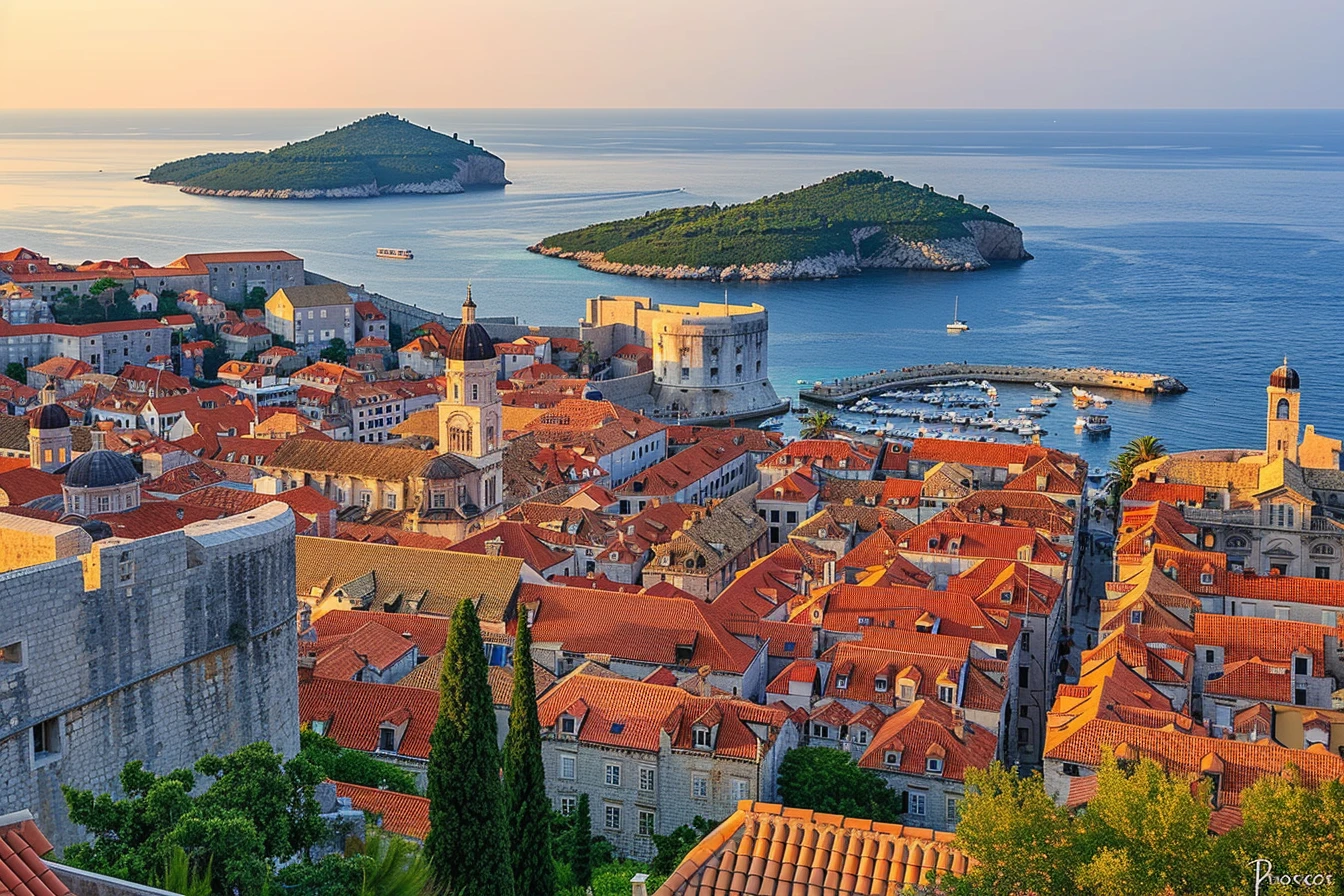
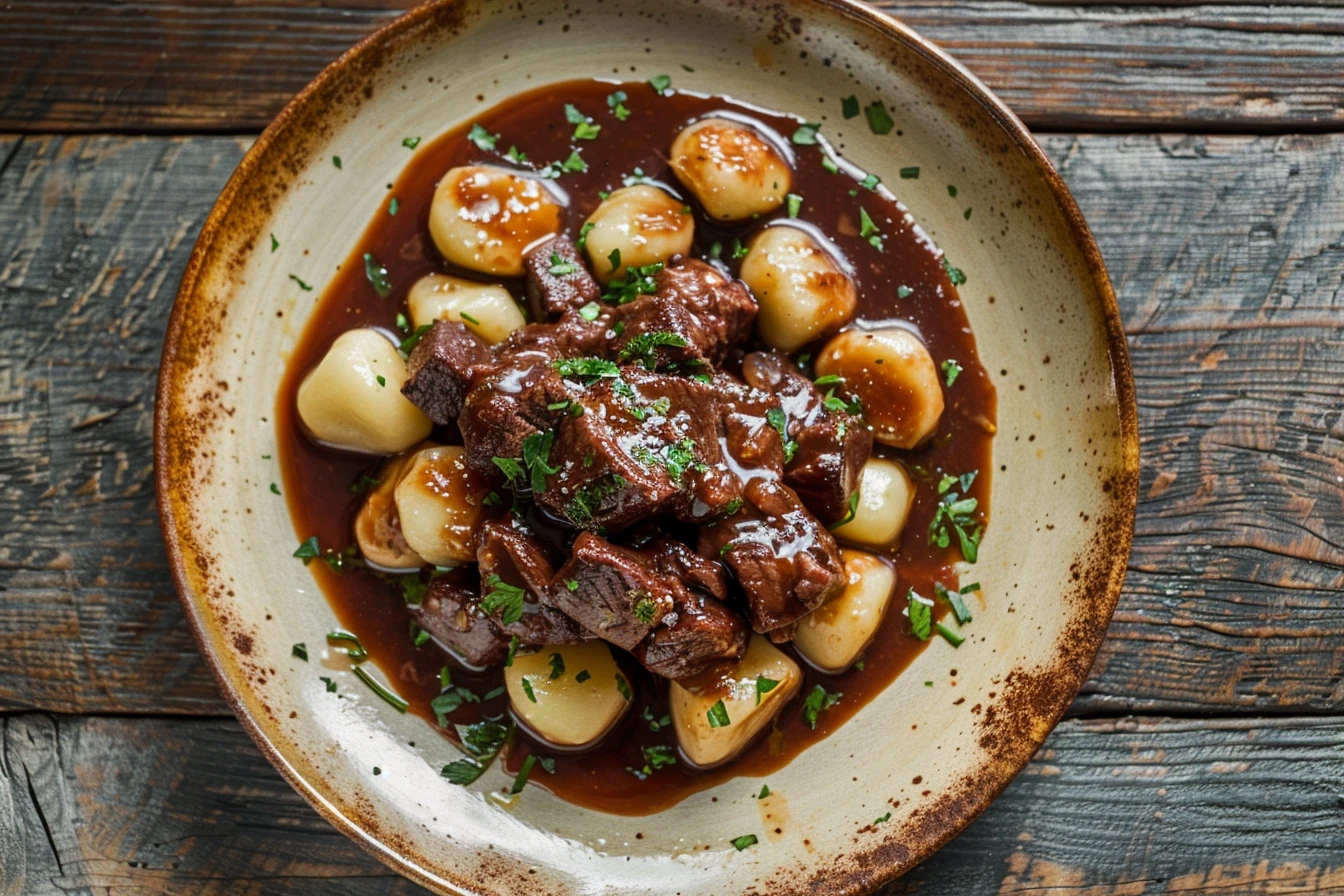
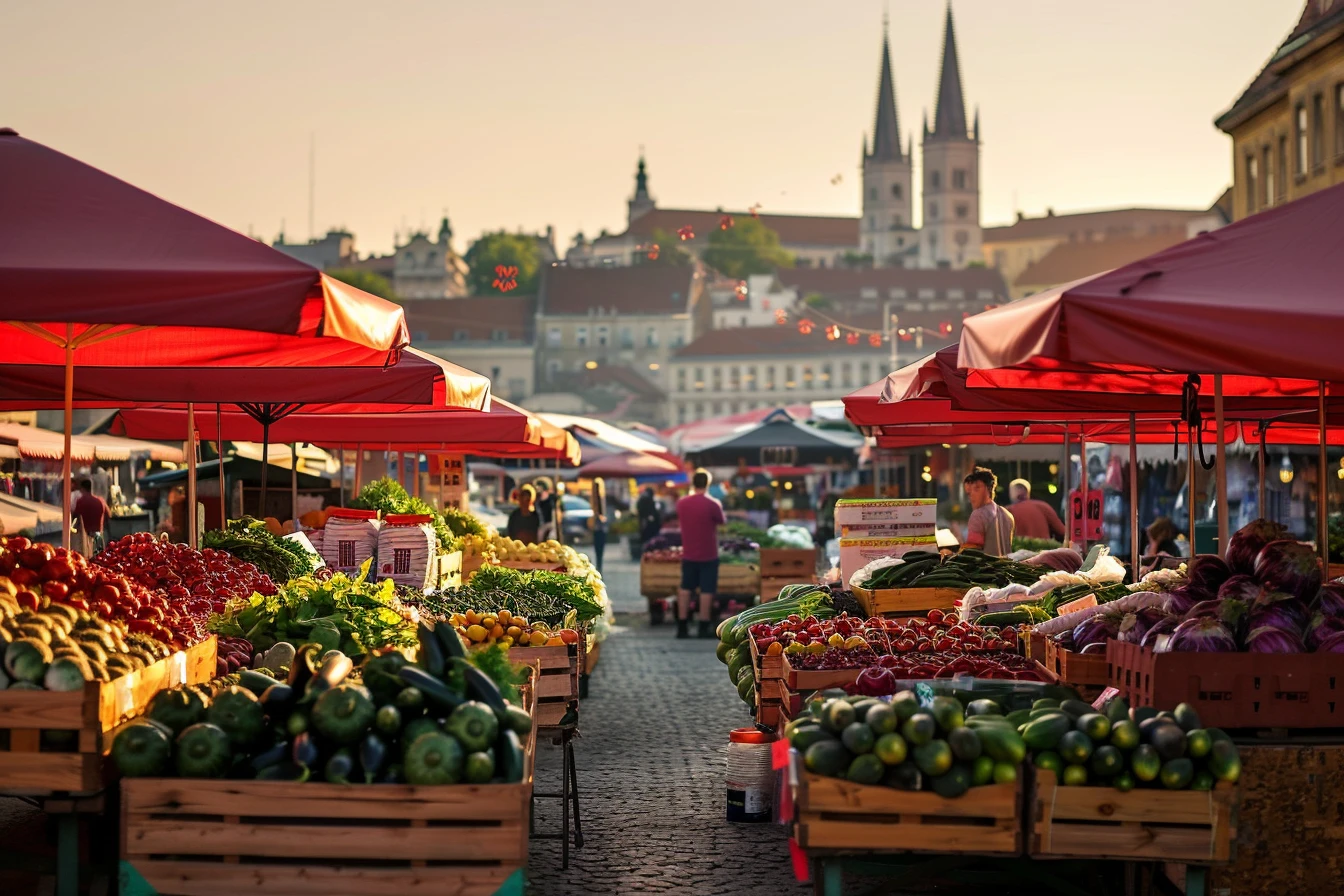
🏛️ Dubrovnik Old Town — tap to orient to Croatia🥩 Pašticada — tap to understand the hidden-fish pattern🍅 Dolac Market — tap for the fresh-market safe-path pattern
Geography
Regional Allergen Risk Map
Croatia is structurally a route-shape destination. Five regional cuisines — Dalmatia (coast and islands), Istria (peninsula), Kvarner & Highlands (Rijeka, Opatija, Gorski Kotar, Lika), Central Croatia (Zagreb and Zagorje), and Slavonia (eastern Pannonian lowlands) — produce five distinct allergen risk profiles that reset at specific geographic crossings. The Adriatic coast (Dalmatia, Istria, Kvarner) concentrates fish, shellfish, and olive oil dining culture; inland and continental regions (Central, Slavonia) run on pork, paprika, sour cream, and the walnut-and-poppy-seed dessert tradition. A single 10-day itinerary typically crosses at least three of these zones — Učka tunnel (Istria to Kvarner), Velebit tunnels (Kvarner to northern Dalmatia), Zagreb approach (Dalmatia or Kvarner to Continental) — and each crossing requires a fresh 'what's the hidden vehicle here' check. Route-shape trip planning matters as much as venue selection.
Loading region map…
↑ Hover a county for region detail
🌊
Dalmatia · Dalmacija
MODERATE
Dalmatia stretches from Zadar south through Šibenik, Split, and the islands (Hvar, Brač, Korčula, Vis) to Dubrovnik, encompassing 1,100+ kilometers of Adriatic coastline.
↑ Fish is structural (brodet stock, anchovy-in-pašticada, fish-based risotto), shellfish concentrates at Ston oysters and Lim Channel mussels, sulfites concentrate in local wine (plavac mali, pošip). The Dalmatian konoba is the defining venue — warm, family-run,...
🌳
Istria · Istra
MODERATE
Istria is the heart-shaped peninsula in Croatia's northwest, culturally closer to Italy than to Zagreb and historically part of Venice and later the Austro-Hungarian Empire.
↑ Fish and shellfish mirror Dalmatia; wheat (pasta) is structurally more prominent via fuži, njoki, ravioli, and the pasta-based tartufata truffle dishes; walnut pairings appear in truffle-stuffed fuži and some boškarin preparations.
⛰️
Kvarner & Highlands · Kvarner i Gorje
MODERATE
Kvarner is the bay south of Istria centered on Rijeka (Croatia's largest port), Opatija (the 'Vienna by the Sea' Habsburg resort town), and the islands of Krk, Cres, Lošinj, and Rab. Gorski Kotar and Lika are the mountainous inland counties to the east — Plitvice Lakes National Park sits in Lika.
↑ Coastal Kvarner (Rijeka, Opatija, Krk) mirrors Dalmatian seafood; Gorski Kotar and Lika inland shift toward dairy-forward cuisine with Lika škripavac hard cheese, kajmak, and game-meat dishes. Plitvice Lakes bus-tour restaurants are a distinct venue tier.
🏛️
Central Croatia · Središnja Hrvatska
LOW
Central Croatia centers on Zagreb (the capital, 1.1M metro) and extends north to Zagorje (the wine-and-spa hill country northwest of Zagreb, Krapina-Zagorje and Varaždin counties), east to Međimurje and Koprivnica, and south to the Sisak-Moslavina and Karlovac agricultural zones.
↑ Wheat (štrukli dough, mlinci, schnitzel breading), milk/dairy (štrukli cheese, kajmak, sour cream in stews), and tree nuts/seeds in holiday desserts (orahnjača walnut roll, makovnjača poppy-seed roll). Fish and shellfish exposure is low outside seafood-special...
🌾
Slavonia · Slavonija
MODERATE
Slavonia is the eastern lowland region between the Drava, Sava, and Danube rivers — Osijek-Baranja, Vukovar-Srijem, Brod-Posavina, Požega-Slavonia, and Virovitica-Podravina counties.
↑ Freshwater fish (šaran — carp, som — catfish, smuđ — pike-perch) in fiš paprikaš and grilled preparations; pork-heavy protein load with paprika and garlic; wheat-based bread and dumplings; dairy via sour cream (kiselo vrhnje) in stews. The freshwater-fish expo...
Allergen Risk
Allergen Prevalence Index
The Croatian allergen landscape concentrates fish, shellfish, and wine-sulfites on the coast; wheat, dairy, and tree nuts in the continental and holiday-dessert layer. Anchovy (inćuni) and fish stock (riblji temeljac) are the structural hidden-fish vehicles that Croatian kitchens categorize as 'sauce' or 'base' rather than 'fish' — a distinction the card must activate. Shellfish threads as a structural companion especially on the Pelješac peninsula (Ston oysters) and in Dalmatian konobas with shared-plate appetizers.
Legumesgrah · leća · grašak · Soy + peanut + lupin mandatory; other legumes not
5
5
4
5
Why these 14 allergens matter in Croatia specifically: The EU FIC 14 is the legal floor and, functionally, the operational ceiling at Croatian food businesses — konoba, čarda, hotel restaurant, agroturizam, cruise galley, and ferry-port café are all legally required to identify these 14 on request. The friction isn’t legal coverage (it’s strong); it’s the Croatian-language communication channel at family-run venues. The three rows to watch most closely for a Croatia trip are fish (structural hidden vehicle through inćuni and riblji temeljac), shellfish (Ston oyster and Dalmatian buzara concentration), and sulfites (wine-poured konoba service and cured-meat delicatessen like pšut).
Regional variance within Croatia: These scores reflect national averages. A coastal Dalmatian konoba sees fish-supply prevalence at 10/10 and fish hidden-risk at 10/10; a Slavonian čarda in Osijek has fish supply closer to 5/10 and freshwater species (šaran, som, smuđ) rather than the Adriatic species. A Zagreb fine-dining tasting menu concentrates sulfites in the wine pairings; an agroturizam in Istria concentrates tree nuts (orasi, lješnjaci in Istrian desserts) at a higher rate than coastal cuisine. Route-shape trips cross these gradients three to four times.
What’s safer than expected in Croatia: Peanut is meaningfully less structural in Croatian cuisine than in North African (karanga-adjacent), Southeast Asian (peanut sauce), or American (peanut butter) contexts — for peanut-allergic travelers, Croatia is a high-confidence destination with a dedicated Croatian card. Soy is essentially absent from traditional Croatian cuisine (modern Asian-fusion venues are the exception). Buckwheat is concentrated in specific regional dishes (hajdina kaša in some Central/Continental preparations) but is rare at tourist-corridor venues. Sesame is a modern addition to some baked goods (sesame-topped bread, seeded rolls) rather than a structural through-line.
Cuisine
Dish Allergen Map — 13 Croatian Dishes
Croatian dishes sort into three regional profiles — Dalmatian coastal seafood, Istrian Italian-influenced pasta-and-truffle, Continental Central European pork-paprika-dairy — with a shared dessert layer that concentrates tree nuts in continental and holiday preparations. The highest-risk dishes are structurally-hidden-fish preparations (pašticada with anchovy finishing, seafood risotto using brodet stock, crni rižot black risotto) and shellfish-heavy specialties (škampi na buzaru, Ston oysters, salata od hobotnice). Safe paths exist in every cuisine zone but require a Croatian-language card that names the specific local vehicles.
Dish
Allergen Tags
Hidden Risk Notes
Risk
PašticadaPašticada · Dalmatia
FISH (anchovy finishing)SULFITES (wine reduction)TREE NUTS (some recipes)WHEAT (gnocchi accompaniment)MODIFIABLE — SAFE PATH AVAILABLE
Pašticada is the archetype of Croatia's hidden-fish pattern. Many konoba recipes finish the sauce with anchovy paste (inćuni) dissolved in at the reduction stage as an umami depth element — the beef dish contains no visible fish but the anchovy is structurally there. Variance is recipe-dependent and not always menu-disclosed: some Dalmatian grandmothers consider anchovy-in-pašticada mandatory, others omit it. Some traditional recipes also finish the dish with crushed walnuts (orasi) as a textural garnish. The wine reduction contains sulfites. For fish-allergic travelers, pašticada is the single most important Croatian dish to flag explicitly — a card that names inćuni is the tool that reaches the cook's actual kitchen inventory.
HIGH
Brodet / Brudet / Brodettobrodet (Dalmatian), brudet (Istrian), brodetto (Italian-Istrian menus) · Dalmatia, Istria, Kvarner
FISH (all forms)SHELLFISH (often mixed in)SULFITES (wine)GARLIC & ONION
Brodet is the unambiguous fish dish — no traveler with a fish allergy would order it knowingly. The hidden-vehicle risk is downstream: brodet stock often sits on restaurant stoves throughout service and is reused as the base for 'seafood risotto' (rižot od plodova mora), crni rižot (black risotto, colored with squid ink), paella-style seafood rice, and unnamed bisque-style reduction sauces on upscale menus. A konoba cook preparing 'seafood risotto' considers the brodet stock a rice base, not a fish ingredient — a fish-allergic diner ordering risotto without the card naming riblji temeljac may receive the dish with fish stock throughout. Also: many konoba bread baskets on the table catch brodet splash during communal service. Shellfish is often mixed into the stew (scampi, mussels).
HIGH
Škampi na buzaruŠkampi na buzaru / Scampi na buzaru · Dalmatia, Istria, Kvarner
The dish itself is unambiguous shellfish. Structural cross-contact risk is in the communal service pattern: shared bread baskets dipped in the scampi-garlic-wine sauce at the table, shared plates passed around, shells left in shell bowls at the table, and hands-and-fingers eating style that transfers shellfish proteins to other foods. The breadcrumb finish introduces wheat; the wine is a sulfite source; raw garlic is heavy. For shellfish-allergic travelers, the konoba with active buzara service on the table nearby is a meaningful cross-contact environment — request a separate dining area or choose a different venue.
FISH (stock base)SHELLFISH (cuttlefish/squid ink)SULFITESGARLIC & ONION
Double hidden-allergen stack: the 'black' color comes from cuttlefish ink (shellfish category), and the stock is fish-based (riblji temeljac or brodet). A fish-and-shellfish-allergic diner cannot order crni rižot; a fish-only-allergic diner still cannot order it because of the stock. Some konoba versions omit the ink and call it something else, but the name 'crni rižot' on a menu is structural shellfish + fish. Cross-contact in the kitchen rice station is structural — the cuttlefish ink stains everything.
HIGH
Kamenice iz Stona (Ston oysters)Kamenice iz Stona / Ostrige · Dalmatia (Pelješac peninsula)
SHELLFISH (oysters)
The dish itself is direct shellfish exposure. The structural risk is in the wider itinerary context: if you are visiting Dubrovnik and taking any Pelješac wine-and-oyster tour, Ston oysters are marketed aggressively and the default shore-excursion lunch often includes oyster service. For shellfish-allergic travelers, the Pelješac itinerary requires declaring at booking; many operators can substitute a land-based lunch (peka in a Konavle or inland venue) but the substitution is not automatic. The Mali Ston oyster taverna environment also has structural airborne exposure from shucking stations — shellfish-allergic travelers with respiratory sensitivity should avoid the tavernas entirely.
The peka technique itself is structurally safe for most allergies — the meat, potatoes, olive oil, herbs, and onions under the bell contain no hidden allergens. The risks are in the service format and protein choice: (1) hobotnica ispod peke (octopus under the bell) is a common choice — shellfish-allergic travelers must specify janjetina (lamb) or teletina (veal); (2) the communal-service format means shared bread baskets with ajvar cross-contact, and sometimes a kajmak (clotted cream) accompaniment that milk-allergic travelers must decline; (3) some wedding and agroturizam peka meals include walnut-finished desserts afterward (tree nuts). Pre-notify the venue at booking; specify the protein; request no communal bread basket at your place setting.
LOW
Ajvar (red pepper spread)Ajvar · Continental, Slavonia, and commercial distribution coast-wide
FISH (some commercial brands)GARLIC & ONIONSULFITES (vinegar)MODIFIABLE — SAFE PATH AVAILABLE
Household ajvar is traditionally fish-free — just peppers, eggplant, oil, vinegar, garlic. Several widely-distributed commercial brands include anchovy paste or fish sauce as an umami layer, disclosed on the EU-FIC label but not always communicated at restaurant service where ajvar is brought to the table as a 'standard accompaniment.' For fish-allergic travelers, the ajvar on every konoba bread plate is a structural exposure risk — specify no ajvar at the table, or ask which brand is being served (household versions are safer).
MODERATE
Fuži s tartufima (Fuži with truffles)Fuži s tartufima · Istria
Fuži is egg-and-wheat pasta, made fresh on the same kitchen surface as truffle preparations — cross-contact with truffle dust and previous pasta doughs is structural. Cream reductions introduce milk; some versions finish with crushed walnuts or pine nuts for textural contrast. Istrian truffle pasta is one of the most destination-signature dishes in the country, meaning agroturizam and Istrian konoba menus often feature it heavily and other options may be limited. For wheat-and-egg-allergic travelers, Istrian tourism requires pre-calling venues.
MODERATE
Štrukli (Zagreb cheese dough)Zagorski štrukli / Kuhani štrukli / Pečeni štrukli · Central Croatia (Zagreb, Zagorje)
WHEAT (dough)MILK (cheese filling, sour cream)EGG (dough and filling binder)
Triple-structural allergen stack: wheat dough, cottage cheese filling, egg binder. No safe modification possible — the dish is a wheat-milk-egg construction by definition. For travelers with any of these allergies, štrukli is an order-a-different-dish situation, not a modification situation. Zagreb fine dining typically offers strong alternatives (meat plates, vegetable sides) and EU allergen disclosure is well-observed. This is a useful 'structural red flag' dish to know by name — 'bez štrukla, molim' (without štrukli, please) is a commonly-understood request.
HIGH
Janjetina s ražnja (lamb on the spit)Janjetina s ražnja · Dalmatia hinterland, Lika, Slavonia
MILK (kajmak side if served)GARLIC & ONION (trace)MODIFIABLE — SAFE PATH AVAILABLE
Structurally one of the safest Croatian dishes for allergic travelers — whole lamb roasted over coals with salt and no added sauces. The risks are in the accompaniments: kajmak (clotted cream) is often served as a bread spread alongside, ajvar is standard on the table, and the bread basket may be communal. For the lamb itself, no cross-contact with fish or shellfish because the spit rotation is a dedicated station. Roadside spit-roast venues on the A1 motorway are reliable safe-path options for travelers driving Zagreb-to-Split.
FISH (freshwater)SULFITES (wine)WHEAT (noodles)EGG (noodles)GARLIC & ONION
Freshwater fish is the structural protein — distinct from Dalmatian saltwater fish for taxonomic purposes but the same clinical allergen for most fish-allergic travelers. The broth is heavy paprika and wine, egg noodles are typically served alongside. A fish-allergic traveler at a Slavonian čarda will find fiš paprikaš is the dish the venue exists to serve — consider dining elsewhere rather than asking for modification. Čobanac (shepherd's stew, pork and game) is the safe-path alternative at the same venue.
Structurally wheat-and-egg dough. Tree-nut-risk is recipe-variable — walnut-containing versions are common in Dalmatia and on the islands, sometimes undisclosed on menus. The rum/brandy content introduces sulfites. Fritule at cruise ship Croatian-themed dessert service is a structural exposure point for travelers with any of wheat, egg, or tree nut allergies. For Christmas and winter holiday travelers, fritule is ubiquitous.
Four-allergen structural stack: walnuts (orasi) as the defining filling, yeasted wheat dough, milk and egg as dough binders. Makovnjača is the poppy-seed sibling — structurally safer for tree-nut-allergic travelers but still wheat/milk/egg. Zagreb hotel breakfast buffets and Continental agroturizam service put orahnjača on the table by default.
HIGH
The hidden-fish pattern in three dishes:Pašticada (Dalmatian slow-braised beef) is the flagship — many konoba recipes finish the sauce with inćuni (anchovy paste). Brodet is unambiguously fish but its stock sits on the stove all service and becomes the base for the next table’s seafood risotto. Crni rižot (black risotto, colored with squid ink) uses fish stock as its foundation. A Croatian card naming inćuni, riblji temeljac, and brodet closes the gap that English ‘fish allergy’ does not.
Safe-path dishes by region: In Dalmatia, grilled whole fish with olive oil and lemon (orada, brancin, zubatac) is the cleanest protein path for non-fish allergies — the preparation is minimalist, the ingredients visible, the chef-plated. In Istria, plain fuži with boškarin ragù (confirm wheat tolerance) is the pasta-safe path. In Continental Croatia, štrukli bez nadjeva (cheese-filled dough, plain variant) is challenging for egg/dairy allergies but a useful carb anchor. In Slavonia, čobanac (paprika shepherd’s stew) is the multi-allergen-friendlier path provided sour cream is excluded.
Fresh-market alternatives: Croatia’s farmer’s markets (tržnica) — Dolac in Zagreb, Pazar in Split, the daily market in Dubrovnik’s Old Town, Pula’s central market — offer whole fresh fruit, raw vegetables, unprocessed meats, and labeled commercial products that bypass the restaurant-kitchen communication channel entirely. For multi-allergen travelers on route-shape trips, a daily market stop is the reset pattern between konoba meals.
Where to Eat
Venue Safety Profile
Croatian venue tiers gradient from EU-compliance-strong (Zagreb fine dining, international hotels, cruise ships) through transition zones (tourist-corridor coastal restaurants) to the family-kitchen tier (konobas, čardas, agroturizams) where the EU allergen matrix exists on paper but the delivery channel is Croatian-language and grandmother-at-the-grill. The route-shape trip typically crosses multiple venue tiers in a single week.
Higher Risk
Most Reliable
⛴️Ferry terminal and port-area café
The transit dining tier — Jadrolinija ferry terminals (Split, Zadar, Rijeka, Dubrovnik Gruž), bus station cafés (Zagreb Autobusni kolodvor, Split Autobusni kolodvor), highway rest stops on the A1 Zagreb-Split motorway, Dubrovnik Airport and Split Airport food courts. These are the venues where travelers in motion eat — quickly, between connections, with limited menu choice. Menus are limited (pizza, grilled meat sandwich, pastry and coffee), EU-FIC labeling is displayed but allergen conversation is minimal, and staff turnover is high. For allergic travelers on ferry days and bus days, these are the venues where a packed backup meal is the safer choice than the menu.
Pack shelf-stable backup food for ferry and bus days — a hotel-sourced packed lunch, a supermarket-sourced pre-packaged meal with EU-FIC labels, or pre-ordered food delivered to the hotel. Do not attempt allergen-safe dining at a Jadrolinija terminal café during peak-season Saturday boarding.
HIGH
🏚️Village konoba / Rural konoba
Family konobas off the main tourist corridor — the Pelješac peninsula villages, the Istrian hill towns (Motovun, Grožnjan, Buzet), Vis and Lastovo islands, Konavle south of Dubrovnik. These are the grandmother-at-the-grill venues that the konoba cultural institution is built around. Menus may be handwritten in Croatian only; the cook is often the owner or extended family; English is patchy; EU allergen information exists in the back of house but the delivery channel is a direct conversation in Croatian. Hospitality is genuinely warm — a prepared traveler with a Croatian card is treated as an honored guest, not an inconvenience.
Arrive early in service (before the dinner rush), hand the Croatian card to whoever greets you, and be willing to spend 10 minutes on the communication before ordering. The cook will often come out of the kitchen to review with you. Do not expect a written allergen matrix at the table — the matrix is in the back of house, the card is the operational tool.
MOD
🌿Istrian / Dalmatian agroturizam
Farm-stay restaurants operated by families on their own property — pigs raised on-site, wine from their own vines, olive oil from their own trees, often fish from the nearest cove or stream. Concentrated in the Istrian interior (Motovun, Livade, Buje, Buzet area), the Dalmatian hinterland (Konavle south of Dubrovnik, the Vrgorac region inland from Makarska), and increasingly in the Pelješac peninsula. Menu is set — typically a multi-course tasting featuring truffle dishes, boškarin beef, fresh pasta, and house wine. English varies; hospitality is exceptional; allergen accommodation requires advance notice.
Call 2–3 days before reservation. Explain the allergy in Croatian (or in English with a Croatian follow-up) and ask whether the menu can be adjusted. Most agroturizams will substantially reshape the tasting for a named allergy but cannot do it on-arrival. For truffle-heavy Istrian agroturizams, wheat allergy is the specific challenge — the pasta is the dish.
MOD
🐟Slavonian čarda (river tavern)
Freshwater-fish taverns along the Drava, Sava, Danube, and Kupa rivers — Kopački Rit, Ilok, Osijek waterfront, Požega area. Cuisine is fiš paprikaš, čobanac, river-fish-roasted-over-coals, pork-and-paprika stews, smoked kulen sausage, Slavonian kruh bread. Service is Croatian-first, English patchy, and the venue exists specifically for the river-fish and game-meat tradition. For fish-allergic travelers, čarda is the venue type to avoid for the house specialties and choose for the pork/meat alternatives. For Slavonian travelers outside the čarda tier — Osijek urban restaurants, Vinkovci and Požega town venues — EU-FIC compliance is baseline but tourism maturity is thinner than on the coast.
Order čobanac (pork/game stew) or rostilj (grilled meat) if fish-allergic; skip fiš paprikaš. Čarda kitchens handle freshwater fish intensively — cross-contact risk is structural for severe fish allergies.
MOD
🏨International hotel restaurants
Four- and five-star international brand hotels in Zagreb (Esplanade, Sheraton, Hilton, Regent Esplanade), Dubrovnik (Hotel Dubrovnik Palace, Rixos Premium, Villa Dubrovnik, Grand Park Hotel), Split (Radisson Blu, Le Meridien Lav), Hvar (Palace Elisabeth, Adriana Hvar Spa), Rovinj (Grand Park Hotel, Maistra Monte Mulini). EU-FIC-compliant, English-fluent, with written allergen matrices. Breakfast buffets are the structural cross-contact risk (see buffet_warning). À la carte dinner service is well-managed. Room service is reliable for controlled allergen service. The safety choice is à la carte breakfast over buffet.
Request à la carte breakfast rather than the buffet; skip the minibar-level hotel confectionery basket; specify allergies at check-in so the concierge can flag them to the F&B team for every meal.
MOD
⭐Zagreb fine dining
The top tier of Croatian gastronomy sits in Zagreb — Noel, Mundoaka, Dubravkin Put, Apetit City, LD Restaurant in Dubrovnik, Pelegrini in Šibenik, Monte in Rovinj, 360° in Dubrovnik. These are EU-FIC-compliant kitchens with written allergen matrices in Croatian and English, menu engineering done with allergen columns, staff trained in allergen protocol, and pre-notification workflows for allergic diners. Many have Michelin stars or Gault Millau rankings. English service is fluent. This tier is the closest Croatia has to the restaurant-allergen-protocol experience a traveler from London, New York, or Tokyo would recognize as baseline.
Book by email 48 hours ahead, reconfirm the allergy at the reservation desk, carry the Croatian card to hand at the table for the waitstaff to photograph for the kitchen. Fine dining chefs in Zagreb will often come tableside for allergic diners — this is normal and appropriate.
LOW
🍷Coastal tourist konoba
The konoba tier on the major tourist corridor — Dubrovnik Old Town, Split Diocletian's Palace, Hvar Town, Rovinj harbor, Pula seafront. These are family-owned but tourism-mature: menus in Croatian and English, EU allergen matrix on request, younger English-speaking service staff, and a decade-plus of experience with allergic guests. Cross-contact discipline varies — smaller kitchens mean shared workstations — but the communication channel works in English if needed. The core coastal dining experience for most tourists.
Hand the Croatian card at seating; the server will typically take it to the cook. Specify 'no bread basket at my seat' to avoid ajvar cross-contact. Ask whether pašticada contains inćuni if ordering — this is the question the tourist konoba tier has come to expect.
LOW
🚢Cruise ship galley (ocean + small-ship)
The cruise dining tier — ocean cruise lines (Viking Ocean, Silversea, Azamara, Oceania, Windstar, Seabourn, Regent, Celebrity, MSC, Norwegian, Royal Caribbean, Princess, Holland America) calling at Adriatic ports, and small-ship Croatian operators (Katarina Line, Sail Croatia, Unforgettable Croatia, Goolets gulet charters, CroisiEurope). Ocean cruise allergen protocols are mature and well-documented at booking; small-ship Croatian galleys are more improvisational with daily port provisioning. The full operational model — pre-notification at booking, embarkation confirmation, daily menu pre-review, shore excursion gap — is detailed in the contextual section. Cruise dining itself is the low-risk layer; the shore-excursion catered lunch is the pan-tier risk.
See section-the-croatia-route for the full cruise operator map and per-line protocols. Pre-notify at booking minimum 30 days ahead for ocean lines, 14 days ahead for small-ship operators.
LOW
Hotel and cruise buffet cross-contact: International hotel breakfast buffets in Zagreb, Dubrovnik, Split, and coastal resort properties are structurally high cross-contact environments — shared serving utensils, pastry trays with sesame-seeded rolls next to plain rolls, scrambled eggs next to ham, cheese plates next to anchovy plates. Cruise ship buffets operate similarly. For travelers with any major allergy, request a dedicated à la carte breakfast rather than the buffet.
Konoba family-kitchen reality: A konoba cook at an open hearth in Ston, on Hvar, or in rural Istria may be a grandmother who has been preparing pašticada, brodet, and peka for 40 years. She may not read the EU allergen matrix that the owner filed with the agency. She will read a Croatian-language card handed to her at the moment of ordering. The card-to-the-cook channel is the operational reality of konoba dining — the paper-matrix channel is for regulatory compliance.
Shore excursion catered lunch — the pan-tier risk: Whether you're sailing Viking Ocean or a Katarina Line gulet, the cruise kitchen has an established allergen protocol. The konoba, Konavle farm, or winery serving your shore-excursion group is a separate kitchen — with its own staff, its own EU-FIC compliance level, and no relationship to the cruise line's dietary program. Pre-notify the shore excursion desk 48 hours before the excursion, or pack a shelf-stable backup meal.
Agroturizam — the farm-stay allergen profile: Istrian and Dalmatian hinterland agroturizams are family-run farm-stays where the food comes from the property (pigs, wine, olive oil, vegetables, often fish from the nearest cove). The allergen protocol is 'ask grandmother' — more direct than a tourist restaurant, more idiosyncratic. Pre-call the venue 2–3 days before; the hostess will typically adjust the menu substantially for a named allergy, but not on a walk-in basis.
Dining Etiquette
Communication & Etiquette for Allergic Travelers
Croatian hospitality culture is warm and responsive — and Croatian kitchens categorize food by ingredient rather than by allergen group. The practical etiquette for allergic travelers in Croatia is about communication channel (written card handed to the cook, not verbal description to the server) and specificity (naming inćuni and riblji temeljac, not ‘fish’ in English). The six patterns below are the operational etiquette across konoba, čarda, agroturizam, fine-dining, hotel, and cruise contexts.
📋
The card does the work — put it in the cook's hands
Hand, don't describe. At konobas, čardas, and agroturizams, the cook is often separated from the server by an open kitchen hatch, a dining-room-to-galley door, or 20 feet of stone floor. A verbal description from the server to the cook loses detail at every hop. A Croatian-language card, handed to the server and physically carried into the kitchen, does not lose detail. Hand the card at seating, not at ordering. Wait for the server to take it to the kitchen before ordering. At village konobas, the cook may come out of the kitchen to review with you — this is a good sign, and appropriate behavior is to thank them and let them ask questions. Do not try to describe the allergy verbally while the card is in your hand — hand it first, then answer questions afterward.
🎯
Croatian kitchens categorize by ingredient, not by allergen group
Specifics, not categories. A Croatian cook thinks about inćuni (anchovies), riblji temeljac (fish stock), and brodet (fish stew) as three distinct kitchen items — not as three instances of 'fish.' Saying 'no fish' in English may be read as 'no fish fillet on the plate' and miss all three hidden vehicles. The card that names inćuni, riblji temeljac, and brodet explicitly activates the kitchen's actual inventory categories. Same principle for shellfish — the card that names kamenice, dagnje, škampi, and hobotnica reaches the kitchen more reliably than 'no shellfish.' For tree nuts, name orasi (walnuts) and bademi (almonds) separately. The specificity is a form of respect toward the cook's expertise — a prepared traveler naming the local ingredient in the local language is read as serious, not fussy.
❤️
Konoba hospitality responds to engagement — not to anxiety
The warmth is real. The konoba cultural institution is built around the host–guest relationship. A prepared traveler who hands a Croatian card, names specific vehicles, and trusts the cook is treated as an honored guest. A traveler who transmits anxiety — apologizes repeatedly, second-guesses the cook, asks the server to confirm and reconfirm — activates the reassurance reflex, where the cook's instinct is to say 'u redu' (okay) as social lubricant rather than as factual confirmation. The posture that works at konobas is matter-of-fact: 'this is my allergy, here is my card, I trust you, molim vas (please).' The warmth is genuine and responsive, but it responds to confidence, not to apology.
🕰️
Arrive at the start of the shift, not at the rush
Early in service. Konoba service volumes spike: lunch 12:30–14:30, dinner 19:00–21:30 in the tourist season. The cook's attention is highest at the start of the shift — 12:00 for lunch, 18:30 for dinner. Arriving at the beginning of service gives the cook time to review your card, ask clarifying questions, and plan the modification. Arriving at the 20:30 dinner rush means the card goes into the stack of five other tables' orders and may not get the same engagement. For peka and agroturizam venues with multi-hour cook times, the pre-notification must happen the day before, not at arrival.
🚫
Decline the bread basket and ajvar at arrival
The tabletop is a cross-contact surface. Bread service at Croatian coastal restaurants arrives with the menu — small loaves of bread with olive oil, tapenade, ajvar, and often anchovy paste in separate bowls. For fish-allergic, shellfish-allergic, and tree-nut-allergic travelers, this is a structural cross-contact moment before any dish is ordered. 'Molim vas, bez košarice s kruhom kod mene. Bez ajvara' — 'please, no bread basket at my seat, no ajvar.' This is not rude. Croatian servers understand the allergic-diner protocol. Request the bread basket to be placed with your non-allergic companions at the other end of the table, or entirely removed.
📅
Pre-notify cruise operators at booking, not at embarkation
Booking, not boarding. Ocean cruise lines (Viking Ocean, Silversea, Azamara, Oceania, Seabourn, Windstar, Regent, Celebrity, MSC, Norwegian, RCL, Princess, HAL) expect the allergy declaration at booking — minimum 30 days before sailing, ideally at the time of reservation. Small-ship Croatian operators (Katarina Line, Sail Croatia, Unforgettable Croatia, Goolets, CroisiEurope) ideally get 14 days. The embarkation-day conversation with the maître d' or chef is a confirmation, not the initial notification. For shore excursions, the booking note should flag the allergy separately — the ship's dining team and the excursion team are different departments, and the information does not always cross the hallway.
Languages
Languages Spoken
Croatia's linguistic situation is structurally simple for card strategy: Croatian (hrvatski) is the universal kitchen language and the single language the card must target. English reaches the coastal tourism infrastructure but not the konoba cook. Italian has meaningful residual presence in Istria (~5% native speakers, higher in specific towns like Rovinj/Rovigno and Umag/Umago where it's co-official). Serbian in eastern Slavonia is mutually intelligible with Croatian at the kitchen-vocabulary level. No immigrant-labor language gap structurally affects kitchen staffing — unlike Greece (Albanian kitchen workers), the UK (Bangladeshi curry houses), or the UAE (Filipino hotel kitchens), Croatia's hospitality kitchens operate in Croatian with local family staffing.
Universal — every konoba cook, every čarda hostess, every agroturizam owner, every small-ship cruise chef, every hospital nurse speaks Croatian as first language. The single card-target language.
Strong at international hotels, Zagreb fine dining, cruise ship concierge desks, private hospital international patient offices, and coastal tourist-corridor restaurants with younger service staff. Weaker at village konobas, rural agroturizams, Slavonian čardas, and small-ship cruise galleys.
Tourist corridors — Dubrovnik, Split, Hvar, Rovinj, Pula, Zagreb, major cruise ports
~60%
Italian Italiano / Talijanski · 🇮🇹
Meaningful in Istrian tourism — Rovinj and Umag are officially bilingual Croatian/Italian (signage, menus, service often all three: Croatian, Italian, English). The Istrian ethnic Italian community (~25,000 people) maintains Italian as a working language. For Italian-speaking travelers to Istria, Italian is a credible card channel at Istrian tourist-corridor venues — not a replacement for Croatian at the kitchen level.
Mutually intelligible with Croatian at the kitchen-vocabulary level — 'riba' is fish in both, 'češnjak' / 'beli luk' are garlic variants, 'orasi' is walnuts in both. The ethnic Serbian community in eastern Slavonia uses Cyrillic for some signage but Croatian/Latin script for restaurant menus and allergen matrices. A Croatian card functions at every Serbian-community venue in Croatia.
Eastern Slavonia (Vukovar-Srijem county), parts of Lika-Senj, Sisak-Moslavina
~4%
German Deutsch · 🇩🇪
Moderate at tourism-facing service — German-speaking tourists are the single largest foreign-visitor demographic (Austrian, German, Swiss), and older service staff in Istria and Kvarner often have conversational German. Kitchen penetration is weaker than English.
Tourist corridors — especially Istria, Kvarner (Opatija historical Austrian influence), and summer Dalmatian resort towns
~20%
Two cards, two contexts: The Croatian card reaches the cook at the konoba, čarda, agroturizam, gulet galley, farmhouse peka, and rural hospital nurse station. The English card reaches the concierge, the cruise director, the executive chef at upper-band hotels, the Zagreb Tourist Board desk, and the 112 dispatcher. Carry both printed; carry both in digital wallet. Hand the Croatian card to the cook at every konoba interaction — the written artifact outperforms verbal English at family-run venues even where the server speaks English.
Reading Labels
Croatian & Label Guide
Croatia uses the Latin alphabet, so script recognition isn't the challenge — pronunciation is. Croatian consonants č, ć, đ, š, ž and digraphs lj, nj, dž are opaque to English speakers. The 12 term cards below are the critical allergen vocabulary for reading Croatian menus, supermarket labels, and konoba handwritten lists — with pronunciation guides for when written communication isn't enough and you need to say the term out loud.
Croatian is written in the Latin alphabet with seven diacritical characters. The pronunciation key: č ≈ 'ch' (as in 'church'), ć ≈ softer 'ch' (like the 't' in British 'tune'), đ ≈ soft 'j' (as in 'jeep'), š ≈ 'sh' (as in 'shoe'), ž ≈ 'zh' (like the 's' in 'measure'). Digraphs: lj ≈ 'ly' (as in 'million'), nj ≈ 'ny' (as in 'canyon'). Stress typically falls on the first syllable. Every vowel is pronounced — no silent letters.
RIBA
REE-ba
Fish (generic)
The base term for any fish. Expect it in the names of dishes (riblja juha — fish soup, riblji temeljac — fish stock) and on menu section headers. If you see 'riba' anywhere on a menu, the dish is fish-based.
INĆUNI
EEN-choo-nee
Anchovies
The critical hidden-fish term. Appears in pašticada recipes, commercial ajvar brand labels (sastojci / ingredients list), and pizza topping names. Also written srdele (sardines/anchovies in common kitchen usage). If a fish-allergic traveler learns only one Croatian word, this is it.
ŠKOLJKE
SHKOL-yeh
Shellfish (bivalves generic)
The umbrella term for shellfish. Breaks down into kamenice (oysters), dagnje (mussels), school (bivalves). Shellfish-allergic travelers should also learn škampi (scampi), jastog (lobster), hobotnica (octopus).
KAMENICE
ka-meh-NEE-tseh
Oysters
Specific term for oysters — also written ostrige on some menus. Pelješac peninsula (Ston, Mali Ston) production. The Oyster Festival in Mali Ston in March is the seasonal peak.
ORASI
OH-ra-see
Walnuts
Walnut — the dominant tree nut in Croatian cuisine. Appears in orahnjača (walnut roll), fritule recipes, some pašticada preparations, and Slavonian/Zagorje dessert service. Continental Croatia's defining tree nut.
BADEMI
BA-deh-mee
Almonds
Almond — dominant in Dalmatian desserts including rafioli (Korčula almond pastries). Less structural than walnuts but present in coastal sweet service.
SIR
SEER
Cheese
Generic cheese. Specific Croatian cheeses: paški sir (Pag Island sheep cheese), škripavac (Lika hard cheese), svježi kravlji sir (fresh cow cheese, the štrukli filling). 'Kremasto' on a description means creamy/with cream.
Wheat and gluten. 'Gluten' is the EU-FIC disclosure term on labels; 'pšenica' is the kitchen word for wheat flour. Specific wheat products: kruh (bread), tjestenina (pasta), fuži (Istrian pasta), štrukli (Zagreb cheese-dough), mlinci (baked-dough strips).
JAJA
YA-ya
Eggs
Eggs. Bjelance (egg white), žumanjak (egg yolk). Common in Croatian pasta, štrukli, and dessert layers.
ČEŠNJAK
CHESH-nyak
Garlic
Garlic — also occasionally bijeli luk ('white onion,' a Bosnian/Serbian-influenced usage). Structural in almost every savory Croatian dish including buzara preparations, pašticada, and brodet.
SULFITI / VINO
SOOL-fee-tee / VEE-no
Sulfites / Wine
Sulfites (sulfiti) and wine (vino) — paired because wine is the primary sulfite source on Croatian menus. 'Sadrži sulfite' on a label means 'contains sulfites.' Local wine categories: plavac mali (Dalmatian red), malvazija (Istrian white), teran (Istrian red), pošip (Korčula white), grk (Korčula white).
Croatian diacritics at a glance: Croatian uses the Latin alphabet with five diacritic characters — č (soft “ch” as in čevapčići), ć (softer “ch” as in inćuni), đ (soft “dj”), š (“sh” as in školjke), and ž (French “j” as in rižot) — plus the digraphs dž, lj, and nj. These characters carry meaning: inćuni (anchovies) and incuni without the diacritic are not the same word to a Croatian kitchen. Copy the characters from this guide into your notes app or screenshot the page for phone reference — typing Croatian diacritics on a non-Croatian keyboard is non-trivial and the workaround is visual pattern-matching on packaged food labels and menu boards.
Communication
Essential Safety Phrases
A curated set of Croatian phrases for the specific venue encounters a Croatia trip surfaces — handing the card at a konoba, asking about the allergen matrix, declining ajvar at the table, requesting pre-notification at a cruise or agroturizam booking, and communicating severity at an emergency venue. Phrases are ordered by frequency of use on a typical 10-day Croatia itinerary.
Scenario 01
Hand, don't describe
CroatianEssential
Imam tešku alergiju na hranu. Molim vas, dajte ovu karticu kuharu. Ne mogu jesti [alergeni].
EE-mam TESH-koo a-LER-gee-yoo na HRA-noo. MOH-leem vas, DAI-teh OH-voo KAR-tee-tsoo KOO-ha-roo. Neh MOH-goo YES-tee [alergeni].
I have a severe food allergy. Please give this card to the chef. I cannot eat [allergens]. — The card does the work better than verbal description. Hand it, make eye contact, wait for the server to take it to the kitchen. At village konobas the cook may come out — this is normal and appropriate.
Scenario 02
The legal ask
CroatianEssential
Molim vas alergenu informaciju. Po EU zakonu morate je imati.
MOH-leem vas a-LER-geh-noo EEN-for-MAH-tsee-yoo. Po EH-oo ZAH-ko-noo MOH-ra-teh yeh EE-ma-tee.
Please give me the allergen information. By EU law you are required to have it. — Use this at coastal tourist konobas and mid-tier restaurants where the matrix exists but isn't proactively offered. The reference to EU law is not rude — it signals you're a prepared traveler invoking a right that exists. Most Croatian venues will produce the matrix within a few minutes.
Scenario 03
The diagnostic question
CroatianEssential
Sadrži li pašticada inćune? (Zatvara li se umak s inćunima?)
SAH-dr-zhee lee PASH-tee-TSA-da EEN-choo-neh? (ZA-tva-ra lee seh OO-mak s EEN-choo-nee-ma?)
Does the pašticada contain anchovies? (Is it finished with anchovy paste in the sauce?) — If yes — order janjetina (lamb), piletina (chicken), or grilled fish instead. Pašticada is not a dish to modify because the anchovy is structural to the sauce.
Scenario 04
The hidden-stock question
CroatianEssential
Da li je rižot s ribljim temeljcem? (Je li temeljac od ribe?)
Da lee yeh REE-zhot s REEB-lyim teh-MEHL-ts-em? (Yeh lee teh-MEHL-yats od REE-beh?)
Is the risotto made with fish stock? (Is it a fish-based broth?) — 'Seafood risotto' and crni rižot (black risotto) are both fish-stock-based. Even a 'vegetable risotto' at a coastal konoba may have a fish-stock base if the kitchen reuses stock across dishes.
Scenario 05
The tabletop boundary
CroatianEssential
Molim vas, bez košarice s kruhom kod mene. Bez ajvara, hvala.
MOH-leem vas, bez ko-SHA-ree-tseh s KROO-hom kod MEH-neh. Bez AH-yva-ra, HVA-la.
No bread basket at my seat, please. No ajvar at my seat. — Direct and matter-of-fact. Croatian servers don't read this as rude — they read it as allergic-diner protocol. Cross-contact from the bread basket is a real structural risk that declining at arrival removes.
Scenario 06
Advance notice for peka
CroatianEssential
Imam rezervaciju za peku sutra. Imam alergiju na hranu. Možete li prilagoditi meni?
EE-mam reh-zer-VA-tsee-yoo za PEH-koo SOO-tra. EE-mam a-LER-gee-yoo na HRA-noo. MOH-zheh-teh lee pree-LA-go-dee-tee MEH-nee?
I have a booking for peka tomorrow. I have a food allergy. Could you adjust the menu? — Peka venues expect pre-notification — the multi-hour cook time forces it. Most rural konobas and agroturizams will substantially reshape the meal for a named allergy but cannot accommodate on walk-in basis.
Scenario 07
The cruise confirmation
CroatianEssential
Imam alergiju na hranu koja je zabilježena u rezervaciji. Želim potvrditi prilagodbe jelovnika s kuhinjom.
EE-mam a-LER-gee-yoo na HRA-noo KO-ya yeh za-bee-LYEH-zheh-na oo reh-zer-VA-tsee-yee. ZHEH-leem po-TVR-dee-tee pree-LA-god-beh yeh-LOV-nee-ka s KOO-heen-yom.
I have a food allergy flagged in the booking notes. I'd like to confirm the daily menu adjustments with the kitchen. — For English-fluent ocean cruise lines this happens in English; the Croatian version is for small-ship Croatian operators where the maître d' is also the sous chef and Croatian is the working language.
Scenario 08
The hospital registration
CroatianEmergency
Imam alergijsku reakciju. Koristio/koristila sam EpiPen. Trebam adrenalin i medicinsku pomoć.
EE-mam a-LER-gyee-skoo reh-AK-tsee-yoo. ko-REES-tee-o/ko-REES-tee-la sam eh-pee-PEN. TREH-bam ad-reh-NA-leen ee meh-DEE-tseen-skoo PO-moch.
I am having an allergic reaction. I used my EpiPen. I need epinephrine and medical attention. — Use koristio (male speaker) or koristila (female speaker) — Croatian past-tense verbs are gendered. Adrenalin is the Croatian term for epinephrine. At KBC Zagreb, KBC Split, and Opća bolnica Dubrovnik emergency departments, English is reliably available; at smaller island and Slavonian hospitals, Croatian may be the working language.
Scenario 09
The emergency call
CroatianEssential
Trebam hitnu pomoć. Imam tešku alergijsku reakciju. Nalazim se na [adresa / orijentir].
I need an ambulance. I am having a severe allergic reaction. I am at [address / landmark]. — Speak slowly; give the street address or major landmark (e.g., 'Stradun, blizu Orlandovog stupa' — Stradun, near Orlando's Column in Dubrovnik). 112 dispatchers generally route English speakers to an English-capable operator; 194 may not.
Scenario 10
Breaking reassurance reflex
CroatianEssential
Ovo je teška alergija. Mogu umrijeti. Molim vas da ovo shvatite ozbiljno.
OH-vo yeh TESH-ka a-LER-gee-ya. MOH-goo oo-MREE-yeh-tee. MOH-leem vas da OH-vo SH-va-tee-teh oz-BEEL-yno.
This is a severe allergy. I could die. Please take this seriously. — Use this when the initial communication is being waved off. 'Mogu umrijeti' ('I could die') is not hyperbolic in Croatian medical vocabulary — it is the specific register that communicates medical severity to a venue that may not have encountered anaphylaxis before. Croatian hospitality responds to direct severity language once the pleasantries have been crossed.
Pronunciation Reference
Croatian Phonetic Glossary
How to say and read Croatian terms most likely to appear on konoba menus, konoba chalkboards, agroturizam sign-boards, and in conversation with a cook. Croatian pronunciation is rule-based — each letter has a fixed sound — but the five diacritic characters (č, ć, đ, š, ž) and digraphs (dž, lj, nj) are the learnable chokepoints. Always prefer a printed Croatian card so staff can read the terms directly — these phonetic cues are for verbal communication support.
Key pronunciation anchors:ć in inćuni is softer than č in čevapčići — the first approaches English “chu” with a forward tongue, the second is hard “ch.” Ri in riba is a rolled “r” with a short “ee” — not an English “ree.” Nj in konj is the palatal “ny” of Italian gnocchi, not separate letters. The Croatian language’s one-letter-one-sound rule means once you learn the diacritic set, you can pronounce any Croatian word accurately from the spelling.
Pre-Trip Preparation
Allergy-Specific Packing List for Croatia
Packing for a Croatia trip follows the EU-travel baseline — EpiPen (plus spare), antihistamines, medical documentation — with two Croatia-specific additions: shelf-stable backup food for ferry and bus days when the Jadrolinija terminal café is the only meal option, and printed Croatian allergy cards with the key local vehicles named (inćuni, riblji temeljac, brodet, kamenice, orasi, sulfiti) for the konoba-cook communication channel.
💊 Medical essentials
✓
Two EpiPens (or equivalent auto-injector) — Always pack two, not one — the 5–15% biphasic reaction rate makes a single dose insufficient for any anaphylaxis event far from a hospital. Keep both in carry-on, not checked luggage.
✓
Antihistamines (cetirizine, loratadine, diphenhydramine) — Second-generation non-drowsy for day use, diphenhydramine (Benadryl) for reactions. Cetirizine is sold as Zyrtec/Aerius in Croatia under EU trade names.
✓
Medical documentation letter from physician — English + Croatian translation if possible. Should name the allergen, the EpiPen prescription, and confirm medical necessity for international travel. Croatian customs protocol for personal-use medication import with documentation.
✓
EU-compliant prescription (if EU traveler) — EU prescriptions are valid cross-border in Croatia under Commission Implementing Directive 2012/52/EU. Finnish, Estonian, and Portuguese e-prescriptions are interoperable with Croatian pharmacies without paper copy.
✓
Inhaler (if asthmatic) — Asthma increases anaphylaxis mortality risk. Pack with the EpiPen set.
📇 Communication tools
✓
Printed Croatian allergy cards (physical, multiple copies) — Generate at prepared.travel/generator. Pack 4+ copies — one in your pocket/purse, one in your hotel room, one in your day bag, one as spare. Plastic-coated for ferry and boat travel; print quality > smartphone display for konoba handoff.
✓
English allergy card as companion — For concierge desk, cruise maître d', hospital international office, Zagreb fine dining. Not sufficient on its own at konoba level.
✓
Smartphone with card in offline-accessible format — Island ferries and Slavonian rural areas have patchy signal — do not depend on loading the card from cloud storage at the moment of ordering. Screenshot or PDF saved locally.
✓
Small notebook with key phrases — 'Imam tešku alergiju,' 'Sadrži li inćune?', 'Molim vas alergenu informaciju.' Handwritten reinforces and backs up the printed card.
🛒 Shelf-stable backup food
✓
3–4 safe protein bars or pre-packaged meals — Pack from home — the EU-FIC-compliant labels on Croatian supermarket products are reliable, but your specific trusted brands may not be available. Clif Bars, Larabars, or home-market equivalents.
✓
Rice cakes, crackers, or crisp bread — For ferry days, bus days, and the inevitable meal where the restaurant choice doesn't work. Croatian supermarkets (Konzum, Tommy, Spar, Lidl) stock these with EU-FIC labels.
✓
Shelf-stable fruit (dried, if not sulfite-sensitive) — Apples, oranges available everywhere fresh in Croatia. Dried apricots and dates may contain sulfites.
✓
Single-serve almond butter or seed butter packets — For tree-nut-free travelers: sunflower seed butter (SunButter). For shelf-stable protein when the meal option doesn't work.
🚢 Cruise-specific
✓
Pre-notification email printed (booking + confirmation) — For ocean and small-ship cruises — bring the printed booking note confirming the allergy was flagged. Hand to the maître d' at embarkation.
✓
Shore excursion allergy card — Separate from the main cruise card — hand to the excursion leader at the start of each shore excursion. The excursion team operates separately from the ship dining team.
🇭🇷 Country-specific additions
✓
Ferry-day packed meal — Jadrolinija ferry terminals (Split, Zadar, Rijeka, Dubrovnik Gruž) have limited and highly seasonal food service — pack your own meal for any ferry day, especially inter-island routes.
✓
Pelješac Wine Road substitute meal — If doing Pelješac wine tours and shellfish-allergic, pre-notify to substitute the oyster-lunch stop for a land-based konoba. Bring a shelf-stable backup in case the substitution doesn't happen.
✓
Small ice pack for EpiPen temperature control — Summer temperatures on Dalmatian islands reach 35–40°C. EpiPens should stay below 30°C. Insulated pouch with reusable ice pack is practical for day bags.
The Croatia route
Croatia is a route, not a city
Unlike most destinations Prepared Travel covers, Croatia is structurally a route-shape destination — the typical 7-to-14 day trip crosses Istria, Kvarner, Dalmatia, and Continental Croatia in a single itinerary, compounding allergen exposure across regional cuisines within one passport. The cruise layer compounds the structure: twelve ocean cruise lines call at Dalmatian ports, and a distinctive small-ship Croatian cruise category (Katarina Line, Sail Croatia, Unforgettable Croatia, Goolets, CroisiEurope) operates boats between 30 and 40 passengers with galley models that no other destination Prepared Travel covers replicates. This section maps the route — the regional cuisine transitions, the ocean cruise operators with their named protocols, the small-ship Croatian operators with their individual profiles, the shore-excursion catered lunch layer (the pan-tier cruise risk), and the highway-konoba / ferry-port dining layer for the self-drive and bus traveler.
⛵
The moving-traveler problem
A Croatia traveler hands their allergy card to more different kitchens per week than a traveler in almost any other destination — because Croatia doesn't have a single culinary anchor city where you base for a week and day-trip from. A typical 10-day Croatia itinerary is Dubrovnik → Hvar → Split → Plitvice → Zagreb, or Pula → Rovinj → Opatija → Zadar → Split, or a 7-night cruise calling at five ports. Each transition crosses a regional cuisine line: Istria (Italian-influenced truffle-and-pasta) → Kvarner (coastal hybrid with mountain influences) → Dalmatia (Mediterranean seafood and konoba) → Continental (Central European pork-and-paprika). The 'what's the hidden vehicle here?' mental model resets at each crossing. The card strategy that works for a coastal konoba must be the same card that works for a Zagreb fine-dining venue, a Slavonian čarda, and an Istrian agroturizam — which is why the Croatian-language card that names specific local vehicles (inćuni, brodet, školjke, orasi, štrukli, fiš paprikaš) does more work than a generic allergen card.
🗺️
Regional cuisine transitions — where the menu resets
The geographic markers where Croatia's cuisine materially shifts — useful mental anchors for planning card strategy at each leg of a route-shape trip. (1) Učka tunnel (opened 1981, 5.5 km, A8/A9 route between Rijeka and Pula): you pass from Kvarner coastal cuisine (seafood with Central European bread-and-cheese accompaniment) into Istria (Italian-Istrian truffle-and-pasta culture, malvazija wine). Menus shift to fuži, njoki, boškarin beef, tartufi (truffles). (2) Velebit tunnels (the A1 motorway Mala Kapela and Sveti Rok tunnels between Gorski Kotar and the Dalmatian coast): you pass from Kvarner/Gorski Kotar mountain cuisine (game, hard cheese, lamb under peka) into northern Dalmatia (olive oil, brodet, plavac mali). Menus shift to konoba seafood, Dalmatian pašticada, crni rižot. (3) Zadar bypass heading south on A1: you are fully in central Dalmatia — Šibenik, Split, Hvar island access via ferry. Peka becomes structural, Ston oysters become marketed at every restaurant. (4) Slavonski Brod going east on A3: you cross into Slavonia — pork, paprika, kulen sausage, fiš paprikaš at čardas. The cuisine is Central European-Pannonian, structurally different from coastal Dalmatia. (5) Zagreb approach from either direction: you are in Continental Croatia — štrukli, purica s mlincima, zagrebački odrezak. EU-FIC compliance is highest here; English is most fluent. At each of these five transitions, the card keeps the same — but the question 'what's hidden here?' gets a different answer.
🚢
Ocean cruise lines calling at Croatian ports
Twelve major ocean cruise lines include Croatian ports in their Mediterranean and Adriatic itineraries — typically Dubrovnik (Gruž port), Split (Gradska Luka), Zadar, Pula, and sometimes Rovinj, Hvar, and Korčula. The shared protocol across the ocean tier is well-established: pre-notify at booking (minimum 30 days ahead for all lines, 60+ days for specialty dietary requests), confirm with the maître d' or F&B manager at embarkation, request daily menu pre-review, and brief the shore-excursion desk separately about any off-ship catered meals. The operational reality is that ocean-line galleys are large, professionally run, and allergen-protocol-mature — they handle thousands of meals per day and have ship-board allergen matrices comparable to EU-FIC restaurant compliance. Per-line differences are meaningful for dietary approach but secondary to the shared protocol. The pan-line risk is the shore-excursion catered lunch, covered below.
Viking Ocean Cruises· Premium Email Special Requests at booking and minimum 30 days pre-sail; Viking confirms dietary accommodations in writing before sailing. Onboard, the Special Requests coordinator reaches out on embarkation day to confirm the allergy with the F&B team. Daily menus can be pre-reviewed at dinner the night before; chefs adjust substantially for named allergies.
Silversea· Luxury Pre-notification at booking (minimum 30 days) routes to the onboard F&B team. Silversea's all-inclusive model includes dining at multiple restaurants per ship, and dietary flags carry across venues automatically. The butler system means allergen information is also held at the room level.
Azamara· Premium / Country-intensive Pre-notify at booking, minimum 21 days. Azamara's allergen form flags the dietary restriction across all onboard venues. The Country Intensive model means more shore-excursion allergen touchpoints — the shore excursion team is a separate notification channel.
Oceania Cruises· Premium / Food-forward Pre-notify at booking. Oceania's allergen handling is among the strongest in the ocean cruise tier because the F&B program itself is more chef-driven — menus are more complex, dining rooms are smaller, and chef-tableside consultation is part of the cultural offering. Allergic guests often receive off-menu preparations.
Seabourn· Luxury Pre-notify at booking. Seabourn's small-ship size and luxury model mean allergen handling is typically chef-and-manager-tableside. The ship's small dining program (usually 3 main venues) keeps dietary information centralized.
Windstar Cruises· Premium / Sail-powered Pre-notify at booking minimum 21 days. Smaller ship means allergen flag reaches the chef directly; onboard, the Guest Services Manager personally confirms at embarkation.
Regent Seven Seas Cruises· Luxury / All-inclusive Pre-notify at booking. Regent's all-inclusive model means the shore-excursion program is in-house (not outsourced), so allergen flags carry from ship dining through to shore excursions more smoothly than at lines that outsource excursions.
Celebrity Cruises· Premium / Modern luxury Pre-notify at booking. Celebrity's Allergen-Free Dining program is documented and consistent — the Maître d' confirms at embarkation and daily menus can be pre-reviewed. Main Dining Room service is the reliable allergen channel; specialty restaurants require separate notification.
Norwegian Cruise Line (NCL)· Contemporary / Mass-market Pre-notify at booking via Access Desk. Allergen handling is consistent but scales vary by ship — larger ships mean busier galleys and more variable allergen discipline. Main Dining Room service is the reliable channel; specialty restaurants handle allergens individually.
Royal Caribbean· Contemporary / Mass-market Pre-notify at booking via Special Needs Department. Allergen flags carry to Main Dining Room; specialty restaurants require separate flagging. Mega-ship scale means the allergen protocol works but individualization is limited.
MSC Cruises· Contemporary / European mass-market Pre-notify at booking. MSC's allergen handling quality is sailing-variable and demographic-dependent — the line's European mass-market positioning means the passenger mix and crew rotation affect consistency. MDR service is the reliable channel.
Princess Cruises· Premium / Mid-market Pre-notify at booking via Medallion Class pre-cruise process. Allergen flags carry to the Medallion Class app and to MDR service. Daily menu pre-review is standard.
Holland America Line· Premium / Traditional Pre-notify at booking via Access & Compliance Department. Allergen handling is traditional-cruise-mature — MDR service is reliable; dining room managers track allergen flags across sailings.
Across all twelve ocean lines, the shared protocol is: (1) declare the allergy at booking — minimum 30 days before sailing, longer for multi-allergen profiles; (2) confirm in writing before sailing and bring the confirmation printed to embarkation; (3) speak with the Maître d', Guest Services, or Special Services at embarkation day to verify; (4) pre-review daily menus the night before at dinner; (5) brief the shore excursion desk separately — the excursion team and the dining team are different departments.
⛵
Small-ship Croatian cruises — the Adriatic-specific tier
The small-ship Croatian cruise category is genuinely distinctive — boats between 30 and 40 passengers, Croatia-specific itineraries (typically Split-Dubrovnik, Split-Opatija, Dubrovnik-Montenegro loops), daily port-to-port sailings with overnight harbor stays, and galley models where the chef is often also the sous chef and may even serve your plate. This tier exists at scale essentially only in Croatia — the gulet tradition (traditional Turkish/Adriatic wooden sailing yachts) overlapping with the small-ship cruise format creates a product found nowhere else. The allergen protocol reality is distinct from ocean lines: pre-notification at booking (14 days minimum) and direct handoff of the Croatian card to the chef at boarding. Menus are locked to regional catch-of-the-day by design — this is the point of the product — which means substitution options are fewer than on ocean ships. For shellfish-allergic travelers taking a Pelješac-corridor itinerary, the substitution to land-based meals may need to happen at provisioning, not at service. Five operators dominate the category.
Katarina Line· Croatian small-ship fleet Pre-notify at booking via Katarina Line's dietary form (14 days minimum). The booking note reaches the specific boat and chef before departure. On boarding day, hand the Croatian card directly to the chef — small galleys mean the chef is accessible and accustomed to direct guest communication. The provisioning model is daily-port-based (Split green market, Dubrovnik market), meaning substitutions for named allergies are possible but not guaranteed — declare specifically at booking rather than on boarding.
Sail Croatia· Croatian small-ship — bifurcated tiers The two tiers handle allergens differently. Navigator: pre-notify at booking, expect chef accommodation similar to Katarina Line. Elegance/Explorer: the party-boat galley is high-volume, high-turnover, often staffed by seasonal hires — allergen discipline is materially weaker than on Navigator. Severe allergy travelers should choose Navigator or consider a different category.
Unforgettable Croatia· UK-based Croatia specialist Pre-notify at booking through the Unforgettable Croatia concierge team. The concierge handles the allergy communication to the specific boat and chef on the client's behalf — an operational model distinct from booking directly with the boat operator. This works well for clients who want a single point of contact and poorly for clients who want to communicate directly with the chef.
Goolets (gulet charters)· Traditional gulet charter aggregator Full private-charter model — the entire boat is yours, the chef cooks specifically for your group, and allergen accommodation is essentially complete with proper pre-notification. Pre-notify at charter booking (30 days ahead ideal). The chef provisions daily based on your stated preferences. This is the most allergen-accommodating tier in the Croatian cruise category — if the budget allows.
CroisiEurope· French river/coastal operator Pre-notify at booking via CroisiEurope's guest services. The French-operator model means allergen handling is EU-FIC-standard but with French-style service; the Croatian regional menu integration means some dishes are Croatian-prepared and some are French-kitchen adaptations.
⚠️
The shore-excursion catered lunch — the pan-tier risk
The single most under-communicated risk across every cruise tier — ocean lines, small-ship Croatian operators, gulet charters, river cruises — is the shore-excursion catered lunch. Here's the operational reality: when your ship docks in Split and you book the 'Traditional Croatian Dinner at Konavle Farm' shore excursion, your cruise line's dietary program and the konoba's dietary capability have no relationship. The cruise line vets the excursion vendor for logistics, scheduling, insurance, and capacity — rarely for kitchen allergen protocol. The konoba was told to prepare lunch for 35 guests at 13:00 on Tuesday; it was not told that one of those guests has a severe fish allergy and cannot eat the ajvar on the welcome plate. The same pattern holds for: the 'Pelješac Wine and Oyster Tour' lunch (oyster-heavy, structurally shellfish), the 'Istrian Truffle Hunt and Tasting' (truffle-pasta heavy, structurally wheat-and-egg), the 'Peka Farm Experience' (communal plates, ajvar on every table), and the 'Hvar Lavender Tour and Lunch' (variable menu, no cruise kitchen involvement). The working protocol: (1) at booking, flag the allergy separately on the shore excursion — not just on the cruise booking; these are different departments; (2) 48 hours before the excursion, speak to the Shore Excursion Desk and ask them to confirm with the vendor; (3) bring your Croatian card to hand to the excursion leader at the start of the excursion, and to the chef at the catered venue; (4) pack a shelf-stable backup meal for every excursion day; (5) consider choosing excursion categories that don't include catered meals (Diocletian's Palace walking tour without lunch, Plitvice transfer without the bus lunch stop). This is the single most important cruise-allergic-traveler intelligence — the ship galley is the low-risk layer; the shore excursion catered lunch is where the system fails.
Operational rule: Shore excursions are a separate kitchen from the cruise galley — the cruise’s dietary program does not automatically reach them. Carry the Croatian card, hand it to the excursion coordinator at disembarkation, and accept the alternate-lunch arrangement if the excursion venue cannot accommodate.
🚗
Highway konoba and ferry-port dining — the self-drive and bus traveler
For travelers not on cruises — rental car road trips, Jadrolinija ferry itineraries, Flixbus long-distance connections — the structural dining layer is different. The A1 Zagreb-to-Split motorway is the most-traveled corridor in Croatia; rest stops at Bosiljevo, Lučko, and Karlovac have gas-station-attached konobas serving spit-roasted lamb (janjetina s ražnja), grilled meats, and simple plated food. These venues are transit-dining — fast, volume-heavy, Croatian-language-first. Allergen discipline is EU-FIC-compliant on paper but the practical reality is that a bus full of tourists arriving for a 45-minute stop does not receive individualized allergen service. Pack a shelf-stable meal; use the venues for coffee and verified-safe food only. Jadrolinija ferry terminals (Split, Zadar, Rijeka, Dubrovnik Gruž, and the smaller islands) have limited food service — a café with espresso, pastries, and a small sandwich menu, scaled to the passenger volume. In peak summer Saturday boarding, these venues are overwhelmed; allergen conversation is not viable. Pack meals for every ferry day. For Slavonian road trips specifically, the small towns between Zagreb and Osijek have čardas (river taverns) that are Croatian-first, fish-heavy, and have thinner tourism infrastructure than the coast — the Croatian allergy card becomes more important, not less, in Slavonia. Finally, a specific self-drive note: Croatian supermarket chains (Konzum, Tommy, Spar, Lidl, Kaufland) stock EU-FIC-labeled pre-packaged meals, bread, fruit, and protein options — a morning supermarket stop before a driving day is the reliable pattern for self-catered allergen-safe meals en route.
🔥
The Konavle peka shore excursion — a case study
A specific example to anchor the shore-excursion risk pattern. 'Traditional Croatian Dinner at Konavle Farm' is one of the most-booked shore excursions for cruise ships calling at Dubrovnik — sold by Viking, Silversea, Azamara, Oceania, and multiple small-ship Croatian operators. The excursion is built around the peka ritual: a farm in the Konavle region (south of Dubrovnik toward the Montenegrin border) prepares lamb or veal under the iron peka bell, serves it with traditional Dalmatian sides, and pairs it with local wine. The allergic-traveler risk structure: (1) the peka itself is structurally low-risk (meat, potatoes, olive oil, herbs under the bell — no hidden allergens if plain janjetina is specified); (2) the welcome plate on arrival is high-risk (ajvar, fish paste, cheese plates, prosciutto, communal bread); (3) the appetizer course is variable (sometimes octopus salad — structural shellfish); (4) the dessert course often includes fritule or orahnjača (structural tree nuts); (5) the wine service is heavy (sulfites); (6) the communal seating and shared plates create cross-contact across the meal. Working the protocol: pre-notify the cruise line 48 hours before the excursion; pre-notify the farm via the cruise line (they won't call the farm directly for you, but they'll note it on the excursion sheet); hand the Croatian card to the farm host on arrival (the host is typically the farm owner, often speaks English conversationally but the cook in the outdoor kitchen likely does not); specify 'bez welcome tanjura' (no welcome plate at my seat) and request plain peka lamb with potatoes. This case study is worth internalizing because variations of the same pattern apply to Pelješac wine-and-oyster tours, Istrian truffle agroturizam excursions, and Plitvice Lakes bus-tour lunches — cruise-booked catered meals at local venues are the structural cross-contact layer.
Case study takeaway: The Konavle peka pattern is the concrete instance of the pan-tier shore-excursion risk — warm hospitality plus a different kitchen plus a different communication channel. The Croatian card, handed at the farmhouse door, activates the channel that the cruise booking cannot.
Emergency
Emergency Infrastructure
Croatia operates the EU universal emergency number 112 (recommended — English dispatchers generally available) alongside direct-service numbers 194 (Hitna pomoć / ambulance, Croatian-first), 192 (police), 193 (fire), 195 (coast guard). Urban response times in Zagreb, Split, Rijeka, Dubrovnik are 10–15 minutes; island and rural response times are longer. Dalmatian island stays require understanding the maritime evacuation pathway — on-island medical post first responder, transfer to Split or Dubrovnik tertiary hospital.
112
EU universal emergency (recommended for travelers) · 194 Hitna pomoć (direct ambulance) · 192 Policija · 193 Vatrogasci · 195 Obalna straža (coast guard)
The recommended number for travelers. Free from any phone (including out-of-service and locked devices). Dispatchers route to ambulance, police, fire, mountain rescue, or coast guard. English capability is more reliable at 112 than at 194.
EU 112 is the operational default for travelers: The EU universal emergency number 112 is the recommended first-call for travelers in Croatia — English-language capability is more reliable than at the direct Hitna pomoć line (194). 112 dispatchers route to ambulance, police, fire, mountain rescue, or coast guard as appropriate. 112 is free from any mobile phone including out-of-service devices. Save 112 in your phone before arrival alongside the named hospital numbers above.
⚓ Adriatic island medical evacuation: For Dalmatian and Kvarner island stays (Hvar, Brač, Korčula, Vis, Mljet, Lastovo, Krk, Cres, Lošinj, Rab, Pag), the operational emergency pathway is: (1) the on-island medical post (dom zdravlja) as first responder — every inhabited Croatian island has one; (2) ambulance ferry transfer or helicopter evacuation to the mainland tertiary hospital; (3) KBC Split for central Dalmatian islands, Opća bolnica Dubrovnik for southern Dalmatian islands, KBC Rijeka for Kvarner. For severe anaphylaxis at a Hvar hotel or a Mljet island resort, the island medical post handles initial epinephrine and stabilization; helicopter evacuation to KBC Split takes 20–40 minutes depending on weather and time of day. This is not a theoretical concern — it is the structural reality of Dalmatian island travel and worth understanding before booking an island itinerary with severe allergies.
KBC Zagreb (Rebro) · Klinički bolnički centar Zagreb — Lokacija Rebro
Kišpatićeva 12, 10000 Zagreb · +385 1 2388 888
Croatia's largest teaching hospital and tertiary care center. Emergency department operates 24/7. Allergology department at the Department of Internal Medicine. The default Zagreb emergency destination for serious anaphylaxis.
Zagreb (Central Croatia) · English-capable · HIGH confidence
Secondary Zagreb tertiary hospital; strong emergency department. Alternative to KBC Zagreb depending on proximity.
Zagreb (Central Croatia) · English-capable · MEDIUM confidence
KBC Sestre Milosrdnice · Klinički bolnički centar Sestre milosrdnice
Vinogradska cesta 29, 10000 Zagreb · +385 1 3787 111
Third major Zagreb tertiary hospital — Sisters of Mercy University Hospital Centre.
Zagreb (Central Croatia) · English-capable · MEDIUM confidence
KBC Split (Firule) · Klinički bolnički centar Split — Firule
Spinčićeva 1, 21000 Split · +385 21 556 111
Dalmatia's primary tertiary hospital. Emergency department 24/7. The reference destination for severe anaphylaxis anywhere in central Dalmatia and the central-Adriatic islands (Brač, Hvar, Vis, Šolta).
Split (Dalmatia) · English-capable · HIGH confidence
Opća bolnica Dubrovnik · Opća bolnica Dubrovnik
Dr. Roka Mišetića 2, 20000 Dubrovnik · +385 20 431 777
The only general hospital serving the Dubrovnik area — Old Town, Gruž port, Konavle, and Pelješac peninsula all route here. Located in the Medarevo area. 24/7 emergency department. For cruise travelers and Pelješac wine-road visitors, this is the reference destination.
Dubrovnik (Dalmatia) · English-capable · HIGH confidence
KBC Rijeka · Klinički bolnički centar Rijeka
Krešimirova 42, 51000 Rijeka · +385 51 658 111
Kvarner and northern Adriatic primary tertiary hospital. Serves Rijeka, Opatija, Istria coastal travelers, and Krk/Cres/Lošinj islands.
Rijeka (Kvarner) · English-capable · HIGH confidence
Opća bolnica Zadar · Opća bolnica Zadar
Bože Peričića 5, 23000 Zadar · +385 23 505 505
Northern Dalmatia general hospital. Serves Zadar, the Paklenica area, Kornati islands, Pag Island.
Zadar (Dalmatia) · English-capable · MEDIUM confidence
Opća bolnica Pula · Opća bolnica Pula
Zagrebačka 30, 52100 Pula · +385 52 376 000
Istrian primary general hospital. Serves Pula, Rovinj, Poreč, and Istrian agroturizam travelers.
Pula (Istria) · English-capable · MEDIUM confidence
KBC Osijek · Klinički bolnički centar Osijek
Josipa Huttlera 4, 31000 Osijek · +385 31 511 511
Slavonia's primary tertiary hospital. English capability is thinner than at coastal hospitals — Slavonian medical culture is Croatian-first.
Osijek (Slavonia) · Croatian primary · MEDIUM confidence
Private international-patient clinics (supplementary): For non-emergency allergology consultations during extended stays, the Polyclinic Bagatin (Zagreb) and Polyclinic Medikol (Zagreb, Split) offer English-language appointments and private-pay services. For over-the-counter medication needs, Croatian pharmacies (ljekarne) operate with duty-rotation schedules — one pharmacy per district stays open 24/7 by rotation. The on-duty pharmacy is posted on every pharmacy’s door and on 1811 (the national information line).
Preparation
Bringing Your EpiPen to Croatia
EpiPen and allergy medication import to Croatia is permitted with documentation for personal use up to 30 days. EU travelers have frictionless access under the Schengen framework (Croatia joined Schengen January 2023). Non-EU travelers carry in original packaging with physician's letter. The Croatian Agency for Medicinal Products (HALMED) is the regulatory authority; a technical nuance is that medications must generally be authorized for marketing in Croatia, but personal-use carry with documentation is established practice.
Permitted with documentation: EpiPens and equivalent epinephrine auto-injectors are permitted for personal medical import into Croatia. EU travelers move EpiPens across EU borders under the standard framework (Croatia Schengen member since January 2023). Non-EU travelers carry in original packaging with a physician’s letter. The 30-day personal-use allowance is Croatian Customs Administration policy.
01 📄
Before travel — prepare documentation. For non-EU travelers: obtain a physician's letter in English (Croatian translation is a nice-to-have, not required) stating (a) the medication name and generic name, (b) the prescribed dosage, (c) that the medication is for personal medical use, (d) the condition it treats (severe food allergy / anaphylaxis). Bring the original prescription. Keep medications in their original pharmacy packaging with pharmacy labels visible. For EU travelers: standard EU prescription suffices; Finnish, Estonian, and Portuguese e-prescriptions are interoperable with Croatian pharmacies without paper copy.
02 🧳
At customs — declare if asked. For EU travelers: no declaration required for personal-use EpiPens — free movement within Schengen. For non-EU travelers arriving at Zagreb, Split, Dubrovnik, or Pula airports: if customs asks about medications (rare but possible), show the physician's letter and original prescription. The Croatian Customs Administration permits personal-use medication up to 30 days. Do not ship medications via mail/post — this is prohibited and shipments will be returned. Hand-carry only.
03 🛂
At hotel check-in — store safely. EpiPens should be stored at 15–25°C (59–77°F), away from direct light. Summer temperatures on the Dalmatian coast regularly exceed 30°C. Most Croatian hotels have in-room safes with climate control; mid-range accommodations may not. Ask at check-in — 'Gdje mogu sigurno čuvati lijekove?' ('Where can I safely store medications?'). Consider carrying an insulated pouch with reusable ice pack for day bag use on Dalmatian beach days and island excursions.
04 💊
Carrying during the trip. Keep two EpiPens on your person or in your carry bag at all times, not in the hotel room. For ferry, bus, and cruise travel, carry them in your primary bag — not in luggage checked at the port or loaded on the cruise ship's embarkation belt. For beach days and island excursions, an insulated pouch is the practical solution for temperature control.
05 🏥
If you need a refill in Croatia. EU prescriptions are valid at Croatian pharmacies (ljekarne) under EU cross-border prescription directive. Non-EU prescriptions are not automatically valid — visit a private clinic (Poliklinika Medikol, Specijalna bolnica Sv. Katarina, Poliklinika Analiza, others) to obtain a Croatian prescription equivalent. Epinephrine auto-injectors are available in Croatia but not under the 'EpiPen' brand — the local equivalents include Anapen, Jext, and Epipen generic (brand varies by supplier). HALMED publishes the current approved medications list.
06 💉
In an anaphylaxis event. Inject the EpiPen immediately. Call 112 (recommended) or 194 (direct ambulance). State: 'Imam anafilaktičku reakciju' (I am having an anaphylactic reaction) and 'Koristio sam / koristila sam EpiPen' (I used an EpiPen — male / female speaker). Give your location clearly — street address plus major landmark. If on an island or remote area, also mention the nearest town — the dispatcher will route to the appropriate island medical post or mainland ambulance. Pack two EpiPens even for short trips — the 5–15% biphasic reaction rate makes a single dose insufficient when you're 40 minutes from a hospital.
Epinephrine brand landscape in Croatia: EpiPen is the international trade name widely recognized in Croatian emergency departments and pharmacies. Croatia-authorized epinephrine auto-injectors include Anapen (UCB Pharma), Jext (ALK-Abelló), and EpiPen (Viatris). For travelers relying on pharmacy refill in Croatia, any of these is functionally equivalent. HALMED's current list should be verified before travel.
Antihistamines in Croatian pharmacies: Cetirizine (Zyrtec, Aerius generic), loratadine (Claritin), and fexofenadine are all available over-the-counter at Croatian pharmacies (ljekarne). Brand names vary but generic equivalents are widely stocked.
Regulatory authority:Croatian Agency for Medicinal Products and Medical Devices (HALMED) is the Croatian regulatory authority for medications. HALMED is the authority for medication approval, import regulation, and pharmacy oversight. The 30-day personal-use allowance with documentation is Customs Administration policy; HALMED regulates the marketing-authorization requirement for medications generally. Personal-use carry with physician documentation is established practice; verify current HALMED guidance before travel for edge cases (long-term residence, bulk quantities, controlled substances).
Regulation
Allergen Labeling Law
Croatia applies EU Regulation 1169/2011 (Food Information to Consumers, FIC) to packaged food and restaurant/food service — the EU 14 mandatory allergens must be disclosed. Croatia has been an EU member since July 2013, transposing FIC into national law via Zakon o informiranju potrošača o hrani (NN 56/2013). Enforcement authority is the Hrvatska agencija za hranu (Croatian Food Agency, HAH). Restaurant-level compliance is real at Zagreb fine dining and coastal tourist-corridor restaurants; at village konobas and čardas, the matrix exists in the back of house but requires direct asking in Croatian to surface.
EU Regulation 1169/2011 (Food Information to Consumers — FIC): Zakon o informiranju potrošača o hrani (NN 56/2013) and subsequent harmonization. Enforcement: Hrvatska agencija za hranu (Croatian Food Agency, HAH) in coordination with Državni inspektorat (State Inspectorate). Effective: EU FIC: December 13, 2014 (restaurant allergen disclosure); Croatia EU membership from July 1, 2013.
01. Cereals containing gluten · Žitarice koje sadrže gluten
EU FIC Annex II mandatory allergen. Must be declared on all pre-packaged foods and disclosed on request at all food-service venues (konoba, restaurant, hotel, cruise galley, ferry-port café). Taxonomy mapping: wheat.
02. Crustaceans · Rakovi
EU FIC Annex II mandatory allergen. Must be declared on all pre-packaged foods and disclosed on request at all food-service venues (konoba, restaurant, hotel, cruise galley, ferry-port café). Taxonomy mapping: shellfish.
03. Eggs · Jaja
EU FIC Annex II mandatory allergen. Must be declared on all pre-packaged foods and disclosed on request at all food-service venues (konoba, restaurant, hotel, cruise galley, ferry-port café). Taxonomy mapping: egg.
04. Fish · Ribe
EU FIC Annex II mandatory allergen. Must be declared on all pre-packaged foods and disclosed on request at all food-service venues (konoba, restaurant, hotel, cruise galley, ferry-port café). Taxonomy mapping: fish.
05. Peanuts · Kikiriki
EU FIC Annex II mandatory allergen. Must be declared on all pre-packaged foods and disclosed on request at all food-service venues (konoba, restaurant, hotel, cruise galley, ferry-port café). Taxonomy mapping: peanut.
06. Soybeans · Soja
EU FIC Annex II mandatory allergen. Must be declared on all pre-packaged foods and disclosed on request at all food-service venues (konoba, restaurant, hotel, cruise galley, ferry-port café). Taxonomy mapping: soy.
07. Milk · Mlijeko
EU FIC Annex II mandatory allergen. Must be declared on all pre-packaged foods and disclosed on request at all food-service venues (konoba, restaurant, hotel, cruise galley, ferry-port café). Taxonomy mapping: milk.
08. Nuts (tree nuts) · Orašasti plodovi
EU FIC Annex II mandatory allergen. Must be declared on all pre-packaged foods and disclosed on request at all food-service venues (konoba, restaurant, hotel, cruise galley, ferry-port café). Taxonomy mapping: tree_nuts.
09. Celery · Celer
EU FIC Annex II mandatory allergen. Must be declared on all pre-packaged foods and disclosed on request at all food-service venues (konoba, restaurant, hotel, cruise galley, ferry-port café). Taxonomy mapping: fruits_vegetables.
10. Mustard · Gorušica
EU FIC Annex II mandatory allergen. Must be declared on all pre-packaged foods and disclosed on request at all food-service venues (konoba, restaurant, hotel, cruise galley, ferry-port café). Taxonomy mapping: seeds_spices.
11. Sesame seeds · Sezam
EU FIC Annex II mandatory allergen. Must be declared on all pre-packaged foods and disclosed on request at all food-service venues (konoba, restaurant, hotel, cruise galley, ferry-port café). Taxonomy mapping: sesame.
12. Sulphur dioxide and sulphites · Sumporni dioksid i sulfiti
EU FIC Annex II mandatory allergen. Must be declared on all pre-packaged foods and disclosed on request at all food-service venues (konoba, restaurant, hotel, cruise galley, ferry-port café). Taxonomy mapping: sulfites.
13. Lupin · Lupina
EU FIC Annex II mandatory allergen. Must be declared on all pre-packaged foods and disclosed on request at all food-service venues (konoba, restaurant, hotel, cruise galley, ferry-port café). Taxonomy mapping: legumes.
14. Molluscs · Mekušci
EU FIC Annex II mandatory allergen. Must be declared on all pre-packaged foods and disclosed on request at all food-service venues (konoba, restaurant, hotel, cruise galley, ferry-port café). Taxonomy mapping: shellfish.
Restaurant allergen disclosure — EU FIC baseline: EU FIC Article 44 requires all food businesses — including restaurants, konobas, čarda, agroturizam venues, ferry-port cafés, cruise galleys operating in EU waters, and hotel F&B — to provide allergen information for non-prepackaged food. The information may be on the menu, in a separate written allergen matrix, or verbally by trained staff on customer request. Croatian enforcement is baseline; compliance quality varies by venue tier.
Ajvar — the regional brand variance problem: Ajvar is the ubiquitous Balkan red pepper and eggplant spread served at every Croatian meal — sometimes as a bread dip, sometimes as a side to grilled meat, sometimes stirred into stews. The structural allergen issue: ajvar brand varies in ingredients. Household and artisan versions are traditionally fish-free — just roasted peppers, eggplant, oil, vinegar, garlic, salt. Several widely-distributed commercial brands include anchovy paste or fish sauce as an umami layer, and the EU-FIC disclosure is on the jar label but not always communicated at restaurant service where ajvar is brought to the table as 'standard.' The regional product pattern: Podravka (Croatian multinational, Koprivnica-headquartered) makes ajvar with fish-inclusive and fish-free SKUs; Zvijezda (another major Croatian brand) likewise. For fish-allergic travelers, the practical protocol is to specify 'bez ajvara' (no ajvar) at the table by default — the upside of occasionally having ajvar you could safely eat does not outweigh the risk of receiving an anchovy-containing brand.
Konoba handwritten menus and EU-FIC compliance: Many Croatian coastal konobas operate with handwritten daily menus on chalkboards or paper — the day's catch, the day's peka protein, the day's specials. EU-FIC requires the allergen information to be available but does not require it to be on the menu itself; the matrix in the back of house is compliant. The practical consequence for the allergic traveler: the menu in front of you at a konoba may not list allergens, but the kitchen is legally required to provide the information on request. Ask in Croatian: 'Molim vas alergenu informaciju' ('Please give me allergen information') or hand your Croatian card.
Commercial ajvar and fish sauce disclosure: As covered in the regional_product_callout above — commercial ajvar brands vary in fish inclusion, and the EU-FIC disclosure is on the jar label. When ajvar is served from a restaurant's bulk container on the table, the jar may not be visible to the diner — specify 'bez ajvara' rather than trying to verify the brand.
Open-pour house wine and sulfite disclosure: Traditional konoba service pours wine from the barrel — 'gemišt' (wine-and-sparkling water) or 'bevanda' (wine-and-still-water) in diluted Dalmatian style, or pure house wine in larger pours. EU labeling requires 'contains sulphites / sadrži sulfite' declaration on bottled wine above 10mg/L; for open-pour service, the declaration is on the bulk supplier's label which is not visible to the diner. Sulfite-sensitive travelers should ask directly and consider bottled alternatives where the label is accessible.
Pag Island sheep cheese — PDO protection and cross-contact: Paški sir (Pag Island sheep cheese) is a PDO (Protected Designation of Origin) product — EU labeling guarantees the origin but does not guarantee allergen cross-contact control. Pag Island dairies process sheep milk (ovčje mlijeko) exclusively, so sheep-milk-specific allergic travelers are protected from cow-milk contamination; cow-milk-specific allergic travelers may tolerate paški sir (sheep-milk-only) where they cannot tolerate krava cheeses. The PDO label is useful diagnostic information.
Traveler Reports
Traveler Voices — Community Reports
Croatia field reports from Prepared Travel readers and the broader food-allergy travel community consistently emphasize three things: (1) EU-FIC compliance is real and functional at coastal tourist-corridor venues and Zagreb fine dining; (2) the konoba cook responds substantively to a Croatian-language card; (3) the cruise shore-excursion catered lunch is the repeated failure point. Prepared Travel is actively collecting Croatia field reports — submit yours via the form below.
The konoba in Lapad took my Croatian card to the kitchen and the cook came out to confirm I didn't want anchovy in the pašticada — she said most visitors don't know it's in there. Ended up ordering grilled branzino (which I can't eat, fish-allergic — I misread my own card in the moment, the server caught it). They refused to serve me the branzino and brought me chicken instead. Attentive beyond any restaurant I've been to at home.
A.M. · Dubrovnik, Dalmatia · 2025-09 · Fish · Shellfish
Pre-notified Viking at booking 45 days out. Embarkation: confirmed. Daily dinner: seamless. Then the Konavle farm dinner shore excursion — the welcome plate had fritule with walnuts on the table before we sat down. The cruise line had not briefed the farm. Asked in English, hostess apologized warmly but couldn't produce an ingredient list. Skipped the dessert and spent the evening hungry. Lesson: brief the shore excursion desk separately.
The konoba next door to our hotel was serving škampi buzara at the next table — garlic and wine smell drifting across. I asked for a separate table as far from the scampi station as possible; they moved us without hesitation. Ordered lamb peka (pre-ordered that afternoon). Learned: proximity matters with shellfish cross-contact in communal dining rooms.
J.K. · Hvar Town, Dalmatia · 2025-07 · Shellfish
References & Transparency
Sources, Citations & Data Confidence
Prepared Travel’s Croatia destination intelligence is compiled from EU and Croatian regulatory documents, cruise operator dietary protocols, Croatian tourism medicine practitioner guidance, hospital directories, and travel community reports. Each claim in this guide references a numbered citation — sources are listed below with confidence ratings.
📚 View all 12 source citations▼
01
Regulation (EU) No 1169/2011 on the provision of food information to consumers. European Commission, 2011. [link]Regulation. Confidence: HIGH. The foundational EU regulation requiring food businesses to disclose the 14 mandatory allergens. Applies in Croatia via EU membership (since July 2013) and national transposition (NN 56/2013).
02
Need emergency help? — Official guidance on Croatian emergency numbers (112 universal, 194 ambulance, 192 police, 193 fire). Vlada Republike Hrvatske (Government of the Republic of Croatia), 2024. [link]Government. Confidence: HIGH. Official government confirmation of the 112 universal EU emergency number and Croatian direct-service numbers.
03
Bringing in medicine and narcotics — personal-use import guidance for travelers. Carinska uprava Republike Hrvatske (Croatian Customs Administration), 2024. [link]Government. Confidence: HIGH. Official Customs Administration guidance — personal-use medication up to 30 days permitted with medical documentation; narcotic medications require a 5-day maximum with physician certification.
04
Medical Assistance for U.S. Citizens in Croatia. U.S. Embassy in Croatia, 2025. [link]Government. Confidence: HIGH. U.S. Embassy documentation of the technical nuance around medication import — personal-use is permitted with documentation, but medications must technically be marketing-authorized in Croatia. Also documents the mail-import prohibition.
05
Croatian Agency for Medicinal Products and Medical Devices. Agencija za lijekove i medicinske proizvode — HALMED, 2026. [link]Government. Confidence: HIGH. The Croatian regulatory authority for medication approval, import, and pharmacy oversight. Reference for current EpiPen equivalent brands authorized for Croatian market (Anapen, Jext, EpiPen generic).
06
Food safety and allergen disclosure enforcement in Croatia. Hrvatska agencija za hranu (HAH / Croatian Food Agency), 2026. [link]Government. Confidence: MEDIUM. The Croatian enforcement authority for EU-FIC allergen disclosure — including restaurant-level compliance.
07
Food allergy: A review and update on epidemiology, pathogenesis, diagnosis, prevention, and management. Sicherer SH, Sampson HA, 2018. [link]Peer_reviewed. Confidence: HIGH. Peer-reviewed Journal of Allergy and Clinical Immunology review covering clinical prevalence rates — fish allergy ~0.1–0.4% adults, shellfish ~1–2%, tree nut ~1.2%, peanut ~1–2% (European cohort).
08
The prevalence of celiac disease in Europe: Results of a centralized, international mass screening project. Mustalahti K, et al., 2010. [link]Peer_reviewed. Confidence: HIGH. Annals of Medicine paper establishing European celiac prevalence at ~1% — the reference for Croatian wheat/gluten prevalence estimation.
09
Emergency services — Emergency phone numbers in Croatia. Croatia.hr (Croatian National Tourist Board), 2025. [link]Government. Confidence: HIGH. Official tourist-board emergency services reference. Confirms 112 as recommended for travelers and English dispatcher availability at major service centers.
10
Dubrovnik hospitals, clinics and pharmacies — emergency protocols for visitors. Dubrovnik-Online, 2025. [link]Practitioner_resource. Confidence: MEDIUM. Travel practitioner resource confirming Opća bolnica Dubrovnik as the Dubrovnik-area 24/7 emergency reference, Pelješac and Konavle routing, and private clinic options.
11
Presenting a prescription at a pharmacy in another EU country — cross-border EU prescription recognition. European Commission — Your Europe, 2025. [link]Government. Confidence: HIGH. EU citizens' rights framework for cross-border prescription recognition. Confirms Croatia as part of e-prescription interoperability with Finland, Estonia, and Portugal.
12
Administrative divisions of Croatia — 20 counties plus City of Zagreb. Wikipedia — Counties of Croatia, 2026. [link]Reference. Confidence: MEDIUM. Reference for Croatia's 21-unit admin1 structure — 20 counties (županije) and the City of Zagreb with dual city/county status. Matches the Highcharts hr/hr-all.topo.json administrative structure used in the region section map.
🎯 Section confidence ratings▼
Section
Confidence
Note
Regulatory / EU-FIC labeling law
HIGH
Direct EU regulation source, Croatian transposition documented
Emergency numbers
HIGH
Croatian government sources, multiple cross-references
Major hospitals verified; individual address and phone re-verification recommended before publish
Clinical prevalence data
HIGH
Peer-reviewed literature (JACI 2018, Annals of Medicine 2010)
Cruise line protocols
MEDIUM
Protocols reflect industry-documented practices; individual operator re-verification recommended before publish
Regional administrative structure
HIGH
21-county structure verified against multiple government and reference sources
This guide is a living document. Prepared Travel destination pages are living documents. Regulations change, hospital directories update, cruise operator protocols evolve, and our field understanding deepens with each trip report. If you have corrections, updates, or field experience to share — email feedback@prepared.travel or use the feedback form on this page.
Regional coordination: Croatia travel often connects to Greece, Italy, Slovenia, Montenegro, and other Adriatic destinations. Prepared Travel publishes destination guides for Greece with more EU-Mediterranean destinations on the 2026 roadmap. For multi-country Adriatic itineraries, generate a separate card for each country at prepared.travel/generator.
You've done the research. Now build your Croatia allergy card.
The Adriatic is waiting. Go prepared.
Generate your two Croatia food allergy cards — Croatian (hrvatski) for the konoba cook, the čarda hostess, the agroturizam grandmother, the gulet chef, and the hospital nurse — and English for the concierge, the cruise maître d', and the international patient desk. Your Croatian card names the specific local vehicles (inćuni, riblji temeljac, brodet, kamenice, orasi) that Croatian kitchens categorize by ingredient, not by allergen group. EU FIC allergen law has protected diners in Croatia for over a decade. Your card is what activates the protection at the konoba hearth.