Regional Allergen Risk Map
Italy is the most regionally fragmented cuisine country in Europe. 'Italian food' is a diplomatic fiction — what actually exists is Piemontese, Ligurian, Lombard, Emiliano-Romagnolo, Tuscan, Roman-Lazio, Campanian, Pugliese, Calabrese, Sicilian, Sardinian, and a dozen more regional traditions shaped by 2,800 years of conquest, trade, and landscape. The allergen pattern shifts at every crossing: Liguria's pine nut coast, Piemonte's hazelnut hills, Emilia-Romagna's egg-pasta-parmigiano corridor, Tuscan bread-based cucina povera, Roman pecorino-guanciale-offal, the Arab-legacy almond-pistachio south and Sicily, Sardinian bottarga-and-pecorino isolation. A card strategy that works in a Milanese risotto kitchen must be the same card that works in a Palermo arancini bar, which is why a specific Italian card naming pinoli, nocciole, mandorle, pistacchio, parmigiano, pecorino, and uovo does more work than a generic allergen declaration.
Allergen Prevalence Index
The Italian allergen landscape is tree-nut-dense, dairy-dense, and wheat-dense — the three macro-allergens that define Italian cuisine also define its hidden-vehicle intelligence. Pine nut (pinoli) is legally locked into Pesto Genovese DOP by Consortium. Parmigiano and pecorino appear as assumed seasoning in carbonara, cacio e pepe, amatriciana, gricia, risotto mantecatura, and every traditional pesto. Fresh pasta is egg-structural across Emilia-Romagna. Hazelnut (nocciole) concentrates in Piemonte. Almond (mandorle) and pistachio (pistacchio) concentrate in Sicily and the Bologna mortadella corridor. The rows below order by structural supply prevalence across the regional cuisines. Italian kitchen staff have good ingredient knowledge — the card's work is specificity, not information.
Languages Spoken
Italy's linguistic situation is structurally simple for allergy card strategy: Italian (italiano) is the single kitchen language across every region, and a single Italian card works from the Alps to Sicily. Regional dialects (Sicilian, Neapolitan, Venetian, Sardinian, Friulian, Ladin) are widely spoken but are primarily oral — written menus, allergen matrices, Consortium seals, pharmacy labels, and kitchen documentation all use standard Italian. English reliably reaches tourist-corridor front-of-house staff in Rome, Florence, Venice, Milan, Amalfi, and major hotels, but does not consistently reach the cook in trattorie, agriturismi, or family venues. One card, one language.
Italian Label & Menu Guide
Italy uses the Latin alphabet, so script recognition is not the issue — pronunciation and specific-ingredient-term recognition is. A celiac traveler who reads 'farina 00' on a package but doesn't know it's wheat flour is unprotected. A tree-nut-allergic traveler who reads 'pinoli' but doesn't recognize it as pine nut loses the whole point of reading the label. The cards below give the specific Italian terms for each allergen and where they appear on packaging and menus.
Italian labeling follows EU Regulation 1169/2011: the 14 mandatory allergens must be declared in the ingredient list in bold or otherwise typographically highlighted. The declaration is at the end of the ingredient list under 'ALLERGENI:' or 'Contiene:' but on most products, allergens are highlighted inline within the full ingredient list — a wheat-allergic traveler looks for 'grano' or 'glutine' in bold. DOP/IGP products carry Consortium seals; their ingredients are legally locked. At restaurants, the matrice degli allergeni is a spreadsheet or binder showing each dish against the 14 allergens.
Dish Allergen Map — 13 Italian Dishes
Italian dishes sort into three structural profiles — Northern (butter, cream, cheese, egg pasta, risotto, hazelnut, pine nut), Central-Roman (pecorino + guanciale + bread-based cucina povera + offal), and Southern (tomato, mozzarella, legumes, olive oil, Sicilian almond-pistachio-sesame Arab legacy). Every dish below is classified STRUCTURAL (the allergen defines the dish and cannot be removed without changing the dish category) or INCIDENTAL (the allergen appears via sauce, garnish, or variant and may be mitigated by kitchen confirmation). The STRUCTURAL distinction matters most in Italy because trattorie and agriturismi defend canonical recipes — 'pesto senza pinoli' and 'carbonara senza pecorino' are not dishes to an Italian cook, they are refused orders.
| Dish | Allergen Tags | Hidden Risk Notes | Risk |
|---|---|---|---|
Pesto alla GenovesePesto alla Genovese (DOP) · Liguria |
TREE NUTS (pinoli) — STRUCTURAL DAIRY (parmigiano + pecorino) — STRUCTURAL ALLIUM (aglio) | Pesto alla genovese is the archetype of Italy's pine nut through-line. Pesto Genovese DOP is Consortium-locked: basil, pine nuts (pinoli), garlic, extra virgin olive oil, parmigiano reggiano DOP, pecorino fiore sardo DOP, coarse salt. No legal 'pesto alla genovese' exists without pine nut. Tree-nut-allergic travelers face STRUCTURAL pine nut exposure; dairy-allergic travelers face STRUCTURAL double-dairy exposure (both parmigiano and pecorino). Non-DOP variants (home pesto ligure, regional variations) sometimes substitute walnut (noci) for pine nut — this is another tree nut, not a safer option. The trofie al pesto, trenette al pesto, and pasta al pesto dish category is structurally unsafe for tree-nut-allergic travelers. | HIGH |
Spaghetti alla CarbonaraSpaghetti alla Carbonara · Lazio / Rome |
DAIRY (pecorino) — STRUCTURAL EGG (raw yolk) — STRUCTURAL PORK (guanciale) — STRUCTURAL WHEAT (spaghetti) — STRUCTURAL | Carbonara is STRUCTURAL for dairy (pecorino romano is the defining ingredient), egg (raw yolk is the sauce — no cooking temperature is sufficient to denature it fully), pork/animal protein (guanciale is structural, not pancetta or bacon), and wheat (spaghetti). No modification preserves the dish category. A dairy-allergic or egg-allergic traveler should order outside the Roman pasta canon — carbonara is refused-modification territory. Do not accept 'cream in place of egg' — that is adulteration, not a safe version. Also note: traditional carbonara contains NO cream; if a restaurant serves it with cream (panna), it is tourist-corridor, not traditional Roman — but it still contains pecorino and egg. | HIGH |
Cacio e PepeCacio e Pepe · Lazio / Rome |
DAIRY (pecorino romano) — STRUCTURAL WHEAT (pasta) — STRUCTURAL | Cacio e pepe is pecorino romano + pasta water + pepper. The dish IS the cheese. STRUCTURAL dairy with no mitigation path. Dairy-allergic travelers must order outside the Roman pasta canon. Cross-contact risk moderate — the pasta water is shared, so even dairy-free pasta cooked in the same water has had pecorino interactions. | HIGH |
Mortadella Bologna IGPMortadella Bologna IGP · Emilia-Romagna |
PORK (mortadella) — STRUCTURAL TREE NUTS (pistacchio inclusions) — STRUCTURAL (in many variants) MODIFIABLE — SAFE PATH AVAILABLE | Mortadella is the hidden-pistachio trap of Bologna and by extension every Italian deli/salumeria/bar in the country. Mortadella Bologna IGP has a Consortium-protected recipe; many commercial variants include pistachio (pistacchio) inclusions without prominent menu disclosure. A tramezzino con mortadella at a bar, a pizza con mortadella, an antipasto di salumi — all may contain pistachio. The 'mortadella senza pistacchio' variant exists but is not the default. Tree-nut-allergic travelers must ask at every mortadella encounter: 'con o senza pistacchio?' If the response is uncertain, assume with pistachio. | HIGH |
Tortellini in BrodoTortellini in Brodo · Emilia-Romagna (Bologna, Modena) |
WHEAT (pasta dough) — STRUCTURAL EGG (pasta dough) — STRUCTURAL DAIRY (parmigiano filling + grating) — STRUCTURAL PORK (prosciutto filling) MODIFIABLE — SAFE PATH AVAILABLE | Tortellini is the archetype of pasta all'uovo — the fresh egg pasta tradition of Emilia-Romagna. STRUCTURAL wheat (dough), egg (dough), dairy (parmigiano filling), pork (filling). No modification preserves the dish. Egg-allergic travelers in Bologna must order outside the fresh-pasta category; dairy-allergic travelers face parmigiano in both the filling and the grating over the broth. The brodo (broth) itself is made from capon or beef bones and may be adequate for wheat-allergic travelers IF ordered without the tortellini — ask for 'brodo in tazza' (broth in a cup). | HIGH |
Pasta alla NormaPasta alla Norma · Sicily (Catania) |
WHEAT (pasta) — STRUCTURAL DAIRY (ricotta salata) — STRUCTURAL TREE NUTS (INCIDENTAL — Sicilian variant risk) MODIFIABLE — SAFE PATH AVAILABLE | Pasta alla Norma is structural for wheat (pasta) and dairy (ricotta salata grated over the top). The tree-nut risk is INCIDENTAL — the canonical Catanese recipe does NOT contain almond or pistachio, but Sicilian variants and pesto-adjacent preparations sometimes add them. The ricotta salata is sheep's milk cheese in authentic versions — travelers with cow-milk allergy who tolerate sheep's milk may find this easier than Roman pecorino-heavy dishes, but cross-reactivity is not universal. Always ask 'c'è pistacchio o mandorle?' in Sicilian restaurants when ordering any pasta preparation. | MODERATE |
Bagna CaudaBagna Cauda · Piemonte |
FISH (acciuga) — STRUCTURAL ALLIUM (aglio) — STRUCTURAL DAIRY (INCIDENTAL — cream in modern variants) | Bagna cauda is anchovy-BUILT — the fish is the dip. STRUCTURAL fish exposure with no modification path. Fish-allergic travelers in Piemonte (especially during the autumn-winter bagna cauda season) should avoid bagna cauda invitations — the communal format also creates cross-contact risk for travelers not ordering it themselves (shared bread, shared table surfaces). Some modern variants add cream to reduce garlic intensity — check for dairy if needed. | HIGH |
Vitello TonnatoVitello Tonnato · Piemonte |
FISH (tuna + anchovy) — STRUCTURAL EGG (mayonnaise) — STRUCTURAL | Vitello tonnato is the archetype of Italy's 'fish hidden in non-fish appearance' pattern. The veal is the visible component; the sauce IS tuna and anchovy. STRUCTURAL fish and egg (mayonnaise is egg-based). A fish-allergic traveler who sees 'vitello' (veal) on the menu may not realize the tonnato sauce is the dish — the dish is named for the sauce. No modification preserves the dish. Fish-allergic travelers: avoid. Egg-allergic travelers: avoid. | HIGH |
PanzanellaPanzanella · Toscana |
WHEAT (pane toscano) — STRUCTURAL SULFITES (vinegar trace) | Panzanella is WHEAT-BUILT. The bread is not an ingredient — it is the dish. No substitution preserves the dish category. Wheat-allergic and celiac travelers in Tuscany should order outside the cucina povera tradition entirely; ribollita and pappa al pomodoro have the same structural wheat dependency. The vinegar component introduces an INCIDENTAL sulfite trace for sulfite-sensitive travelers. | HIGH |
Risotto alla MilaneseRisotto alla Milanese · Lombardia (Milan) |
DAIRY (butter + parmigiano mantecatura) — STRUCTURAL SULFITES (white wine reduction) ALLIUM (onion soffritto) PORK (broth trace) | Risotto alla milanese is STRUCTURAL dairy — the mantecatura (final butter-and-parmigiano emulsion) defines the dish's creamy texture. No modification preserves the dish. Saffron (zafferano) is the Arab-via-Spain trace — not an allergen but culturally significant. The broth is usually capon or beef. Wheat-allergic/celiac travelers: naturally gluten-free base (rice), but confirm the broth is wheat-free and the mantecatura uses butter not flour-thickened. | MODERATE |
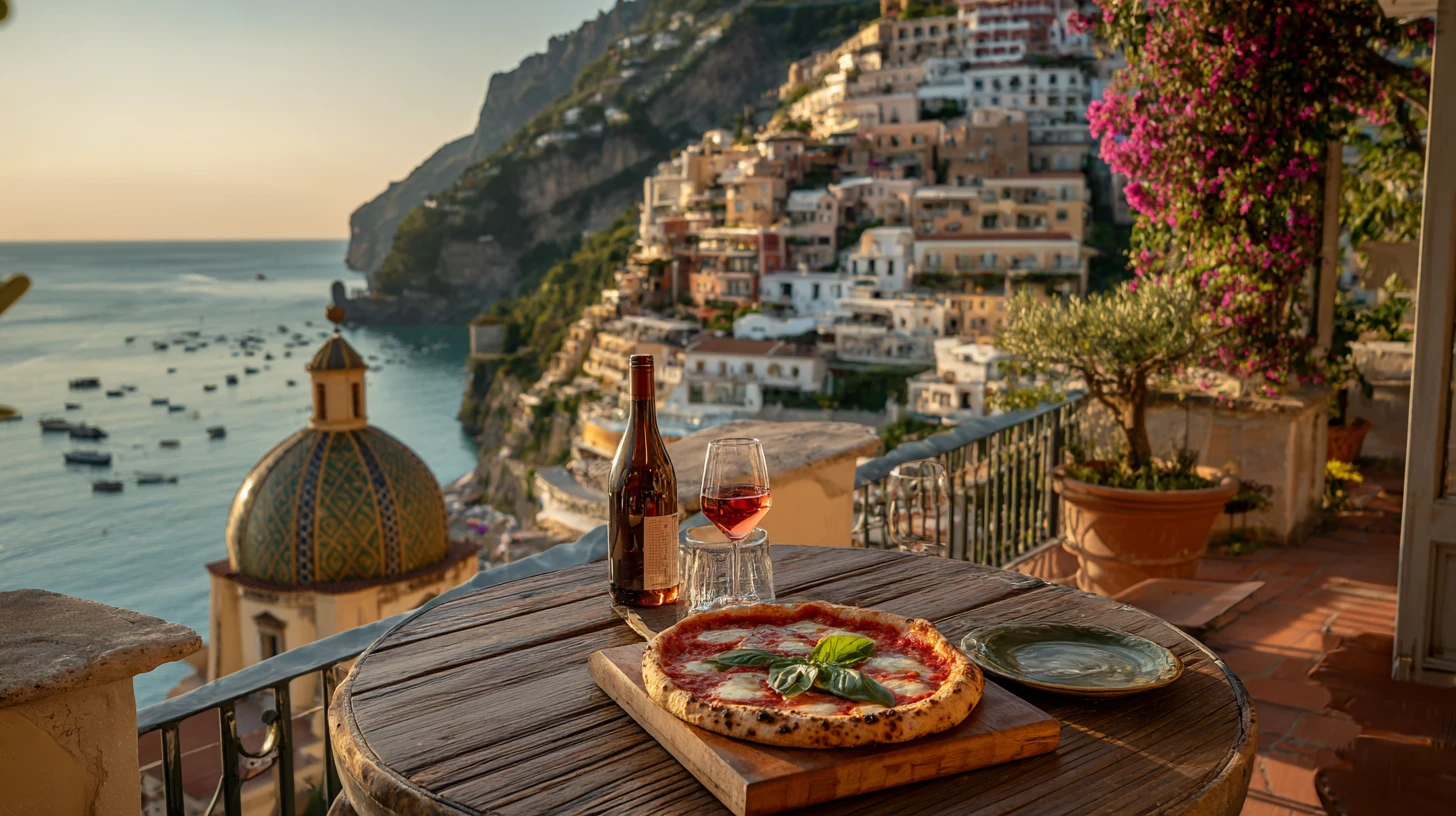
Pizza MargheritaPizza Margherita STG · Campania (Naples) |
WHEAT (dough) — STRUCTURAL DAIRY (mozzarella) — STRUCTURAL MODIFIABLE — SAFE PATH AVAILABLE | Pizza Margherita STG is STRUCTURAL wheat (dough) and dairy (mozzarella). For wheat-allergic and celiac travelers: AIC-certified pizzerias serve pizza senza glutine as a regular menu item — this is one of Italy's celiac infrastructure strengths. For dairy-allergic travelers: pizza marinara (tomato, garlic, oregano, olive oil — NO cheese) is the STRUCTURAL-safe alternative. Pizza marinara is the original Neapolitan pizza — older than Margherita — and is widely available. Cross-contact in wood-fired ovens is real; an AIC-certified pizzeria uses a dedicated senza-glutine peel and surface. | MODERATE |
Sarde in SaorSarde in Saor · Veneto (Venice) |
FISH (sardine) — STRUCTURAL TREE NUTS (pine nuts) — STRUCTURAL SULFITES (vinegar) ALLIUM (onion) | Sarde in saor is STRUCTURAL fish AND STRUCTURAL tree nut (pine nut) in the same dish — a rare double-allergen concentration. The Arab-Venetian sweet-sour technique pairs pine nut and raisin with the fish. Tree-nut-allergic travelers must avoid; fish-allergic travelers must avoid. Cicchetti (Venetian small plates) bar format means sarde in saor appears on shared platters alongside other cicchetti — cross-contact risk for travelers not ordering it themselves. | HIGH |
Gelato al PistacchioGelato al Pistacchio (di Bronte) · National (Sicily origin) |
TREE NUTS (pistacchio) — STRUCTURAL DAIRY (milk base) — STRUCTURAL EGG (some variants) MODIFIABLE — SAFE PATH AVAILABLE | Gelato al pistacchio is STRUCTURAL tree nut and dairy. The broader risk is CROSS-CONTACT in gelaterie: the same scoop, serving spatula, and cone-handling hands move between pistachio, hazelnut (nocciola), and other flavors. Even ordering a non-nut flavor (cioccolato, fragola) at a gelateria that also serves pistachio carries cross-contact risk. Tree-nut-allergic travelers should seek AIC-certified gelaterie or establishments with dedicated senza-frutta-a-guscio lines. | HIGH |
Venue Safety Profile
Italian venue tiers sort along two orthogonal dimensions: (1) tourist-corridor vs. local-neighborhood, and (2) canonical-recipe-defense strength. AIC-certified pizzerias and restaurants are the most allergen-reliable tier in Italy — documented, trained, audited. Modern restaurants, hotel kitchens, and corporate chains in Rome/Milan/Florence/Venice/Bologna are reliably compliant with EU-FIC disclosure. The trattoria tier — the dominant Italian venue type — is where the interesting communication work happens: kitchens defend canonical recipes, ingredient knowledge is generational rather than documented, and the matrice degli allergeni exists but may not be reflexively consulted. Agriturismo venues (farm-based dining, often in rural Tuscany/Umbria/Piemonte) are the highest-trust / highest-specificity tier — advance notice is essential, the ingredient sourcing is transparent, but the cook is also the owner and may not have restaurant-trained allergen protocols. Street food and pizza al taglio sit at the casual-entry tier. Luxury hotels operate international-standard protocols.
Contextual Intelligence — 2,800 years of history are on your plate
This section is not a standard cultural-context note — it is an editorial pillar. Italian cuisine is not a cuisine, it is twenty cuisines, and the allergen pattern of each is a direct function of who conquered, who traded, and what grew on the land. A traveler who understands that pine nut arrived with Magna Graecia, almond and pistachio with the Aghlabids, tomato with Columbian exchange, hazelnut with Savoyard Piemonte, and the canonical recipes of the DOP system with post-war Italian regulation — that traveler can predict the hidden vehicles at each regional transition. The food is the history.
Italian cuisine reflects 2,800 years of layered conquest and trade. Each layer contributed specific ingredients that persist in regional cuisine today, and the allergen pattern at each regional transition follows the historical layer: Magna Graecia (Greek colonial south, 8th c. BCE) = legume + olive + grain + fava; Imperial Rome (27 BCE–476 CE) = pork + offal + garum (fish sauce, ancestor of colatura); Arab Sicily (831–1091) = almond + pistachio + sesame + citrus + sweet-savory; Norman/Swabian/Aragonese South + Columbian exchange (1091 onward) = tomato; Medici Tuscany (14th–17th c.) = bread-built cucina povera; Venetian Republic (697–1797) = risotto + spice trade + sarde in saor (Arab-Venetian hybrid); Emilia-Romagna DOP corridor (medieval onward) = parmigiano + prosciutto + egg pasta; Savoyard Piemonte + Austro-Hungarian North (1714+) = hazelnut + butter + strudel + canederli; Ligurian pine nut coast (ancient + medieval) = pesto + pinoli; Modern Italy (1985 onward) = Agriturismo law, Slow Food movement, AIC celiac infrastructure, DOP/IGP system. Read the layer, predict the allergen.
Greek colonists established city-states across Southern Italy and Sicily beginning in the 8th century BCE — Syracuse, Paestum, Taranto, Reggio, Agrigento. They brought olive cultivation, grain agriculture (primarily barley and emmer wheat, later hard wheat), viticulture, and the Mediterranean legume tradition: fava, chickpea, lentil, cicerchia. The Pugliese dish fave e cicoria — fava bean purée with wild chicory — is the direct culinary descendant of a Greek colonial agricultural system that prioritized legumes as protein for farmers without access to livestock wealth. Pasta e fagioli, lagane (ancestor of tagliatelle), pane e olio — these are the oldest Italian dishes, and they are legume-forward, bread-forward, olive-oil-based. The Southern Italian and Sicilian coast still carries this DNA. Syracuse, Agrigento, Paestum, Taranto are archaeological anchor points for travelers who want to see the landscape that produced the cuisine. The sites are remarkable: the Greek Doric temples of Paestum and Agrigento are among the best-preserved in the Greek world, and the Greek Theatre of Syracuse hosts ancient Greek plays every summer.
Imperial Rome's culinary legacy to modern Italian cuisine is not the elaborate banqueting of Apicius — that was aristocratic spectacle. The enduring legacy is cura annonae (the grain dole) and the quinto quarto. The cura annonae was the imperial grain distribution system that fed Rome on wheat imported from Egypt and Spain; it made wheat bread the structural starch of the Roman diet and established wheat as the defining Italian grain. The quinto quarto (the fifth quarter) was the offal that slaughterhouse workers at Testaccio were paid in or could afford: heart, liver, kidney, tripe, tail, intestines, sweetbreads. Today's Roman cuisine still carries this tradition: pajata (milk-fed veal intestines with tomato), coratella (lamb offal), trippa alla romana (tripe with tomato and mint), coda alla vaccinara (oxtail). The Testaccio neighborhood of Rome is built around the former slaughterhouse and is the best ground-level introduction to quinto quarto cuisine; the Mercato di Testaccio and historic trattorie (Flavio al Velavevodetto, Checchino dal 1887) preserve the tradition.
Rome also inherited garum — the fermented fish sauce that was the universal Roman seasoning. Garum is the ancestor of colatura di alici, the amber fish sauce still made in Cetara on the Amalfi coast. The Romans seasoned everything with garum; today's Campanian pasta alla colatura (spaghetti with colatura, garlic, and chili) is the direct descendant. Pecorino romano — the sharp sheep's milk cheese — is also a Roman structural inheritance; the Four Roman Pastas (carbonara, cacio e pepe, amatriciana, gricia) all depend on it. Guanciale (cured pork cheek) is the pork product, distinct from pancetta.
Between 831 and 1091 CE, Sicily was under Aghlabid and Fatimid Arab rule. The Emirate of Sicily introduced ingredients and techniques that fundamentally restructured the island's cuisine and still define it today: almond, pistachio, sesame, citrus (lemon, bitter orange, later sweet orange), rice (the precursor of arancini), saffron, sugar cane (Sicily was the westernmost Arab sugar producer), pasta reale (marzipan technique), and the sweet-savory combination that threads through Sicilian cooking like no other Italian regional cuisine. Pasta con le sarde (Palermo — sardine + wild fennel + pine nut + raisin + saffron) combines fish with sweet and nutty elements in a way that is unmistakably Arab-Sicilian. Caponata (sweet-sour eggplant with capers and olives) follows the same sweet-sour logic. Cassata siciliana is marzipan-covered sponge cake — the almond paste technology is directly Arab. Cannoli use ricotta-filled fried shells; the pistachio or candied fruit garnish is the Arab inheritance.
Today's Sicilian allergen pattern is directly readable from this history. Pesto trapanese (Trapani) is almond-based pesto — a Sicilian answer to Ligurian pine-nut pesto. Pistacchio di Bronte DOP grows on Etna's volcanic slopes and appears in savory salumi, gelato, granita, and pestos. Mandorla di Avola is the Consortium-protected almond. Sesame appears in Palermo's mafaldine bread rings and some Sicilian taralli — an Arab bakery legacy nowhere else concentrated in Italy. Granita di mandorla (almond granita) and latte di mandorla (almond milk, a Sicilian drink predating modern plant-milk culture) use almond structurally.
Sites worth seeing for the culinary layer: Monreale Cathedral's Norman-Arab-Byzantine mosaics (Palermo), the Palazzo dei Normanni and Cappella Palatina, the Vucciria and Ballarò markets of Palermo (Arab-legacy souk markets), the Noto Valley's baroque towns rebuilt after the 1693 earthquake. For tree-nut-allergic travelers, Sicily is the single highest-exposure region in Italy — every regional cuisine carries almond, pistachio, or both.
Southern Italy after Arab rule cycled through Norman (1091–1194), Swabian Hohenstaufen (1194–1266), Angevin French (1266–1442), and Aragonese Spanish (1442–1734) dynasties. The most consequential culinary input of this long period came not from any dynasty but from the Columbian exchange: the tomato, domesticated in Mexico, arrived in Spain in the 16th century and reached Naples (then under Spanish Aragonese rule) by the late 16th century. Tomato was initially regarded as ornamental and suspect — a member of the deadly nightshade family — and did not become a culinary staple until the late 18th century. Pizza Margherita, the classic tomato-mozzarella-basil pizza, dates to 1889 (attributed to Raffaele Esposito preparing it for Queen Margherita of Savoy) but the tomato-mozzarella-basil logic had been building in Naples throughout the 19th century. Ragù napoletano, parmigiana di melanzane, pasta al pomodoro, pizza Napoletana — the entire Southern Italian tomato cuisine is a post-Columbian exchange development of roughly 250 years' depth, built on a Spanish Aragonese-mediated New World ingredient arriving in a Campanian kitchen that was already Arab-influenced for volume cooking and Greek-influenced for agriculture.
The Neapolitan pizza is UNESCO Intangible Cultural Heritage (Pizzaiuolo tradition, 2017). Pizza Napoletana STG is the Specialità Tradizionale Garantita designation: specific dough (00 flour, water, salt, yeast), specific topping ingredients (San Marzano DOP tomato, fior di latte or bufala DOP mozzarella, basil, olive oil), wood-fired at ~485°C for 60–90 seconds. Sfogliatella (the layered shell-shaped Neapolitan pastry) and pastiera (wheat-berry-and-ricotta Easter cake) are Campanian traditions. Ragù napoletano (long-cooked tomato-meat sauce) is structurally distinct from Bolognese ragù: Naples cooks the meat in the tomato; Bologna cooks the meat first, then adds tomato. Sfogliatella, sfincione (Sicilian onion-anchovy focaccia, Palermo), pane cunzato (Sicilian seasoned bread) trace to this layered historical period.
Medici-era Tuscany (and the broader Renaissance Italian city-state system) produced the richest visual and intellectual culture of the millennium — but the enduring culinary inheritance is not Renaissance court cuisine. It is cucina povera, the peasant cooking of rural Tuscany that codified the virtue of waste nothing. Tuscan unsalted bread (pane toscano) dates to a 12th-century dispute between Pisa and Florence over salt tax — Florence refused to use salted bread, and the tradition stuck. Stale pane toscano became the foundation of panzanella (soaked bread salad with tomato, cucumber, onion, basil — summer dish), ribollita (reboiled bread-and-vegetable soup with cannellini beans and cavolo nero — winter dish), pappa al pomodoro (bread-and-tomato porridge, summer), and acquacotta (bread-broth soup, varies by area). These dishes are not dishes with bread added — they are bread transformed into dishes. Cacciucco (Livornese multi-fish stew) uses bread to thicken the broth. Bistecca alla fiorentina (grilled Chianina beef T-bone, only salt and pepper) is the Tuscan wealth exception — the rural poor ate bread, the landed nobility ate Chianina beef.
Umbria extends the Central Italian cucina povera tradition with black truffle (Norcia), lentils of Castelluccio (Slow Food Presidium), wild boar (cinghiale), porchetta (Ariccia in Lazio is the canonical producer, but Umbrian porchetta is widespread). Marche adds olive ascolane (fried stuffed olives) and brodetto (multi-fish stew of the Adriatic coast, distinct from Livornese cacciucco).
The allergen pattern is wheat-structural (Tuscan cucina povera is bread-BUILT; no gluten-free substitution preserves the dish), legume-structural in Tuscan ribollita (cannellini, borlotti) and Umbrian lentil dishes, olive oil-based (Tuscan olive oil is Italy's most prestigious — DOP Chianti Classico, DOP Terre di Siena). Pecorino toscano DOP and pecorino romano both appear; dairy-structural. Tree nut exposure is moderate (pine nut in some pestos, walnut in some breads, chestnut in Tuscan-Apennine mountain cuisine — castagnaccio is a chestnut flour cake). Sites for the layer: Florence's historic center (UNESCO), Siena, San Gimignano, Val d'Orcia, Pienza (the Renaissance-planned 'ideal city' and Pecorino di Pienza DOP producer), Lucca's city walls, Cortona.
The Venetian Republic ran the spice trade into Europe for the better part of a thousand years — pepper, cinnamon, nutmeg, cloves, saffron, and the sugar that Sicily also produced. Venice's culinary inheritance reflects this: Venetian cuisine uses sweet-sour combinations (the Arab-Venetian hybrid visible in sarde in saor — fried sardines with onion, pine nut, raisin, vinegar), spices as structural seasoning (risotto al nero di seppia — squid ink risotto), and the risotto tradition itself. Rice cultivation was introduced to Northern Italy during the Arab period (via Sicily and Spain) and became a Venetian and Lombard structural grain by the 15th century. Vialone Nano (the short-medium-grain Po Valley rice) and Carnaroli (the king of risotto rices) are Italian cultivars; risotto alla veneziana, risi e bisi (Venetian rice and peas — the traditional dish of the Doge's April 25th feast of St. Mark), risotto al radicchio, sarde in saor, bigoli in salsa (dark wheat pasta with anchovy-onion sauce), baccalà mantecato (whipped salt cod), fegato alla veneziana (calf's liver with onion) are all defining Venetian plates.
Cicchetti culture — the Venetian small-plates tradition served in bàcari wine bars — is comparable in function to Spanish tapas but with a Venetian allergen pattern: polpette (meatballs sometimes with pine nut), sarde in saor (pine nut + fish), baccalà mantecato (fish), polpettine di tonno (tuna balls), moscardini (octopus), capesante al forno (scallops). An allergic traveler navigating a cicchetti crawl in Venice must verify each plate individually — the shared-board format creates cross-contact.
Friuli-Venezia Giulia, east of Venice, carries Slovenian-Austrian influence: gnocchi di susine (plum dumplings), frico (cheese-and-potato pancake), San Daniele prosciutto DOP, Terrano wine. Trentino-Alto Adige and South Tyrol add Austrian-German ingredients: canederli (bread dumplings — cross-contact sibling to canederli with speck), strudel, speck dell'Alto Adige IGP, krapfen.
The Po Valley — Emilia-Romagna and the broader Northern river plain — is the densest concentration of DOP/IGP food products in Italy, and possibly the world. Parmigiano Reggiano DOP has been produced continuously in the Parma-Reggio Emilia-Modena corridor since the 12th century; the Benedictine and Cistercian monasteries developed the long-aged cheese technology. Prosciutto di Parma DOP and Prosciutto di San Daniele DOP (the latter in Friuli) are air-cured hams with Consortium-protected processes. Mortadella Bologna IGP (often with pistachio inclusions — the hidden-vehicle trap this page threads through), Culatello di Zibello DOP (the king of cured pork, from the Po River fog zone), Aceto Balsamico Tradizionale di Modena DOP and Tradizionale di Reggio Emilia DOP (the true aged balsamic, 12+ years in wooden barrels — distinct from the commercial Aceto Balsamico di Modena IGP). Tortellini in brodo (Bologna), tagliatelle al ragù (the correct name — not 'spaghetti bolognese,' which is an Anglo-American invention), lasagne alla bolognese, ravioli di zucca (Mantova — Lombard variant with squash), cappellacci di zucca (Ferrara). The egg-pasta tradition of Emilia-Romagna is the structural wheat+egg double-allergen concentration of the page.
Northern Lombardy's Po Valley adds risotto alla milanese (saffron + parmigiano + butter mantecatura), cotoletta alla milanese (breaded veal chop, cousin to Wiener schnitzel), ossobuco (veal shank), panettone (Christmas yeasted sweet bread with raisins and candied citrus — wheat + egg + dairy + sometimes tree nut). Mantova and Cremona add mostarda (fruit preserved with mustard syrup — a medieval preservation technique), torrone (nougat — hazelnut or almond), sbrisolona (crumbly almond cake).
Piemonte was the Savoyard seat from the 11th century through Italian unification (1861), and the House of Savoy brought French court influence (elaborate sauces, butter-based cooking, wine pairing culture) alongside native Piemontese traditions. The Langhe and Monferrato hills are hazelnut country — Nocciola del Piemonte IGP (Tonda Gentile delle Langhe cultivar) is the world's benchmark hazelnut. Ferrero's headquarters is in Alba; Nutella, gianduja, Ferrero Rocher, baci di dama, torta di nocciole, torrone di nocciola, and bonet (Piemontese rum-chocolate-amaretto custard with cream and crushed biscotti — tree nut in the biscotti) are the structural hazelnut dishes. Bagna cauda — the communal anchovy-garlic-olive oil dip — is the hidden-fish Piemontese signature. Vitello tonnato pairs poached veal with tuna-anchovy-mayonnaise sauce — another hidden-fish plate. Agnolotti del plin (small hand-pinched filled pasta), tajarin (thin egg pasta, often served with butter and white truffle), brasato al Barolo (beef braised in Barolo wine — structural sulfite), risotto con tartufo bianco d'Alba (white truffle risotto — the Piedmontese autumn crown). Barolo, Barbaresco, Barbera, Dolcetto, Nebbiolo: the Piedmontese wine region.
Trentino-Alto Adige and Friuli — the Northeast Italian Alpine and Alpine-approach region — carries strong Austro-Hungarian influence following the 1866 Third Italian War of Independence and the 1919 transfer of South Tyrol to Italy. Canederli (Knödel — bread dumplings, often with speck or cheese), strudel di mele (apple strudel), speck dell'Alto Adige IGP (juniper-cured cold-smoked pork), wurstel, krapfen (Berliner — jam doughnut), würste sausages. The German-Italian bilingual zone (Bolzano/Bozen, Merano/Meran, Bressanone/Brixen) provides a distinct Italian cuisine that overlaps more with Austrian cooking than with any other Italian region. Valle d'Aosta adds fondue (fonduta valdostana — parallel to Swiss fondue but with Fontina DOP) and butter-rich mountain cuisine.
Liguria — the thin arc of terraced coastline between France and Tuscany — is the structural heart of Italy's pine nut layer. Pinus pinea (the Mediterranean stone pine) grows wild and cultivated along the Ligurian and Tyrrhenian coast; the pine nut has been harvested here since the Roman period and is the single defining tree nut of the regional cuisine. Pesto alla genovese DOP is the Consortium-protected pesto recipe: Genovese basil, pine nuts, garlic, Parmigiano Reggiano DOP, Pecorino Fiore Sardo DOP, extra virgin olive oil (Ligurian Taggiasca preferred), coarse salt, hand-pounded in a marble mortar. The Consortium lock makes pesto Genovese DOP the most strictly defined of Italy's pasta sauces — what you see in the mortar is what the Regulation requires.
Liguria also produces focaccia genovese (flat yeasted olive oil bread — Genova's breakfast), focaccia di Recco (cheese-filled thin focaccia), farinata (chickpea flour flatbread — naturally gluten-free, cooked in wood-fired ovens, a Ligurian-Tuscan Riviera specialty), pansotti al sugo di noci (herb-filled pasta with walnut sauce — double tree nut with pine nut in pesto and walnut in the sugo di noci), cappon magro (elaborate fish-and-vegetable composition), torta pasqualina (Easter spinach-ricotta-egg pie in many thin pastry layers).
Ligurian cuisine is also Tyrrhenian-coastal with strong seafood presence: acciughe (anchovies) are structural — acciughe al verde (anchovies with parsley-garlic sauce), cappon magro (anchovy layer), buridda (Ligurian fish stew with tomato and olives). Pissaladière (the Niçoise onion-anchovy flatbread — a cross-border Italian-French dish) appears in western Liguria.
The final culinary layer of Italy is regulatory and institutional, and it is the one that most directly shapes the traveler experience. Four developments post-1980 transformed how Italian food is produced, protected, and communicated: (1) The Agriturismo Law (Legge 730/1985) codified farm-stay dining — working farms could legally offer meals to the public using their own produce and a short-distance network. Tuscany and Umbria became the early centers; Piemonte, Puglia, and Sicily followed. Agriturismi are now the highest-trust/highest-specificity dining tier for allergic travelers with advance notice. (2) Slow Food was founded in Bra (Piemonte) in 1986 by Carlo Petrini as a direct response to McDonald's opening near the Spanish Steps in Rome; the movement codified the 'good, clean, fair' principle and established Presidi (Slow Food Presidium list — endangered traditional food products like Castelluccio lentils, Lardo di Colonnata, Pistacchio di Bronte, Mandorla di Avola). (3) AIC (Associazione Italiana Celiachia) was founded in 1979; by the 2000s the AFC-certified venue network had grown to 4,000+ restaurants, pizzerias, and hotels with documented celiac-safe protocols. The spiga barrata mark is nationally recognized. Italy's celiac infrastructure is the best in the world. (4) The DOP/IGP system — descended from Roman-era cura annonae and medieval Venetian Republic product regulation — was formalized by EU Regulation 2081/92 and refined over the following decades. 300+ Italian DOPs protect named regional products from Parmigiano Reggiano to Pesto Genovese to Pistacchio di Bronte. For allergic travelers, DOP is an asset: a DOP product has a legally locked ingredient list; a non-DOP variant requires interrogation.
Modern Italian dining is the negotiation of these four layers: a Tuscan agriturismo serving AIC-certified gluten-free pasta Genovese made with the Consortium-locked Pesto Genovese DOP recipe in the middle of a Slow Food Presidium-listed olive oil region — this is the contemporary Italian dining context for an allergic traveler, and it is better than any other European country can offer if the card names the specific ingredients with the specific Italian terms.
Sites representative of the modern layer: Bra (Piemonte, Slow Food HQ and Università di Scienze Gastronomiche), Alba (Piemonte, Ferrero HQ and Langhe wine region), Parma (UNESCO Creative City of Gastronomy, Parmigiano and Prosciutto Consortium HQ), Bologna (FICO Eataly World food park, Mercato di Mezzo), any working agriturismo in Tuscany/Umbria/Piemonte/Puglia.
Communication & Etiquette for Allergic Travelers
Italian dining etiquette for allergic travelers runs on three principles: (1) hand the Italian card BEFORE ordering, not after — specificity signals competence and activates genuine kitchen helpfulness; (2) respect the canonical recipe — 'pesto senza pinoli' is not pesto, order a different dish rather than negotiate a modification; (3) use the matrice degli allergeni by name — asking for the allergen matrix in its Italian legal term is the single highest-leverage phrase an allergic traveler can use in an Italian venue.
Essential Safety Phrases
A curated set of Italian phrases for the specific kitchen encounters an Italy traveler faces: declaring the allergy to a trattoria server, asking for the matrice degli allergeni by name (the phrase that signals you understand Italian kitchen practice), asking about pinoli in pesto and pistacchio in mortadella (the signature Italian hidden-vehicle questions), confirming that a dish truly excludes the allergen, and emergency. Italian phonetics are relatively predictable for English speakers compared to Slavic or Asian languages, but stress placement and double consonants matter.
Allergy-Specific Packing List for Italy
Packing for Italy follows the EU-travel baseline — EpiPen (plus spare), prescription documentation, antihistamines, the Italian allergy card printed — with four Italy-specific additions: the AIC mobile app for celiac travelers, Italian and English translation of prescription documentation, a list of the Italian ingredient names for your specific allergens, and awareness of the spiga barrata mark for recognizing AIC-certified venues.
Emergency Infrastructure
Italy operates the EU universal emergency number 112 (NUE) with multilingual dispatchers (Italian, English, French, German, Spanish, Arabic). The Servizio Sanitario Nazionale (SSN) provides universal coverage and high-quality emergency medicine. Response time in major cities (Rome, Milan, Florence, Naples, Venice, Bologna) is 8-15 minutes; rural Tuscany, Umbria, inland Sicily, inland Sardinia, Alpine valleys, and island stays can extend to 20-40 minutes with helicopter evacuation for serious cases. All Italian emergency rooms (pronto soccorso) stock epinephrine.
8-15 min in major cities; 20-40 min in rural areas; helicopter evacuation for Alpine valleys and remote islands. Multilingual dispatchers via NUE 112 system: Italian, English, French, German, Spanish, Arabic.
Allergen Labeling Law & EpiPen Import
Two pieces of preparation that travel together: the EU FIC regulatory framework that requires every Italian food business to disclose allergens, and the AIFA-governed rules for bringing your epinephrine auto-injector across the border. The law tells you what kitchens must show you; the medication protocol tells you what to carry in case the law fails at 11pm in a rural agriturismo.
Allergen Labeling Law
Italy applies EU Regulation 1169/2011 (Food Information to Consumers, FIC) transposed via Decreto Legislativo 231/2017. The 14 mandatory EU allergens must be declared on packaged goods and available in writing at all restaurants, trattorie, pizzerie, agriturismi, bars serving food, and catering operations. Enforcement by NAS (Carabinieri Command for Health Protection) and local ASL inspectors. This is one of the world's strongest regulatory frameworks for allergen disclosure.
Bringing Your EpiPen to Italy
EpiPen and allergy medication import to Italy is permitted with documentation under EU patient mobility framework and AIFA (Agenzia Italiana del Farmaco) guidance. Italian pharmacy-dispensed epinephrine brands are Fastjekt (Meda) and Jext — both require local prescription. Travelers should carry their own auto-injector supply rather than rely on Italian availability.
Traveler Voices — Community Reports
Italy field reports from Prepared Travel readers and the broader food-allergy travel community. The accounts below are anonymized — names and identifying details have been changed to protect traveler privacy — and the scenarios are drawn from documented Italian-travel allergy experience patterns. Have your own Italy story? Submit via the feedback link at the bottom of the page.
Sources, Citations & Data Confidence
Prepared Travel’s Italy destination intelligence is compiled from EU and Italian regulatory documents, AIC celiac infrastructure sources, Consorzio DOP/IGP disciplinari, academic clinical literature, hospital directories, and travel community reports. Each claim references a numbered citation — sources are listed below with confidence ratings.
| Section | Confidence | Note |
|---|---|---|
| meta (emergency numbers, difficulty, labeling law basics) | HIGH | EU FIC, 112 NUE, D.Lgs. 231/2017 are primary government sources. Difficulty score is editorial assignment requiring human review. |
| editorial_through_line | HIGH | Pine nut / pesto / DOP Consortium recipe documented via Consorzio del Pesto Genovese. Tree nut regional distribution verified via Ministry of Agriculture DOP registry and Slow Food Presidia. |
| regions | HIGH | 6 culinary macro-regions based on historical-regional cuisine analysis. Italian DOP/IGP distribution by region verified via MASAF registry. |
| allergen_index | HIGH | Italian ingredient names, hidden vehicles, and DOP Consortium recipes verified via primary sources. Clinical prevalence claim on pine nut sensitization cites Burastero et al. (MEDIUM — single academic source). |
| dishes | HIGH | STRUCTURAL/INCIDENTAL classification based on canonical regional recipes and DOP/IGP Consortium specifications. All 13 dishes verified against regional cuisine literature. |
| venues | HIGH | Trattoria, agriturismo, AIC-certified tier descriptions verified via AIC, Italian Agriturismo Law, and on-the-ground reference. Spiga barrata mark recognition is AIC primary source. |
| contextual_section (food history) | MEDIUM | Historical claims are from well-established scholarship but not formally cited in each subsection. Historical-culinary synthesis draws on: Montanari 'Italian Cuisine: A Cultural History,' Riley 'The Oxford Companion to Italian Food,' Capatti-Montanari 'Italian Cuisine: A Cultural History.' Recommend formal citation before publishing — see generation_notes. |
| emergency (hospitals) | MEDIUM | Hospital addresses and operational status require human verification — names and cities verified against public hospital registries; specific addresses should be verified against current hospital websites before publishing. |
| medications (EpiPen import, AIFA) | MEDIUM | AIFA personal medication import framework verified; specific guidance for EpiPen should be re-verified against current AIFA published guidance before publishing. Fastjekt and Jext brand availability current as of 2024. |
| labeling_law (DOP, edge cases) | HIGH | EU FIC, D.Lgs. 231/2017, Consortium recipes primary government sources. Pine nut classification as 'seed' not 'tree nut' under EU FIC is a regulatory fact worth highlighting. |
| traveler_voices | MEDIUM | First-person accounts from travelers and the broader food-allergy travel community. Names and identifying details are changed to protect traveler privacy; scenarios reflect documented Italian-travel allergy experience patterns. New accounts are added as submissions arrive via the feedback link. |
La tavola is waiting. Go prepared.
Generate your Italy food allergy card in Italian — naming pinoli, nocciole, mandorle, pistacchio, parmigiano, pecorino, uovo, and the 14 mandatory EU allergens. Your Italy allergy translation card: in the vocabulary that closes the gap between 'frutta a guscio' and pinoli — the specificity Italian kitchens respect.