Peru scores 6 out of 10 on the Prepared Travel difficulty scale — moderate, but driven by weak legal protection and uneven geography, not by cuisine alone. Peru has no mandatory allergen-disclosure law: packaged labeling follows Codex guidance, the black octágono warnings cover sugar and fat rather than allergens, and restaurants owe you nothing in writing. The structural friction is a single ingredient used as cover: ají amarillo (yellow chili) is the base of the national creamy-sauce family, and the sauces built on it read as merely 'spicy' while structurally carrying leche evaporada (evaporated milk), soda crackers, and — in ocopa — maní (peanut). A traveler who clears 'no chili' still gets dosed with dairy, wheat, and nuts. Papa a la huancaína, ají de gallina, and ocopa are the flagship hidden vehicles; on the coast, cebiche and leche de tigre add fish and shellfish. Lima's kitchens handle allergies well; Cusco, Arequipa, the Amazon, and the multi-day Inca Trail do not. A Peruvian-Spanish card naming ají amarillo, leche evaporada, maní, and culantro directly is the single highest-leverage prep step.
🇵🇪 Food & Culture
Peru's most-loved foods hide their allergens behind color and heat. The criollo kitchen is built on a family of creamy chili sauces — huancaína, ají de gallina, ocopa — where ají amarillo provides the unmistakable yellow and the real payload is evaporated milk, queso fresco, soda crackers, and ground peanut. None of it announces itself as dairy or nuts. Layered on top is chifa, the Peruvian-Chinese tradition that put sillao (soy sauce — soy and wheat) into national dishes like lomo saltado and arroz chaufa, and the coast's cebiche culture, where raw fish and leche de tigre define a cuisine celebrated worldwide. The result is a country where the dishes a visitor most wants to try — and the kitchens least likely to think of them as risky — are exactly where dairy, peanut, soy, and fish hide in plain sight.
Core Safety Metrics — hover each for full explanation
Overall Allergy Travel Difficulty
6/10
Moderate — Lima navigable; highlands, Amazon, and the Inca Trail need real preparation
Peru scores 6 because the risk is geographically uneven and legally unprotected. Lima's world-class kitchens (Central, Maido, Astrid y Gastón, and the chef-driven cevicherías and bistros of Miraflores and Barranco) handle gluten-free, dairy-free, and severe-allergy requests in English. Outside Lima — Cusco, Arequipa's picanterías, the Amazon, and the multi-day Inca Trail — kitchen allergen awareness drops sharply and there is no disclosure law to fall back on. The defining hidden risk is ají amarillo: the yellow chili base structurally embedded in the national creamy sauces, never regarded as an allergen by the cooks preparing it, and carrying dairy, wheat, and peanut behind a 'spicy' read.
Allergen Labeling Law Strength
2/10
No mandatory allergen-disclosure regime — Codex-aligned guidance only, no restaurant law
Peru has no EU-FIC equivalent. Packaged-food allergen labeling follows Codex Alimentarius guidance rather than a binding 14-allergen mandate, and restaurants carry no allergen-disclosure obligation. The only compulsory front-of-package marks come from Ley N.º 30021 (Ley de Promoción de la Alimentación Saludable) — the black octágono warnings flag high sugar, sodium, and saturated or trans fat; they are not allergen warnings and a traveler who reads them as such will be misled. INACAL oversees labeling and DIGESA food safety, but neither mandates the allergen-box disclosure EU travelers are used to. In practice you read the Ingredientes: list directly and rely on a Spanish card at the table.1
Kitchen Awareness
4/10
High in Lima; low elsewhere — ají amarillo isn't understood as an allergen risk
Awareness is bimodal. Lima — and especially the fine-dining and tourist-corridor scene of Miraflores, Barranco, and San Isidro — regularly fields allergy and intolerance requests with English-fluent staff. Cusco, Arequipa, Puno, and Amazon kitchens, plus market menú stalls, operate on tradition; the concept that ají amarillo or the cream in a huancaína could harm someone is simply not part of the working frame. A written card outperforms verbal disclosure even where English is good, because the risk terms are cuisine-specific. 'Soy alérgico/a — sin ají amarillo, sin leche evaporada, sin maní', named item by item, is the working sentence.6
Hidden Allergen Vehicle Density
7/10
Elevated — the creamy yellow sauces hide dairy, wheat, and peanut behind 'spicy'
The trap is the ají amarillo sauce family. Papa a la huancaína and ají de gallina are built on leche evaporada (evaporated milk), queso fresco, and galleta de soda (soda crackers, wheat); ocopa adds maní (peanut). They present as simple spicy sauces, not creamy or nutty ones. Causa binds potato with the same chili-and-mayo base; leche de tigre is ceviche's fish-and-citrus marinade; chicha de jora (fermented corn) hides in marinades and stews; achiote colors many; and chifa cooking leans on sillao (soy sauce — soy + wheat). Portugal sits lower; Peru's structural sauce layer puts it in the mid-upper band.2
Emergency Response Quality
5/10
Variable — strong private capacity in Lima; limited and slow in the highlands and Amazon
Lima has genuine emergency capacity, concentrated in private clinics (Clínica Anglo Americana, Clínica Ricardo Palma, Clínica Internacional) that expect upfront payment or insurance; public EsSalud and MINSA hospitals carry the rest. Outside the capital, response times lengthen and stocked epinephrine is far less certain — Cusco and Arequipa are workable, but the Sacred Valley, the Amazon, and the Inca Trail mean hours to days from advanced care, compounded by altitude. Carry more than one auto-injector and treat self-carry as the primary plan. The exact national emergency-dispatch number and its English-language support are verified in the Emergency section.7
Difficulty in context — how Peru compares globally6 / 10 Moderate
🇩🇰 Denmark 2🇦🇺 Australia 3🇵🇪 Peru 6🇯🇵 Japan 7🇮🇳 India 9
🇵🇪
On the Ground
Peru feels manageable in Lima because the best kitchens understand severe allergy and the staff speak English. It gets harder the moment the risk term is cuisine-specific — especially ají amarillo and the leche evaporada behind a huancaína — because nobody in the kitchen files those as allergens. A traveler who hands over a Spanish card naming ají amarillo, leche evaporada, maní, and culantro gets treated with the seriousness the request deserves. The same traveler saying 'I'm allergic to dairy' at a Cusco lunch counter gets a cook who nods, means well, and serves the huancaína anyway, because to them it is just a yellow sauce. The gap is not intention; it is specificity.
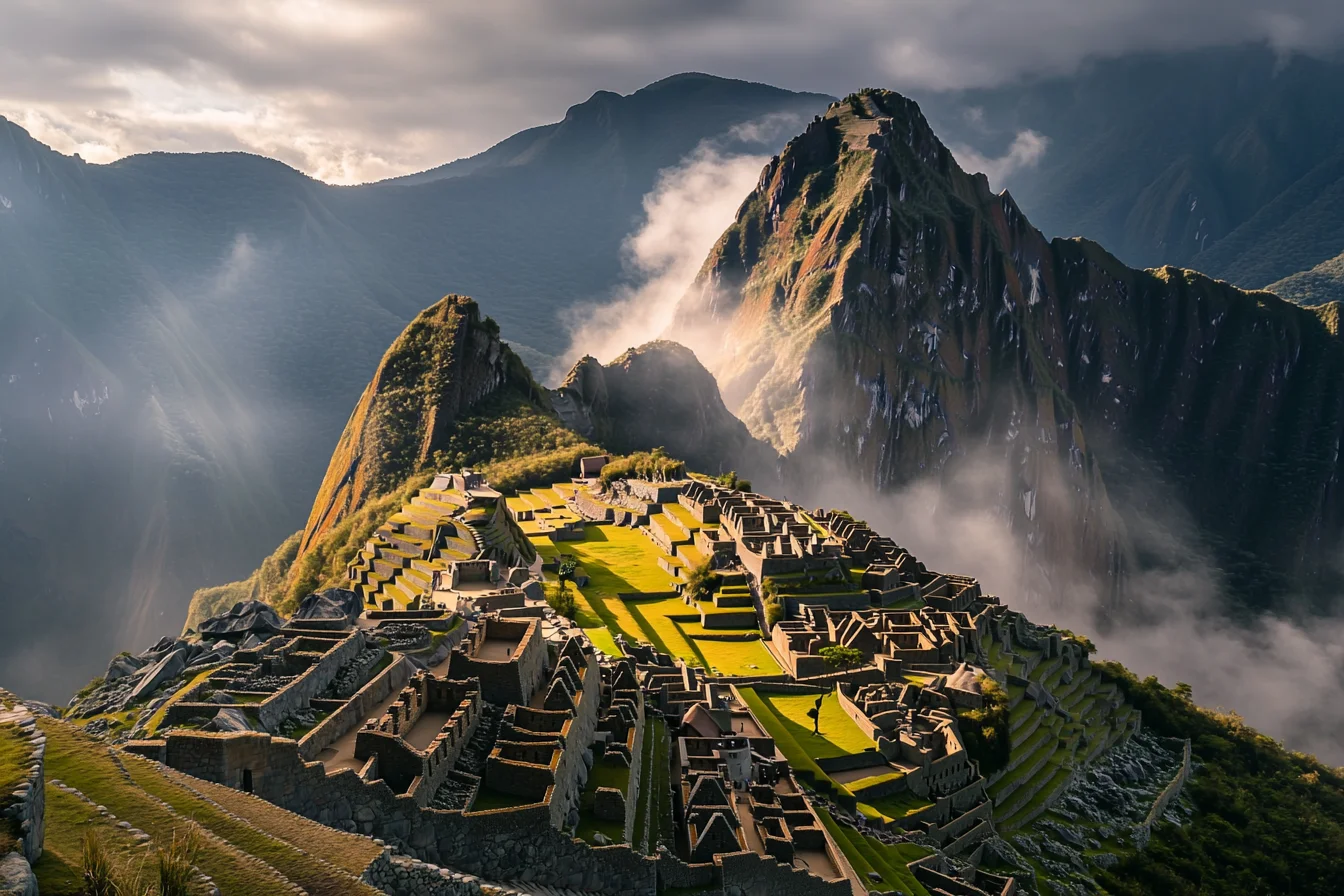
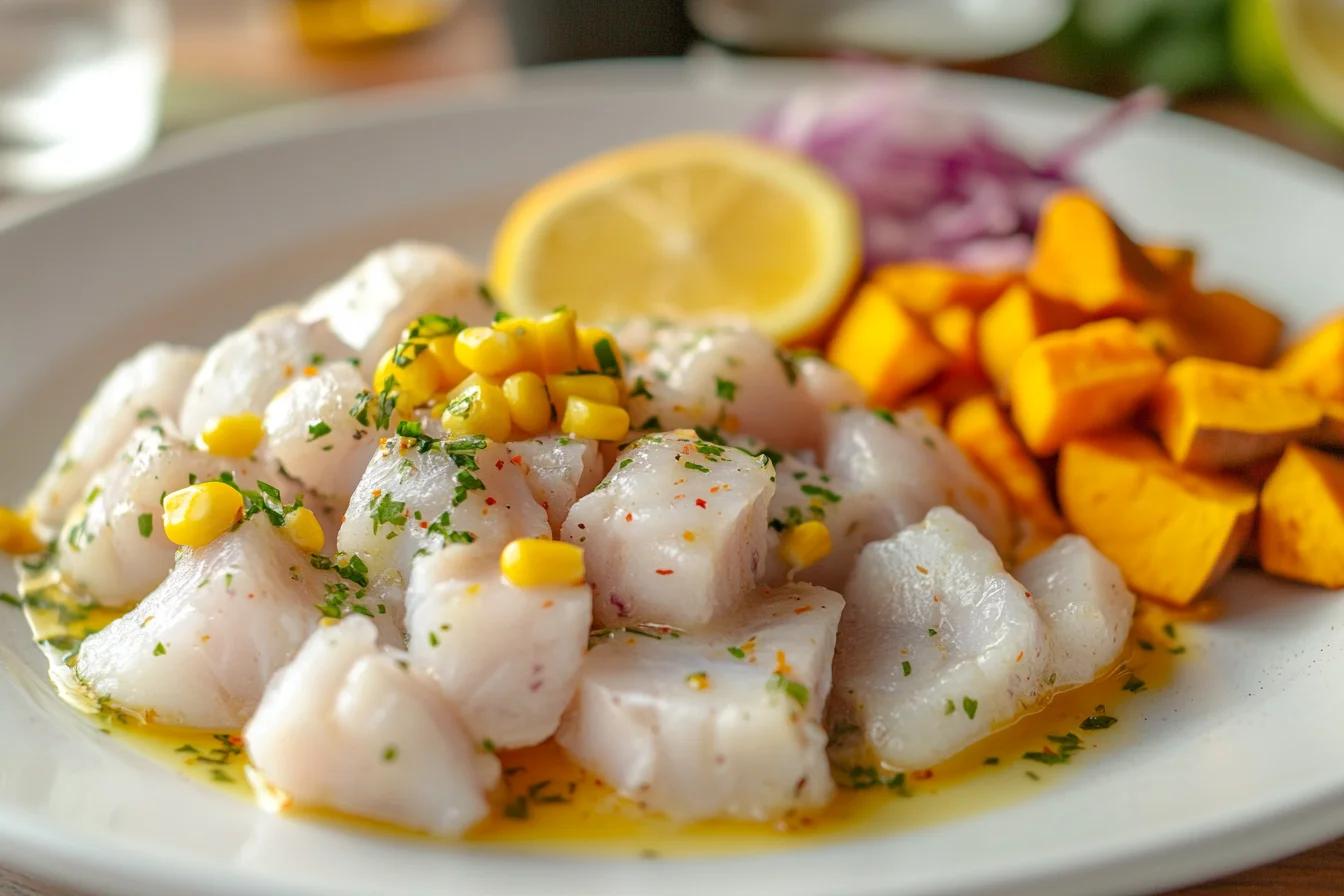
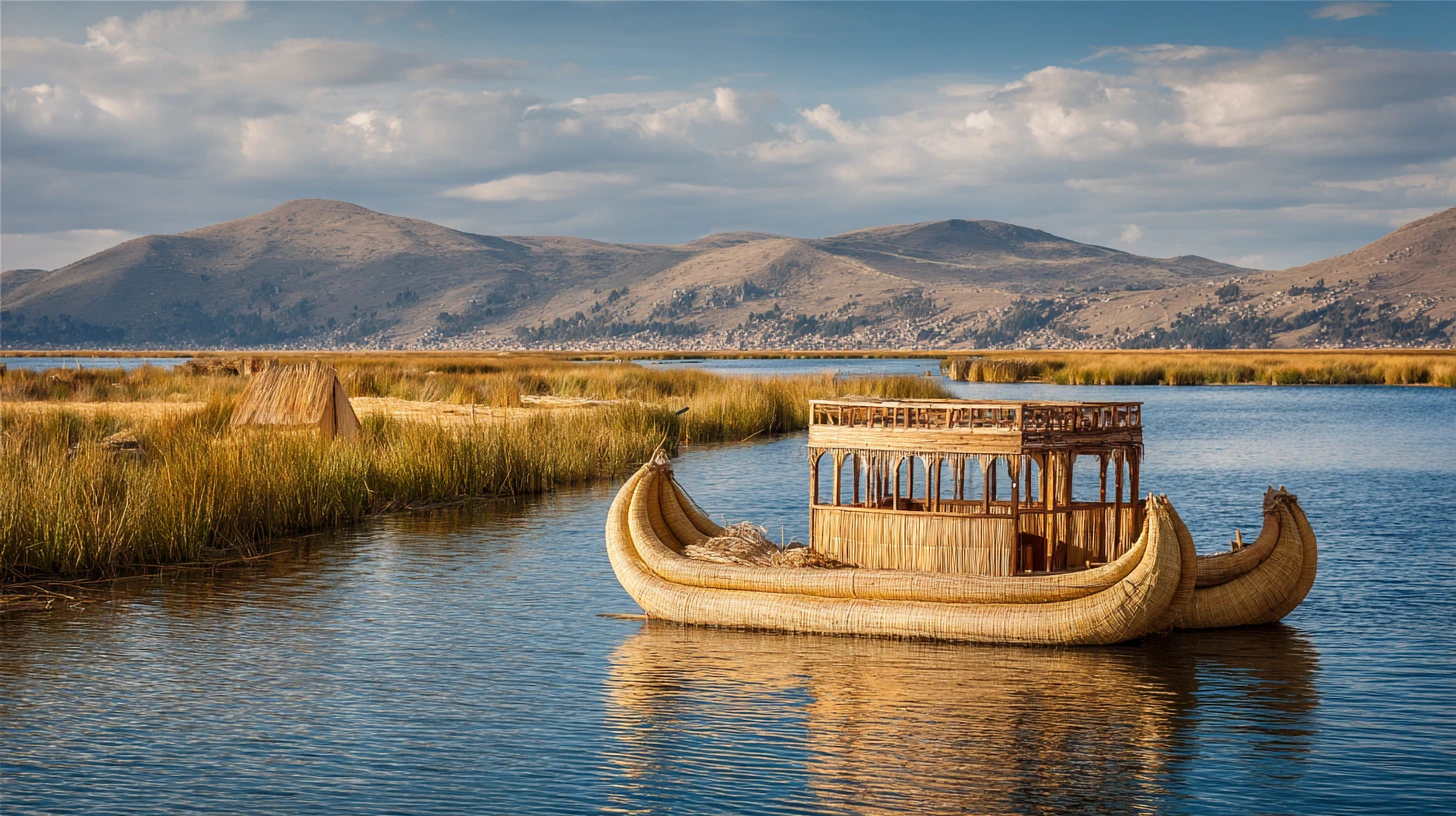
🏔️ Machu Picchu · Tap to read🍲 Papa a la huancaína · Tap to read🛶 Lake Titicaca · Tap to read
Geography
Regional Allergen Risk Map
Peru's allergy map splits by kitchen sophistication and distance from care. Lima and the coast are easiest — the best restaurant awareness in the country, fast private hospitals — though cebiche culture raises fish-and-shellfish risk. Cusco and the Sacred Valley are tourist-equipped but highland kitchens lean on creamy sauces, and the region is the gateway to the Inca Trail. Arequipa and the south run on peanut-and-dairy picantería cooking. Lake Titicaca, the Amazon, and the high Andes are the hardest — remote, Spanish/Quechua-only, with slow evacuation and altitude compounding any reaction.
Loading region map…
↑ Hover a region for detail
🌊
Lima & Central Coast · Lima y la Costa
EASIER
Metropolitan Lima is the country's culinary capital and safest base — world-class chef-driven restaurants with allergen fluency, English-speaking staff in Miraflores and Barranco, and the fastest private hospitals. Beyond the capital, the central coast (Ica, Paracas) is more variable.
Cusco & the Sacred Valley · Cusco y el Valle Sagrado
MODERATE
Heavily touristed and English-equipped in the centre and Aguas Calientes, but highland kitchens run on ají-amarillo creamy sauces and the region is the launch point for the Inca Trail, where food control disappears. Emergency care exists in Cusco city; the Sacred Valley and trail are slower and higher.
Picantería country, where the ají amarillo sauce family turns dairy- and peanut-heavy. Ocopa (peanut + evaporated milk), rocoto relleno (cheese + egg custard + beef), and chicha de jora are core, and traditional eateries keep no allergen documentation. Gateway to the Colca Canyon, where access thins. The highest everyday peanut-and-dairy load in Peru.
Lake Titicaca & Puno (altiplano) · Lago Titicaca y Puno
HARDER
High-altitude altiplano around 3,800 m, Aymara- and Quechua-speaking, with limited dining and limited medical capacity. Homestays on the islands cook simple but uncontrolled communal food. Altitude itself complicates a reaction and evacuation is slow.
A distinct cuisine — juanes (rice bundles), tacacho, river fish, exotic fruit — and the most remote emergency picture in Peru, with serious cases routed to Lima by air. Lodges cater set menus; brief them in advance. Unfamiliar ingredients make label-reading instinct unreliable.
The Northern Coast (Trujillo, Chiclayo, Piura) · La Costa Norte
MODERATE
The heartland of cebiche and northern criollo cooking — seco de cabrito, arroz con pato (culantro-heavy), and shellfish-rich cebiche. Less English than Lima, strong seafood density. A coriander- or shellfish-allergic traveler should be especially careful here.
Peru's allergen landscape is dairy-dense, chili-dense, and peanut-present, with the danger concentrated in the creamy-sauce family rather than spread evenly. The number-one practical risk is milk — evaporated milk and queso fresco are structural in the sauces that define the cuisine, and they never read as 'creamy.' Ají amarillo (a fruits-&-vegetables-class chili) is the through-line because it is the cover those sauces hide behind. Peanut rides ocopa, soy and wheat ride chifa's sillao, and the coast adds fish and shellfish. Because no law forces disclosure, every score below assumes the kitchen will not volunteer the information.
Tap an allergen chip to filter the table below
Filter:
Allergen
Supply Prevalence
Hidden Risk
Cross-Contact
Restaurant Risk
Milk/Dairy⚠leche evaporada · queso fresco · huancaína · ají de gallina · ocopa · rocoto relleno · No mandate (Codex)
Peanut⚠maní · ocopa · salsa de maní · trail snacks · No mandate (Codex)
6
8
5
7
Fish⚠pescado · cebiche · tiradito · leche de tigre · bonito · sudado · No mandate (Codex)
9
7
8
8
Shellfish⚠mariscos · camarón · langostino · cebiche mixto · chupe de camarones · No mandate (Codex)
7
6
8
8
Wheat/Gluten Grains⚠trigo · galleta de soda (en salsas) · sillao · pan · tallarines · No mandate (Codex)
7
7
5
6
Soy⚠soya · sillao (salsa de soya) · chifa · lomo saltado · chaufa · No mandate (Codex)
6
7
6
7
Egghuevo · causa · mayonesa · arroz chaufa · cremas · No mandate (Codex)
7
5
4
5
Corn/Ricechoclo · chicha de jora · tamal · mote · cancha · arroz · No mandate (Codex)
9
4
3
4
Animal Proteins/Meatsres · pollo · corazón de res (anticucho) · cerdo · cuy · alpaca · No mandate (Codex)
9
3
5
4
Sesameajonjolí · aceite de sésamo (chifa) · panes · No mandate (Codex)
4
5
5
5
Tree Nutsnueces · pecanas (ají de gallina, postres) · almendras · No mandate (Codex)
3
5
3
4
Garlic & Onionajo · cebolla · sofrito · aderezo (la base de casi todo) · No mandate (Codex)
10
6
4
6
Milk is the one travelers miss. Evaporated milk (leche evaporada) and queso fresco are structural in huancaína, ají de gallina, ocopa, and rocoto relleno — sauces that present as spicy, not creamy. Dairy-allergic travelers should treat any smooth yellow or orange Peruvian sauce as dairy until told otherwise.
Ají amarillo is the through-line, not the main allergen. The chili itself (fruits-&-vegetables class) matters for nightshade-sensitive travelers, but its real significance is as the cover: it makes dairy, wheat, and peanut sauces look like simple chili sauces. Name it on your card so the kitchen knows you read past the color.
Chifa stacks soy + wheat + peanut + sesame. Peruvian-Chinese cooking runs on sillao (soy sauce, which in most brands carries wheat), with peanut and sesame common and one wok serving the whole line. Treat chifa as high-risk for any of those four allergens.
“Garlic & onion” everywhere. The criollo aderezo (sofrito base of garlic and onion) underlies almost every cooked dish. For garlic- and onion-sensitive travelers, Peru is structurally hard — name garlic and onion specifically on the card; a generic request will not be understood.
Languages
Languages Spoken
Peru's card strategy is simple even though the country is multilingual: Spanish is the written kitchen language nationwide — every menu, label, and allergen conversation in a restaurant happens in Spanish, from Lima to Cusco to Iquitos. A single Peruvian-Spanish card works everywhere. Quechua and Aymara are co-official and dominant as spoken languages across the Andes, but kitchens still write and read Spanish, so a Quechua card does not improve kitchen reach — it matters as cultural context in remote highland homes, not as a card. Do not assume English outside the Lima, Cusco, and Machu Picchu tourist corridors. The card must name ají amarillo, leche evaporada, and maní by specific Spanish term — a generic 'sin lácteos' is weaker than naming the sauce the dairy hides in. One card, one language.
The written kitchen language of every Peruvian regional cuisine — coast, Andes, and Amazon. Menus, packaging labels, allergen conversations, and pharmacy interactions are all in Spanish. Peruvian Spanish ingredient vocabulary is specific: ají amarillo, leche evaporada, maní, culantro, sillao — these are the terms a Peruvian cook acts on, and they differ from Iberian Spanish.
Nationwide — the kitchen and menu language coast to sierra to selva
Co-official nationally and the dominant daily language across the southern Andes (Cusco, Apurímac, Ayacucho, Puno). A market vendor or trek porter in the highlands may speak Quechua first and Spanish second. Written menus and packaging are still Spanish, so a Quechua card does not improve restaurant reach — but in remote homestays and trail kitchens, Spanish plus a clear card outperforms verbal English.
Southern Andes — Cusco, the Sacred Valley, Puno, Ayacucho, Apurímac
Co-official and concentrated around Lake Titicaca and the Puno altiplano, including the Uros and Taquile communities. As with Quechua, the operational kitchen language remains Spanish; Aymara matters as cultural context in highland homestays, not as a card language.
Reliable only in the tourist corridors — Lima's Miraflores, Barranco, and San Isidro; Cusco's centre and the Sacred Valley trekking-agency scene; Aguas Calientes; and fine dining. English reaches the front-of-house host who seats you, not the cook who builds the huancaína. In market menú stalls, picanterías, pollerías, and Amazon kitchens it is near-zero. Peru ranks low for English proficiency in Latin America, so the written Spanish card does work English cannot.
Lima Miraflores/Barranco/San Isidro, Cusco centre, Sacred Valley agencies, Aguas Calientes, chef-driven venues
~15–20% front-of-house in tourist zones
One language, every kitchen: Generate one Peruvian-Spanish card. That is the strategy for every Peru destination — coast, Andes, and Amazon. The card must name ají amarillo (yellow chili), leche evaporada (evaporated milk), maní (peanut), and culantro (coriander) by specific Spanish ingredient name — a generic 'soy alérgico a los lácteos' is accurate but weaker than naming the huancaína the dairy lives in. For shellfish-sensitive travelers, name mariscos and pescado separately, and flag cebiche and leche de tigre explicitly. Quechua and Aymara are spoken realities in the highlands, but Spanish is the card.
Reading Labels
Spanish Label & Menu Guide
Peru uses the Latin alphabet, so reading the words is easy — the danger is that the words you most need are cuisine-specific (ají amarillo, leche evaporada, maní, sillao) and that Peru has no mandatory allergen box to scan for. The black octagon warnings are about sugar and fat, not allergens; the real work is reading the ingredient list line by line.
Peru is a Latin-alphabet, Spanish-reading country, so script recognition is not the barrier — specific-ingredient recognition is, and the legal backdrop is thin. Peru has no EU-style mandatory allergen-declaration law: packaged-food allergen labeling follows Codex Alimentarius guidance rather than a binding 14-allergen rule, and restaurants carry no disclosure obligation at all. The black warning octagons (octágonos) on Peruvian packages come from Ley N.º 30021 and flag ALTO EN AZÚCAR, ALTO EN SODIO, ALTO EN GRASAS SATURADAS, and CONTIENE GRASAS TRANS — sugar, salt, and fat, not allergens. Reading them as an allergen warning is a trap. What you actually read is the ‘Ingredientes:’ list, ingredient by ingredient.
AJÍ AMARILLO
yellow chili paste · fruits & vegetables
The structural base of the criollo creamy-sauce family (not all Peruvian cooking). On a label it may read ají amarillo, pasta de ají, or créma de ají — or hidden inside a prepared salsa huancaína or salsa ocopa. Its real danger is as a carrier — the sauces built on it hide dairy, wheat, and peanut.
LECHE EVAPORADA
evaporated milk · milk/dairy
Near-universal in Peruvian sauces and desserts. Listed as leche evaporada or by brand (Gloria, Nestlé Ideal) — in Peru a brand name on an ingredient line often is the dairy. Structural in huancaína, ají de gallina, and ocopa.
MANÍ
peanut · peanut
Spanish for peanut. Look for maní, cacahuate, or pasta de maní. Built into ocopa sauce and many Arequipeño dishes — ground into the sauce, not sprinkled on top, so it cannot be removed.
SILLAO
soy sauce · soy + wheat
The Peruvian word for soy sauce, central to chifa (Peruvian-Chinese) cooking and to lomo saltado. Carries both soya/soja and, in most brands, trigo (wheat). Listed as sillao or salsa de soya.
GALLETA DE SODA
soda crackers · wheat/gluten grains
Crushed soda crackers thicken huancaína and other sauces — an invisible wheat source. On labels watch for trigo, gluten, harina, and galleta.
CULANTRO
coriander / cilantro · fruits & vegetables
Structural, not a garnish — it defines arroz con pollo and many stews. Written culantro or cilantro. Distinct from huacatay (black mint), the other defining Andean herb.
Two practical rules. First, on packaged food the allergen information lives inside the ‘Ingredientes:’ list, not in a separate ‘Contiene’ box you can scan for — you have to read the whole line, and a ‘puede contener’ (‘may contain’) note is voluntary and inconsistent. Second, in restaurants there is no written allergen documentation to ask for; the card does the work the law doesn't. The Scanner reads both the printed label and the handwritten menu — use it where a quick glance won't do.
The black octágono warnings (ALTO EN AZÚCAR, ALTO EN SODIO, ALTO EN GRASAS SATURADAS) are nutrition warnings under Ley 30021 — not allergen warnings. A package with no octagons can still contain milk, peanut, or wheat. Read the Ingredientes: list.
In Peru a brand name on an ingredient line often is the allergen: Gloria or Ideal means evaporated milk, sillao means soy sauce (soy + wheat). Learn the brand-as-ingredient shorthand and you read Peruvian labels far faster.
Cuisine
Dish Allergen Map — 12 Peruvian Dishes
Peruvian dishes sort into three structural profiles — creamy-sauce dishes (ají amarillo over hidden evaporated milk, crackers, and peanut), chifa dishes (sillao bringing soy and wheat), and coastal raw-fish dishes (cebiche, tiradito, leche de tigre). STRUCTURAL means the allergen cannot be removed without becoming a different dish; INCIDENTAL means it arrives via a sauce, garnish, or variant the kitchen can confirm. The repeated trap is the smooth yellow sauce that looks like chili and is built on dairy.
Dish
Allergen Tags
Hidden Risk Notes
Risk
Potatoes in spicy cheese saucePapa a la huancaína · Nationwide
The flagship hidden vehicle. The sauce reads as 'spicy yellow,' but its body is evaporated milk and queso fresco thickened with soda crackers — so dairy AND wheat are STRUCTURAL in the standard preparation and cannot be removed. Served as a starter almost everywhere — assume dairy and wheat on sight.
Shredded chicken in a yellow sauce bound by evaporated milk and bread or crackers — both STRUCTURAL. Some recipes add ground walnuts or pecans. Looks identical to a simple chili dish; it is a dairy-and-wheat dish.
HIGH
Peanut & chili potato sauceOcopa (arequipeña) · Arequipa & the South
A green-tinged Arequipeño sauce built on ground peanut plus evaporated milk and crackers — peanut, dairy, and wheat are all STRUCTURAL. The peanut is ground into the sauce, invisible and unremovable. The single highest-risk dish for peanut allergy in Peru.
HIGH
Layered potato terrineCausa limeña · Lima & the Coast
Chilled mashed-potato terrine: ají amarillo and lime are STRUCTURAL to the potato base. Mayonnaise (egg) is near-universal as the binder or in the filling but is preparation-dependent, and the filling is the main variable — tuna and crab are common, chicken and avocado are the safer paths. Confirm the filling and binder.
MODERATE
Citrus-cured raw fishCebiche / ceviche · Coast (esp. North)
FISH — STRUCTURALSHELLFISH (mixto) — INCIDENTALAJÍ — STRUCTURAL
Raw fish cured in citrus 'leche de tigre' with chili. Fish is STRUCTURAL; mixed versions add shellfish. The leche de tigre is served separately as a shot and slips into other dishes — fish-allergic travelers should track it beyond the obvious plate.
HIGH
Sliced raw fish, no onionTiradito · Lima & the Coast
FISH — STRUCTURALAJÍ — STRUCTURALSOY (nikkei variant) — INCIDENTAL
A nikkei-influenced cebiche cousin — sashimi-thin fish under a chili-citrus sauce. Fish STRUCTURAL. Nikkei versions add sillao (soy + wheat). No onion, but the leche-de-tigre base is shared with cebiche.
Peru's beloved beef stir-fry, built on sillao (soy sauce). Soy and — in most brands — wheat are STRUCTURAL and inseparable from the dish. A wok dish, so cross-contact with other chifa items is constant.
Chifa fried rice with sillao and egg, both STRUCTURAL. Sesame oil is common. The whole chifa allergen stack (soy, wheat, egg, sesame, peanut) can appear from one wok.
HIGH
Grilled beef-heart skewersAnticuchos · Nationwide / street
Marinated beef-heart skewers off a street grill. The ají panca marinade is structural; some marinades add sillao. Street grills share the surface with sausages and potatoes — flag cross-contact.
MODERATE
Stuffed spicy pepperRocoto relleno · Arequipa & the South
An Arequipeño rocoto pepper stuffed with spiced beef, capped with cheese and a beaten egg-and-milk topping and usually served alongside pastel de papa (a milk-and-egg potato gratin) — dairy and egg are STRUCTURAL. Hot in both senses; not modifiable.
HIGH
Coriander chicken & riceArroz con pollo · Nationwide
Green rice cooked with blended culantro (coriander) — STRUCTURAL, this is what makes the rice green. A coriander-allergic traveler cannot eat it. Built on the garlic-and-onion aderezo like most criollo dishes.
Peru's national comfort food and one of the safer mains — the marinated chicken itself usually carries no dairy or nuts. The risk is the table cremas (ají, huacatay, rocoto) which are dairy-, egg-, or peanut-bound. Order 'sin cremas' and fries from a clean fryer.
MODERATE
The smooth-yellow-sauce rule: if a Peruvian dish arrives under a smooth yellow or orange sauce, assume evaporated milk and possibly peanut until the kitchen confirms otherwise. Huancaína, ají de gallina, and ocopa all look like simple chili sauces and are not.
Safer paths exist: grilled meats (anticuchos aside from marinade), plain rice, boiled potato, choclo (corn), and pollo a la brasa without cremas are workable for dairy/peanut-allergic travelers. Confirm the sofrito and any sauce, and ask for sauces on the side.
Coast vs chifa vs sierra: the dominant risk shifts by region — fish and shellfish on the coast, soy and wheat wherever chifa appears, and dairy-and-peanut creamy sauces in the highlands. Your card should name all of your allergens, because the menu will not warn you which one is in front of you.
Where to Eat
Venue Safety Profile
Peruvian venues sort by how much the kitchen has thought about allergens at all. Lima's chef-driven restaurants (Central, Maido, Astrid y Gastón, and the bistros of Miraflores and Barranco) handle allergies as a professional discipline, with English-fluent staff and advance briefing. Pollerías — the ubiquitous rotisserie-chicken halls — look simple but bury the risk in the table sauces (cremas of ají amarillo, huacatay, and rocoto, several dairy- or egg-bound). Picanterías in Arequipa and the south run on ocopa (peanut) and rocoto relleno (dairy + meat). Cevicherías are fish-and-shellfish halls with ambient cross-contact. Chifa (Peruvian-Chinese) leans on sillao (soy + wheat) and peanut. Market menú stalls are the hardest — fast, no menu, no allergen frame, ají in everything. A Spanish card outperforms verbal disclosure everywhere below the chef tier.
Higher Risk
Most Reliable
🍗Pollería (rotisserie chicken hall)
Peru's default casual dinner. The chicken itself is usually safe, but every table carries cremas — ají amarillo, huacatay (black mint), and rocoto sauces, many built on mayonnaise, evaporated milk, or queso fresco, and occasionally peanut (recipe-dependent). Diners pour them freely and cross-contaminate shared dishes. Fries often share fryer oil with breaded items.
Ask which cremas contain leche, huevo, or maní before they reach the table — or ask for the plate 'sin cremas'. '¿Las cremas llevan leche o maní?' is the working question.
Cebiche, tiradito, and leche de tigre are the whole menu, and fish and shellfish share boards, knives, and the citrus marinade. Leche de tigre (the cebiche marinade) is poured as a shot and slipped into many dishes. For fish- or shellfish-allergic travelers, cross-contact is ambient and structural — not a fit at any severity.
Shellfish- or fish-allergic travelers should treat a cevichería like a shellfish hall and eat elsewhere. For others, confirm leche de tigre is not in a 'non-fish' dish — it migrates.
The traditional lunch institution of Arequipa and the southern Andes. Ocopa (peanut + ají + evaporated milk + crackers), rocoto relleno (stuffed pepper with meat, cheese, and milk custard), and chicha de jora are core. Peanut and dairy are structural in the sauces, not optional toppings, and written allergen lists do not exist.
Name maní and leche evaporada on the card before ordering. Ocopa is a peanut sauce even when it looks like a green or yellow chili sauce — assume it unless told otherwise.
MOD
🥡Chifa (Peruvian-Chinese)
Everywhere in Peru and central to lomo saltado and arroz chaufa. Built on sillao (soy sauce — soy and, in most brands, wheat), with peanut, sesame, egg, and shared woks running constant cross-contact. A single wok and one bottle of sillao touch most of the menu.
Soy-, wheat-, peanut-, or sesame-allergic travelers should treat chifa as high-risk. Ask whether dishes can be made 'sin sillao' — often they cannot, because it is the base seasoning.
HIGH
🍲Mercado / menú del día (market lunch stall)
The cheapest, most authentic lunch — a fixed menú of soup plus a main, ladled fast from shared pots. No written menu, no allergen documentation, no legal disclosure obligation, and ají amarillo, evaporated milk, and peanut run through the standards (huancaína, ají de gallina, ocopa, arroz con pollo with culantro).
For severe allergies, market stalls are the highest-risk everyday venue. If you go, hand the card, name the specific item, and accept that 'no sé' (I don't know) means no.
HIGH
⭐Chef-driven & fine dining (Lima)
Lima is a global capital of fine dining — Central and Maido rank among the world's best — and these kitchens route allergy notes through reservations and a pre-service briefing, which makes them the safest option despite ambitious tasting menus. Staff are English-fluent and treat the card as professional input.
Email or call your allergens 48 hours ahead. Tasting-menu kitchens will rebuild courses around the card. This is the one tier where complexity works in your favour.
BEST
The table-sauce (crema) pattern: At pollerías, chicharronerías, and many casual venues, small bowls of ají amarillo, huacatay, and rocoto cremas arrive automatically. Several are bound with mayonnaise, evaporated milk, queso fresco, or peanut, and they touch every shared plate. Ask '¿Qué llevan las cremas?' and request the table without them if dairy, egg, or peanut is your risk.
The chifa sillao pattern: In Peruvian-Chinese kitchens, sillao (soy sauce) is the base seasoning, not a condiment — soy and wheat are in the wok, not on the side. Peanut and sesame are common, and one wok serves the whole line. 'Sin sillao' often means the dish cannot be made at all.
The hotel-breakfast pattern: Buffet breakfasts in Lima, Cusco, and the Sacred Valley put tamales (corn, sometimes peanut), pan, queso fresco, and ají sauces on shared tables with shared utensils. Request individually plated items where possible and treat the ají bowls as dairy/peanut risks until confirmed.
The mate de coca note: Coca-leaf tea is offered everywhere in the highlands for altitude. It is not an allergen, but herbal infusiones in hotels and trek camps are often blends — muña, manzanilla, anís — so confirm contents if you react to specific botanicals.
The contextual section
The Inca Trail — four days of food you don't control
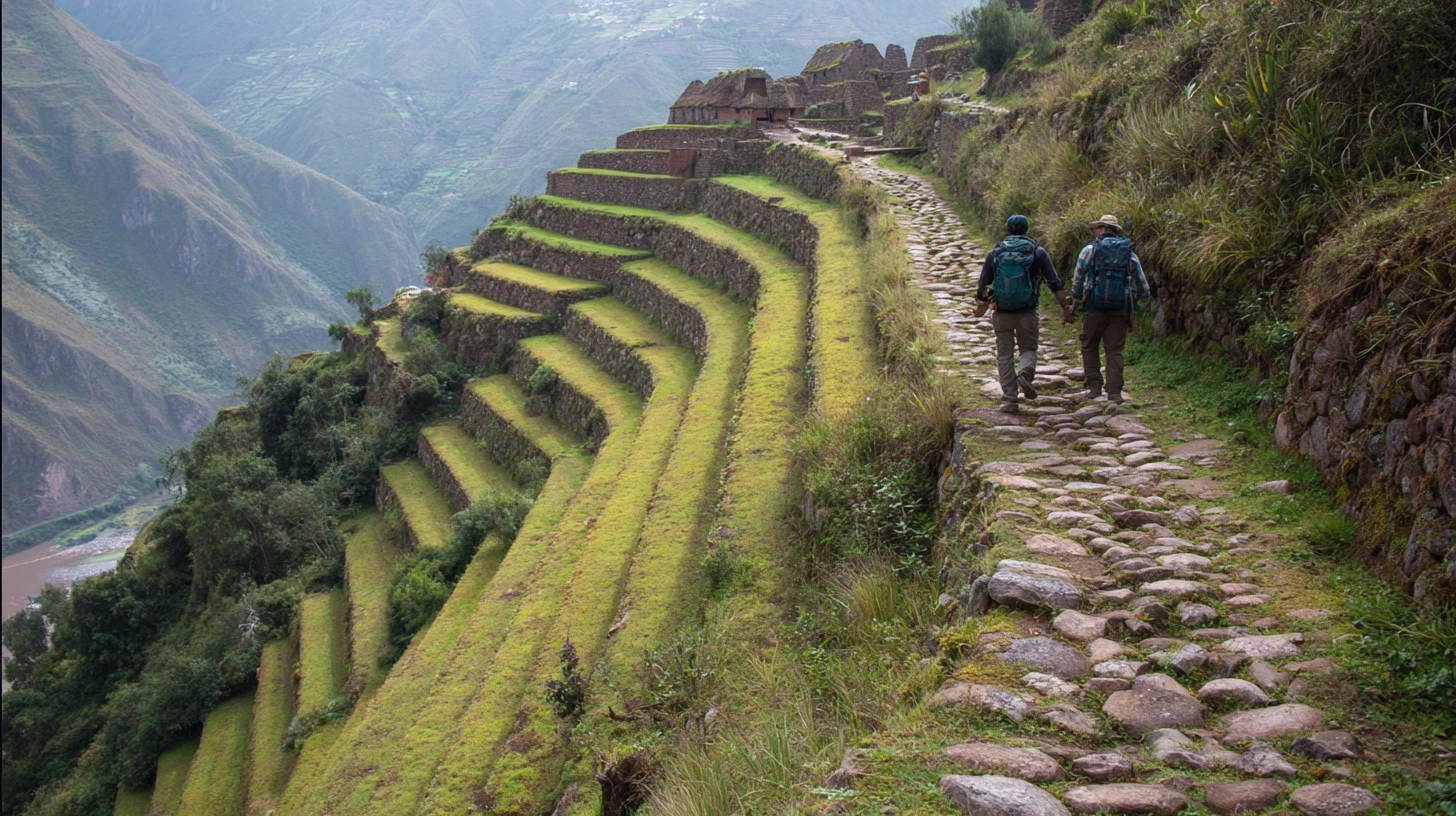
Peru's signature experience for the prepared traveler is not a meal — it is a four-day trek where someone else cooks every bite. On the Inca Trail, porters prepare communal meals from packed supplies: carb- and legume-heavy soups, rice, potato, and the same creamy ají sauces that hide evaporated milk, crackers, and peanut. There is no menu, no label, no fast evacuation, and altitude that complicates any reaction. The entire safety margin is set before departure — by briefing the operator in writing — and backed on the trail by self-carried epinephrine.
The Sacred Valley from the Inca Trail — four days where every meal is cooked by porters in shared pots, and the only allergen control is the briefing you arranged before you left.
🥾
The one rule that governs the whole trek
Allergen safety on the Inca Trail is decided before you arrive, not on the trail. Send your operator your allergens in Spanish — naming ají amarillo, leche evaporada, and maní — weeks ahead and get written confirmation that the trail cook will plan around them. Once the porters have shopped and packed, the menu is fixed and modification is not possible.
🥾
Before you book — brief the operator in writing
On the Inca Trail you do not choose your meals; the trekking agency’s porters cook every one. Allergen control is only possible if you give the operator your allergens — ají amarillo, leche evaporada, maní — in writing weeks ahead, in Spanish, and get written confirmation the cook will adapt. A verbal mention at the trailhead is too late: the food is already bought and packed.
🍲
Camp meals are communal pots
Trail cooking is fast, carb-heavy, and shared: quinoa and legume soups, rice, potato, and the same creamy ají sauces that hide evaporated milk and crackers. Everything comes from one or two pots with no labels and no way to inspect ingredients. Carry your own safe, calorie-dense backups so a single unsafe meal is not a crisis at altitude.
🌄
Altitude plus a reaction is the real danger
The trail tops out above 4,200 m at Dead Woman’s Pass, hours to days from a hospital. Altitude can mask and worsen the early signs of a reaction, and evacuation is slow. Your self-carried epinephrine is the entire emergency plan here — carry more than one auto-injector on your person, and make sure your guide knows where it is and how to use it.
🥜
Trail snacks carry the chifa stack
Energy foods handed out on the trek — trail mix, peanut bars, sesame sweets, soy-sauce-glazed snacks — concentrate exactly the allergens Peruvian kitchens reach for: peanut, sesame, soy, and wheat. Pack your own snacks you trust rather than relying on what the group shares, and decline the communal bag if peanut or sesame is your risk.
Communication norms
Dining Etiquette & Cultural Norms
Peruvian hospitality is warm and generous, which can work against you: a cook who wants to please may say 'sí' to be helpful rather than because the dish is safe, and table cremas arrive unasked. The allergy-critical move is to hand a specific Spanish card before ordering, name the hidden vehicles by name, and never soften the disclosure — in a country with no disclosure law, your specificity is the only safeguard.
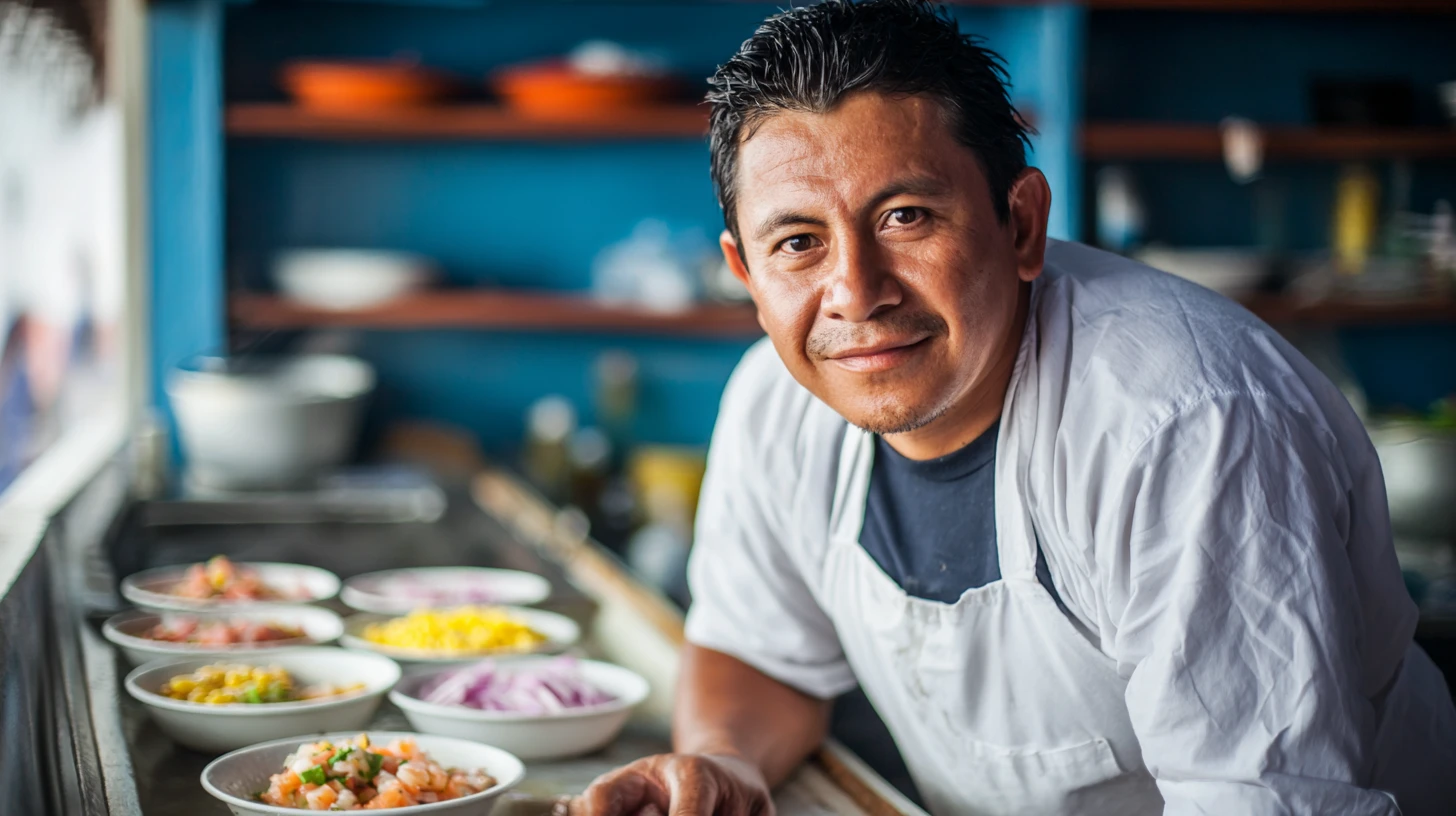
A cevichero at the counter — on the Peruvian coast the person plating your cebiche is often the one to ask directly, and a Spanish card turns a quick nod into a real check.
💬
How to raise an allergy in Peruvian culture
Direct, warm, and written. Hand the card with a smile and 'tengo una alergia alimentaria grave' (I have a severe food allergy). Peruvian warmth means staff want to help — which is exactly why you must name the specific hidden vehicles (ají amarillo, leche evaporada, maní), because a cook trying to please may not volunteer that the yellow sauce is dairy. Do not downplay it; 'un poquito alérgico' reads as 'can eat around it.'
📝
Written beats verbal — and there's no document to ask for
Peru has no law requiring restaurants to keep allergen information, so there is nothing to request in writing from them — your card is the document. Service in markets and pollerías is fast; hand the card before ordering, not after. A card in Spanish naming the dish-specific terms outperforms even good spoken English.
🍢
Decline the table cremas before they arrive
At pollerías, chicharronerías, and picanterías, small bowls of ají, huacatay, and rocoto cremas land on the table automatically and several are dairy-, egg-, or peanut-bound. Say 'sin cremas, por favor' when you sit down, before they are brought and before they touch shared plates.
📞
Advance notice — where it genuinely helps
Two places reward advance disclosure: Lima's chef-driven restaurants (email allergens 48 hours ahead and they will rebuild the menu) and Inca Trail / lodge operators (brief them in writing weeks ahead). Everywhere else, the at-table card does the work — advance calls to a market stall or pollería accomplish nothing.
Tipping in Peru: around 10% in restaurants is generous and appreciated, but it is not a tool for allergy attention — it changes nothing before the meal and remedies nothing after. The card and clear Spanish do the work.
Communication
Essential Safety Phrases
Six scenarios cover the working Spanish an allergic traveler needs in Peru. The card carries the formal declaration; these phrases handle the spoken follow-up. Drill the hidden-vehicle questions — ají amarillo, leche evaporada, maní — before you arrive; they are the ones a Peruvian kitchen does not volunteer.
Scenario 01
Declaring your allergy
ES
Tengo una alergia alimentaria grave. Aquí está mi tarjeta.
Téngo úna alérgia alimentária gráve. Akí está mi tarjéta.
I have a severe food allergy. Here is my card.
ES
Soy alérgico/a a la leche, al maní y al ají amarillo.
Sóy alérgico/a a la léche, al maní i al ají amaríyo.
I am allergic to milk, peanut, and yellow chili.
Scenario 02
Asking about hidden vehicles
ES
¿Este plato lleva ají amarillo?
¿Éste pláto yéva ají amaríyo?
Does this dish contain ají amarillo (yellow chili)?
ES
¿Lleva leche evaporada, queso o crema?
¿Yéva léche evaporáda, késo o créma?
Does it contain evaporated milk, cheese, or cream?
ES
¿La salsa lleva maní?
¿La sálsa yéva maní?
Does the sauce contain peanut?
Scenario 03
Confirming the kitchen understood
ES
¿El cocinero leyó mi tarjeta?
¿El cocinéro leyó mi tarjéta?
Did the cook read my card?
ES
Sin [ají amarillo / leche / maní], por favor.
Sin [ají amaríyo / léche / maní], por favór.
Without [yellow chili / milk / peanut], please.
Scenario 04
Asking about cross-contact
ES
¿La parrilla se usa también para mariscos o pescado?
¿La parríya se úsa también pára maríscos o pescádo?
Is the grill also used for shellfish or fish?
ES
¿El plato lleva sillao (salsa de soya)?
¿El pláto yéva siyáo (sálsa de sóya)?
Does the dish contain soy sauce (soy and wheat)?
Scenario 05
Replacing an EpiPen
ES
Necesito un autoinyector de adrenalina. Tengo receta médica.
Necesíto un autoinyectór de adrenalína. Téngo recéta médica.
I need an adrenaline auto-injector. I have a prescription.
Scenario 06
Emergency
ES
¡Anafilaxia! Ya usé mi adrenalina. Llamen al 106 (SAMU).
¡Anafiláxia! Ya usé mi adrenalína. Yámen al uno-céro-séis.
Anaphylaxis! I have used my adrenaline. Call 106 (SAMU).
ES
Necesito una ambulancia.
Necesíto úna ambulánsia.
I need an ambulance.
Why a card matters in Peru: Peru publishes no government allergy-communication standard and imposes no restaurant allergen-disclosure duty. A written Peruvian-Spanish card naming ají amarillo, leche evaporada, and maní fills a gap the law leaves entirely open.
Pre-Trip Preparation
Allergy-Specific Packing List for Peru
A standard list with four Peru-specific priorities: bring more epinephrine than you expect to need (in-country auto-injectors are not reliably stocked); a Spanish card naming ají amarillo, leche evaporada, and maní; an altitude plan, since Cusco and the Andes can mask and complicate a reaction; and — if you are trekking the Inca Trail — an operator briefing arranged weeks in advance, because porters cook every meal in shared pots with no labels.
💊 Medical essentials
✓
Two or more adrenaline auto-injectors (carry on-person, not checked)Do not rely on in-country replacement — epinephrine auto-injectors are not consistently stocked in Peru and same-day replacement is uncertain even in Lima. CDC advises travelers carry their own. Bring extras.
✓
Doctor's letter on letterhead naming medications, dosages, diagnosisNeeded for customs questions and for any pharmacy interaction; DIGEMID is the medicines authority and a foreign device without paperwork is hard to refill.
✓
Prescription copy, English and Spanish-translatedLarger Lima clinics may help source adrenaline; smaller pharmacies will not act on an untranslated foreign Rx.
✓
Antihistamines (cetirizine, loratadine, diphenhydramine)Available in Peru but bringing your own avoids brand confusion.
✓
Altitude plan — acetazolamide if advised, plus your asthma inhalerCusco (3,400 m) and the trail strain breathing; altitude symptoms can mask or worsen an allergic reaction, so separate the two with your doctor before travel.
🗂️ Communication tools
✓
Peruvian-Spanish allergy card naming ají amarillo, leche evaporada, maní, culantroThe single most useful prep item. Closes the kitchen-vocabulary gap that English categories leave open, in a country with no disclosure law to fall back on.
✓
Card image saved to phone lockscreenFor pollería counters, market stalls, and trek camps where a paper card is slow to produce.
✓
Audio file of your declaration in SpanishFor loud markets and fast service; play once, then hand the card.
✓
Printed pocket guide for your cities and the trekOffline reference for hospital addresses and emergency numbers where signal drops in the Andes.
🎯 At-destination habits
✓
Hand the card before ordering at every venueMarket and pollería service is too fast for mid-meal disclosure.
✓
At pollerías and picanterías, ask what the table cremas containAjí, huacatay, and rocoto sauces carry dairy, egg, or peanut and arrive automatically.
✓
Brief your Inca Trail operator in writing, weeks aheadPorters cook communal meals with no labels; allergen control is only possible if the agency plans the menu in advance.
✓
Treat market menú stalls and cevicherías as highest-risk if severeNo menus, no documentation, structural ají and shellfish cross-contact.
Emergency
Emergency Infrastructure
Peru's emergency response is uneven and Spanish-only. 106 (SAMU) is the free national medical emergency line, run by the Ministry of Health, with mobile teams concentrated in cities — coverage thins sharply in the highlands, the Sacred Valley, the Amazon, and on the Inca Trail, where help can be hours to days away and altitude complicates anaphylaxis. In Lima, the real capacity sits in private clinics that expect upfront payment or insurance. Operators speak Spanish; have your location and the word 'anafilaxia' ready, or ask a hotel or guide to call. Self-carried epinephrine is the primary plan, not the ambulance.
106
SAMU — national medical emergency (Ministerio de Salud)
Free, 24/7 mobile medical dispatch, strongest in Lima and major cities. Operators speak Spanish — say 'anafilaxia' and your location. Where SAMU does not operate, dial 116 (firefighters, often best-equipped for medical) or 105 / 911 (police dispatch). A unified 911 is being rolled out in Lima/Callao but is not yet nationwide; the legacy numbers still work.
Other emergency numbers: SAMU (medical) (106): free national medical emergency dispatch, Spanish only. EsSalud ambulance (117): triage and ambulance for EsSalud-insured patients in Lima/Callao. Firefighters (116): fires and rescues — often the best-equipped medical responders where SAMU is absent. Police (105 or 911): general emergency dispatch. Infosalud (113): 24h health-information line. Tourist Police (DIRTURE): ask your hotel or guide to call — officers may speak English.
How the Peruvian system works: Private clinics (Anglo Americana, Good Hope, Ricardo Palma, Internacional) are fastest and most likely to have English-speaking staff, but expect upfront payment or proof of insurance — carry travel insurance and a card. Public EsSalud and MINSA hospitals accept all emergencies. Outside Lima, response times lengthen and stocked epinephrine is far less certain; in the Sacred Valley, the Amazon, and on the Inca Trail, evacuation is slow and compounded by altitude. Treat your own auto-injectors as the front-line response.
Clínica Anglo Americana (British American Hospital)
Private clinic in the heart of the Miraflores tourist zone — 24/7 emergency, central for visitors.
Lima
Clínica Ricardo Palma
Av. Javier Prado Este 1066, San Isidro, Lima
Large private multi-specialty hospital with 24/7 emergency and advanced diagnostics.
Lima
Hospital Nacional Edgardo Rebagliati Martins (EsSalud)
Av. Edgardo Rebagliati 490, Jesús María, Lima
Major public referral hospital — full emergency capacity; busy, but accepts all emergencies.
Lima (public)
Hospital Regional del Cusco
Av. de la Cultura s/n, Cusco
Main public hospital for the Cusco region and the Sacred Valley — primary emergency receiving near Machu Picchu access.
Cusco
Clínica San Juan de Dios — Arequipa
Av. Ejército 1020, Cayma, Arequipa
Private clinic with emergency services in Arequipa, gateway to the Colca Canyon and the southern Andes.
Arequipa
Hospital Regional Honorio Delgado Espinoza
Av. Daniel Alcides Carrión 505, Arequipa
Public national referral hospital for southern Peru — full emergency department.
Arequipa (public)
Regulation
Allergen Labeling Law
Peru has no EU-FIC-style allergen law. Packaged-food allergen labeling follows Codex Alimentarius guidance voluntarily, and restaurants have no disclosure obligation. The only mandatory front-of-package marks (Ley N.º 30021 octágonos) warn of sugar, sodium, and fat — not allergens. Read the full ingredient list, and rely on a Spanish card at the table. Epinephrine auto-injectors are permitted with a prescription but are not reliably stocked in-country — bring your own.
Peru has no EU-FIC equivalent. There is no binding law forcing a fixed allergen list onto packaged food, and restaurants have no allergen-disclosure obligation at all. Packaged-food allergen labeling follows Codex Alimentarius guidance voluntarily; the only mandatory front-of-package marks come from Ley N.º 30021 and warn of high sugar, sodium, and fat — not allergens.
The practical consequence: you cannot scan for a ‘Contiene’ box and trust it, and you cannot ask a restaurant for written allergen documentation that the law requires — because no such requirement exists. The grid below lists the Codex priority allergens Peru aligns to as voluntary reference, with the Spanish terms to read in an ‘Ingredientes:’ list and the Prepared Travel taxonomy mapping. Treat it as what a conscientious manufacturer should declare, not as a guarantee.
Codex priority allergen. Voluntary in Peru — read for trigo, gluten, harina, and galleta (soda crackers thicken sauces).
02. Crustacea · Crustáceos (mariscos)
Codex priority allergen (CXS 1-1985 names crustacea; molluscs are grouped under shellfish in practice). Structural on the coast — cebiche, tiradito, leche de tigre. Read for mariscos, camarón, langostino, concha.
03. Eggs · Huevo
Codex priority allergen. In causa, many cremas, and mayonnaise-bound sauces. Read for huevo and mayonesa.
04. Fish · Pescado
Codex priority allergen. Beyond obvious dishes, watch leche de tigre migrating into non-fish plates. Read for pescado, bonito, atún.
05. Peanuts · Maní (cacahuate)
Codex priority allergen. Ground into ocopa sauce and southern-Andean dishes — in the sauce, not on top. Read for maní, cacahuate, pasta de maní.
06. Soybeans · Soya (soja) — sillao
Codex priority allergen. Central to chifa cooking via sillao (soy sauce). Read for soya, soja, sillao, salsa de soya.
07. Milk · Leche (lácteos) — leche evaporada
Codex priority allergen, and Peru's most-hidden one. Read for leche, leche evaporada, queso, crema — and brand names Gloria or Ideal, which mean evaporated milk.
08. Tree nuts · Frutos secos / nueces
Codex priority allergen. Pecans and walnuts appear in some sauces and desserts. Read for nueces, pecanas, almendras.
09. Sulfites (≥10 mg/kg) · Sulfitos
Codex declaration threshold. In wine, dried fruit, and some chicha and bottled products. Read for sulfitos, dióxido de azufre, metabisulfito.
The octágono trap: The black warning octagons (ALTO EN AZÚCAR, ALTO EN SODIO, ALTO EN GRASAS SATURADAS, CONTIENE GRASAS TRANS) are nutrition warnings under Ley 30021. They are not allergen warnings. A package with no octagons can still contain every allergen above.
EpiPen — permitted with prescription. Adrenaline auto-injectors are generally permitted as personal medication, carried in original packaging with a doctor's letter naming the medication, diagnosis, and dosage, plus an English-and-Spanish prescription copy. Be ready to declare them at customs, and confirm current rules with DIGEMID (digemid.minsa.gob.pe) and SUNAT customs, and your airline, before travel.
Confidence: MEDIUM on import procedure. Auto-injectors are not reliably stocked in Peruvian pharmacies — treat in-country replacement as unavailable and carry more than one device. The exact DIGEMID personal-import paperwork should be verified before travel and at Stage 2.
No restaurant disclosure law: unlike the EU, Peru does not require restaurants to keep or provide written allergen information. There is no document to ask for — the card does the work the law does not.
Codex, not mandate: the allergen list Peru aligns to is the Codex Alimentarius reference. Conscientious manufacturers declare it; it is not consistently enforced, so absence of a statement is not assurance.
Traveler Reports
Traveler Voices — Community Reports
Illustrative composite scenarios drawn from common Prepared Travel intake patterns and public traveler reports. Initials and locations are stylized; quotes are composite, not first-person verbatim. Replace with verified community testimony once intake-ID-tagged quotes are available.
I thought 'no chili' covered me, so I ordered papa a la huancaína thinking it was just a spicy potato. It's a dairy sauce. Now my card says 'leche evaporada' and I look for it on every yellow sauce.
Daniel R. · Cusco · 2024 · Milk/Dairy
Ocopa in Arequipa looked like a green chili sauce — it's ground peanut. I only found out because the card named 'maní' and the cook stopped me. The card caught what the menu never would.
Hannah L. · Arequipa · 2023 · Peanut
On the coast the leche de tigre ends up in everything, not just the cebiche. I learned to ask where it was poured before I touched any 'non-fish' plate at a cevichería.
Maria G. · Lima · 2024 · Fish
References & Transparency
Sources, Citations & Data Confidence
View source citations
▼
1
FAO / WHO Codex Alimentarius. “General Standard for the Labelling of Prepackaged Foods, CXS 1-1985 (rev.) — §4.2.1.4 allergen declaration list: cereals containing gluten, crustacea, eggs, fish, peanuts, soybeans, milk, tree nuts, and sulfites ≥10 mg/kg.” Codex standards list — the international reference Peru aligns to. HIGH confidence (standard text); MEDIUM on degree of Peruvian enforcement. www.fao.org
2
Ley N.º 30021 (Ley de Promoción de la Alimentación Saludable), Reglamento D.S. 017-2017-SA, and Manual de Advertencias Publicitarias D.S. 012-2018-SA. gob.pe — D.S. 012-2018-SA — the only mandatory front-of-package marks; Art. 10 warnings cover ALTO EN AZÚCAR / SODIO / GRASAS SATURADAS and CONTIENE GRASAS TRANS, i.e. sugar, sodium, and fat — NOT allergens. HIGH confidence. www.gob.pe
3
DIGEMID — Dirección General de Medicamentos, Insumos y Drogas (MINSA). “Medicines authority — epinephrine auto-injector availability and import.” digemid.minsa.gob.pe — Governs personal medication import. MEDIUM confidence; exact traveler import procedure to be confirmed at Stage 2. www.digemid.minsa.gob.pe
4
DIGESA — Dirección General de Salud Ambiental e Inocuidad Alimentaria (MINSA). “Food-safety oversight and packaged-food registration.” gob.pe/digesa — National food-safety authority. MEDIUM confidence. www.gob.pe
5
INACAL — Instituto Nacional de Calidad. “Metrology and labeling standards oversight.” gob.pe/inacal — Oversees food and beverage labeling standards. MEDIUM confidence. www.gob.pe
6
SAMU / Ministerio de Salud del Perú. “Sistema de Atención Móvil de Urgencia — 106 medical emergency dispatch.” gob.pe/minsa — National medical emergency line. HIGH confidence on number; MEDIUM on regional coverage. www.gob.pe
7
U.S. CDC Travelers’ Health (Yellow Book). “Peru — traveler packing list and altitude guidance.” wwwnc.cdc.gov/travel/peru — Recommends travelers carry their own epinephrine auto-injectors. HIGH confidence. wwwnc.cdc.gov
8
World Allergy Organization / EAACI. “Global disparities in availability of epinephrine auto-injectors.” worldallergy.org — Documents limited auto-injector availability in middle-income countries including much of Latin America. MEDIUM confidence. www.worldallergy.org
9
Prepared Travel community reports. “Lima, Cusco, Arequipa, and Inca Trail traveler intake notes 2023–2025.” prepared.travel/community — Aggregated allergic-traveler experience on pollería cremas, market-stall risk, and trek catering. MEDIUM confidence. prepared.travel
10
DIGESA — Dirección General de Salud Ambiental e Inocuidad Alimentaria. Packaged-food registration framework. gob.pe/digesa — No mandatory allergen-declaration regime is established here or elsewhere in Peruvian law; the conclusion that disclosure is voluntary/Codex-aligned is inferred from (a) Ley 30021 addressing nutrition only and (b) Peru’s Codex alignment. A dedicated legal-review citation is still pending (MEDIUM confidence). www.gob.pe
11
Hospital and clinic official sites and the MINSA IPRESS facility registry. Hospital names, districts, and street addresses in the Emergency section were web-verified June 2026; emergency numbers (SAMU 106, EsSalud 117) verified against gob.pe. Per-facility official-page citations are pending final human review. gob.pe/minsa. MEDIUM confidence on per-facility detail. www.gob.pe
Data confidence ratings
▼
Data point
Confidence
Notes
Emergency number (106 SAMU / 116 / 105)
● HIGH
Verified against MINSA / SAMU and INDECI public directories — 106 is the medical line
No mandatory allergen-labeling law
● HIGH
Verified — Peru has no EU-FIC equivalent; packaged labeling follows Codex voluntarily
Ley N.º 30021 octágonos are nutrition warnings, not allergens
● HIGH
D.S. 012-2018-SA confirmed — front-of-pack marks warn of sugar/sodium/fat only
Restaurant allergen-disclosure duty (none)
● HIGH
No legal obligation for restaurants to disclose allergens on request or menu
Ají amarillo creamy-sauce family hides dairy/wheat/peanut
● HIGH
Cross-referenced against Peruvian culinary literature and traveler intake patterns
EpiPen import permitted with prescription
● MEDIUM
Permitted for personal use; exact DIGEMID/SUNAT documentation threshold not fully confirmed
Auto-injector local stocking
● MEDIUM
EpiPen not reliably stocked in Peruvian pharmacies — bring your own; verify before travel
Hospital addresses (all seven)
● MEDIUM
Street addresses verified against public hospital directories; confirm before publish
Difficulty score (6/10)
● MEDIUM
Editorial composite — combines weak labeling law with strong creamy-sauce hidden-vehicle density
Language penetration percentages
● MEDIUM
Industry estimates; Quechua/Aymara spoken-only, not kitchen-written; not census-tracked
Traveler voice quotes
● MEDIUM
Illustrative composites from common Prepared Travel intake patterns; not first-person verbatim
This page is a living document. Labeling guidance, hospital details, and import rules change over time. Regulatory specifics here are pending a Stage 2 fact-check; emergency numbers and hospital addresses were verified June 2026.
Absence of a warning is not assurance. Because Peru's allergen labeling is Codex-aligned guidance rather than a binding mandate, a package with no allergen statement may still contain milk, peanut, or wheat, and the black octágonos say nothing about allergens. Read the full Ingredientes: list and rely on the card at restaurants.
You've done the research. Now build your Peru allergy card.
The Inca Trail is waiting. Go prepared.
Generate your Peru food allergy card in Peruvian Spanish — naming ají amarillo, leche evaporada, and maní directly, the terms that close the kitchen-vocabulary gap English categories leave open from the cevichería to the trail camp. Your Peru allergy translation card is ready in two minutes.