
Allergen Prevalence Index
This index scores two separate dimensions: supply prevalence (how embedded an allergen is in the cuisine) and hidden risk (how likely it is to appear without disclosure). They often diverge. Sesame via tahini and wheat via filo pastry dominate on supply prevalence. Peanut and soy score low — not traditional in Greek cuisine — but their rarity means kitchens have less trained response when asked.3
Dish Allergen Map
Greek cuisine presents a clear STRUCTURAL / INCIDENTAL divide. Filo pastry in spanakopita, tiropita, and baklava is always STRUCTURAL and cannot be removed. Tahini in pasteli and koulouria is STRUCTURAL. The psistaria (grill restaurant) offers reliably safe options: grilled whole proteins, feta-free salads, and rice pilafi cooked in olive oil are allergen-light across most profiles.
| Dish | Allergens | Risk Notes | Risk Level |
|---|---|---|---|
Spanakopita (Σπανακόπιτα)Spinach and feta pie in filo pastry |
WHEAT (filo)DAIRY (feta)EGG | STRUCTURAL ×3 — Filo pastry (wheat), feta (dairy), and egg binder are all load-bearing. None can be removed. No safe modification path. | ● HIGH |
Tzatziki (Τζατζίκι)Greek yogurt dip with cucumber and garlic |
DAIRY (yogurt) | STRUCTURAL — Tzatziki is yogurt-based; cannot be made dairy-free. Traditional recipes contain no tahini — confirm if ordering at a non-traditional venue. Served on the same mezze spread as sesame-based dips — cross-contact via shared bread is inherent to the format. | ● LOW |
Horiatiki Salad (Χωριάτικη)Tomato, cucumber, olive, feta, onion |
DAIRY (feta) | STRUCTURAL (feta) — Traditional horiatiki always includes feta; omission must be requested explicitly. SAFE MODIFICATION: Request “χωρίς φέτα” (without feta) — well understood at every venue in Greece. | ● LOW |
Moussaka (Μουσακάς)Layered eggplant, minced meat, béchamel topping |
DAIRY (béchamel)WHEAT (roux)EGG | STRUCTURAL ×3 — The béchamel topping contains milk, flour (wheat roux), and egg binding. All three are structural and inseparable. | ● HIGH |
Pastitsio (Παστίτσιο)Baked pasta tubes, meat sauce, béchamel |
WHEAT (pasta)DAIRY (béchamel)EGG | STRUCTURAL ×3 — Thick pasta tubes (wheat), béchamel topping (dairy + wheat + egg). All three allergens structural and inseparable. | ● HIGH |
Baklava (Μπακλαβάς)Filo pastry layered with walnut-pistachio filling, honey syrup |
WHEAT (filo)TREE NUTS (walnut, pistachio) | STRUCTURAL ×2 — The entire structure is filo (wheat) and the filling is nut meal. CROSS-CONTACT — Produced at the same surfaces as sesame koulouria and pasteli at every bakery. | ● HIGH |
Grilled Sea Bream / LavrakiWhole fresh fish grilled with olive oil and lemon |
FISH | STRUCTURAL (fish) — For non-fish-allergic travelers: olive oil, lemon, salt, herbs — no hidden dairy, wheat, or sesame in traditional preparation. INCIDENTAL (shellfish cross-contact) — Many psistaries grill fish and shellfish on the same grill. Request grill cleaning: “Μπορείτε να καθαρίσετε τη σχάρα πριν;” | ● MODERATE (fish only) |
Dolmades (Ντολμαδάκια)Rice-stuffed vine leaves — hot with avgolemono or cold with olive oil |
EGG (avgolemono version) | STRUCTURAL (egg — hot version) — The hot version is finished with avgolemono (egg-lemon sauce). STRUCTURAL-FREE (cold version): The cold “λαδερά” (oil-based) version contains no egg. Ask: “Είναι λαδερά ή με αβγολέμονο;” | ● MODERATE |
Pasteli (Παστέλι)Compressed sesame-honey bar — ubiquitous at every bakery and counter |
SESAME (structural) | STRUCTURAL — Pasteli is almost entirely sesame. Found at every bakery, kafeneion, petrol station, and supermarket checkout. Occasionally offered as a complimentary nibble at traditional restaurants. Decline by name: “Δεν τρώω παστέλι — έχω αλλεργία στο σουσάμι.” | ● HIGH |
Taramosalata (Ταραμοσαλάτα)Fish roe dip with olive oil, lemon, bread — standard mezze |
FISH (roe)WHEAT (bread, most versions) | STRUCTURAL (fish) — Taramosalata is made from tarama (cured fish roe) — not always described as “fish” on a mezze menu. INCIDENTAL (wheat) — Most versions use soaked bread; some use potato. Confirm: “Γίνεται με ψωμί ή με πατάτα;” | ● HIGH |
Souvlaki (Σουβλάκι)Grilled meat skewers — pita wrap or on a plate |
WHEAT (pita wrap)DAIRY (tzatziki) | STRUCTURAL (pita wrap version) — Wheat and dairy structural in the wrap format. SAFE MODIFICATION: Order “στο πιάτο” (on the plate) — no pita, no tzatziki. Meat marinade at traditional venues is olive oil, lemon, and oregano only. | ● MODERATE |
Fava Santorini (Φάβα)Santorini yellow split pea purée with olive oil and lemon |
LEGUMES (split pea) | Legumes (split pea) STRUCTURAL. For non-legume-allergic travelers, fava is one of the safest dishes in Greece — no wheat, dairy, sesame, tree nuts, or egg in traditional preparation. Capers and red onion as garnish are INCIDENTAL — easily omitted. Note: Santorini fava is a split pea (Lathyrus clymenum), not a broad bean. | ● MODERATE (legumes only) |
Tiropita (Τυρόπιτα)Cheese-filled filo pastry — the Greek bakery staple |
WHEAT (filo)DAIRY (cheese)EGG | STRUCTURAL ×3 — Filo (wheat), feta/anthotiro (dairy), egg binder — all structural. Available at every Greek bakery from 7am. CROSS-CONTACT — Produced in the same bakery as sesame koulouria and baklava. | ● HIGH |
Regional Allergen Risk Map
Greece's regional allergen variance is driven by cuisine tradition, tourist infrastructure, and medical access. The tahini and filo problem is nationwide, but allergen awareness is highest in Athens and lowest on small Aegean islands. Medical access varies sharply: Athens is a European capital; remote Cycladic islands have basic health centres only.
Venue Safety Profile
The Greek venue hierarchy runs from Athens fine dining where EU allergen protocols are strongest, through tourist-facing tavernas where English aids communication, down to village kafeneions and small-island fish tavernas where kitchen knowledge of allergen regulations may be minimal. The psistaria (grill restaurant) is the most reliably safe dining format for most allergen profiles. The zacharoplasteion (pastry shop) is the highest-risk environment for sesame and tree nut allergic travelers.
Communication & Etiquette for Allergic Travelers
Greek dining culture is built on φιλοξενία (filoxenia) — hospitality toward guests — and this works strongly in an allergic traveler's favour. A direct, honest explanation of a dietary requirement is almost always met with a genuine attempt to help. The key cultural nuance: do not minimise the severity of your allergy in an attempt to seem polite.
Languages Spoken
Greek is the only language of kitchen communication across Greece. English is spoken front-of-house in tourist areas but does not reach the kitchen consistently at any venue type. A Greek-language allergy card is the single most effective communication tool you will carry in Greece — it bridges the front-of-house to kitchen gap that verbal English cannot. The more languages your card covers, the wider the range of kitchen staff it can reach.
Essential Safety Phrases
These phrases are structured around the tahini and sesame risk — ταχίνι is the most important word in your Greek allergy vocabulary. All phrases use formal polite Greek (the σας form) appropriate for restaurant communication.
Allergy-Specific Packing List for Greece
Greece's packing priorities are shaped by three specific risk factors: the sesame exposure risk at every bakery and mezze table (Greek card naming ταχίνι essential), small-island medical access limitations (always carry epinephrine), and summer heat that affects medication storage.
Mezze Culture & Island Dining
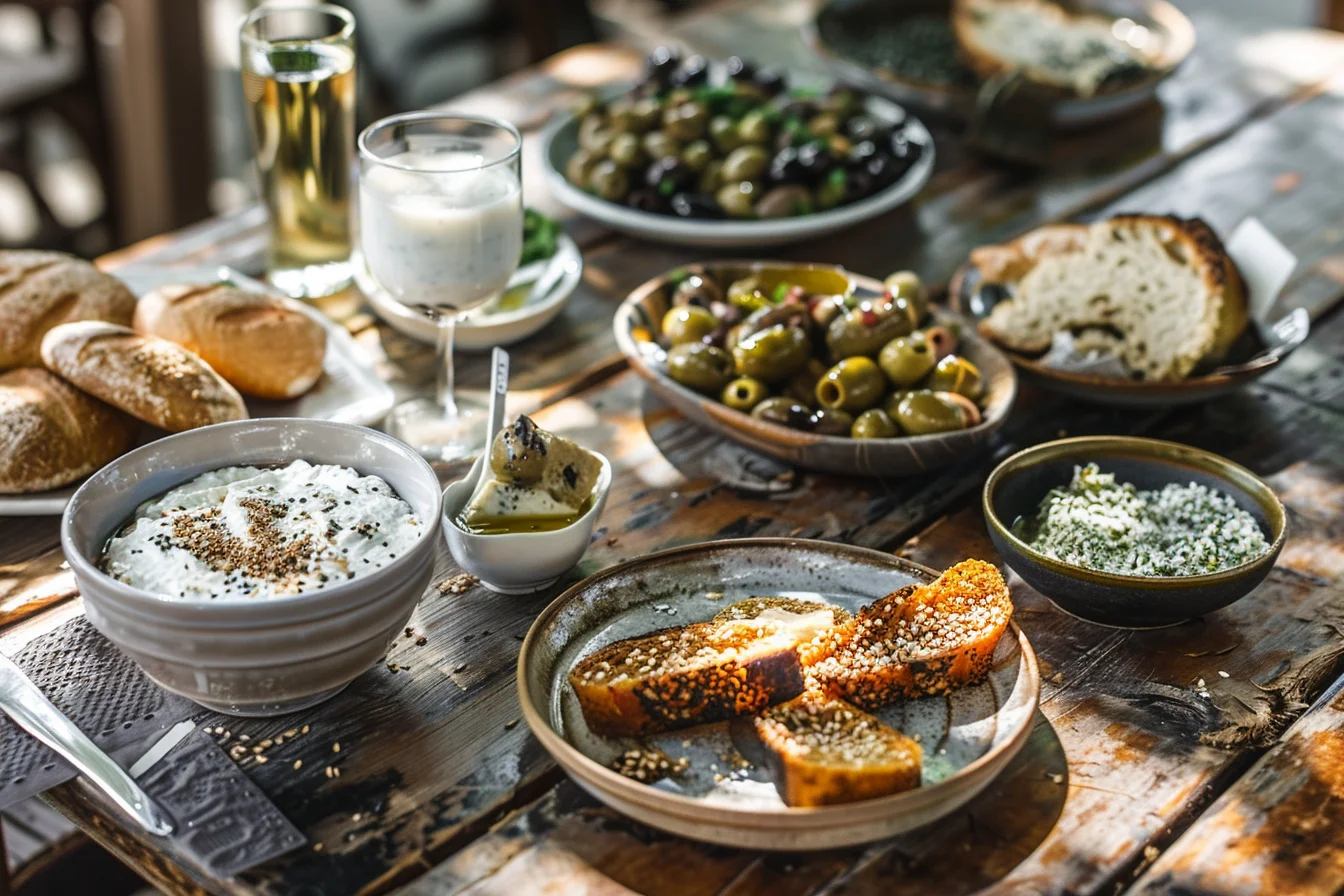
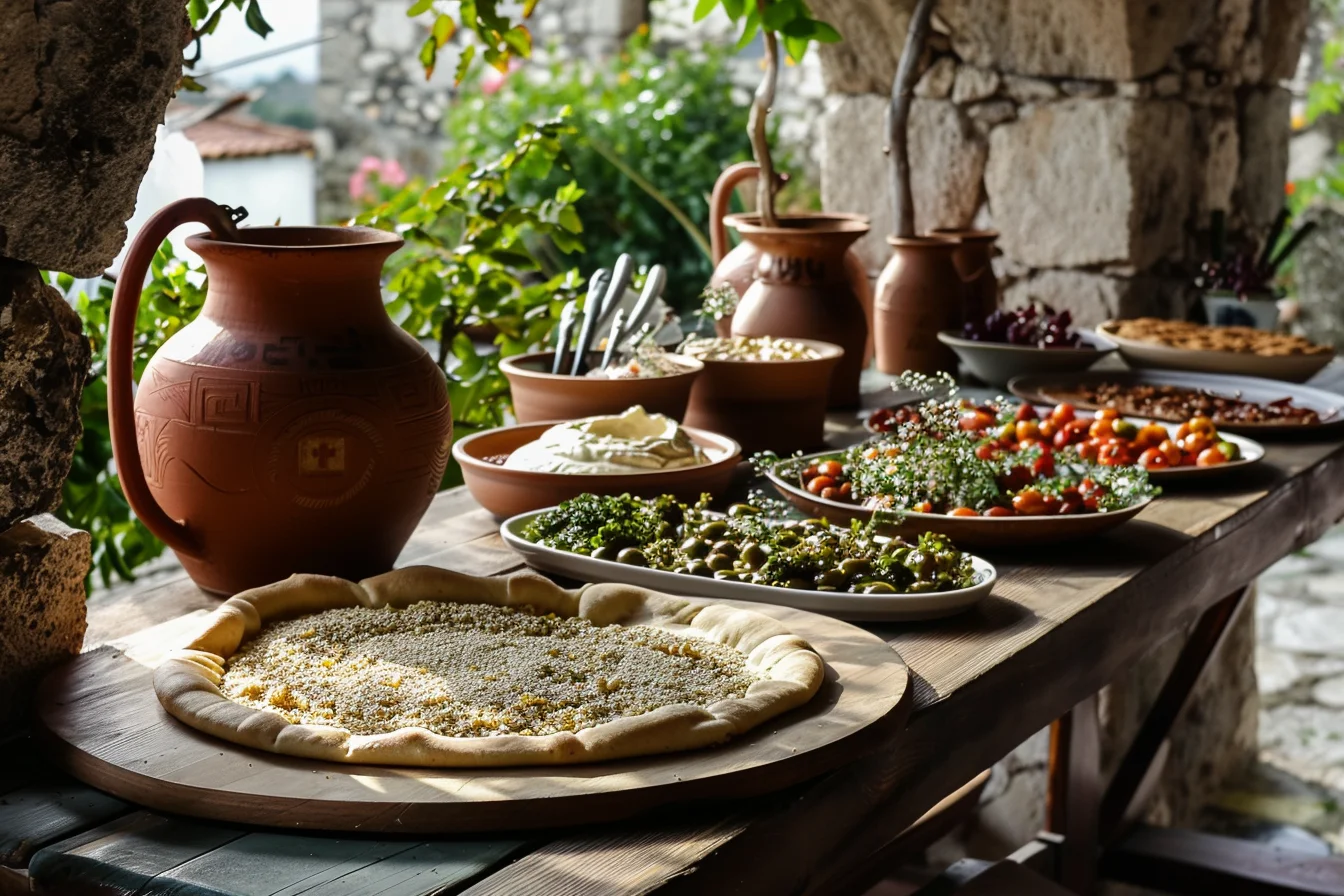
The mezze format is at the heart of Greek dining culture and is the single greatest operational challenge for allergic travelers in Greece. It is not enough to ask about the dishes you ordered — you must manage the shared table itself. Dishes arrive simultaneously, oils and sauces migrate across the table through shared bread, and the format assumes a level of cross-contact that no individual dish assessment can account for.
Greek mezze is not individual ordering — it is simultaneous sharing. Every dish on the table is within reach of every allergen on the table. Olive oil carries from the feta salad to the bread to the tahini dip in the normal course of a shared meal. The format that makes Greek dining extraordinary is the same format that makes allergen management unusually complex.
Greek mezze is typically prepared in a small kitchen using a shared set of serving bowls, ladles, and trays. Dips are portioned from large refrigerated containers — tzatziki, taramosalata, tahini dip, and melitzanosalata may sit in the same preparation area. Sesame-crusted bread (koulouria) and pasteli are placed on the bread plate. The filo pastries (tiropita, spanakopita) are baked in trays shared with baklava at most bakeries that supply both.
For any restaurant where you plan to eat a full meal, contact ahead. In Athens and tourist areas, email in English is effective. Outside the main tourist circuit, contact by phone and have your Greek allergy card ready to photograph and send via WhatsApp — very widely used in Greece for restaurant bookings. The same warmth that defines Greek hospitality generally extends to dietary requests when given the chance to understand them.
Dining on the smaller Greek islands introduces a specific risk layer that mainland travel does not: limited supply chains mean every kitchen serves from a smaller ingredient inventory, and that inventory is what it is on the day. Seasonal variation is extreme — a dish that is tahini-free in May may be made with tahini in August because the standard ingredient ran out. Mykonos and Santorini have the most tourist-polished restaurant infrastructure in the Cyclades; Naxos and Tinos tend toward more traditional, family-run kitchens where the cook's instinct rather than a written allergen record guides ingredient decisions. Small-island kitchens are often run by one family cooking the same dishes for decades.
The Greek grill restaurant is the most reliably safe dining format for the widest range of allergen profiles in Greece. The entire menu is built on olive oil, lemon, herbs, and proteins. There is no béchamel, no filo, no tahini, no complex sauces, no hidden dairy vehicles other than accompaniments. Order grilled meat or fish on a plate (“στο πιάτο”) rather than in a pita wrap, request salad without feta (“χωρίς φέτα”).
Emergency Infrastructure
Athens and Greece's major cities have solid emergency infrastructure with reliable EKAB ambulance response. EU healthcare access applies for EU/EEA travelers with EHIC. The material risk variable is small-island geography: the further from Athens or a regional hospital, the longer the evacuation time. Comprehensive travel insurance with medical evacuation cover is strongly recommended for island travel.
8–12 minutes average in Athens · 15–25 minutes in major cities · 20–40 minutes on main islands · up to 60+ minutes on remote small islands requiring helicopter or ferry evacuation. 112 also works from any mobile phone (EU-wide emergency number).2
Bringing Your EpiPen to Greece
Greece is an EU member state and epinephrine auto-injectors are permitted for personal medical use without special import authorization. EpiPen and Emerade are available by local prescription at Greek pharmacies in major cities — but availability outside Athens, Thessaloniki, and Heraklion is not guaranteed. Bring a full supply from home.
eof.gr (National Organisation for Medicines) →
Verify at eof.gr →
Allergen Labeling Law
Greece implements EU Regulation 1169/2011 (Food Information to Consumers) — one of the strongest allergen labeling frameworks in the world. The 14 mandatory EU allergens must be declared on packaged food labels and must be provided to restaurant customers upon request (verbally or in writing). This is a genuine legal protection — but it is a protection you must invoke. Restaurants are not required to proactively label menus; you must ask.1
Κανονισμός (ΕΕ) αριθ. 1169/2011 — in force since 13 December 2014
Traveler Voices
Real experiences from food-allergic travelers who have navigated Greece. The sesame and mezze cross-contact observations below reflect the core challenges documented on this page — and the hospitality culture that makes Greece manageable when the right preparation is in place.
Sources, Citations & Data Confidence
Every claim marked with a superscript number is sourced below. Safety-critical information deserves honest attribution and epistemic labeling.
| Section | Confidence | Source / Notes |
|---|---|---|
| EU FIR allergen labeling law | ● HIGH | Primary regulation source — eur-lex.europa.eu. Greek implementation confirmed by EOF. |
| Emergency numbers and EKAB system | ● HIGH | EKAB source confirmed; 166 and 112 verified. |
| EpiPen import rules | ● MEDIUM | General EU framework applied. Verify current rules at eof.gr before travel. |
| Clinical allergen prevalence in Greece | ● MEDIUM | No dedicated Greek national prevalence study identified. EAACI European data used as proxy. |
| Hospital addresses | ● MEDIUM | Sourced from public hospital directories and confirmed operational. Verify addresses remain current. |
| Tahini protein concentration | ● MEDIUM | Based on general sesame protein science (Cianferoni & Muraro 2012). Greek-specific tahini analysis not independently confirmed. |
| Difficulty score 4/10 | ● MEDIUM | Editorial score. Key tension: Athens tourist corridor (~3) vs. small-island and village score (~5–6). |
| Traveler voice quotes | ● MEDIUM | Community-submitted; represent individual experiences and may not generalize. |
Filoxenía is waiting.
Go prepared.
Generate your Greece allergy card in Greek — with allergen names in Greek script, ταχíνι-specific language, and the severity statement every kitchen needs to read. Phone, letter, and wallet formats with audio.