Namibia scores 7 out of 10 on the Prepared Travel difficulty scale — high, anchored against Japan 7 for different reasons (Japan = hidden-vehicle complexity in well-disclosed food; Namibia = moderate complexity in poorly-disclosed food with long evacuation distances) — because the Foodstuffs, Cosmetics and Disinfectants Ordinance 18 of 1979 governs labeling but contains no allergen-disclosure clause, packaged-food labeling follows voluntary NSI Codex-aligned standards, restaurant disclosure is not mandated, ambulance service is privatized and pre-paid, and lodges along the self-drive corridor sit 200–400 km from a private tertiary hospital with anaphylaxis capability. The structural friction is vocabulary plus disclosure gap: unlabeled spice rubs on biltong, droëwors, and lodge braai meat may carry grondboontjie-meel (groundnut/peanut flour) as a documented binder in some Southern African commercial blends, padstal product has no ingredient list, and the local spesery (spice) category obscures the allergen entirely. Sesame (sesamsaad) is pervasive in German-Namibian bakery; sulfite cure (sulfiet-kuur) defines biltong and droëwors, with boerewors usually carrying it only as a commercial preservative. The cuisine's saving grace: its safe default is also its national dish — a plain grilled game steak (gemsbok, kudu, springbok) with no spice rub, alongside pap (mieliepap) and a salad, on every lodge menu in the country. An Afrikaans card naming grondboontjie-meel, sesamsaad, sulfiet-kuur directly — with English on the back — is the single highest-leverage prep step.
🇳🇦 Food & Culture
Namibian food is what 130 years of layered colonial inheritance, mandate, and independence left on the fire. German colonial bakeries put sesame on every brötchen in Swakopmund and Lüderitz. Afrikaans-speaking farmers brought biltong, droëwors, and the braai. Oshiwambo and Otjiherero kitchens cook oshifima and stewed game in cast-iron pots, and Windhoek's Single Quarters market grills kapana — flame-cooked beef strips dipped in a communal spice bowl — that some travelers will tell you is the country's real signature dish. What the road-trip traveler eats most often is the German-Afrikaans hybrid: meat over coals, biltong by the kilogram, rusks and koeksisters, sesame-seeded roosterkoek. The C14 from Sossusvlei to Walvis Bay is also the route from one biltong stall to the next.
Core Safety Metrics — hover each for full explanation
Overall Allergy Travel Difficulty
7/10
High — undeclared allergens, private ambulance, long evacuation distances
Namibia sits in the high-difficulty band alongside Japan 7 for entirely different reasons: Japan = hidden-vehicle complexity in well-disclosed food; Namibia = moderate complexity in poorly-disclosed food. 7/10 reflects three compounding factors: no restaurant allergen-disclosure law, private-pay ambulance with upfront charges, and self-drive distances that place travelers 200–400 km from a private tertiary hospital with anaphylaxis capability for days at a time. The cuisine carries documented sesame and sulfite load, with possible peanut via unlabeled spice mixes. The cultural-modification score is high in the traveler's favor — 'just put it on the fire' is the country's default cooking method.
Allergen Labeling Law Strength
2/10
Effectively absent — 1979 ordinance has no allergen clause
Namibia's Foodstuffs, Cosmetics and Disinfectants Ordinance 18 of 1979 governs food labeling but contains no allergen-disclosure requirement. The public-health framework operates under the Public and Environmental Health Act 1 of 2015. The Namibia Standards Institution (NSI) publishes Codex-aligned voluntary food standards. South African R146 (2010)-compliant goods imported into Namibia carry SA-style allergen declarations, which is the only reliable allergen labeling on Namibian shelves. The 'Bevat'/'Contains' line on SA imports is your most trustworthy disclosure tool. Local Namibian-manufactured packaged goods, padstal product, lodge kitchens, restaurants, and street vendors operate without allergen disclosure of any kind.1
Kitchen Awareness
4/10
Variable — lodge kitchens strong, padstals near zero
Awareness runs on a bimodal distribution. Top-tier safari lodges (Wilderness, andBeyond, Ultimate Safaris, Onguma) brief chefs on dietary requirements at booking and execute reliably — the international ownership and clientele creates muscle memory. Mid-range guesthouses and B&Bs are inconsistent. Padstals, fuel-station Wimpys, and OK Foods delis have no allergen vocabulary at all — the cultural model treats whatever is in the spice mix as 'spesery' (spice), not as food, let alone allergen. A staff member who would understand 'peanut allergy' in the abstract may not connect it to the rub on the meat in front of them. A written Afrikaans card naming grondboontjie-meel explicitly is what closes the gap.
Hidden Allergen Vehicle Density
7/10
Elevated — three layered vehicles across the road-trip food supply
Three hidden vehicles, all unlabeled. Grondboontjie-meel (groundnut/peanut flour) is a documented binder in some Southern African commercial biltong spice blends; padstal product carries no ingredient list and cannot be verified. Sesamsaad (sesame seed) is pervasive in German-Namibian baking — the seeded brötchen at Swakopmund Konditoreien, Engen forecourt bakeries, and Sunday roosterkoek (a high cross-contact topping, not a dish-defining ingredient). Sulfiet-kuur (sodium-metabisulfite cure) defines biltong and droëwors; boerewors is a fresh sausage that usually carries it only as a commercial preservative. SA R146 commercial product declares 200–400 ppm on the label, padstal product is uncontrolled and untested. Add SA-import dessert macadamia / pecan / almond on lodge trolleys (peppermint crisp tart, Romany Creams, pecan-nut tart). Italy scores higher (pinoli); Japan scores higher (dashi); Namibia sits in the mid-upper band because the disclosure gap is the multiplier.2
Emergency Response Quality
4/10
Private-pay urban only — gravel-road evacuation can exceed 4 hours
Windhoek and Swakopmund have private tertiary hospitals with 24/7 trauma centres and ICU capability: Lady Pohamba (Frankie Fredericks Street, Kleine Kuppe — 14-bed Trauma Unit, 10-bed ICU, COHSASA-accredited, emergency centre 0833 911), Mediclinic Windhoek, and Mediclinic Swakopmund. Ambulance service is privatized: E-Med Rescue 24, Aeromed, MedRescue, Lifelink typically pre-charge a credit card OR require a verified evacuation-insurance policy number before dispatch. Public 10177 dispatch is unreliable outside urban zones; 112 (mobile, GSM-universal) routes to police. From Sossusvlei, Etosha (Halali), Damaraland, or the Caprivi, ground evacuation is 4–8 hours; helicopter requires insurance and weather cooperation. Operationally a Namibian anaphylaxis response is a triad: lodge ambulance + insurer evacuation + 10177/112 fallback. Save all three before leaving Windhoek.7
Difficulty in context — how Namibia compares globally7 / 10 High
🇩🇰 Denmark 2🇦🇺 Australia 3🇯🇵 Japan 7🇳🇦 Namibia 7🇮🇳 India 9
🚙
On the Ground
Namibia rewards the prepared and punishes the casual. The safe default meal — a plain grilled game steak with pap and salad, no spice rub — is on every lodge menu and is the country's most allergen-actionable order. Lodge kitchens execute it reliably; padstal product cannot. The country's safety floor is built at the lodge booking stage, at the supermarket on day one, and at the moment you walk past a padstal counter without stopping. The gap is not the cuisine — it is the disclosure regime.
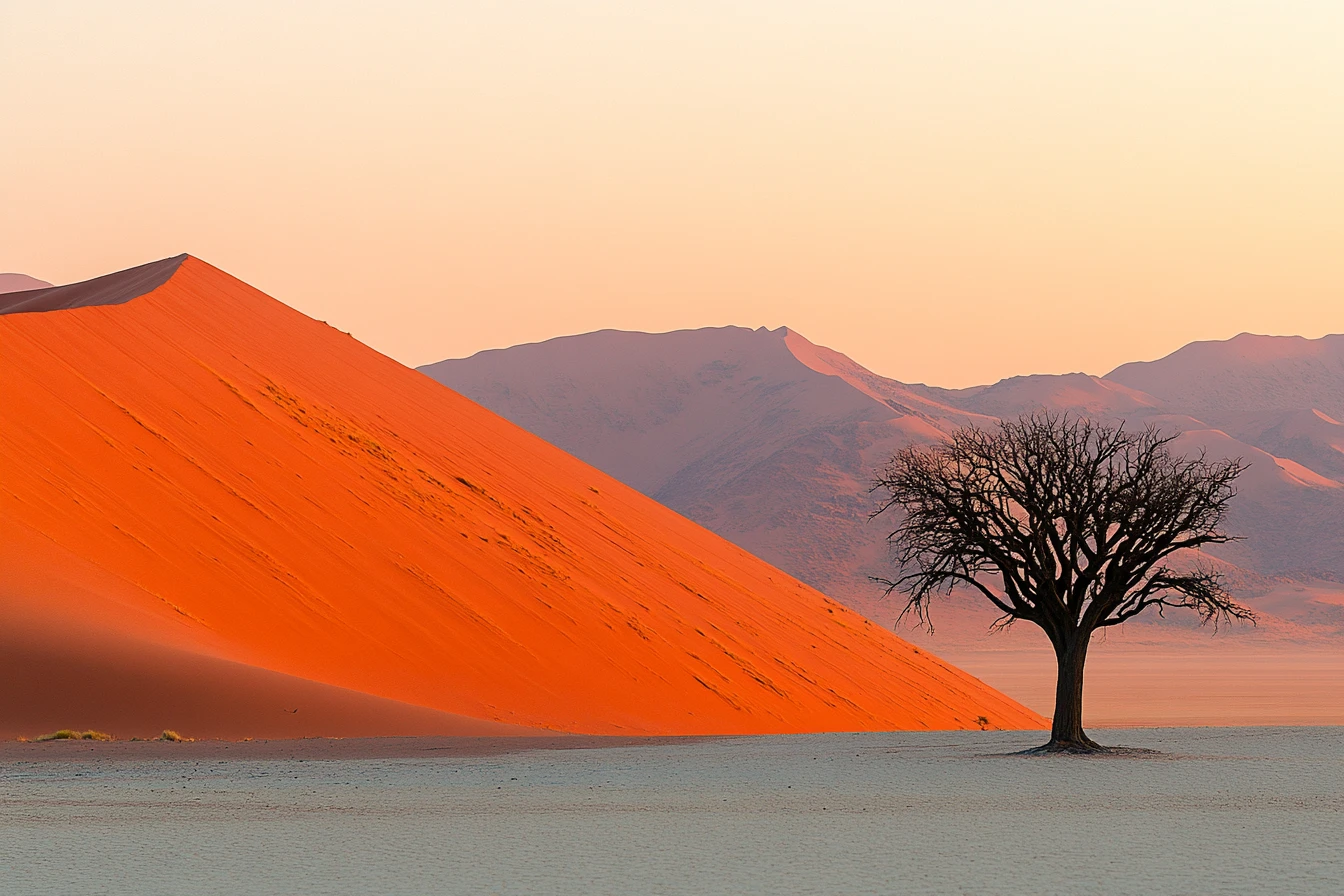
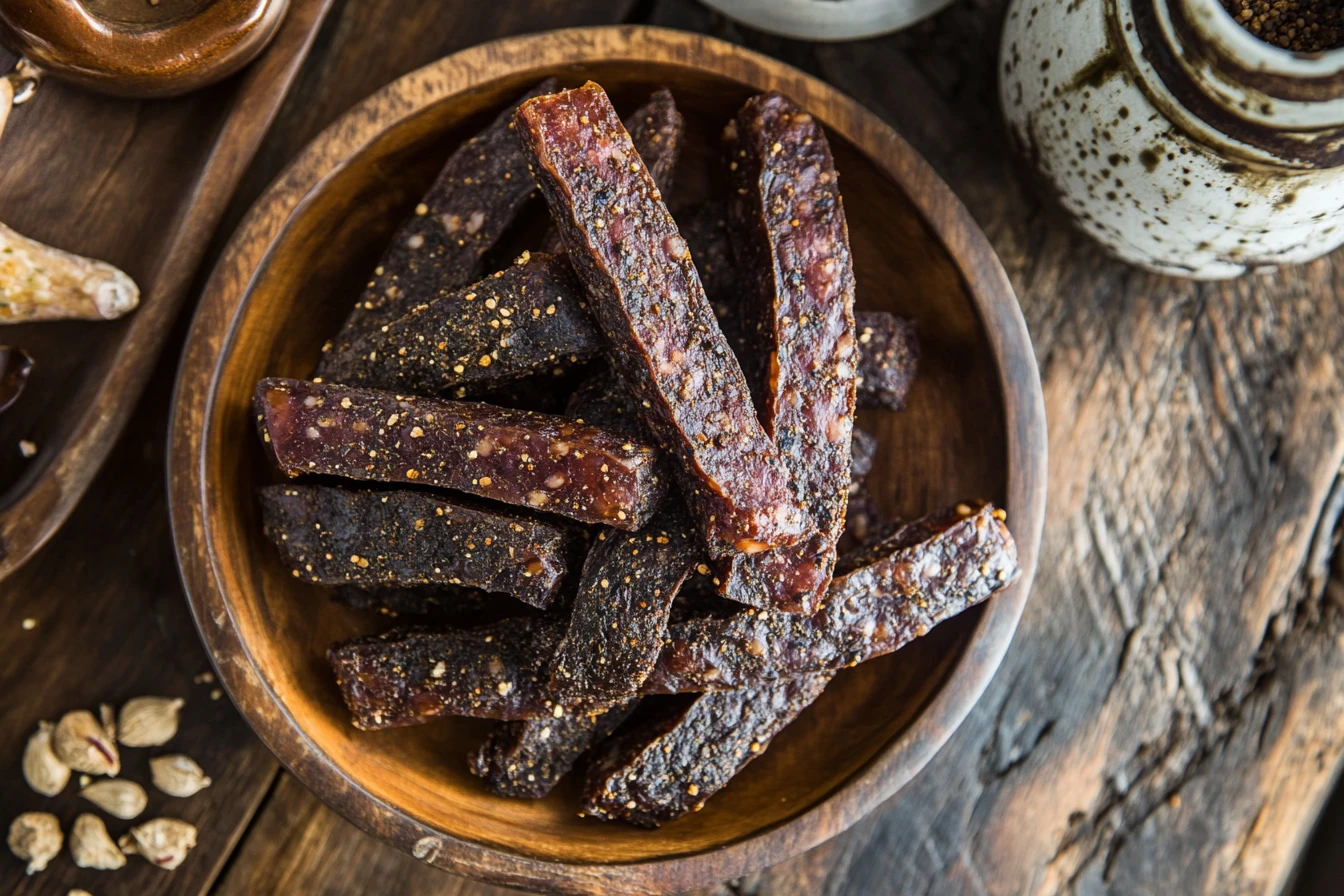
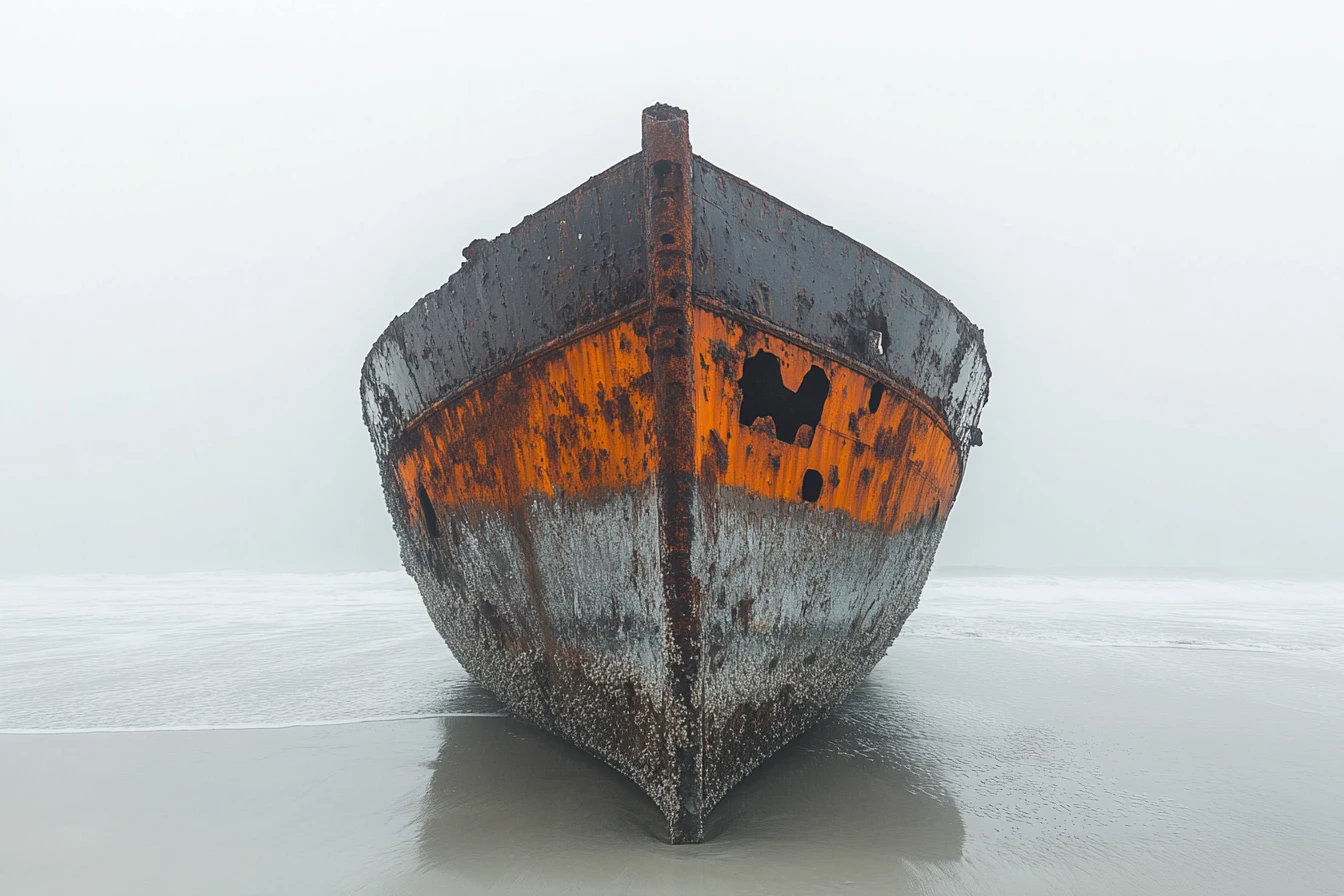
🏜️ Sossusvlei Dune 45 · Tap to read🥩 Padstal biltong · Tap to read🚢 Skeleton Coast wreck · Tap to read
Geography
Regional Allergen Risk Map
Namibia's regional risk gradient is overwhelmingly an infrastructure gradient, not a cuisine gradient — the same biltong appears in every region; what changes is how far you are from an ICU. Etosha, the Skeleton Coast, Damaraland, the Kalahari, and the Caprivi sit 200–500 km from definitive trauma care. Khomas (Windhoek) and Erongo (Swakopmund/Walvis Bay) are the country's two medical anchors — Lady Pohamba, Mediclinic Windhoek, and Mediclinic Swakopmund are the only private tertiary hospitals with consistent epinephrine stock and ICU capability. The cuisine layer is overlaid on top: Erongo adds the German-Namibian sesame-bakery belt, ǁKaras and Zambezi add fish and shellfish exposure, Omaheke adds the cultural-visit and demonstration-food dimension. Eight regions are profiled below; the constant across all of them is unlabeled biltong-spesery in padstal supply chains.
Loading region map…
↑ Hover a region for detail
🏛️
Khomas (Windhoek) · Khomas
MODERATE
Windhoek is the regulatory and medical anchor for the whole country. Lady Pohamba Private Hospital and Mediclinic Windhoek are the two definitive anaphylaxis-capable centres. Fine-dining restaurants — Joe's Beerhouse, Leo's at the Castle, the Stellenbosch Wine Bar — accept written allergy cards reliably. The padstal-and-fuel-station risk drops because supermarket-deli infrastructure dominates urban eating.
Swakopmund is the German-Namibian capital — the bakeries, cafés, and Konditoreien sell brötchen, pretzels, and seeded rolls in volume. Sesame is pervasive here in a way it is not elsewhere in the country. Mediclinic Swakopmund is the regional trauma centre. Walvis Bay adds shellfish exposure (oysters, kabeljou) that is rare in the interior.
Hardap hosts the Sossusvlei lodge cluster, the country's signature landscape destination. Lodge kitchens here run on a single weekly fresh-food drop from Windhoek. Sesriem itself has a fuel station and a small shop; the next medical facility beyond the lodge doctor (where present) is in Mariental, 200 km north, and the next anaphylaxis-capable centre is Windhoek. Pre-book everything; padstal stops on the C19 are a regretted convenience.
Kunene is the most isolated traveler region — the Skeleton Coast Park, Damaraland, the Kunene River. There is no hospital closer than Khorixas or Opuwo (basic district hospitals) and definitive care requires evacuation to Windhoek or Swakopmund. Most lodges here are fly-in only; if you are driving, you are committed to a multi-day round trip. Carry two EpiPens minimum and over-fuel for road egress.
Etosha is the wildlife flagship destination. Lodge clusters at Okaukuejo, Halali, and Namutoni run NWR or operator kitchens; private concessions (Ongava, Onguma) execute better on dietary requirements. Park gates close at sunset, which means a 4 PM anaphylactic reaction at Halali becomes a serious problem — drive time to definitive care is 2–4 hours and helicopter access requires fuel cooperation.
The Zambezi Region (formerly Caprivi) is the country's wetland strip — the cuisine shifts toward freshwater fish (tigerfish, bream, oshana fish) and the seasonal floods change supply chains. Katima Mulilo is the only town of size; the state hospital handles basic emergencies but is not a definitive anaphylaxis centre. Cross-border evacuation to Kasane (Botswana) or Livingstone (Zambia) is sometimes faster than Windhoek.
Omaheke / the Namibian Kalahari is the country's east — red-dune lodges around Gobabis, cattle-farm guesthouses, and the San community visits at Grashoek and Tsumkwe (Ju/'Hoansi Living Museum and surrounding villages). Itineraries here are lodge- and farm-stay-based rather than restaurant-based; food usually comes from one prepared kitchen. The distinctive risk type is cultural-tourism food encounters — bushwalks, demonstration foods, campfire meals — where a written allergy card and a guide-as-translator matter more than a menu. Medical access is thin: Gobabis district hospital is the regional facility; definitive private tertiary care is Windhoek (200–400 km).
Southern Namibia is the country's quietest tourist region — Lüderitz for German colonial atmosphere and oysters, Aus for the desert horses, the Fish River Canyon for hikers. Seafood exposure dominates Lüderitz. Keetmanshoop is the regional medical anchor but is a basic facility; serious cases are referred to Windhoek (500 km).
The Namibian allergen landscape is shaped by one structural fact: nothing is mandatory-labeled in restaurants, and locally-produced packaged goods follow a 1979 ordinance that has no allergen clause. South African R146-compliant imports are the only reliable allergen disclosure on shelves. The cuisine layers three high-prevalence vehicles — grondboontjie-meel (groundnut/peanut flour) as a documented binder in some commercial spice blends and unlabeled padstal rubs, sulfiete (sulfites) in every cured meat as the dish-defining cure, and sesamsaad (sesame) common in seeded German-Namibian bakery, with high Konditorei cross-contact risk. Game-meat exposure (animal_proteins) is statistically distinct here because the proteins are everywhere: gemsbok, kudu, springbok, eland, ostrich. The rows below order by structural supply prevalence across Namibian regional cuisines and the road-trip venue ladder.
Tap an allergen chip to filter the table below
Filter:
Allergen
Supply Prevalence
Hidden Risk
Cross-Contact
Restaurant Risk
Peanut / Grondboontjie⚠grondboontjie-meel · grondboontjie-olie · groundnut rub · spice mix · biltong-spesery · marinade · Not mandatory in Namibia
Clinical allergen prevalence in Namibia: Population-level Namibian food-allergy data is thin. Regional South African data is the best available proxy: peanut and tree-nut allergy track global averages, sesame is rising in urban populations, sulfite intolerance is meaningfully more clinically visible than in European cohorts (likely reflecting per-capita cured-meat consumption). The Allergy Society of South Africa (ALLSA) publishes regional guidance applicable to Namibian travelers and clinicians.4
Why these allergens matter in Namibia specifically: Three out of four hidden-risk drivers are structural to the road trip, not to the cuisine: peanut hides in unlabeled padstal spice rubs (no ingredient lists), sulfites are the cure that defines biltong and droëwors as products, and sesame is the seed crust that defines the German-Namibian brötchen recipe. The fourth, game meat, is high-supply / low-hidden — it is everywhere but rarely substituted for an unfamiliar protein without disclosure. The two rows to watch most closely for a Namibia trip are peanut (grondboontjie-meel as biltong binder, padstal product unverifiable) and sulfites (the cure itself, structural across the cured-meat shelf).
Regional variance within Namibia: These scores reflect national averages along the self-drive corridor. Khomas (Windhoek) and Erongo (Swakopmund) have stronger urban kitchen awareness via the international-traveler base. Erongo concentrates sesame at far higher rates via the Swakopmund Konditorei belt. Zambezi shifts the fish exposure profile toward freshwater species (tigerfish, bream) rather than ocean fish. Omaheke concentrates cultural-visit and demonstration-food cross-contact that no kitchen taxonomy captures. The eight regions above surface these gradients.
What's safer than expected in Namibia:Soy is essentially absent from traditional Namibian cuisine outside the modern Asian-fusion handful in Windhoek. Egg exposure outside breakfast and baking is low — lunch and dinner default meat-first. Plain grilled game (gemsbok, kudu, springbok) with no spice rub is the country's safest restaurant order and is on every lodge menu. Pap (mieliepap) is naturally gluten-free and a reliable starch base across the country. Buckwheat, fungal/mold/yeast load, and allium-specific risks are all low for typical Namibian itineraries.
Languages
Languages Spoken
Namibia's language ecology is unusual: English is the sole constitutional official language (since 1990), but it is the third or fourth language of most of the population. Afrikaans is the operational lingua franca in restaurants, lodges, padstals, and supermarket-deli counters across the country. German is concentrated in Swakopmund, Lüderitz, and the German-Namibian farm-stay belt. Oshiwambo is the most-spoken household language but rarely surfaces at traveler-facing venues. The card strategy is Afrikaans first, English second, German as situational bonus. There is no significant Namibian-Afrikaans dialect divergence from South African Afrikaans at the kitchen-vocabulary level — standard Afrikaans cards are read identically in Windhoek, Swakopmund, and at any padstal.
Highest — lodge cooks, padstal owners, supermarket-deli staff default to Afrikaans in informal interaction even when the menu is English. The kitchen verbs (braai, bredie, kook, gaarmaak, spesery, kuur) are Afrikaans. Standard Afrikaans cards from Prepared Travel are read identically across Namibia and South Africa — no dialect adjustment needed. The card's job is to name grondboontjie-meel, sesamsaad, sulfiet-kuur in the words a cook actually thinks in.
Nationwide — operational kitchen language for the road-trip corridor
Reliable at lodges and fine dining; declines at padstals and rural fuel stops. Almost everyone reads English; not everyone parses it under stress. English is the constitutional official language and the language of all signage, regulation, packaging, and lodge correspondence. The English-back side of an Afrikaans card is what an international-hotel F&B manager reads first — it's essential, not redundant.
Nationwide — constitutional official language, all signage
High in Swakopmund Konditoreien and Lüderitz hotels; near-zero elsewhere. The German-Namibian community is small (~30,000 people) but operates a disproportionate share of the Swakopmund hospitality industry. For a trip with a Swakopmund/Lüderitz/farm-stay leg, generate a German card from Prepared Travel as a supplementary tool — not the primary, but worth the five minutes.
Swakopmund · Lüderitz · German-Namibian farm-stay belt (Otjiwarongo, Omaruru)
Demographically dominant (~49% of population, household language) but rarely the language of traveler-facing kitchens. The community-based tourism enterprises in the north (Onyuulaye, Nakambale Museum, Ongula Village) use English or Afrikaans with travelers. Add only for extended community/cultural-visit itineraries beyond the standard self-drive corridor.
Spoken in Kunene, Erongo (inland), and parts of Omaheke. Encountered in Damaraland and Kaokoland community-based tourism (Himba and Herero villages). Like Oshiwambo, English or Afrikaans is the traveler-interface language in nearly all cases. A guide is the practical translation layer for cultural visits.
Khoekhoegowab (Nama/Damara) is one of the most distinctive click-consonant languages in Africa and Namibia's third-largest language community after Oshiwambo and the Khoisan group. Spoken across ǁKaras, Hardap, Kunene, and Erongo. Operationally absent from the traveler-corridor kitchen interface — English and Afrikaans dominate the venues a road-trip itinerary touches.
ǁKaras · Hardap · Kunene · Erongo
<2% traveler-corridor kitchen reach
Two cards, every kitchen: Generate an Afrikaans + English dual card from prepared.travel/generator. That is the card strategy for every Namibian destination — Windhoek, Sossusvlei, Etosha, Swakopmund, Caprivi, Kalahari, Fish River Canyon. The Afrikaans side names grondboontjie-meel, sesamsaad, sulfiet-kuur in the words a lodge cook or padstal owner actually thinks in. The English side is what an international-hotel F&B manager reads. For a trip with a meaningful Swakopmund / Lüderitz / German-farm-stay leg, add a third German card as situational backup. Cards in Oshiwambo, Otjiherero, or Khoekhoegowab do not improve safety on a standard road-trip itinerary — the kitchen interface is Afrikaans/English even where the household language is something else.
Reading Labels
Afrikaans Label & Menu Guide
Afrikaans Label & Menu Guide
Allergens on SA-import packaged goods appear in two places: bolded inline within the ingredient list, and in a separate ‘Bevat / Contains’ line beneath. The bolded inline is the more reliable signal — the ‘Contains’ line is voluntary and not always present. Read both sides of the bilingual Afrikaans/English label; sometimes one declares an allergen the other omits. On Namibian-manufactured packaged goods, there is no required allergen statement — check the ingredient list manually and assume worst case. The cards below give specific Afrikaans terms for each allergen and where they appear on packaging and menus.
GRONDBOONTJIE
Peanut / groundnut ⚠
Appears in biltong-spesery (spice rub), braai marinades, and SA-import snack labels. Forms: grondboontjie-meel (flour), grondboontjie-olie (oil), grondboontjie-botter (butter). The #1 hidden vehicle term — memorize this one above all others.
SESAMSAAD
Sesame seed ⚠
Structural in German-Namibian rolls (brötchen) and SA seeded breads. The seed crust IS the recipe, not a garnish. Every Swakopmund Konditorei sells seeded loaves at volume.
SULFIETE
Sulfites · SO₂ ⚠
Declared as ‘sulfiete’ or ‘natriummetabisulfiet’ on packages >10mg/kg per SA R146. The cure that defines biltong and droëwors; a commercial preservative often added to boerewors. Also in wine, dried fruit, packaged sauces.
EIER
Egg ⚠
In koeksisters, melktert, vetkoek glaze, and most baked goods. Eierwit (white) and eiergeel (yolk) appear as components on richer R146 labels.
MELK
Milk / Dairy ⚠
And related: kaas (cheese), botter (butter), room (cream), jogurt. Melktert is yolk-dairy-wheat triple-structural. Bobotie uses milk-soaked bread in its base.
KORING / GLUTEN
Wheat / gluten ⚠
In rusks, koeksisters, brötchen, vetkoek, melktert. Pap (mieliepap, sorghum) is wheat-free; double-check vetkoek and roosterkoek before assuming.
SOJA
Soy ⚠
Soya, soya-bean oil, soya flour in SA-import processed snacks. Less culinary use in traditional Namibian cuisine than in Asian destinations. Modern fusion venues in Windhoek use molho de soja.
VIS
Fish ⚠
Kabeljou, snoek, kingklip on the coast; freshwater tigerfish and bream in the Caprivi. Vissaus (fish sauce) appears in modern Windhoek venues. Check Walvis Bay restaurant menus for cross-contact at grills.
SKULPDIERE
Shellfish ⚠
Oysters (oester), prawns (garnale), crayfish (kreef), calamari. Concentrated in Lüderitz and Walvis Bay; rare in the interior. The collective term seekos is ambiguous — name crustaceans and molluscs separately.
BOOMNEUTE
Tree nuts ⚠
Almond (amandel), pecan (pekanneut), macadamia, walnut. Appears in lodge dessert trolleys via SA dessert imports: peppermint crisp tart, Romany Creams biscuits, pecan-nut tart.
BEVAT
‘Contains’ line ★
The SA R146 allergen-disclosure line on packaged goods. ‘Bevat: koring, eier, melk, soja, grondboontjie’ = ‘Contains: wheat, egg, milk, soy, peanut.’ The single most important keyword to scan for on imported product labels.
ALLERGIE
Allergy / allergen ★
Kitchen vocabulary for explaining a dietary requirement. ‘Ek het ’n allergie vir grondboontjies’ = ‘I have a peanut allergy.’ Allergeen = the allergen itself. ‘Ernstige allergie’ = ‘severe allergy’.
How allergens appear on Namibian packaging: On SA-import packaged goods, the allergen statement appears at the foot of the ingredient panel as ‘Bevat: [allergens]’ / ‘Contains: [allergens]’. Both Afrikaans and English versions appear on bilingual labels — read both, since one is occasionally more complete than the other. On Namibian-made packaged goods, there is no required allergen statement; check the ingredient list manually and assume worst case. ‘Mag spore bevat van …’ = ‘may contain traces of…’ is voluntary precautionary labeling on SA imports, common but not legally required.
How grondboontjie-meel hides on Namibian menus: The primary hidden vehicle, grondboontjie-meel (groundnut flour) in biltong-spesery, almost never appears on menus by name — it is invisible inside ‘biltong’, ‘droëwors’, ‘spice rub’, or ‘house marinade’. Ask in writing: ‘Bevat die spesery grondboontjie-meel?’ (Does the spice contain groundnut flour?) — this is the single most important menu-reading question on the trip. Padstal product cannot be verified at all; decline on principle.
Cuisine
Dish Allergen Map — 13 Namibian Dishes
Namibian cuisine is meat-first and method-first — grilled, dried, or cured over wood and salt. The STRUCTURAL allergen story lives in two dishes (biltong and droëwors) and two ingredients (grondboontjie-meel rub and sulfiet cure). The INCIDENTAL allergens cluster in baking (sesame, wheat, egg) and the SA-import dessert chain. Every dish below is classified STRUCTURAL (the allergen defines the dish, cannot be modified out) or INCIDENTAL (the allergen appears via sauce, garnish, or variant and may be mitigated). The STRUCTURAL distinction matters because Namibian kitchens defend canonical recipes — you cannot remove the spice cure from biltong, while seeded brötchen carry sesame the Konditorei rarely separates from plain rolls. A plain braai'd game steak is the country's safest restaurant order; padstal biltong is its most dangerous snack.
STRUCTURAL for sulfites: sodium metabisulfite is the standard cure and cannot be modified out — the cure IS the dish. POSSIBLE STRUCTURAL for peanut: some Southern African commercial spice blends use grondboontjie-meel (groundnut flour) as a binder, and padstal product carries no ingredient list. Peanut-allergic travelers cannot verify. Decline padstal biltong outright. SA R146-labeled commercial biltong (Pick n Pay, Spar, Woolworths) at least carries an ingredient list — read it for 'grondboontjie' or 'peanut' before purchasing.
HIGH
Dried sausageDroëwors · Nationwide
PEANUT (possible spice binder)SULFITES (cure)BEEF / GAME
The dried sausage twin of biltong. Same sulfite cure, same possible grondboontjie-meel in commercial and padstal spice blends. Often sold in 50-gram individual sticks — the 'safe snack' impression is misleading. SA R146-labeled product is the only verifiable option.
SULFITES (commercial preservative, possible)WHEAT (casing · rusk filler in some recipes)
The fresh sausage on every braai. Coriander and cumin define the flavor; the casing is collagen or sometimes wheat-based; some traditional recipes add rusk crumbs as a binder (wheat). Commercial boerewors may contain sulfites or other preservatives — verify the label or butcher specification; it is not a dish-defining cure the way biltong's is. The traveler-side risk is lower than biltong because boerewors is typically eaten cooked-fresh at a lodge or restaurant braai with disclosure possible.
MOD
Grilled game steakBraai (gemsbok / kudu / springbok) · Lodge default
PEANUT (spice rub if applied)GAME MEATMODIFIABLE — SAFE PATH AVAILABLE
The country's safest restaurant order when ordered geen spesery, net sout en peper (no spice mix, just salt and pepper). The structural allergen is the protein category itself, which is normally what the traveler came for. The risk is the spice rub — named explicitly, the lodge cook will skip it. This is the dish to default to at every lodge dinner.
MOD
Flame-grilled beef stripsKapana · Single Quarters Market, Windhoek
PEANUT (communal spice bowl)BEEF
Single Quarters / Oshetu Market in Katutura grills kapana — flame-cooked beef strips that diners hand-dip into a shared communal spice mix. The risk is cross-contact at the communal bowl, not necessarily peanut in the spice itself (composition varies vendor to vendor; chili, salt, coriander dominate). Cultural-experience-worth-doing for the right traveler; not a fit for severe peanut allergy regardless of card. If you go, eat the meat without dipping and stay on the airside of the grill.
The iconic communal pot meal. Ingredients are layered — meat, root vegetables, sometimes dairy, sometimes wine, always commercial spice mixes. Recipes vary household by household. At a lodge or community-tourism kitchen with prior notice, the cook can build a known-safe pot. Decline if added blind at a community visit or campfire setting.
CORN (structural but commonly safe)MODIFIABLE — SAFE PATH AVAILABLE
Maize porridge. Naturally gluten-free, peanut-free, sesame-free. The default starch base across Namibia — on every lodge plate, every Oshiwambo household meal (as oshifima), every braai side. Corn-allergic travelers should ask about sorghum-pap variant. Otherwise this is the safest single dish in the country.
LOW
German-Namibian bread rollsBrötchen · Swakopmund Konditoreien, Lüderitz, German farm stays
WHEATSESAME (seeded crust · high cross-contact)
The signature German-Namibian breakfast bread. Wheat is structural. Plain crust variants exist but seeded loaves (sesame, poppy, sometimes both) are common, and cross-contact in the Konditorei is high — seeded and plain rolls share trays, baker's peels, and counter tongs. Sesame-allergic travelers should skip the Konditorei breakfast counter entirely unless the bakery can confirm a dedicated plain-roll process.
Deep-fried wheat dough — the Namibian/Afrikaner answer to fry-bread. Often filled with mince or jam at the padstal. Shared frying oil is the cross-contact concern (fries, koeksisters, sometimes biltong-spesery-coated items in the same fryer). The dough itself is allergen-thin (wheat); the fryer is the risk.
MOD
Plaited syrup doughnutsKoeksisters · Padstals, Konditoreien, every braai dessert table
WHEATEGGDAIRY (some recipes)
Triple-allergen risk at most padstals. Plaited dough, deep-fried, soaked in spiced sugar syrup. Two distinct regional variants exist (Cape Malay koeksister and Afrikaner plait koeksister) — both are wheat-and-egg structural. No padstal version is modifiable.
Triple-structural Afrikaner dessert. Milk-egg custard in a wheat shortcrust, topped with cinnamon. No allergen-free version exists in any traditional Konditorei or padstal. The cinnamon dusting is the only thing you can opt out of.
The South-African dessert chain dominates lodge trolleys via three signatures: peppermint crisp tart, Romany Creams (coconut and chocolate biscuits), and pecan-nut tart. Peppermint crisp itself is cream + caramel + Tennis biscuit + chopped Peppermint Crisp chocolate bar — structural dairy and wheat. Some lodge variants add chopped pecans or macadamia. Tree-nut-allergic travelers should confirm at every lodge.
MOD
Millet porridge with stewed gameOshifima with onyama · Northern Namibia, community visits
GAME / BEEFMODIFIABLE — SAFE PATH AVAILABLE
Northern Namibia's defining household meal. Oshifima is the millet/sorghum porridge equivalent of pap; onyama is the meat (typically beef, sometimes game). Both elements are allergen-clean for typical road-trip profiles. Encountered most often at Oshiwambo community-based tourism stops, where the cook prepares fresh and is usually willing to discuss ingredients via a guide.
LOW
Country safest order: A plain grilled game steak (gemsbok, kudu, springbok, eland) with no spice rub — geen spesery, net sout en peper — alongside pap (mieliepap) and a green salad. This dish is structurally low-allergen and is on every lodge menu in the country. Pap is naturally gluten-free, peanut-free, and sesame-free. The salad is typically tomato-cucumber-onion-vinaigrette; ask the cook to skip the spice mix in the dressing.
The padstal-and-Konditorei pattern: The two food environments in Namibia where allergen disclosure is structurally absent are the padstal (roadside farm stall) and the German-Namibian Konditorei. Padstal product has no ingredient list and uses spice mixes by the kilogram. Konditorei seeded breads and laminated pastries share trays, peels, and tongs — sesame cross-contact is the norm, not the exception. The safer breakfast pattern in Swakopmund: a hotel-restaurant plated breakfast (eggs to order, bacon, fruit), not the Konditorei counter.
The lodge dessert-trolley pattern: Lodge dinners across Namibia route dessert through a small fixed selection that almost always includes the SA-import trio: melktert, peppermint crisp tart, malva pudding. Romany Creams biscuits appear on the coffee tray. Pecan-nut tart appears as a Sunday-night special. Tree-nut-allergic travelers should specify at booking that desserts must be nut-free across the trip, not per-meal. Most lodges can produce a fresh fruit plate as a default safe alternative.
Where to Eat
Venue Safety Profile
The venue ladder for Namibia maps almost exactly onto the self-drive day — padstal (HIGH), fuel-station forecourt (HIGH), supermarket deli (MODERATE), guesthouse / B&B (MODERATE), self-catering campsite (LOWER), lodge / safari camp (LOWER), international hotel (LOWEST). The signature_experience venue is the lodge — the entire allergy-management strategy is structured around getting the booking right. The biggest under-recognized leverage is self-catering: with a 4x4 cooler, sealed SA-import ingredients bought in Windhoek, and dedicated utensils, severe allergies are managed at the supply chain rather than the kitchen interface.
Higher Risk
Most Reliable
🛻Padstal (roadside farm stall)
Unregulated Afrikaans-tradition farm stalls along every highway — selling biltong, droëwors, koeksisters, melktert, roosterkoek, homemade jams, and rusks. Allergen vocabulary is near zero; the cultural model classifies groundnut flour as 'spice'. No ingredient lists. This is the venue category Namibia's allergen regime fails hardest.
Decline all biltong, droëwors, baked goods, and sweets at padstals regardless of card. Sealed SA R146-labeled product at the next supermarket is the safer route to the same food experience.
HIGH
⛽Fuel-station forecourt (Engen Wimpy, Puma, Vivo)
Every fuel station of size has an attached Wimpy, OK Foods deli, or bakery selling pre-packaged biltong, brötchen, koeksisters, and toasted sandwiches. Staff turnover is high, English-only menus, no allergen training. The pre-packaged Wimpy chain follows SA disclosure (R146); the bakery counter does not.
Stick to sealed SA-import packaged snacks with R146 ingredient labels. Skip the bakery counter. Fuel stops are for fuel, not for food.
HIGH
🛒Supermarket deli (OK Foods · Spar · Pick n Pay)
The supermarket triad runs the Namibian food supply. Pre-packaged goods carry SA R146 labels (allergen disclosure is mandatory in SA, and SA imports dominate shelves). The hot-counter deli, fresh-baked rolls, and butchery sections do NOT carry allergen labels — these are Namibian-regulated and follow the 1979 ordinance (no clause).
Buy SA R146-labeled packaged goods for road snacks. Avoid the hot deli and fresh-baked counters unless a manager confirms ingredients in writing. The packaged-shelf approach is the safest food-procurement strategy in the country.
MOD
🏡Guesthouse / B&B / farm stay
Mid-range Namibian guesthouses run small kitchens with consistent staff. Communication on allergens via written card is reliable, but the menu is fixed (often a single set dinner option) and substitutions depend on the cook's flexibility. Some German-Namibian farm stays specialize in Konditorei desserts — sesame-allergic travelers should ask explicitly about baking.
Email allergy details at booking + 72 hours before arrival. Specify in writing: 'no commercial spice mix, no groundnut, no sesame seed.' A printed Afrikaans card on arrival reinforces the email instruction.
MOD
⛺Self-catering campsite / roof-tent cooking
The most under-recognized safety strategy in Namibia, and arguably the safest path for severe allergies. With a 4x4 cooler, sealed ingredients bought in Windhoek or Swakopmund, and dedicated utensils, you control the kitchen — risk shifts from 'communicating across language and culture' to 'planning a supply chain.' Campsites at Sesriem, Etosha (NWR), Spitzkoppe, Damaraland, and the Kalahari all support this model. The constraint is provisioning discipline: stock for one missed lodge meal and one closed-shop day, and treat shared campsite kitchens and braai grids as contaminated.
Bring sealed staples, dedicated knife / board / sponge / sealed snack box. Re-stock only at major-town supermarkets (Otjiwarongo, Outjo, Swakopmund, Keetmanshoop), never at fuel-station forecourts.
Top-tier safari lodges execute dietary requirements reliably — chef briefings happen at the start of the booking pipeline, and the international ownership/clientele creates muscle memory for allergen management. The constraint is supply chain: most lodges receive one weekly fresh-food drop, so the menu is locked at the start of the week. Last-minute additions are physically impossible. The lodge IS the signature_experience venue — get the booking process right and the lodge becomes the safest dining environment on your trip.
Book through an operator that uses the lodge group's allergy-protocol channel (Wilderness, andBeyond, Ultimate Safaris). Reconfirm 72 hours before arrival. Bring two printed Afrikaans cards (one for the F&B desk, one for the chef).
LOWER
🏨International hotel (Hilton Windhoek, Avani, Strand)
International branded hotels in Windhoek and Swakopmund follow chain-wide allergy protocols, run multiple kitchen lines for buffet vs à-la-carte, and have English-fluent F&B managers. The Windhoek Hilton, Avani, and Strand Hotel Swakopmund are the most reliable urban environments for serious allergies in the country.
Book the city hotel for arrival night and departure night — gives you a known-safe buffer at both ends of the road trip. Order à-la-carte rather than buffet on arrival night.
BEST
The breakfast-buffet cross-contact pattern: Hotel breakfast buffets — particularly Hilton Windhoek and Strand Swakopmund — present standard buffet cross-contact: shared serving tongs across seeded-bread rolls, biltong platters, and koeksister trays. The German-Namibian breakfast pattern is bread-heavy (brötchen, seeded rolls, rye, pretzel, Konditorei pastries — all sesame cross-contact risks). Request à-la-carte breakfast service if available. Most international hotels in Windhoek and Swakopmund accommodate.
The lodge-booking pattern: Top-tier lodges (Wilderness, andBeyond, Ultimate, Onguma) route dietary requirements through the booking pipeline and the head chef receives them before your week starts. Confirm at three checkpoints: (1) initial booking email naming the specific terms 'grondboontjie / peanut, sesamsaad / sesame, sulfiet / sulfite'; (2) 72-hour-out reconfirmation by phone or operator; (3) Afrikaans card handed to the F&B manager at check-in. Three touchpoints close the gap between 'noted' and 'executed.'
The self-catering campsite pattern: Self-catering reframes the safety problem — instead of asking thirty different cooks in five regions to understand your allergen vocabulary, you sit on one well-stocked cooler. The model works best when 60–70% of meals are self-catered and lodge stays are booked at known-allergy-friendly properties for the wildlife-experience legs. Sesriem, Damaraland, Etosha (NWR), Spitzkoppe, and Kalahari campsites all support roof-tent cooking with proper provisioning. Resupply only at major-town supermarkets where SA R146 labels are reliable.
Contextual Intelligence
Self-drive is a logistics problem before it is a meal
Self-drive overlanding — padlangs — is the why-you-came story for Namibia. 3,000 to 4,000 kilometres over two to three weeks, the road IS the experience, and the food is whatever the road provides. The allergic traveler’s job is to plan the food supply chain in parallel with the route, because the road itself does not provide reliable allergen-safe food. The lodge bookings and the supermarket stops are not afterthoughts — they are the spine of a safe trip.
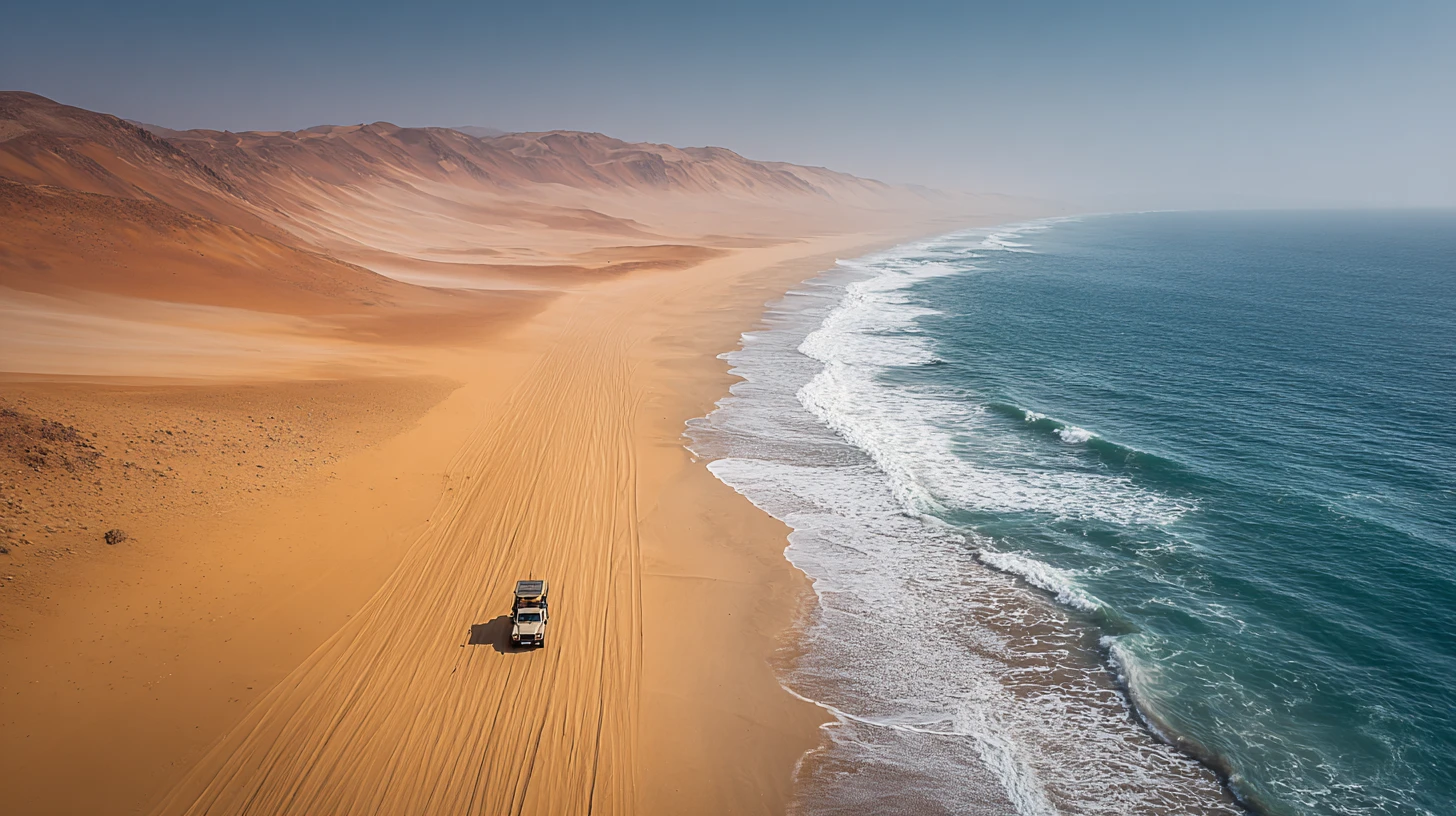
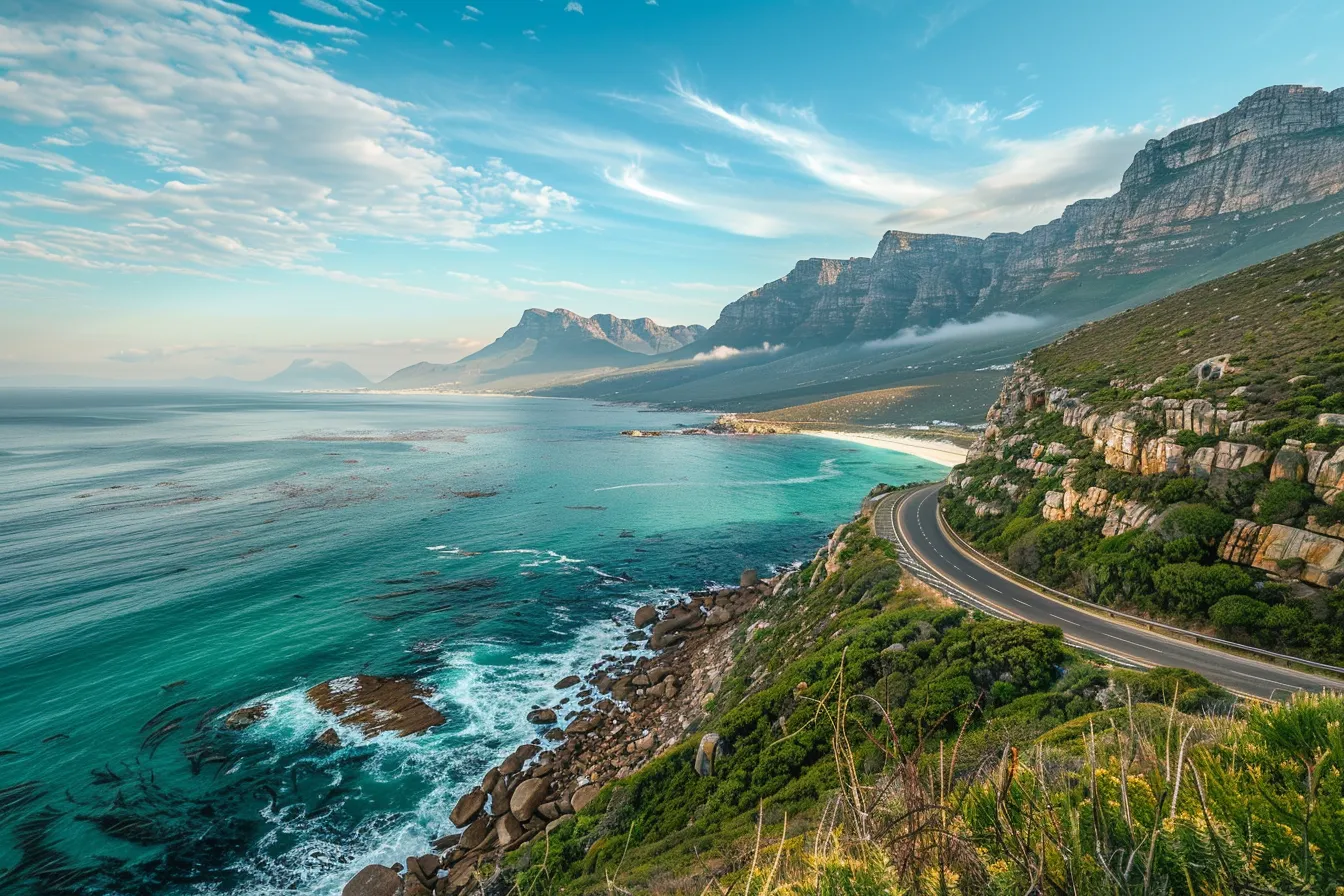
The C34 salt road north of Swakopmund — Namibia's classic coastal self-drive, where the Atlantic runs alongside the desert and the next fuel or food stop can be a hundred kilometres away.
🚙
Build the trip around your food, not around your route.
The classic Namibia loop is route-first: Sossusvlei → Swakopmund → Damaraland → Etosha → Caprivi. The allergic traveler must invert it. Identify the lodges with the strongest dietary protocols (Wilderness, andBeyond, Ultimate Safaris, Onguma), draft the route to connect them, and treat the gravel-road segments as supply-chain problems to be packed for — not eaten through.
🛻
The padstal protocol: walk past, don’t stop
Padstals are the romantic image of a Namibian road trip — Afrikaans farm stalls with biltong hanging in the window, a coffee pot, a koeksisters tray. For an allergic traveler they are also the highest single-exposure risk on the trip, not because every padstal product carries an allergen, but because no padstal product carries an ingredient list. Spice rubs vary by producer; some Southern African commercial blends use grondboontjie-meel (groundnut flour) as a binder; sulfite cure concentrations are uncontrolled and untested. There is no way to verify before tasting. Sample chunks handed across the counter for tasting are the most common single point of accidental exposure. The protocol is to admire from the car, not from the counter.
The rule: Decline all padstal biltong, droëwors, baked goods, and sweets on principle — regardless of how strongly the owner insists their product is safe.
Allergen pattern: possible peanut (grondboontjie-meel in some spice mixes), structural sulfites (sulfiet-kuur in any cured meat), possible sesame (seeded baked goods), possible tree nuts (koeksister/melktert variants).
📧
The lodge booking pipeline is your kitchen
Top-tier Namibian lodges run on a single weekly fresh-food truck from Windhoek or Swakopmund. Whatever isn’t on that truck cannot appear on the plate. This sounds like a constraint — it is in fact the allergic traveler’s best ally. A lodge that knows about your peanut allergy at the booking stage can simply not order the spice mix for that week, can choose alternative protein cuts, and can prepare your three meals across three days within a fully understood ingredient inventory. The pipeline is: email at booking → confirmation from the dietary contact (not the booking agent) → re-confirmation 72 hours before arrival. Missing any of the three breaks the chain.
The rule: Email each lodge twice — at booking and 72 hours before arrival. Get a named dietary contact, not ‘the kitchen’.
OK Foods, Spar, and Pick n Pay are the country’s three reliable allergen-disclosure environments — not because Namibian law requires labels, but because South African R146 (2010) requires them on SA-manufactured packaged goods, and SA imports dominate the shelves. Stock the cooler at a Windhoek or Swakopmund supermarket on day one: sealed cheese, washed produce, SA-labeled biltong (lower-risk than padstal product though not zero), unseeded packaged bread, fruit, water. This is the supply chain the road does not provide.
The rule: Start every leg of the trip with a Windhoek, Swakopmund, or Otjiwarongo supermarket stop. Read SA R146 labels; trust Namibian deli counters less.
Allergen pattern: trust SA-import shelf labels; distrust hot-counter delis, fresh-baked rolls, and Namibian-manufactured packaged goods (no allergen clause).
🏹
Cultural visits aren’t restaurants — bring your food
If your route includes the Kalahari, Omaheke, Tsumkwe, or the Caprivi, you may visit a San community or Living Museum — the Ju/’Hoansi Living Museum at Grashoek, the Khwe at Mashambo, or smaller community-led visits. These are hosted cultural encounters, not restaurants: no ingredient lists, no allergen vocabulary, no refrigeration, no separate utensils. Bushwalks may include foraged plants, roots, or insects offered as tasting; campfire meals are typically shared from a single pot. The right traveler posture is to bring safe food from Windhoek or Grootfontein, use your guide as translator at the start of the visit (not mid-encounter), and politely decline tasting portions unless the guide can translate ingredients clearly. Do not ask the community to modify a demonstration food, ceremonial offering, or shared meal around your allergy in the moment — it is the wrong frame for the interaction. A polite decline, framed around medical necessity, is the universal-respectful path: ‘Baie dankie, maar ek het ’n erge allergie’ (thank you very much, but I have a severe allergy). Book community-run or community-benefiting experiences; do not photograph people, food, or ceremony without explicit permission; do not hand out sweets, snacks, or medicine.
The rule: Bring safe food. Brief your guide before the visit. Decline tasting offers politely, do not negotiate. Community-run operators only.
Allergen pattern: shared cooking surfaces and demonstration foods; foraged plants and insects (mopane worms, marula, !nara) without ingredient transparency; communal pot meals.
🚁
Distance to definitive care defines the trip
From Sossusvlei to Lady Pohamba Private Hospital in Windhoek is 350 km, four-plus hours on gravel. From Etosha (Halali) to Mediclinic Otjiwarongo is 250 km, three hours. From Damaraland or the Skeleton Coast, road evacuation is six-to-eight hours and helicopter is the only realistic option — which requires evacuation insurance, weather cooperation, and a credit card the operator can charge immediately. This is not a reason to skip Namibia; it is the reason to carry two EpiPens, antihistamines for biphasic reactions, and a written incident protocol that the lodge can act on while the helicopter is still in the air.
The rule: Buy evacuation insurance that covers helicopter retrieval before you book the lodge. Carry two EpiPens minimum.
Allergen pattern: the evacuation distance multiplies the consequence of any exposure — the same accidental peanut bite that triggers a manageable reaction in Windhoek becomes a survival problem at Halali at 4 PM.
⛽
Pace your fuel stops to your food stops
Namibian fuel etiquette is to fuel every chance you get — at 50%, not at 25%. The fuel-station forecourt is also the highest-density allergen-risk environment on the road, because every Engen and Puma forecourt carries an attached Wimpy or bakery. The discipline is to fuel and walk, not fuel and eat. The lodge dinner is two hours away. The supermarket stop is for tomorrow’s road snacks, not for now’s. A skipped forecourt meal is the cheapest safety margin on the trip.
The rule: Fuel up at every stop. Buy food only at supermarkets in towns of size — never at forecourts.
Namibian dining culture is direct, transactional, and warm — closer in register to South African Afrikaans-speaking hospitality than to deferential Asian or formal European service. A written allergy card lands better than a verbal explanation in most settings. Severity language carries weight; soft framing (‘I prefer to avoid’) is read as flexibility, which it is not.
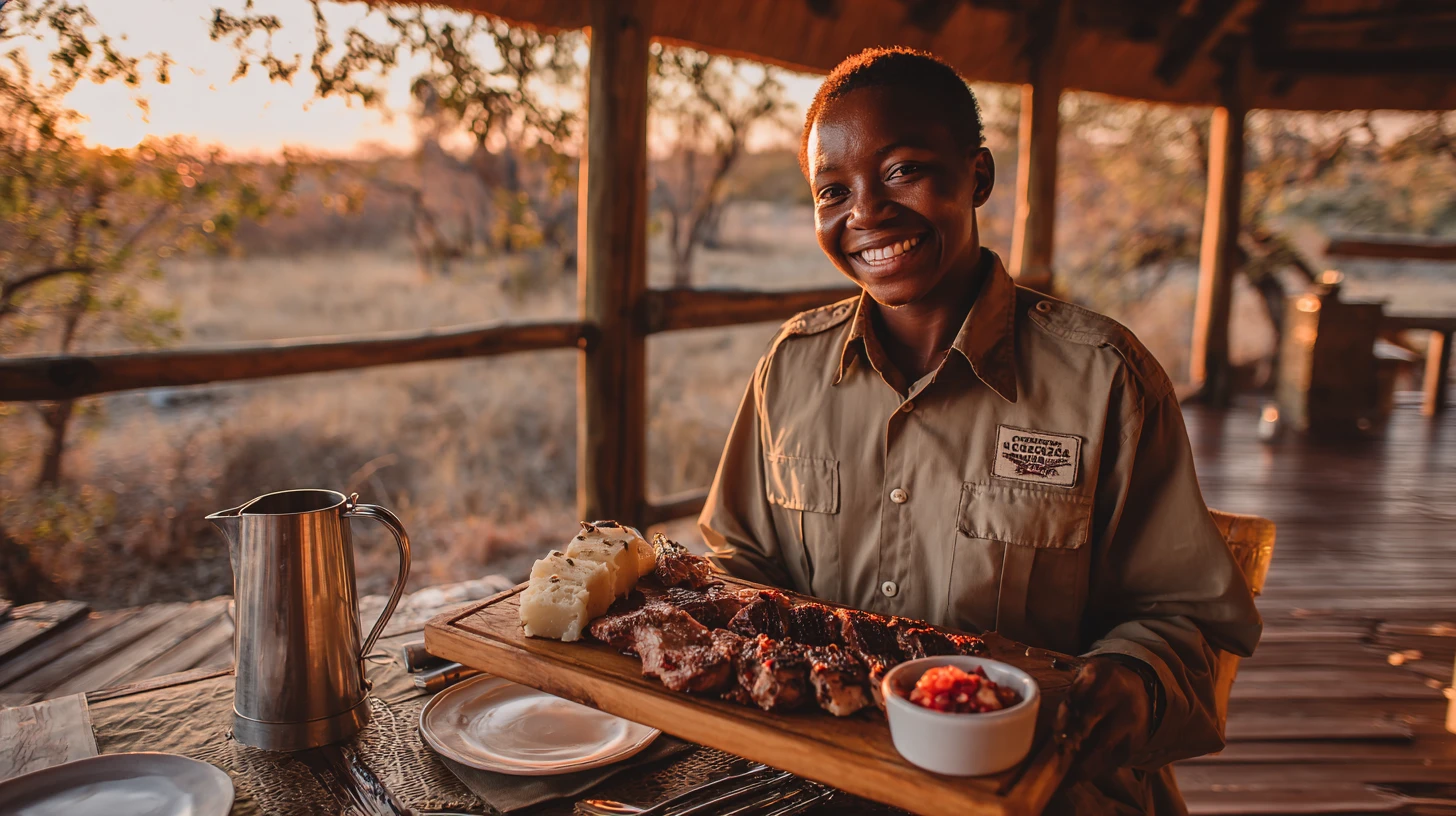
A lodge host brings the evening braai platter to the table — in Namibia the allergy conversation happens here, in plain Afrikaans and before the food leaves the kitchen, not after it arrives.
💬
Hand over the card — don’t explain first
Namibian lodge and restaurant culture rewards directness. Hand over a written Afrikaans-and-English card before the conversation starts, then explain in English. The card carries weight that a verbal request does not — particularly with Afrikaans-speaking kitchen staff who often parse English with their second-language register. The card is the contract; the conversation is the confirmation.
📝
Written wins; verbal alone fails
The cultural model of ‘spice’ obscures grondboontjie-meel as an allergen for a kitchen staff member who would understand a verbal ‘I have a peanut allergy’ in the abstract. The written card naming grondboontjie-meel explicitly closes the gap. Photograph the card on your phone for moments when you don’t have the printed copy in hand. Showing the card on a phone screen is normal practice across the country.
🤝
A lodge decline is a gift, not a snub
If a lodge or restaurant says ‘we cannot guarantee no cross-contact’, they are giving you accurate intelligence. Accept the decline warmly, ask for the closest safe option (usually a plain grilled protein with pap and salad), and move on. The lodge that admits its limits is safer than the one that promises and improvises. Namibian hospitality culture genuinely values an honest no — push back is read as bad faith, not as advocacy.
⚠️
Name the consequence in plain Afrikaans
‘Ek is allergies’ (I am allergic) does not always carry the medical weight a traveler intends. Add ‘Dit is lewensgevaarlik’ (this is life-threatening) and ‘Ek het ’n EpiPen’ (I have an EpiPen). The phrase lewensgevaarlik — life-threatening — is the precise cultural-register word that converts a soft request into a kitchen-level priority. Use it once at booking and once in person, not constantly; over-use reads as theater.
🍷 Wine-list etiquette: Namibian wine lists are South African in nearly every venue — sulfite disclosure follows R146 on the bottle label. Sulfite-sensitive travelers should ask for the bottle to be brought to the table rather than ordering by the glass, where the label is invisible.
Communication
Essential Safety Phrases
Six scenarios, each with Afrikaans-first, English-second framing. The Afrikaans phrases use scholarly Latin transliteration with stress accents (Japan/Greece pattern). Memorize Scenario 02 — it is the single most important set of phrases on the trip.
Scenario 01
Declaring your allergy
AF
Ek het 'n erge voedselallergie. Hierdie is my allergie-kaart.
Ek het 'n érge voedsel-allerghíe. Híerdie is my allerghíe-káart.
I have a severe food allergy. This is my allergy card. Use at first contact at any lodge, restaurant, or padstal; hand over the written card simultaneously. English backup: 'I have a severe food allergy that is life-threatening. Here is my allergy card.' — 'life-threatening' is the keyword.
Scenario 02
Asking about grondboontjie-meel in the spice rub
AF
Bevat die spesery of die marinade grondboontjie-meel of grondboontjie-olie?
Bevát die spésery óf die marinád grond-bóon-tjie-meel óf grond-bóon-tjie-ólie?
Does the spice or the marinade contain groundnut flour or groundnut oil? THE single most important question on the trip. Use before every braai, every padstal sample offer, every lodge meal with any spice rub.
AF
Net sout en peper op my vleis, asseblief — geen kommersiële speserymengsel nie.
Net sóut en péper op my vleis, asseblíef — géen kommersiéle spéserymengsel nie.
Just salt and pepper on my meat, please — no commercial spice mix. The safest universal modification at any braai-based lodge meal.
Scenario 03
Asking about sesame in baked goods
AF
Bevat hierdie broodjie of brood sesamsaad? Ek is ernstig allergies vir sesamsaad.
Bevát híerdie broodjie óf brood sésam-sáad? Ek is érnstig allerghíes vir sésam-sáad.
Does this roll or bread contain sesame seed? I have a severe sesame allergy. Use at every Swakopmund bakery, Engen forecourt bakery, and lodge breakfast spread with bread on the table.
Scenario 04
Confirming safety after preparation
AF
Het die kok my kaart gelees? Is die kos veilig vir my om te eet?
Het die kók my káart gelées? Is die kós véilig vir my om te éet?
Has the cook read my card? Is this food safe for me to eat? Ask before the first bite of every meal, regardless of how confident the lodge seemed at booking.
Scenario 05
Politely declining a padstal offer
AF
Nee dankie — ek het 'n grondboontjie-allergie. Ek kan nie biltong eet nie.
Née dánkie — ek het 'n grond-bóon-tjie-allerghíe. Ek kan nie bíltong éet nie.
No thank you — I have a groundnut allergy. I cannot eat biltong. Padstal owners genuinely want to help; the framed-as-medical decline is heard differently than a vague 'no thanks'.
Scenario 06
Emergency — anaphylaxis in progress
AF
Help! Anafilaksie! Ek het 'n EpiPen nodig. Bel asseblief 10177 of 112.
Help! Ana-fi-láksie! Ek het 'n EpiPén nódig. Bel asseblíef tíen-een-séwe-séwe of een-een-twée.
Help! Anaphylaxis! I need an EpiPen. Please call 10177 or 112. Memorize this; practice saying it aloud before the trip. English backup (used as primary at international hotels): 'Anaphylaxis. EpiPen in my bag. Call 10177 or 112 immediately. I need urgent medical care.'
Why a card matters in Namibia: Namibia does not publish a standardized government allergy communication tool comparable to Japan's CAA sheet or the US FARE chef cards. The country has no allergen-disclosure mandate at all. A well-written Afrikaans + English card naming grondboontjie-meel, sesamsaad, and sulfiet-kuur is the practical substitute for both legal framework and standardized tool.
Pre-Trip Preparation
Allergy-Specific Packing List for Namibia
Self-drive Namibia is the most equipment-heavy trip in the Prepared Travel catalog after the Inca Trail. Distance, regulatory thinness, and supply-chain isolation all stack. Pack as if you cannot resupply — because for 12-hour stretches at a time, you cannot.
💉 Medical essentials
✓
TWO EpiPens minimum (not one) — Namibian pharmacies stock unreliably, with no resupply on the road.
✓
Original prescription packaging + signed doctor’s letter (English) — States diagnosis, prescription, and quantity — request it at customs in Windhoek.
✓
Antihistamine for the biphasic-reaction window — Cetirizine 10mg × 14 covers a delayed second-phase reaction far from care.
✓
Oral prednisolone tablets (per physician guidance) — Biphasic backup in remote evacuation scenarios where care is hours away.
✓
Inhaler if any history of allergic asthma — Namibian air is dust-heavy and dry, and triggers asthmatic-overlay reactions.
✓
Evacuation insurance policy — Printed card with the 24-hour assistance line — private dispatch needs it before it moves.
✓
Medical incident protocol (printed one-pager) — Names your allergens, EpiPen location, evacuation insurer, and home physician.
📇 Communication tools
✓
Prepared Travel Afrikaans allergy card — Printed, laminated, plus a photo on the phone — the primary disclosure tool countrywide.
✓
Prepared Travel English allergy card — Same content; the backup at international hotels and chain F&B desks.
✓
German Prepared Travel card — Carry it if your route includes Swakopmund or German-Namibian farm-stay nights.
✓
Printed allergy details emailed to each lodge at booking — Save the dietary contact’s email offline; the written trail is the protection.
✓
Offline translation app loaded with Afrikaans-English — Google Translate offline pack — Namibian cellular coverage drops for hours at a time.
🛒 At-destination habits
✓
Day-one supermarket stop in Windhoek — Stock the cooler with SA R146-labeled packaged goods (cheese, fruit, labeled biltong).
✓
Re-stock at every town of size — Otjiwarongo, Outjo, Swakopmund, Keetmanshoop — never at fuel-station forecourts.
✓
Read every SA-import label for the ‘Bevat: Grondboontjie’ line — The bolded ‘Contains’ declaration is the only reliable allergen disclosure on shelves.
✓
Reconfirm lodge dietary requirements 72 hours before each arrival — By email, not phone — it leaves a written trail the kitchen can act on.
✓
Decline all padstal product on principle — Regardless of how strongly the owner insists it’s safe — nothing is labeled or tested.
🚙 Self-drive overlanding kit
✓
12V cooler box or fridge in the vehicle — Keeps the emergency safe-snack supply below 8°C across desert temperatures.
✓
Sealed glass-jar safe snacks for the daily drive — SA-label biltong backup, sealed cheese, sulfite-free dried fruit, unsalted rice cakes.
✓
Bottled water — a 24-hour minimum supply per person — Dehydration accelerates anaphylactic physiology in the desert heat.
✓
Spare EpiPen in the glove box — Primary stays on your person at all times; the spare rides with the vehicle.
✓
Satellite messenger (Garmin inReach or equivalent) — Essential where cellular drops to zero — Damaraland, Skeleton Coast, Kunene.
✓
Printed lodge contact list in the glove box — Dietary contacts alongside the route map, readable without signal.
Emergency
Emergency Infrastructure
Namibian emergency response is a triad, not a single number. The country's ambulance system is largely privatized; public dispatch via 10177 is thin outside Windhoek, and 112 (mobile, GSM-universal) routes to police. Private services (E-Med Rescue 24, Aeromed, MedRescue, Lifelink) typically require upfront payment by credit card OR a verified evacuation-insurance policy number BEFORE the vehicle leaves dispatch. The operational rule: confirm the lodge's contracted private provider AT BOOKING; that number matters more than 10177 from your lodge in Damaraland.
10177
Ambulance (national fallback) · 112 universal mobile
Urban response in Windhoek and Swakopmund is 15–30 minutes via 10177. Outside urban zones, public dispatch is unreliable — use the lodge's contracted private ambulance OR your evacuation insurance line directly. 112 (mobile, GSM-universal) routes to police; expect to be transferred. State 'anafilaksie' (anaphylaxis) and your location.
The lodge-question to ask AT BOOKING: Which clinic or hospital do you evacuate guests to for severe allergic reactions, and what is the typical road / air response time? Get the answer in writing before you arrive. Save the lodge's preferred private-ambulance phone number to your phone before you leave Windhoek.
Other emergency numbers: Police (national) (10111): Routes to nearest police station; can dispatch ambulance support in non-medical emergencies. Universal mobile emergency (112): Works on any GSM phone, with or without local SIM. General emergency (999): Also routes to emergency services and is listed by the UK FCDO alongside 10111 and 112; works from landlines and many networks. Windhoek City Emergency (061 211 111): Windhoek-municipal — fire, ambulance, rescue. E-Med Rescue 24 (private ambulance) (081 924): Most reliable private ambulance for Windhoek metro. Pre-pay or insurance card required before dispatch. Aeromed (helicopter) (061 249 777): Helicopter evacuation. Insurance pre-authorization or credit card required. MedRescue (061 230 505): Private ambulance and inter-facility transfer service.
Privatized ambulance reality: Namibia's ambulance system is largely privatized. Public dispatch via 10177 has thin coverage outside Windhoek. Private services typically require upfront payment by credit card OR a verified evacuation-insurance policy number BEFORE the vehicle leaves dispatch. Most lodge groups maintain contracts with one of these providers — confirm the lodge's preferred service at booking. Travelers without insurance who collapse in remote zones can wait hours for dispatch to be paid through.7
How the lodge becomes the first responder: Lodge first aid is the realistic first responder for any anaphylaxis event in remote zones. Confirm at every lodge booking: (1) what first-aid certification does staff hold, (2) which private ambulance / helicopter service is their contracted evacuation partner, (3) what the realistic helicopter ETA is in the prevailing season's weather. Get answers in writing.
Lady Pohamba Private Hospital
Frankie Fredericks Street, Kleine Kuppe, Windhoek
Private tertiary hospital. 24-hour 14-bed Trauma Unit, 10-bed ICU, COHSASA-accredited. Direct emergency centre: 0833 911. Anaphylaxis-capable; stocks epinephrine.
Windhoek · Private
Mediclinic Windhoek
Heliodoor Street, Eros, Windhoek
Private tertiary hospital with multi-disciplinary ICU. Anaphylaxis-capable. Part of the SA-based Mediclinic group; consistent protocols across Southern Africa.
Windhoek · Private
Windhoek Central Hospital
Florence Nightingale Street, Windhoek
Public-sector academic hospital. Treats anaphylaxis but supplies (including epinephrine) can run short. Use only when private options are inaccessible or unaffordable.
Windhoek · Public
Mediclinic Swakopmund
Strand Street North, Swakopmund
Private tertiary hospital, the coastal anchor for the Erongo region, Walvis Bay, and lodge clusters within helicopter range. Anaphylaxis-capable.
Swakopmund · Private
Mediclinic Otjiwarongo
Otjiwarongo, Otjozondjupa Region
The nearest private hospital to Etosha (Halali, Namutoni), ~2–3 hour drive from the southern gates, serving Otjiwarongo, Outjo, Omaruru, Otavi and Etosha tourists. It runs a 24-hour Emergency Centre staffed by nurses with a general practitioner on call (no permanent on-site doctor), plus visiting specialists and an operating theatre — but it refers acute multidisciplinary cases onward rather than holding them. Treat it as a stabilize-and-refer point for severe anaphylaxis, not a tertiary/ICU centre; confirm epinephrine stock on arrival in the region.
Otjiwarongo · Private
Gobabis State Hospital
Dr. Mbuende Street, Gobabis, Omaheke Region
150-bed district hospital with emergency department — the regional facility for Omaheke / the Namibian Kalahari and the Trans-Kalahari corridor to Botswana.
Gobabis · Public
Katima Mulilo State Hospital
Hospital Road, Katima Mulilo, Zambezi Region
Only sizeable medical facility in the Zambezi (Caprivi) strip. Handles stabilization; serious cases refer to Windhoek or are evacuated cross-border to Kasane (Botswana) or Livingstone (Zambia).
Katima Mulilo · Public
Regulation
Allergen Labeling Law
Namibia has no specific allergen-disclosure law. Packaged-food labeling is governed by the Foodstuffs, Cosmetics and Disinfectants Ordinance 18 of 1979 — a colonial-era ordinance that predates the global allergen-labeling framework and contains no allergen clause. The Namibia Standards Institution publishes voluntary Codex-aligned standards, but these are not enforced. South African R146 (2010)-compliant imports carry the only reliable allergen disclosure on Namibian shelves.
Foodstuffs, Cosmetics and Disinfectants Ordinance 18 of 1979 (Ordonnansie 18 van 1979) — Republic of Namibia. The public-health framework operates under the Public and Environmental Health Act 1 of 2015. Zero mandatory allergen categories. No restaurant disclosure requirement of any kind. Voluntary NSI standards align to Codex but carry no enforcement. SA-import goods following R146 (2010) are the only allergen-labeled product on shelves. The Namibia Standards Institution has voluntary standards under review for alignment with SADC and Codex; no parliamentary timeline has been set.1
Ordinance 18 of 1979 applies. Ingredient list required by general food law, but no allergen disclosure clause. Treat all locally-made packaged goods as unverified for allergen content. Read the ingredient list carefully; assume worst case for spice mixes.
Packaged goods (SA-imported) · Suid-Afrikaans
South African R146 (2010) labels travel with the product — the most reliable allergen disclosure on Namibian shelves. Look for the bolded inline allergen declaration in the ingredient list and the ‘Bevat / Contains’ line beneath. Trustworthy for major brands at OK Foods, Spar, Pick n Pay, Woolworths.
Restaurants & lodges · Restaurante · lodges
No mandatory disclosure of any kind. Goodwill and chef discretion only. Top-tier operators (Wilderness, andBeyond, Ultimate Safaris, Onguma) self-impose international protocols. Mid-range guesthouses are inconsistent. A written allergy card is the only practical disclosure tool.
Padstals / farm stalls · Padstalle
No mandatory disclosure. No ingredient lists. No allergen vocabulary. The cultural model treats whatever is in the spice mix as spesery (spice). Decline all product on principle — biltong, droëwors, koeksisters, melktert, roosterkoek — regardless of card.
Lodge / safari camp kitchens · Lodges
No mandatory disclosure. Top-tier operators self-impose international protocols (Wilderness, andBeyond, Ultimate, Onguma). The lodge booking pipeline is the substitute for legal protection — chef briefing at booking, dietary contact named, 72-hour reconfirmation.
Hotel / international chain · Internasionale hotel
No mandatory disclosure. Chain-level protocols (Hilton, Avani, Strand) are the safety driver. Multiple kitchen lines for buffet vs à-la-carte. English-fluent F&B managers. The most reliable urban environment for serious allergies in the country.
Padstal biltong vs SA-labeled commercial biltong — two materially different products: South African commercial biltong (Spar, Pick n Pay, Woolworths) carries R146-compliant ingredient labels — sulfites declared above 10 ppm (typically 200–400 ppm in standard commercial product), allergens listed in the ‘Bevat’ line. Namibian padstal biltong is produced under no allergen-disclosure regime: spice-rub composition varies by producer (groundnut flour is a documented binder in some Southern African blends but use is not universal), sulfite cure concentrations are not tested, and no record-keeping is required. The same word — biltong — describes two materially different products. Sulfite-sensitive and peanut-allergic travelers must distinguish: SA-labeled commercial biltong is a manageable risk read on its label; padstal biltong is a refused-on-principle product.6
South African wine and the sulfite disclosure floor: Namibian restaurants stock South African wine almost exclusively. SA R146 mandates sulfite disclosure above 10 ppm on the bottle label, so by-the-bottle service exposes the disclosure; by-the-glass service hides it. Sulfite-sensitive travelers should ask for the bottle to be brought to the table, not for the wine list.
Alpha-gal syndrome and game meat: Travelers with alpha-gal syndrome (delayed mammalian-meat anaphylaxis triggered by tick-bite sensitization, increasingly diagnosed) face a country-level constraint: game meat is on every lodge menu and is structurally non-substitutable on most fixed lodge menus. Pre-arrange chicken or fish alternatives at booking; do not rely on day-of substitution.
Medication
EpiPen Import & Local Availability
EpiPens are generally treated as personal-use prescription medication (verify current Namibia Medicines Regulatory Council guidance), but customs officers occasionally request the doctor’s letter at Hosea Kutako International. Local pharmacy stock is unreliable. Bring two; the country cannot replace what you lose.
Permitted for personal use: EpiPens (epinephrine auto-injectors) are permitted for personal use. Bring two devices in original prescription packaging accompanied by a signed doctor’s letter. No advance import permit is generally required for a personal-use quantity, though travelers should verify current Namibia Medicines Regulatory Council guidance before travel. Personal-use medication policy is governed by the Medicines and Related Substances Control Act 13 of 2003.5
01 📋
Carry two EpiPens minimum in original pharmacy packaging — the dispensing label on the box is your import paperwork.
02 ✉️
Obtain a signed doctor’s letter on letterhead stating: diagnosis (food allergy with anaphylaxis risk), prescription (epinephrine auto-injector), quantity, and confirmation that the medication is for personal use only. English is sufficient. Carry one copy in hand luggage; leave a second copy with your travel documents.
03 🛂
Declare the medication on the customs form at Hosea Kutako International (Windhoek) if asked. Most travelers are not asked, but officers occasionally inspect.
04 🇿🇦
If transiting via Johannesburg (most common routing), South African customs treats EpiPens identically — the same doctor’s letter satisfies both jurisdictions.
05 ✈️
Do not check EpiPens — temperature variance in cargo holds can degrade epinephrine. Keep in cabin luggage at all times.
06 💊
In-country pharmacy replacement is unreliable. Windhoek pharmacies (Bel-Essex, Dis-Chem, Pick n Pay Pharmacy) stock sporadically. Outside the capital, effectively never. A Namibian physician must issue any local prescription; international prescriptions are not recognized at the pharmacy counter.
Adrenaline auto-injector landscape in Namibia: EpiPens are available by local prescription only — and only in Windhoek and Swakopmund pharmacies, with intermittent stock. Plan to bring all the epinephrine you need. Pediatric strengths are even less reliably stocked; if traveling with a child, bring the prescription-strength device(s) from home.
Confidence: MEDIUM. Verify current EpiPen import rules with the Namibia Medicines Regulatory Council before travel. Personal-use medication policy in Namibia is governed by the Medicines and Related Substances Control Act 13 of 2003 — administrative interpretation at the airport can vary. Bring the doctor’s letter, declare proactively if asked.
Regulatory authority:Namibia Medicines Regulatory Council administers the Medicines and Related Substances Control Act 13 of 2003 — the Namibian national equivalent of FDA / EMA. Regulates the approval, post-marketing surveillance, and import rules for medications.
Traveler Reports
Traveler Voices — Community Reports
Three reports anchored to three different editorial-spine vehicles — padstal biltong (grondboontjie rub), Swakopmund Konditorei (sesame), and self-drive lodge logistics. Confidence: MEDIUM (curated traveler-submitted reports, anonymized by initial).
The owner at the padstal in Solitaire insisted his biltong was ‘just meat and spice’. The spice turned out to include groundnut flour — I figured this out after eating one piece and getting a tight throat 200 km from the nearest hospital. Two EpiPens, an emergency call to the lodge, and a four-hour drive back to Windhoek. Now I tell every traveler: walk past every padstal. You can’t read what’s on it.
Megan K. · Solitaire (between Sossusvlei and Walvis Bay) · 2024 · Peanut
Swakopmund’s bakeries are beautiful and they will kill a sesame-allergic traveler. The brötchen at every café have seeds, the rolls at the Strand breakfast had seeds, even what looked unseeded had been cross-contacted in the same oven. I lasted two days before retreating to the Hilton Windhoek for the rest of the week. Generate a German card — the German bakers read it instantly and warned me off product I would have ordered.
Daniel R. · Swakopmund · 2025 · Sesame
Ultimate Safaris built the entire two-week menu around my child’s peanut-sesame-egg profile from the booking stage. Every lodge had a named dietary contact, every menu was reconfirmed 72 hours before arrival, and Onguma’s chef walked us through the kitchen on arrival. The supply-chain constraint is real — they had ordered around the allergens before the truck left Windhoek. Self-drive with the operator pipeline behind you is the safest way to do this trip.
Pippa T. · Etosha (Onguma) and Damaraland · 2025 · Peanut · Sesame · Egg
References & Transparency
Sources, Citations & Data Confidence
View source citations
▼
1
Republic of Namibia. “Foodstuffs, Cosmetics and Disinfectants Ordinance 18 of 1979 (OG 4011) — annotated statute.” 1979. lac.org.na — Primary Namibian food law. No allergen-disclosure clause. Anchors the labeling-law section’s central claim that Namibia has no allergen mandate. HIGH confidence.
2
Republic of South Africa, Department of Health. “Regulations Relating to the Labelling and Advertising of Foodstuffs (R.146 of 2010).” 2010. gov.za — SA Foodstuffs Act regulations governing allergen disclosure on SA-imported product (which dominates Namibian shelves). HIGH confidence.
3
Government of the Republic of Namibia. “Namibia Food Safety Policy (Cabinet approved, 2015).” 2015. nafsan.org — Namibia’s food-safety strategic framework. HIGH confidence.
4
Levin, M.E. et al. “Food allergy in South African children: epidemiology and cohort findings.” PubMed indexed peer-reviewed literature. pubmed.ncbi.nlm.nih.gov — Regional clinical prevalence proxy for Namibian travelers. MEDIUM confidence (extrapolation across border).
5
Republic of Namibia. “Medicines and Related Substances Control Act 13 of 2003 (administered by Namibia Medicines Regulatory Council).” 2003. lac.org.na — Primary medication import regulation. Governs EpiPen personal-use import. HIGH confidence.
6
Allergy Foundation of South Africa. “Food labelling and allergens — R146 framework explained.” 2024. allergyfoundation.co.za — Practical explainer for the SA R146 framework that governs labels on Namibian shelves. HIGH confidence.
7
Namibia Safaris. “Namibia Emergency Numbers (compiled list — ambulance, police, private services).” 2021 (updated). namibia-safaris.com — Compiled reference for private and public emergency dispatch numbers across Namibia. MEDIUM confidence (private-operator numbers change).
8
Wikipedia. “List of emergency telephone numbers — Namibia entry (10111 police, 10177 ambulance, 112 mobile).” 2025. en.wikipedia.org — Cross-reference for official emergency numbering. HIGH confidence on the canonical numbers.
9
Namibia Standards Institution (NSI). “Officially Developed Namibian Standards (NAMS) — food products and food safety management.” 2025. nsi.com.na — Namibian voluntary food standards (Codex-aligned). HIGH confidence.
Data confidence ratings
▼
Data point
Confidence
Notes
Labeling law (Ordinance 18 of 1979, no allergen clause)
● HIGH
Primary statute directly cited and linked. Verified.
Emergency numbers (10177 / 10111 / 112)
● HIGH
Cross-verified across multiple Namibian and international sources.
EpiPen import rules
● MEDIUM
Governed by Medicines and Related Substances Control Act 13 of 2003; airport-administrative interpretation can vary.
Hospital addresses and anaphylaxis capability
● MEDIUM
Hospital existence and category verified; specific epinephrine stock availability varies day-to-day.
Allergen prevalence and supply scores
● MEDIUM
Editorial scoring based on cuisine inventory; clinical prevalence proxied via SA literature.
Padstal sulfite and groundnut content claims
● MEDIUM
Composition is uncontrolled by definition; specific ranges (200–400 ppm sulfite SA commercial; padstal not tested) are extrapolated.
Confirmed via operator dietary policy documentation and traveler reports.
Self-drive distance and evacuation times
● HIGH
Standard published distances; helicopter ETAs vary with weather.
This page is a living document. Labeling laws change, hospitals change ownership, and allergy awareness in kitchens improves over time. Last verified May 2026.
SADC and Codex alignment note: The Namibia Standards Institution publishes voluntary food standards aligned to Codex and the SADC harmonization framework. These are not enforced. South African R146 (2010) is the de facto allergen-disclosure regime on Namibian shelves via import volume; should NSI move to mandatory disclosure in future, the natural anchor is R146 alignment rather than EU FIC.
You've done the research. Now build your Namibia allergy card.
Padlangs is waiting. Go prepared.
Generate your Namibia food allergy card at Prepared Travel — Afrikaans card with English backup, naming grondboontjie-meel, sesamsaad, and sulfiet-kuur explicitly. Your Namibia allergy translation card is the contract between you and every lodge kitchen, padstal, and supermarket deli on the 3,000-kilometre road ahead.