France scores 4 out of 10 on the Prepared Travel difficulty scale — moderate, in the EU-FIC protected band alongside Italy, Portugal and Croatia — and on paper it is the strongest of the four: EU Regulation 1169/2011 is transposed by Décret n° 2015-447 du 17 avril 2015, which requires restaurants to disclose the 14 mandatory allergens in writing, visibly displayed — not merely on request. The friction is cultural and structural, not legal. The defining hidden vehicle is dairy fat: French sauces are mounted with butter (monter au beurre) and finished with cream as a base technique the kitchen does not file as ‘adding dairy’, so a dish that does not read as creamy — a clear beurre blanc, a pan sauce, a gratin — is still built on beurre and crème fraîche. The second hidden vehicle is almond: frangipane is the structural base of pâtisserie that presents as fruit — the tarte Bourdaloue is pear on almond cream, the galette des rois is pure frangipane. The third is moutarde de Dijon, which emulsifies nearly every French vinaigrette and binds sauces that never name it. A French card that names beurre, crème, fruits à coque, amande, moutarde — and sarrasin for Brittany — directly is the single highest-leverage prep step.
🇫🇷 Food & Culture
France codified its cuisine. Escoffier's mother-sauce system — béchamel, velouté, espagnole, hollandaise, tomate — made butter, cream, egg yolk and flour the structural grammar of the professional kitchen, and a century later the bistro still cooks in that grammar. The other inheritance is the boulangerie: by law a baguette de tradition française is flour, water, salt and yeast, but the case beside it — croissant, pain au chocolat, chausson, financier, macaron, galette des rois — is laminated in butter and bound with almond. The third is regional: Brittany eats galettes de sarrasin (buckwheat, not wheat), Normandy doubles down on cream, Alsace plates flammekueche on crème fraîche and lardons, and the South trades butter for olive oil and garlic. France is a country where the most beloved foods are, structurally, allergens hidden by craft and familiarity.
Core Safety Metrics — hover each for full explanation
Overall Allergy Travel Difficulty
4/10
Moderate — strong EU-FIC display law vs. butter-default and frangipane
France sits in the EU-FIC protected band alongside Italy, Portugal and Croatia, and its restaurant law is arguably the strongest of the four: Décret 2015-447 requires written, displayed allergen information, not just on-request disclosure. The deductions are practical, not legal. First, dairy fat is the invisible default — butter mounts the sauce and cream finishes the dish, and the kitchen does not classify either as ‘dairy’. Second, almond frangipane hides under pâtisserie that reads as fruit. Third, classic bistros and fixed-menu houses carry a non-modification culture — the chef cooks what the chef cooks. Paris, Lyon, the Riviera and tourist corridors handle allergies well in English; rural interiors and traditional houses are harder.
Allergen Labeling Law Strength
9/10
EU 1169/2011 + Décret 2015-447 — written restaurant display mandatory
France operates under EU Regulation 1169/2011 (Food Information to Consumers, ‘INCO’), transposed by Décret n° 2015-447 du 17 avril 2015 (in force 1 July 2015), which amended the Code de la consommation (Art. R. 112-10 et seq.). All 14 mandatory EU allergens must be declared on packaged food, distinguished in the ingredient list by typography. Critically, for non-prepackaged food — restaurants, traiteurs, bakeries, cantines — the information must be provided in writing, legibly and visibly at the point of sale, either the allergen list itself or a clearly displayed means of accessing it freely. Enforcement is by the DGCCRF. The practical gap: the law permits ‘ask staff / available on request’ signage as the displayed ‘means of access’, so a written list still often requires a prompt.1
Restaurant Allergy Awareness
7/10
High in cities; classic-bistro non-modification culture is the friction
Urban France — Paris, Lyon, Bordeaux, the Côte d'Azur — has strong allergy awareness, written allergen documents, and English-fluent front-of-house. The friction is cultural: France's culinary tradition vests authority in the chef, and traditional bistros, brasseries and menu fixe houses can be resistant to ‘can you make it without…’. The reflex that works is to declare rather than request substitution. The dairy-default problem compounds it — staff genuinely may not register the butter mounting a sauce or the cream in a purée as ‘dairy’, because in a French kitchen those are technique, not ingredients.
English & Communication
6/10
Good in Paris and tourist zones; drops sharply in rural interiors
English is widely workable in Paris, the Riviera, Mont-Saint-Michel, the Loire châteaux corridor and ski/wine tourism hubs. It thins fast in rural Brittany, the Massif Central, the Alsace countryside and the Occitan southwest. French remains the written kitchen language nationwide — menus, allergen documents, and packaging are in French — so a French-language card naming the structural vehicles (beurre, crème, fruits à coque, moutarde, sarrasin) outperforms English allergen categories even where staff speak some English.
Emergency Infrastructure
8/10
SAMU world-class; auto-injector supply tensions are the deduction
French emergency medicine is excellent. 112 reaches all EU services; 15 is the SAMU (physician-led medical dispatch, often with a doctor on the line); 18 is the sapeurs-pompiers, who also run front-line medical rescue. Urban response times are fast and hospitals are anaphylaxis-capable. The deduction is pharmacy-side: France markets four adrenaline auto-injectors (EpiPen, Jext, Anapen, Emerade) but supply has been recurrently disrupted — Emerade not distributed since May 2023 after a device fault, Anapen in a 2024–2025 supply shortage — so same-trip replacement is not guaranteed.5
Difficulty in context — how France compares globally4 / 10 Moderate
🇩🇰 Denmark 2🇦🇺 Australia 3🇫🇷 France 4🇯🇵 Japan 7🇮🇳 India 9
🇫🇷
On the Ground
France feels easiest in Paris, Lyon and the Riviera, where written allergen documents and English are normal. The trap is not the law — it is the butter-and-cream default the kitchen treats as technique, the frangipane under a fruit tart, and the Dijon in the vinaigrette. Declare your allergy in French, hand the card on arrival, and name the fats and the almond — do not assume a clear sauce or a fruit dessert is safe.
The boulangerie is waiting — is your French allergy card ready?
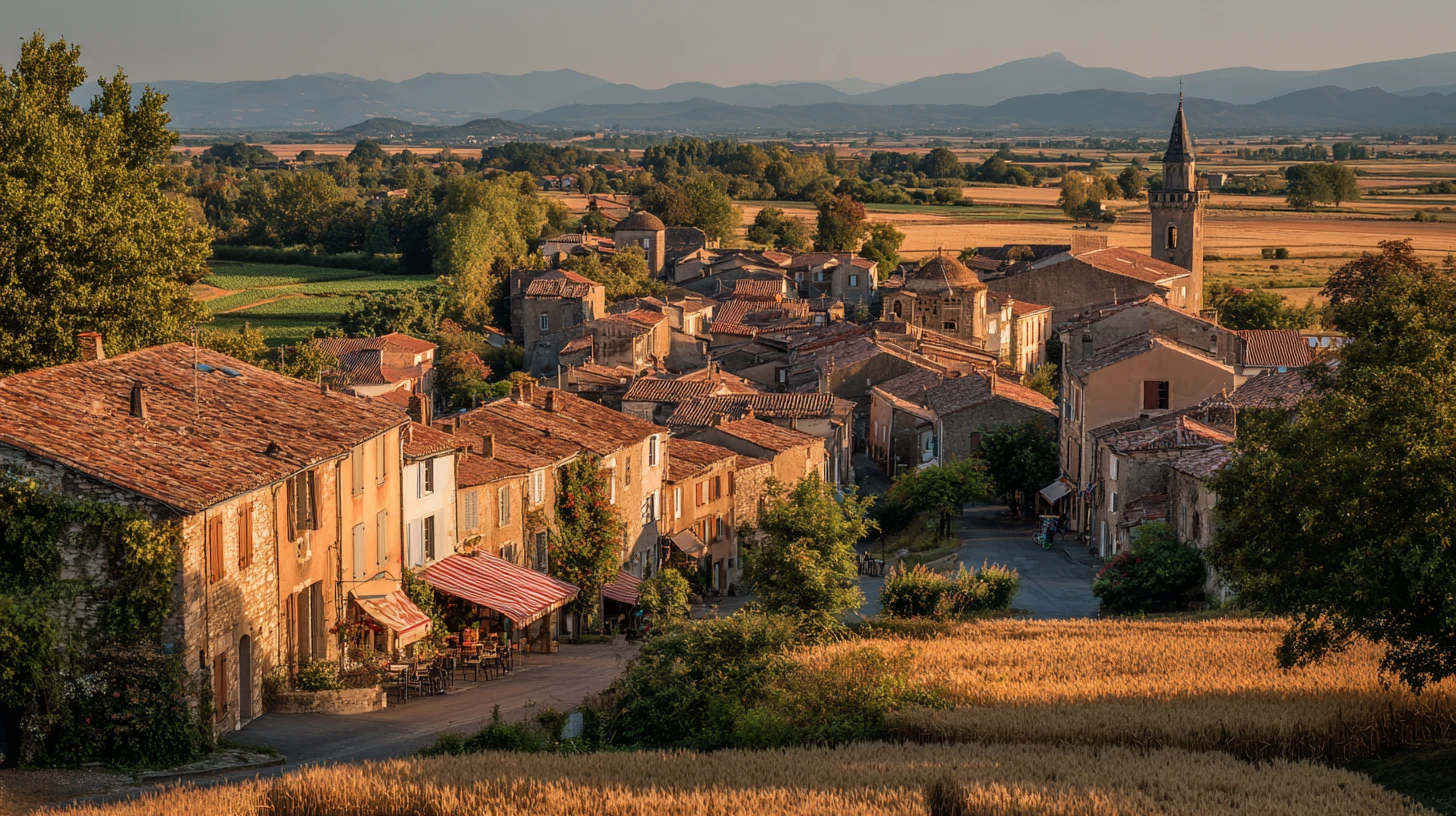
🌉 Pont Alexandre III · Tap to read🥐 Boulangerie · Tap to read🌾 French countryside · Tap to read
Geography
Regional Allergen Risk Map
France's allergy map splits along a butter-versus-olive-oil line and a handful of regional specialities that rewrite the rules. The north and centre cook in dairy fat; Provence and the Mediterranean trade it for olive oil and garlic; Brittany builds its signature dish on buckwheat, not wheat; Alsace plates Germanic cream-and-pork tarts; and the southwest hides walnut in oils and salads. Cities are easier than countryside everywhere.
Loading region map…
↑ Hover a region for detail
🗼
Île-de-France (Paris) · Île-de-France
EASIER
Highest English fluency, the broadest allergen-aware restaurant network in France, fast emergency response, and written allergen documents as the norm in modern bistros and the better brasseries. The hidden vehicles are all present — butter and cream in the classic repertoire, frangipane in every pâtisserie, Dijon in the vinaigrette — but kitchen reflexes and English are strongest here. Historic menu-fixe houses and old-guard brasseries still benefit from a written card.
↑ ['milk' (butter & cream default), 'tree_nuts' (frangipane in pâtisserie), 'seeds_spices' (Dijon in vinaigrette)]
🥞
Brittany · Bretagne / Breizh
MODERATE
Brittany rewrites the wheat rule: the savoury galette is made of buckwheat flour (sarrasin / blé noir), while the sweet crêpe is wheat — the two look identical and share griddles, so a wheat-allergic and a buckwheat-allergic traveller face opposite risks at the same crêperie. Salted butter (beurre salé) is everywhere, the coast is shellfish-rich (oysters, mussels, langoustines), and far breton and kouign-amann are butter-and-egg desserts.
↑ ['buckwheat' (galette de sarrasin), 'milk' (beurre salé everywhere), 'shellfish + fish' (plateaux de fruits de mer)]
🧈
Normandy · Normandie
MODERATE
France's dairy heartland. Isigny butter, crème fraîche, Camembert, Livarot and Pont-l'Évêque mean cream and cheese are not a choice but a regional identity — sauces are mounted heavily, and apples and cider (with Calvados) thread the savoury repertoire too. For a dairy-allergic traveller this is the hardest mainland region to eat traditional cooking in; the modern bistros of Rouen and Deauville are the workaround.
↑ ['milk' (cream & cheese maximal), 'egg' (teurgoule, omelette de la Mère Poulard), 'sulfites' (cider & Calvados)]
🥨
Alsace & Grand Est · Grand Est / Elsass
MODERATE
Germanic France. Flammekueche (tarte flambée) is crème fraîche, onions and lardons on thin dough — dairy, allium, pork and wheat in one plate; choucroute garnie is fermented cabbage with assorted pork and sausages; bretzels and kougelhopf are wheat; and the wine route (Riesling, Gewürztraminer, Crémant) makes sulfites a constant. Menus carry German-rooted dish names that hide their contents from French and English readers alike.
France's gastronomic capital and its dairy-maximal mountains. Lyonnais bouchons run on rich offal, charcuterie and cream; quenelles are pike (fish), wheat, egg and butter; and Lyon's signature praline rose is sugared almond baked into tarts and brioche. The Savoie Alps are cheese country — fondue, raclette and tartiflette are dairy on dairy, often with lardons. Rhône wines add a sulfite layer.
↑ ['milk' (fondue, raclette, tartiflette), 'tree_nuts' (praline rose (almond)), 'fish' (quenelle de brochet)]
🦆
Bordeaux & the Southwest · Nouvelle-Aquitaine
MODERATE
Duck country with three regional allergen twists. Walnut (noix du Périgord) appears as oil (huile de noix) in salad dressings and as nuts in salads and tarts — a tree nut that hides in the dressing, not the dessert. Foie gras, confit and Bayonne ham are animal-protein staples; the Basque country adds piment d'Espelette and the sheep-cheese-and-cherry gâteau basque; and Bordeaux is one of the world's great wine regions, so sulfites run through the table.
↑ ['tree_nuts' (walnut oil in dressings), 'animal_proteins' (foie gras, confit, jambon de Bayonne), 'sulfites' (Bordeaux wine)]
🫒
Provence & the Riviera · Provence-Alpes-Côte d'Azur
MODERATE
The one region where butter recedes: Provence cooks in olive oil and garlic. That is good news for dairy-allergic travellers and a warning for others — aïoli and rouille are garlic-and-egg-yolk emulsions, tapenade and pissaladière carry anchovy (fish), and bouillabaisse is fish and shellfish by definition. Niçois street food (socca, pan-bagnat) and Riviera tourism make this a high-English, written-menu zone.
Cassoulet country. The regional dish is white beans (haricots — a legume) slow-cooked with duck confit, Toulouse sausage and pork — legumes and animal proteins in one pot, often crusted with breadcrumbs. Roquefort (sheep's-milk blue) anchors the dairy layer; foie gras and duck thread the menus; and the Languedoc is a vast wine region. English thins inland from the coast and the Occitan dish names compound the menu-reading challenge.
The northern table runs on butter and cream with a beer accent: carbonade flamande is braised in beer and thickened with mustard-spread pain d’épice, moules-frites makes shellfish a daily staple, and washed-rind cheeses like Maroilles are baked into tarts (flamiche). Endive gratins and welsh add more dairy. Wheat is hard to avoid given the beer-and-bread base.
↑ ['milk' (butter, cream & Maroilles washed-rind cheese), 'seeds_spices' (mustard-spread bread thickens carbonade flamande), 'shellfish' (moules-frites is the regional staple)]
🏰
Centre-Val de Loire · Centre-Val de Loire
MODERATE
Château country leans on goat cheese (Crottin de Chavignol, Sainte-Maure de Touraine) and butter — tarte Tatin, born here, is caramelised apple on a butter pastry, usually served with crème. The praline (caramelised almond) was invented in Montargis and threads through the pâtisserie, and Loire wines (Sancerre, Vouvray) carry sulfites.
The Atlantic west around Nantes is the home of beurre blanc — a sauce that is essentially emulsified butter, poured over fish as a matter of course. The coast (Vendée, Guérande) is shellfish-rich with oysters and mussels, and the gâteau nantais is an almond-and-rum cake. Muscadet, the local white, adds sulfites.
↑ ['milk' (beurre blanc — the butter-emulsion sauce born in Nantes), 'shellfish' (Atlantic oysters & mussels (Vendée, Guérande)), 'tree_nuts' (gâteau nantais (almond))]
🍷
Bourgogne-Franche-Comté · Bourgogne-Franche-Comté
MODERATE
Dijon is the mustard capital, and moutarde binds nearly every regional sauce and vinaigrette here at its source. The cheese board is heavy — Comté, Époisses, Cancoillotte — and the signature stews (bœuf bourguignon, coq au vin) are built on butter, wine and lardons. Burgundy wines and wine-reduction sauces carry sulfites.
↑ ['seeds_spices' (Dijon mustard at its source — binds most sauces), 'milk' (Comté, Époisses & butter-built stews), 'sulfites' (Burgundy wines & wine-reduction sauces)]
🌰
Corsica · Corse / Corsica
MODERATE
The island table centres on brocciu, a fresh sheep/goat cheese folded into omelettes, fiadone and countless fillings (often with egg). Chestnut flour (farine de châtaigne) is a staple base for breads, pulenta and cakes — a tree-nut-adjacent allergen rarely flagged — and pork charcuterie (figatellu, coppa, lonzu) is everywhere.
↑ ['milk' (brocciu (sheep/goat cheese) in omelettes, fiadone & fillings), 'tree_nuts' (chestnut flour (farine de châtaigne) in breads & cakes), 'animal_proteins' (pork charcuterie — figatellu, coppa, lonzu)]
Allergen Prevalence
Allergen Prevalence Index
The French allergen landscape is dairy-first: butter and cream are the structural base of the national cuisine and the allergen kitchens least often name. Almond (frangipane), Dijon mustard and — in Brittany — buckwheat are the other vehicles that hide in plain sight. Wheat and egg are ubiquitous but expected; the danger is the ones that don't read as themselves.
Tap an allergen chip to filter the table below
Filter:
Allergen
Supply Prevalence
Hidden Risk
Cross-Contact
Restaurant Risk
Dairy⚠beurre · crème fraîche · monter au beurre · béchamel · gratin · fromage · lait · EU FIC mandatory
10
10
8
9
Tree Nuts⚠amande · frangipane · praliné · macaron · financier · noix (walnut) · huile de noix · noisette · pignon · EU FIC mandatory (fruits à coque)
9
9
7
8
Mustard⚠moutarde de Dijon · vinaigrette · sauce moutarde · mayonnaise · lapin à la moutarde · steak tartare · EU FIC mandatory (moutarde)
Clinical allergen prevalence in France: French presentations broadly track EU patterns — cow's milk and egg dominate paediatric food allergy; peanut, tree nuts, fish and shellfish dominate adult presentations, with mustard and wheat-dependent exercise-induced anaphylaxis notably more visible in French data than elsewhere. The SFA (Société Française d'Allergologie) is the national professional body and publishes clinical guidance. Mustard allergy is one of the EU's 14 mandatory allergens largely because of French and continental consumption patterns.4
Why dairy is the #1 hidden vehicle: In a French kitchen, butter and cream are technique, not ingredients. A sauce is ‘monté au beurre’ (finished with cold butter), a purée is ‘montée à la crème’, a clear pan sauce is built on a butter emulsion. Staff answering ‘is there dairy in this?’ may truthfully say no while the dish is mounted on butter. Name beurre and crème explicitly, and ask whether the sauce is ‘monté au beurre’.
The frangipane trap: Many French desserts that read as fruit are built on almond cream. Tarte Bourdaloue (pear), galette des rois, pithiviers, financiers, macarons, and most ‘amandine’ tarts are structural almond. A tree-nut-allergic traveller cannot assume a ‘fruit tart’ is nut-free — ask ‘y a-t-il de la frangipane ou de la poudre d'amande ?’
Mustard hides in the dressing: The classic French vinaigrette is oil, vinegar and Dijon mustard whisked to an emulsion — the mustard is what holds it together, and it is rarely named on a menu. Mayonnaise, steak tartare, sauce moutarde and many pan sauces also carry it. If you are mustard-allergic, treat every dressed salad and every emulsified sauce as suspect until confirmed.
Languages
Languages Spoken
France's linguistic situation is structurally simple for the allergic traveller: French is the kitchen language nationwide — menus, the mandatory written allergen documents, and packaging are all in French, in every region and overseas département. Regional languages survive on signage and in dish names but not in the kitchen's working vocabulary. Clarity over authenticity: a French-language card is correct everywhere; regional terms are useful for reading menus, not for communicating risk.
~100% — French reaches the cook in every bistro, brasserie, boulangerie, crêperie, traiteur and hotel kitchen on the mainland, Corsica and the overseas départements. The written kitchen language — menus, the Décret 2015-447 allergen document, packaging labels, regulatory notices — is French nationwide. The Académie-standard register is universal; regional accents do not change the written safety vocabulary.
Nationwide — the kitchen language of every French regional cuisine, mainland and overseas
Workable in Paris, the Côte d'Azur, the Loire châteaux, Mont-Saint-Michel, Bordeaux, and ski/wine tourism hubs, where front-of-house staff commonly handle an allergy conversation in English. It thins fast in rural Brittany, the Massif Central, inland Occitanie and the Alsace countryside. English does not reach the written allergen document, which remains in French.
Paris, the Riviera, and major tourist corridors; weak in rural interiors
In Grand Est, dish names carry German roots that hide their contents from French and English readers alike: flammekueche (crème fraîche, onion, lardons), baeckeoffe (meat-and-wine stew), kougelhopf (yeast cake, often almonds), bretzel (wheat), spätzle (egg noodles). The kitchen still speaks French; the menu is the reading challenge.
In Brittany the critical distinction is lexical: a galette (sometimes galette de sarrasin / krampouezhenn) is buckwheat, while a crêpe is wheat. Beurre salé (salted butter), far breton and kouign-amann are butter-and-egg. Breton appears on signage; the safety conversation is in French.
Across the South, regional words name regional dishes: Niçard socca (chickpea), pan-bagnat (anchovy/tuna), pissaladière (anchovy); Provençal aïoli and rouille (garlic + egg yolk); Basque piment d'Espelette and gâteau basque (sheep cheese / cherry); Corsican brocciu (sheep/goat cheese). All are read, not spoken to the kitchen — French remains the safety language.
Provence, the Riviera, the Basque Country, Corsica
menu vocabulary only
One card, one language: Because French is the universal written kitchen language, a single French allergy card covers the entire country — there is no second safety language to add, unlike multilingual destinations. Regional terms matter for recognising a dish on a menu, which is why this guide names sarrasin, flammekueche, frangipane and aïoli explicitly.
Reading Labels
French Label & Menu Guide
France uses the Latin alphabet, so script recognition is not the barrier — vocabulary and technique are. The 14 EU allergens appear in the packaged-food ingredient list; the danger lives on the menu, where butter, cream, almond frangipane and Dijon are cooking methods that never get named. Learn ten French terms and you can read most of the risk.
French labelling follows EU Regulation 1169/2011 (transposed by Décret n° 2015-447): the 14 mandatory allergens must be declared in the ingredient list (Ingrédients :), distinguished from other ingredients by bold, capitalisation, italics or colour. There is usually no separate ‘Contient’ box — a dairy-allergic traveller scans the ingredient list for lait, beurre, crème; a tree-nut-allergic traveller for fruits à coque, amande, noix, noisette. The harder reading is the menu, where the structural vehicles are technique, not ingredients: a sauce ‘montée au beurre’, a tart built on frangipane, a salad dressed with Dijon. AOP/IGP origin labels (Beurre d’Isigny AOP, Roquefort AOP, Pruneau d’Agen IGP) carry origin protection but do NOT change FIC allergen rules.
LAIT
Milk ⚠
On a label, ‘lait’ is milk. But the dairy that hides is beurre (butter) and crème (cream) in cooked dishes — declared on packaging, but ‘technique’ in a kitchen.
BEURRE
Butter ⚠
The structural dairy fat of French cooking. ‘Monté au beurre’ = finished with butter. Not always registered as ‘dairy’ by staff.
CRÈME
Cream ⚠
Crème fraîche, crème liquide. Sauces, gratins, quiche, purées. Reads as ‘sauce’, not ‘dairy’.
EU-mandatory allergen. Hides in stocks (fond, bouillon), mirepoix, soups and rémoulade — not just the raw stalk.
How allergens appear on French packaging: The 14 EU FIC allergens appear in the ‘Ingrédients :’ list, emphasised in bold or capitals. ‘Peut contenir des traces de…’ = ‘may contain traces of…’ is voluntary precautionary labelling, common but not legally required. ‘Sans’ = ‘without’; ‘fabriqué dans un atelier qui utilise…’ = ‘made in a facility that uses…’.
How dairy and almond hide on French menus: The words to fear are not on the menu. A clear beurre blanc, a pan jus monté, a purée and a velouté are all dairy by technique. A tarte amandine, Bourdaloue, pithiviers or galette des rois is structural almond. Ask, in French: ‘Est-ce monté au beurre ou à la crème ?’ and ‘Y a-t-il de la poudre d'amande ou de la frangipane ?’
Cuisine
Dish Allergen Map — 12 French Dishes
French dishes sort into three structural profiles: dairy-built (gratins, béchamel, alpine cheese, viennoiserie), almond-built (the frangipane pâtisserie family), and emulsion-built (vinaigrette, hollandaise, rouille, mayonnaise — egg, mustard, garlic). Knowing which profile a dish belongs to tells you the question to ask before you order.
Dish
Allergen Tags
Hidden Risk Notes
Risk
Croissant & viennoiseriecroissant · pain au chocolat · croissant aux amandes · Nationwide
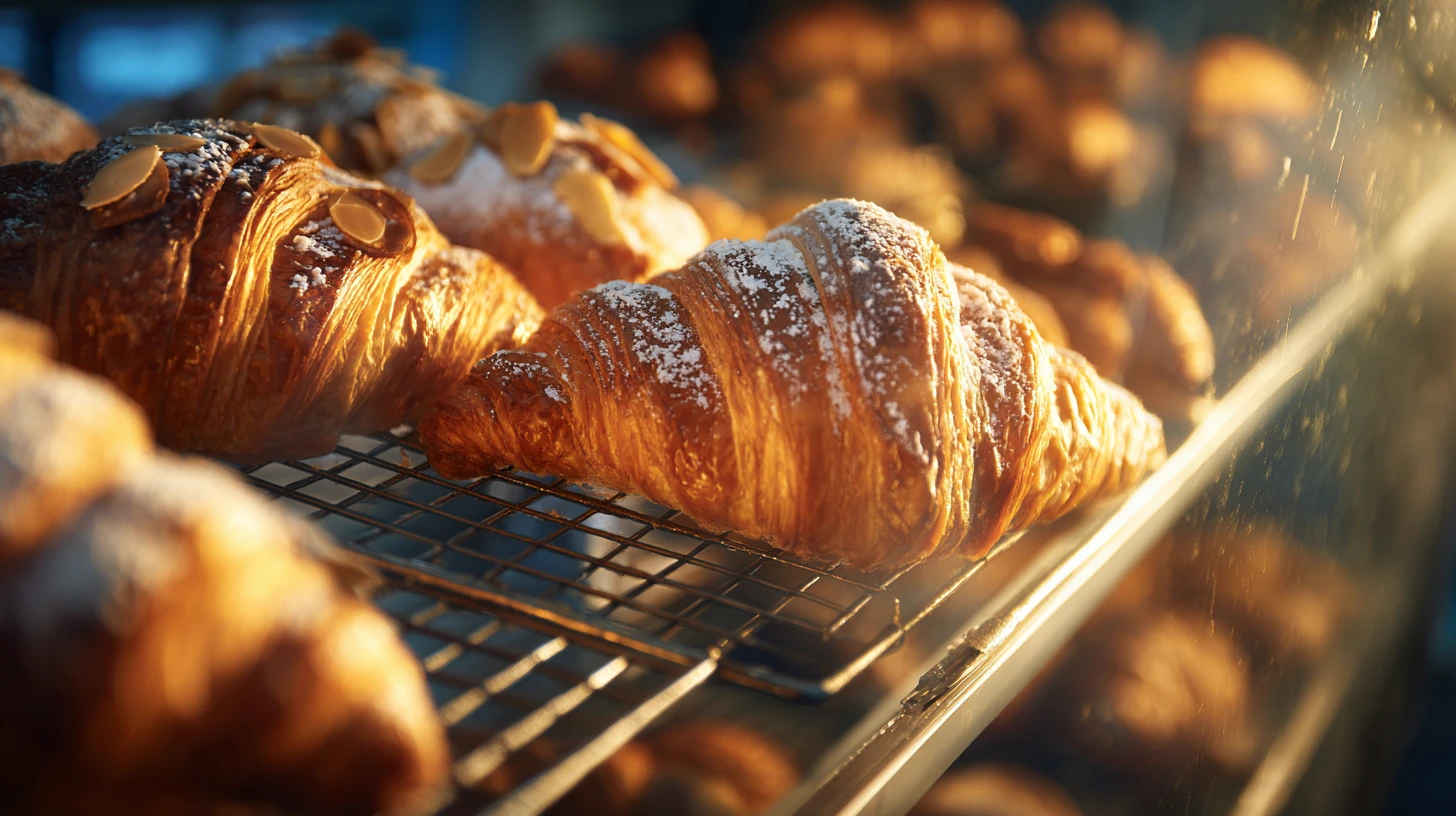
STRUCTURAL butter and wheat: viennoiserie is laminated dough — butter is the product, not a topping, so ‘dairy-free croissant’ does not exist in a traditional boulangerie. The croissant aux amandes adds STRUCTURAL almond frangipane. The plain croissant reads as ‘just bread’; it is the single most common dairy miss for travellers who assume a bakery is safe.
Béchamel is the mother sauce of French comfort food: milk thickened with a butter-and-flour roux, usually finished with cheese. Gratin dauphinois is potatoes baked in cream; croque-monsieur is ham, béchamel and cheese on bread. All STRUCTURAL dairy and wheat — not modifiable.
HIGH
Quiche Lorrainequiche lorraine · Grand Est / Nationwide
A custard tart: egg and cream baked in a butter pastry shell with lardons. Egg, dairy and wheat are all STRUCTURAL — there is no allergy-safe path through a classic quiche. The crust alone disqualifies it for wheat allergy.
HIGH
Breton galette (savoury) vs. crêpe (sweet)galette de sarrasin / blé noir · crêpe de froment · Brittany
BUCKWHEAT (galette) — STRUCTURALWHEAT (crêpe) — STRUCTURALEGG — STRUCTURALDAIRY (butter, cheese) — STRUCTURALPORK (complète) — INCIDENTALThe galette is buckwheat; the crêpe is wheat — opposite risks.
The critical France distinction: the savoury galette is BUCKWHEAT (sarrasin/blé noir), the sweet crêpe is WHEAT — and they share griddles and batter ladles. A wheat-allergic traveller wants the galette; a buckwheat-allergic traveller must avoid it and watch cross-contact on the shared griddle. The complète (egg, ham, cheese) adds egg, dairy and pork.
MUSTARD (Dijon) — STRUCTURALSULFITES (vinegar) — INCIDENTALTREE NUT (walnut, regional) — INCIDENTALAsk for oil + vinegar only, no Dijon.
The French vinaigrette is oil, vinegar and Dijon mustard emulsified — the mustard is the binder, almost never named on a menu. STRUCTURAL mustard in the classic dressing. In the southwest, walnut oil (huile de noix) replaces neutral oil. Mustard-allergic travellers should treat every dressed salad as suspect and ask for ‘huile et vinaigre, sans moutarde’.
EGG (yolk) — STRUCTURALDAIRY (butter) — STRUCTURALSHELLFISH (shared fryer) — CROSS-CONTACTOrder the steak plain or with pepper sauce instead.
Béarnaise and hollandaise are warm emulsions of egg yolk and clarified butter — STRUCTURAL egg and dairy. The steak itself is usually safe, but frites are frequently fried in oil shared with breaded or seafood items. The pepper sauce (au poivre) is cream-based; the bordelaise is wine-and-marrow.
MODERATE
Almond fruit tart / galette des roistarte Bourdaloue · galette des rois · pithiviers · financier · macaron · Nationwide
The frangipane trap. Tarte Bourdaloue reads as a pear tart but is pear on almond cream; galette des rois and pithiviers are frangipane in puff pastry; financiers and macarons are almond-flour cakes. STRUCTURAL almond throughout — a ‘fruit dessert’ is not a safe assumption for tree-nut allergy. Macarons are wheat-free (almond + egg white) but very much tree nut.
Marseille's signature is fish and shellfish by definition, served with rouille — a garlic-and-egg-yolk emulsion thickened with saffron and chilli, spread on bread. STRUCTURAL fish, shellfish, egg and garlic. The broth (soupe de poisson) carries the fish even when strained of solids.
Slow-cooked white beans with duck confit, Toulouse sausage and pork — STRUCTURAL legumes and animal proteins. Some versions are crusted with breadcrumbs (wheat, variant). Generally dairy- and nut-free, which makes it a safer option for those allergies if pork and beans are acceptable.
MODERATE
Moules-frites & plateau de fruits de mermoules-frites · plateau de fruits de mer · huîtres · Brittany / Normandy / Coastal
Mussels steamed in wine (marinière) or cream (à la crème); the seafood platter is oysters, langoustines, crab, whelks and shrimp on ice. STRUCTURAL shellfish. The crème version adds dairy; the broth carries sulfites from the wine; frites share a fryer. A shellfish-allergic traveller should also note airborne and shared-ice cross-contact at a raw bar.
Dairy-maximal mountain food: fondue is melted cheese and wine eaten with bread cubes; raclette and tartiflette are cheese on potato with lardons; flammekueche (Alsace) is crème fraîche, onion and lardons on thin dough. STRUCTURAL dairy and pork throughout — effectively unmodifiable for dairy allergy.
The charcuterie board is animal-protein-first. Foie gras is cured with wine (often Sauternes) and served with toasted brioche; pâté en croûte is wrapped in pastry; some terrines carry pistachio (tree nut) — a frequent hidden inclusion. Generally dairy-light, which can make a charcuterie plate workable for dairy allergy if the bread is set aside.
MODERATE
The ‘it's just bread’ failure: The boulangerie is the most under-estimated risk in France. A plain croissant is laminated butter; an almond croissant adds frangipane; a pain au lait is milk-enriched. Travellers treat a bakery as a safe carbohydrate stop and meet structural dairy and tree nut instead.
Declare, don't request: French culinary tradition vests authority in the chef. Asking ‘can you remove the butter?’ invites refusal in a classic house; declaring ‘je suis allergique, voici ma carte’ and asking which dishes are already safe works better.
What tends to be safer: Grilled or roasted plain proteins, cassoulet (if beans/pork are fine), a charcuterie board minus the bread, oysters for the non-shellfish-allergic, and the Provençal olive-oil repertoire for dairy allergy — Provence is the one region where butter is not the default.
Where to Eat
Venue Safety Profile
French venues sort along a tradition-versus-modernity axis. The more codified and celebrated the format, the more butter-and-cream is non-negotiable and the more the chef's authority resists modification. Modern bistros, the written-document chains, and the olive-oil South are the workarounds.
Higher Risk
Most Reliable
🥐Boulangerie & pâtisserie
The bakery is the hidden-risk venue, not a safe one. Viennoiserie is laminated butter; the pâtisserie case is frangipane, cream and egg; even ‘plain’ breads include pain au lait (milk) and seeded loaves. Counter staff are not kitchen staff and may not know recipes in detail.
Treat the boulangerie like any kitchen: assume butter and almond, and ask before buying — don't assume ‘bread = safe’.
HIGH
🍷Classic bistro & brasserie
The heart of French dining and the home of the non-modification culture. Sauces are mounted with butter, the repertoire is codified, and the chef cooks the dish as written. English is workable in cities. The reflex that works is to declare the allergy and ask which dishes are already safe.
Hand the card on arrival; ask ‘quels plats sont déjà sans beurre / sans crème ?’ rather than requesting substitutions.
MOD
🍽️Modern bistro / néo-bistrot
The best option in urban France. The format does the work: short, daily-changing menus and frequently open kitchens mean staff can actually confirm whether a dish uses butter, cream, nuts, or mustard before the order is fired. Typically English-fluent and comfortable with dietary needs. Found across Paris, Lyon, Bordeaux, Marseille and Nantes.
These kitchens will engineer a safe plate if you give them the card and a little notice — your highest-success venue.
LOWER
🥞Crêperie (Brittany & nationwide)
The buckwheat-versus-wheat venue. Savoury galettes are sarrasin (buckwheat); sweet crêpes are wheat; they share griddles and batter. Salted butter is standard. Useful for wheat allergy (order the galette), dangerous for buckwheat allergy (cross-contact on the griddle).
Wheat-allergic: confirm the galette is 100% sarrasin. Buckwheat-allergic: a shared griddle is the risk, not just the batter.
MOD
🫒Provençal / Mediterranean table
The dairy-allergy refuge and the seafood-allergy minefield. Olive oil and garlic replace butter, so the dairy default lifts — but bouillabaisse, tapenade, pissaladière and aïoli mean fish, shellfish, anchovy and egg are everywhere. High English on the Riviera.
Best region for dairy allergy. Watch anchovy hidden in tapenade, Caesar and pissaladière, and egg yolk in aïoli/rouille.
MOD
🛒Marché & traiteur
Open-air markets and prepared-food counters are a daily ritual and a self-catering opportunity. Traiteurs (prepared-food shops) fall under Décret 2015-447 and must display allergen information near the food. Whole ingredients from market stalls let you cook around your allergens entirely.
Self-catering from the marché is often the safest, cheapest path — and the allergen display at a traiteur is legally required.
MOD
The written document is your right: Under Décret 2015-447 every restaurant, traiteur and cantine must hold allergen information in writing and make it accessible. If a server waves it off, you can ask specifically: ‘Avez-vous la fiche des allergènes ?’ (Do you have the allergen sheet?).
Menu fixe / menu dégustation: Fixed multi-course and tasting menus are the least flexible format — the kitchen has planned every plate in advance. Call ahead, send the card, and confirm before booking; do not arrive and hope to modify on the night.
Chain & casual safety: Bakery-café chains (e.g. Paul, Brioche Dorée) and supermarket prepared foods carry full EU-FIC packaged labelling, which can be more legible than a busy bistro. Useful for a reliable, label-readable fallback meal.
Festivals & street food: Fête de la Musique, village fêtes and Christmas markets mean communal grills, crêpe stands, vin chaud and no allergen documentation. Treat street stalls as unlabelled; the crêpe stand shares one griddle for wheat and buckwheat.
The contextual section
Boulangerie & Marché — the daily rhythm that defines France
France's signature experience is not a monument — it is the boulangerie–marché–bistro rhythm that structures every day: bread in the morning, the market and the terrasse, the long lunch, the cheese course at night. Each beat carries the same two hidden vehicles — butter and almond — which French kitchens treat as technique, not allergens. Learn the rhythm and you learn where to ask.
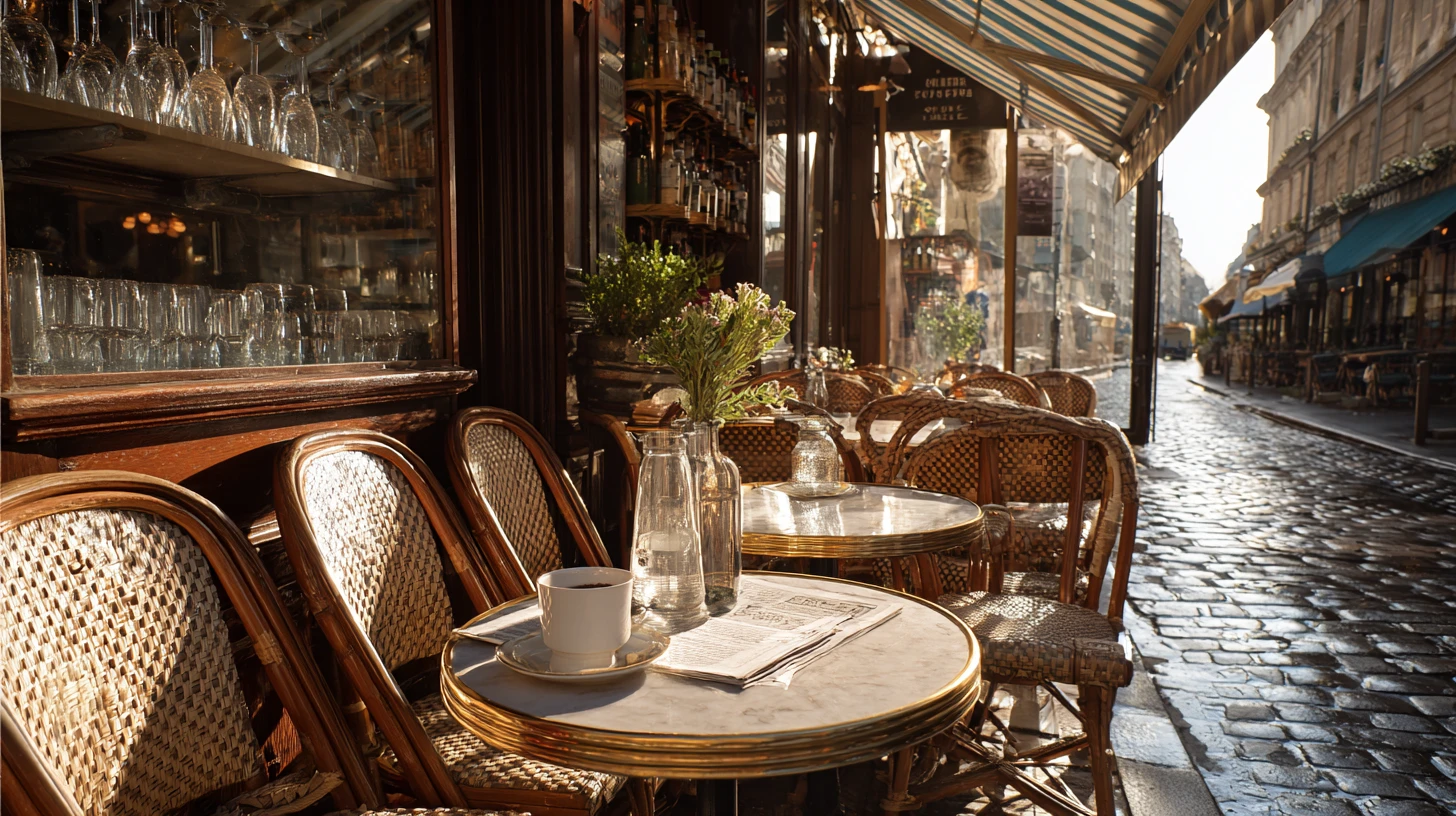
The café terrasse — the connective tissue of the French daily rhythm, where the morning coffee arrives beside a butter-and-almond viennoiserie and the afternoon pause is its own institution.
🥖
The one rule that governs every meal
France's signature experience is not a landmark — it is the boulangerie–marché–bistro daily rhythm: the morning bread run, the open-air market, the long lunch, the café terrasse. The rule that makes it safe is to remember that the two foods this rhythm is built on — butter and almond — are treated by French kitchens as craft, not as allergens. Declare your allergy in French, hand the card on arrival, and name beurre, crème and amande/frangipane directly. Verbal hints get rounded off; a written card naming the fats and the nut closes the gap the cuisine's own pride creates.
🥐
Boulangerie mornings — assume butter and almond
The French day starts at the boulangerie, and it is the most under-estimated allergen venue in the country. Viennoiserie is laminated butter — the croissant is butter, not bread with butter — and the almond croissant, financier and galette des rois are frangipane. Even ‘plain’ options hide dairy: pain au lait is milk-enriched, and brioche is butter-and-egg. Treat the bakery like a kitchen, not a safe carb stop.
The rule: Treat the boulangerie like any kitchen — assume butter in every viennoiserie and almond in the pâtisserie case. Ask before buying; ‘bread = safe’ is the most common dairy miss of the trip.
Allergen pattern: Dairy (beurre, structural in laminated dough) and tree nut (amande/frangipane) are the through-lines; pain au lait and brioche add milk and egg.
🛒
The marché — your safest meal
The open-air marché is the daily rhythm at its best for an allergic traveller. Whole ingredients — market vegetables, fruit, a roast chicken from the rotisserie van, charcuterie, fruit — let you assemble a meal around your allergens entirely, with no kitchen between you and the food. Prepared-food traiteurs fall under Décret 2015-447 and must display allergen information beside the dish. Self-catering from the marché is often the cheapest and lowest-risk option of the trip.
The rule: Build the meal from whole ingredients you can vet yourself. Treat the traiteur and charcuterie stalls as a kitchen — ask for the written allergen information Décret 2015-447 requires beside each prepared dish.
Allergen pattern: Raw produce is the lowest-risk food in France; the risk sits in traiteur prepared dishes (cream, nuts, sulfites) and charcuterie, not the market stall itself.
🍽️
The bistro lunch — declare, don't request
Lunch is the main event: the formule (entrée + plat, or plat + dessert) and the plat du jour. This is where the dairy default lives — sauces montées au beurre, gratins, pan jus on cream. French kitchens respond to a declaration, not a substitution request: hand the card on arrival and ask ‘quels plats sont déjà sans beurre et sans crème ?’ The plat du jour is often the most modifiable because it is cooked fresh that service.
The rule: Hand the card and declare on arrival, before ordering — ‘J’ai une allergie alimentaire grave, sans beurre, sans crème.’ French kitchens act on a declaration made to the chef, not a mid-meal request.
Allergen pattern: Dairy is the structural hidden vehicle of the bistro — butter mounted into sauces (monté au beurre), cream in gratins and pan jus — plus Dijon mustard binding the vinaigrette.
🧀
The cheese course & dessert — the dairy-almond finish
A French meal ends on its two structural allergens. The plateau de fromages is dairy by definition; the dessert trolley is almond (frangipane tarts, financiers, macarons), dairy (crème brûlée, mousse, île flottante) and egg. For dairy allergy, fresh fruit or sorbet (sorbet, water-based) over glace (ice cream, dairy). For tree-nut allergy, skip anything ‘amandine’, ‘Bourdaloue’ or frangipane-based, and confirm — a fruit tart is not automatically nut-free.
The rule: Decline the cheese course and the dessert trolley unless each item is confirmed. For dessert, a plain fruit or a sorbet (not glace) is the reliable order.
Allergen pattern: Dairy (fromage, crème), tree nut (frangipane, financier, macaron — almond) and egg (crème brûlée, mousse, île flottante) cluster in the final course.
Communication norms
Dining Etiquette & Cultural Norms
French dining runs on the authority of the kitchen, so the allergy conversation works differently here: you declare rather than negotiate. Done in French, with a card, framed as a medical fact rather than a preference, it is met professionally. The cultural mistakes are softening the disclosure and asking for substitutions in a traditional house.
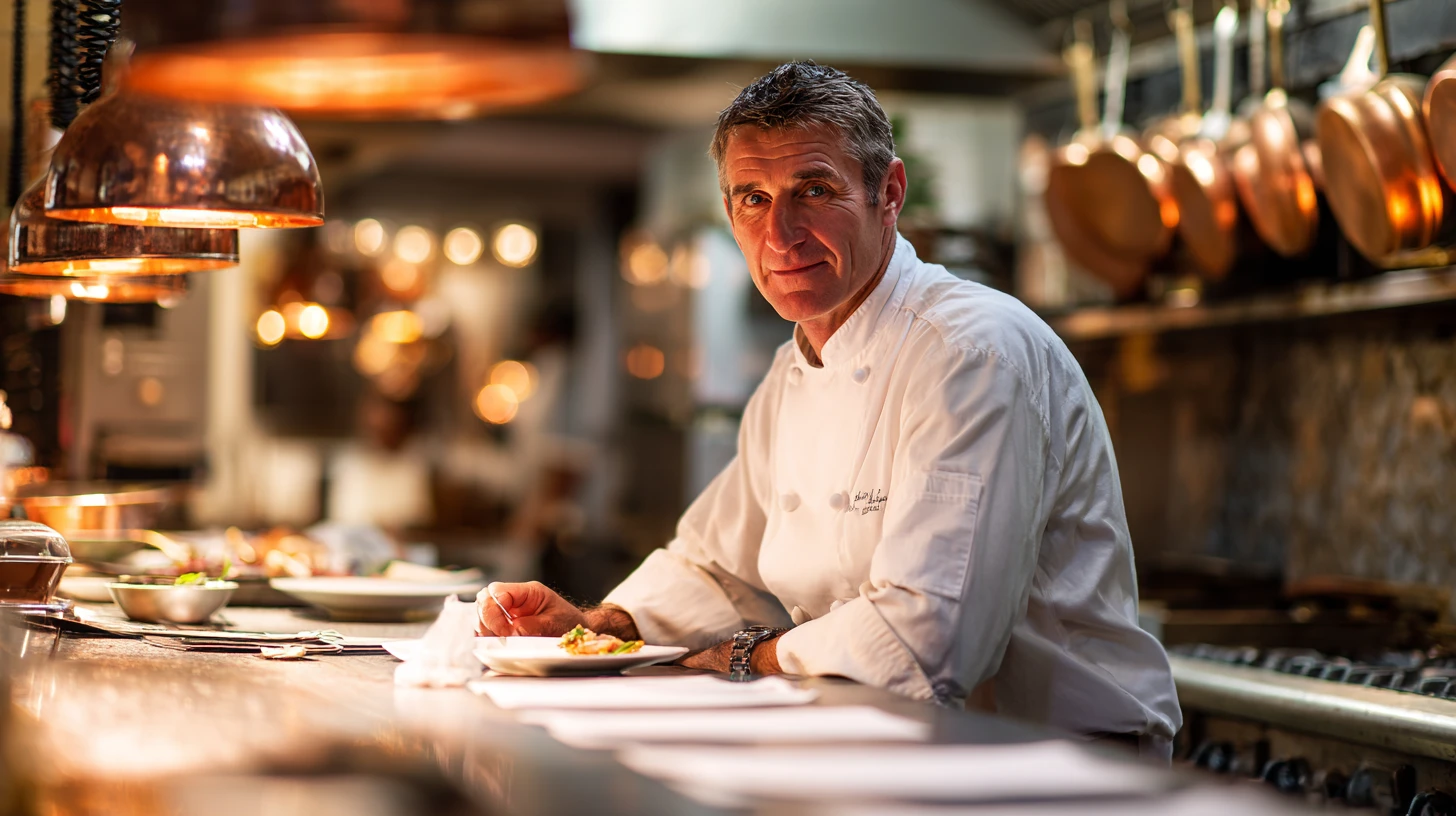
The pass at a Paris bistro — in French kitchens the chef owns the dish, which is why an allergy is best declared, not negotiated.
💬
How to raise an allergy in French culture
Direct, formal, and written. Open with ‘Bonjour’ (skipping it reads as rude), hand the card, and say ‘J'ai une allergie alimentaire grave’ (I have a severe food allergy). Frame it as a medical condition, not a dislike. The cultural mistake is softening it — ‘un peu allergique’ (a little allergic) signals ‘can probably eat around it.’ The second mistake is leading with a substitution request rather than a declaration.
👨🍳
Respect the chef's authority
French cuisine vests authority in the chef, and traditional bistros and fixed-menu houses can take ‘can you make it without butter?’ as a challenge to the craft. Reframe: ask which dishes are already safe (‘quels plats conviennent ?’) and let the kitchen propose. In modern néo-bistrots this formality relaxes and chefs will actively engineer a plate for you.
📄
The written allergen sheet is your right
Décret 2015-447 requires every restaurant and traiteur to hold allergen information in writing. If a server brushes off the question, ask specifically for ‘la fiche des allergènes’ (the allergen sheet) or ‘la liste des allergènes’. The information may be displayed as a sign, a menu annotation, or a binder behind the counter.
🕐
Service rhythm & timing
Lunch runs roughly 12:00–14:00 and dinner from 19:30; many kitchens close between services, so arriving off-hours means limited or reheated options with less flexibility. For a fixed or tasting menu, call ahead — the kitchen plans those plates in advance and cannot easily rework them on the night. Tipping is not required (service is included); a small round-up is normal.
The cultural key for France: Politeness is the channel. A ‘Bonjour, j'ai une allergie alimentaire grave, voici ma carte’ delivered warmly and formally gets a serious, professional response. Brusqueness or skipping the greeting closes doors that the law otherwise keeps open.
Communication
Essential Safety Phrases
Six scenarios cover the working French an allergic traveller needs — declaring the allergy, naming the butter-and-cream default, catching the frangipane in a dessert, refusing the Dijon in a dressing, checking cross-contact, and the emergency line. Phonetics use stress-accented French, not English approximations.
Scenario 01
Declaring your allergy
FR
Bonjour. J'ai une allergie alimentaire grave. Voici ma carte.
Bonjór. Jé une allerjí alimentér gráv. Vwasí ma cárt.
Hello. I have a severe food allergy. Here is my card.
FR
Je suis allergique. Pouvez-vous prévenir le chef, s'il vous plaît ?
Je swí allerjík. Puvé-vu prévenír le shéf, sil vu plé ?
I am allergic. Could you please tell the chef?
Scenario 02
Butter & cream (the dairy default)
FR
Je suis allergique au lait : pas de beurre, pas de crème, pas de fromage.
Je swí allerjík o lé : pa de béur, pa de krém, pa de fromáj.
I am allergic to dairy: no butter, no cream, no cheese.
FR
Ce plat est-il monté au beurre ou à la crème ?
Se pla ét-íl montè o béur u a la krém ?
Is this dish finished with butter or cream?
Scenario 03
Almond & frangipane (desserts)
FR
Je suis allergique aux fruits à coque, surtout l'amande.
Je swí allerjík o frwí a kók, surtú lamánd.
I am allergic to tree nuts, especially almond.
FR
Y a-t-il de la frangipane ou de la poudre d'amande dans ce dessert ?
I a-t-íl de la franjipán u de la púdr damánd dan se desér ?
Is there frangipane or almond powder in this dessert?
Scenario 04
Mustard in the dressing
FR
Je suis allergique à la moutarde. La vinaigrette en contient-elle ?
Je swí allerjík a la mutárd. La vinègrét an kontján-tél ?
I am allergic to mustard. Does the dressing contain any?
FR
Pour la salade : huile et vinaigre seulement, sans moutarde, s'il vous plaît.
Pur la salád : wíl é vinégr seulmán, san mutárd, sil vu plé.
For the salad: oil and vinegar only, no mustard, please.
Scenario 05
Cross-contact & frying
FR
Les frites sont-elles cuites dans la même huile que le poisson ou les fruits de mer ?
Lé frít sont-él kwít dan la mém wíl ke le pwasón u lé frwí de mér ?
Are the fries cooked in the same oil as fish or seafood?
FR
La galette est-elle 100 % sarrasin, sur une plaque séparée du froment ?
La galét ét-él san-pur-san sarrasán, sur une plák séparé du fromán ?
Is the galette 100% buckwheat, on a griddle separate from wheat?
Scenario 06
Emergency
FR
Au secours ! Choc anaphylactique. Appelez le 15 ou le 112.
O sekúr ! Shók anafilaktík. Aplé le kénz u le san-duz.
Help! Anaphylactic shock. Call 15 or 112.
FR
J'ai besoin de mon auto-injecteur d'adrénaline. C'est une urgence.
Jé bezwán de mon óto-anjektéur dadrénalín. Sét une urjáns.
I need my adrenaline auto-injector. This is an emergency.
The two questions that matter most in France:‘Est-ce monté au beurre ou à la crème ?’ (dairy) and ‘Y a-t-il de la frangipane / poudre d'amande ?’ (almond). They catch the two vehicles that hide in plain sight — and neither is usually printed on the menu.
Pre-Trip Preparation
Allergy-Specific Packing List for France
A standard EU packing list with three France-specific additions: a written French allergy card naming beurre, crème, and frangipane explicitly; two adrenaline auto-injectors carried on-person, because French pharmacy supply has been unreliable since 2023; and the knowledge that you can demand a written allergen sheet at any point of sale — it is your legal right under the 2015 décret, not a favor.
💊 Medical essentials
✓
Two adrenaline auto-injectors — carry both on-person, never in checked luggage — French supply has been fragile. Emerade has not been distributed since May 2023 after a drop-test fault (the injector could fail to fire), and Anapen hit a supply shortage from August 2024 during a production-site move — not a quality defect — with re-availability planned for early 2025. Replacement across brands can't be assumed same-trip, so bring your own redundancy.
✓
Doctor's letter on letterhead naming your diagnosis, medications, and dosages — Customs rarely asks, but the letter is what lets a French pharmacie consider an emergency supply if you lose a device mid-trip — and a French prescription requires a French physician's order.
✓
Antihistamines you already trust (cetirizine, loratadine) — Widely sold over the counter in any pharmacie, but bringing your own avoids brand-name guessing during a reaction.
✓
Asthma inhaler if relevant — Pollen loads are high across the Loire, Provence, and the southwest in spring and early summer.
🗂️ Communication tools
✓
French allergy card naming beurre, crème, frangipane, and moutarde explicitly — The single most useful item. French allergen categories don't surface the butter mounted into a sauce or the almond cream inside a fruit tart — the card closes that vocabulary gap.
✓
Card image saved to your phone lockscreen — For boulangerie counters and marché stalls where the queue moves too fast to unfold a paper card.
✓
Audio file of your declaration in French — For loud bistro service at lunch rush; play it once, then hand over the card.
✓
Printed pocket guide for the cities on your route — Offline reference for hospital addresses, pharmacies, and a safe-restaurant shortlist when signal drops.
🎯 At-destination habits
✓
Ask for the written allergen sheet — it must be available at the point of sale — Since the 2015 décret, non-prepackaged food sold in France must carry allergen information in writing. If a server waves it off, you are within your rights to insist.
✓
Declare at the boulangerie before you point at anything — Frangipane, butter, and shared slicing surfaces make the bakery the highest-risk daily stop; disclose before the tongs move.
✓
At bistros, hand the card to the server the moment you sit — French lunch service is brisk and the chef holds final authority — early disclosure routes the question to the kitchen before the order is fired.
✓
Treat every vinaigrette as containing Dijon until told otherwise — Mustard is the default emulsifier in French salad dressing and is one of the EU's 14 declarable allergens — always ask.
Emergency
Emergency Infrastructure
France runs a strong, well-organized emergency system. 112 is the EU-universal number and reaches an English-capable operator; behind it sit two French lines — 15 for the SAMU, a physician-led medical dispatch that can send a doctor-staffed mobile ICU (SMUR) to the scene, and 18 for the sapeurs-pompiers, who also perform medical rescue. Urban response in Paris, Lyon, and Marseille is fast; rural Massif Central, the Alps, and Corsica have longer transport times, with helicopter EMS for serious cases. One Paris-specific thing to know: the best-known allergy-linked hospitals, Necker and Trousseau, are pediatric — an adult in anaphylaxis is taken to a general adult emergency department, not a children’s hospital. If you present with anaphylaxis, say the word — 'anaphylaxie' — and name your trigger plainly so the receiving team understands the exposure.
112
EU-universal emergency (ambulance, police, fire)
Operators handle English; ask 'English, please' immediately. State 'anaphylaxie' and your location. 112 can route you to the SAMU medical desk.
Other emergency numbers: SAMU — medical emergency (15): Physician-led medical dispatch. The SAMU regulates serious medical calls and can send a doctor-staffed mobile ICU (SMUR) to you. Use it for anaphylaxis if you want medical triage directly. Sapeurs-pompiers (18): Fire service, which also performs front-line medical rescue across France. Either 15, 18, or 112 will reach help.
How the French system works: Public hospitals (AP-HP in Paris, CHU centers elsewhere) treat all emergencies regardless of nationality. EU visitors with an EHIC/GHIC card are covered; non-EU travelers should expect to pay and reclaim through travel insurance. The SAMU's mobile-ICU model means advanced care can reach you before you reach the hospital — a genuine strength in a severe reaction.
Hôpital Necker–Enfants malades (AP-HP)
149 Rue de Sèvres, 75015 Paris
Pediatric emergencies (children under 16), 24/7. Major children’s hospital — the Paris reference for an allergic child, not an adult ED.
Paris · Pediatric
Hôpital Armand-Trousseau (AP-HP)
26 Av. du Dr Arnold Netter, 75012 Paris
Pediatric and perinatal reference hospital for eastern Paris; runs a leading pediatric allergology service. The relevant center for an allergic child.
Paris · Pediatric
Hôpital de la Pitié-Salpêtrière (AP-HP)
47-83 Boulevard de l’Hôpital, 75013 Paris
One of Europe’s largest hospitals — major adult emergency department, the clear adult-anaphylaxis option in central-southeast Paris.
Paris · Adult
Hôpital Cochin (AP-HP)
27 Rue du Faubourg Saint-Jacques, 75014 Paris
Large central-Paris adult university hospital with emergency and allergy services.
Paris · Adult
Hôpital Édouard-Herriot (Hospices Civils de Lyon)
5 Place d’Arsonval, 69003 Lyon
Central Lyon’s principal public hospital — full adult emergency receiving.
Lyon
Hôpital de la Timone (AP-HM)
264 Rue Saint-Pierre, 13005 Marseille
Marseille’s largest hospital and the primary emergency center for the south coast.
Marseille
Hôpital Pellegrin (CHU de Bordeaux)
Place Amélie Raba-Léon, 33000 Bordeaux
Bordeaux’s main university hospital — full emergency and ICU for the southwest.
Bordeaux
Confidence: MEDIUM — verify before travel. Hospital names, addresses, and adult/pediatric emergency scope are compiled from public AP-HP and CHU information and can change. Confirm the nearest 24-hour adult emergency department for your arrondissement or city before you need it; in Paris, Necker and Trousseau are pediatric centers, while Pitié-Salpêtrière and Cochin take adults.
Regulation
Allergen Labeling Law
France implements EU Regulation 1169/2011 (Food Information to Consumers) through Décret n° 2015-447 of 17 April 2015. 14 mandatory allergens must appear on packaged-food labels. France goes a step beyond on-request disclosure: for non-prepackaged food, allergen information must be displayed in writing at the point of sale, visibly and legibly — though a posted notice indicating that the information is available, and that staff can provide it, is a permitted form. Enforcement is handled by the DGCCRF. The law lists 'fruits à coque' as one category and 'moutarde' as another; it does not separately surface butter or almond cream, even though both are functionally distinct kitchen ingredients. That legal-versus-practical gap is what your card has to close.
Règlement (UE) n° 1169/2011 / Décret n° 2015-447 — transposing EU Regulation 1169/2011 (Food Information to Consumers), in force since 1 July 2015. Enforced by the DGCCRF (Direction générale de la concurrence, de la consommation et de la répression des fraudes). Restaurant disclosure: France requires allergen information for non-prepackaged food (restaurant, boulangerie, marché stall, traiteur, fromagerie) to be displayed in writing at the point of sale — stronger than the EU-minimum on-request rule, though a posted notice directing customers to ask staff is a permitted form.
EU FIC Annex II mandatory allergen. Must be declared on all pre-packaged foods and, under France's 2015 décret, displayed in writing at the point of sale for non-prepackaged food (restaurant, boulangerie, marché stall, traiteur, fromagerie). Taxonomy mapping: wheat.
02. Crustaceans · Crustacés
EU FIC Annex II mandatory allergen. Must be declared on all pre-packaged foods and, under France's 2015 décret, displayed in writing at the point of sale for non-prepackaged food (restaurant, boulangerie, marché stall, traiteur, fromagerie). Taxonomy mapping: shellfish.
03. Eggs · Œufs
EU FIC Annex II mandatory allergen. Must be declared on all pre-packaged foods and, under France's 2015 décret, displayed in writing at the point of sale for non-prepackaged food (restaurant, boulangerie, marché stall, traiteur, fromagerie). Taxonomy mapping: egg.
04. Fish · Poissons
EU FIC Annex II mandatory allergen. Must be declared on all pre-packaged foods and, under France's 2015 décret, displayed in writing at the point of sale for non-prepackaged food (restaurant, boulangerie, marché stall, traiteur, fromagerie). Taxonomy mapping: fish.
05. Peanuts · Arachides
EU FIC Annex II mandatory allergen. Must be declared on all pre-packaged foods and, under France's 2015 décret, displayed in writing at the point of sale for non-prepackaged food (restaurant, boulangerie, marché stall, traiteur, fromagerie). Taxonomy mapping: peanut.
06. Soybeans · Soja
EU FIC Annex II mandatory allergen. Must be declared on all pre-packaged foods and, under France's 2015 décret, displayed in writing at the point of sale for non-prepackaged food (restaurant, boulangerie, marché stall, traiteur, fromagerie). Taxonomy mapping: soy.
EU FIC Annex II mandatory allergen. Must be declared on all pre-packaged foods and, under France's 2015 décret, displayed in writing at the point of sale for non-prepackaged food (restaurant, boulangerie, marché stall, traiteur, fromagerie). Taxonomy mapping: milk.
EU FIC Annex II mandatory allergen. Must be declared on all pre-packaged foods and, under France's 2015 décret, displayed in writing at the point of sale for non-prepackaged food (restaurant, boulangerie, marché stall, traiteur, fromagerie). Taxonomy mapping: tree_nuts.
09. Celery · Céleri
EU FIC Annex II mandatory allergen. Must be declared on all pre-packaged foods and, under France's 2015 décret, displayed in writing at the point of sale for non-prepackaged food (restaurant, boulangerie, marché stall, traiteur, fromagerie). Taxonomy mapping: fruits_vegetables.
10. Mustard · Moutarde
EU FIC Annex II mandatory allergen. Must be declared on all pre-packaged foods and, under France's 2015 décret, displayed in writing at the point of sale for non-prepackaged food (restaurant, boulangerie, marché stall, traiteur, fromagerie). Taxonomy mapping: seeds_spices.
11. Sesame seeds · Graines de sésame
EU FIC Annex II mandatory allergen. Must be declared on all pre-packaged foods and, under France's 2015 décret, displayed in writing at the point of sale for non-prepackaged food (restaurant, boulangerie, marché stall, traiteur, fromagerie). Taxonomy mapping: sesame.
12. Sulphur dioxide and sulphites >10mg/kg · Anhydride sulfureux et sulfites
EU FIC Annex II mandatory allergen. Must be declared on all pre-packaged foods and, under France's 2015 décret, displayed in writing at the point of sale for non-prepackaged food (restaurant, boulangerie, marché stall, traiteur, fromagerie). Taxonomy mapping: sulfites.
13. Lupin · Lupin
EU FIC Annex II mandatory allergen. Must be declared on all pre-packaged foods and, under France's 2015 décret, displayed in writing at the point of sale for non-prepackaged food (restaurant, boulangerie, marché stall, traiteur, fromagerie). Taxonomy mapping: legumes.
14. Molluscs · Mollusques
EU FIC Annex II mandatory allergen. Must be declared on all pre-packaged foods and, under France's 2015 décret, displayed in writing at the point of sale for non-prepackaged food (restaurant, boulangerie, marché stall, traiteur, fromagerie). Taxonomy mapping: shellfish.
Vin en pichet (house wine, vin de la maison) and sulfite labeling: FIC sulfite disclosure (>10mg/kg) applies to packaged wine. Wine served by the carafe is packaged at the producer level — the sulfite declaration still exists on the original bottle or keg. Ask « y a-t-il des sulfites ? » if sulfite-sensitive.
Boulangerie and pâtisserie counters — the frangipane trap: Bakeries are subject to the written-disclosure rule, but in practice the allergen sheet is often a binder behind the counter rather than a posted card. Almond frangipane sits inside fruit tarts, galette des rois, and many viennoiseries without reading as a nut on the surface. Ask to see the written allergen information — it must exist.
Marché stalls and traiteurs: Open-air market vendors and prepared-food counters are technically covered by the décret, but enforcement is lighter and written sheets are inconsistent. For cut charcuterie, composed salads, and traiteur dishes, visual confirmation plus a direct question is the only reliable check.
AOP and IGP protected foods — what the label tells you: France has hundreds of EU-protected regional foods (Roquefort AOP, Beurre d'Isigny AOP, Lentille verte du Puy AOP, Noix de Grenoble AOP, Champagne AOC). AOP/IGP labels guarantee origin and method but do NOT change FIC allergen disclosure — the 14 allergens must still appear in the ingredients list.
Medication
EpiPen Import & Local Availability
Adrenaline auto-injectors are permitted into France with a prescription. The ANSM (Agence nationale de sécurité du médicament) is the national medicines authority. Four brands have held French marketing authorization — EpiPen, Jext, Anapen, and Emerade — but supply has been unreliable: Emerade has not been distributed since May 2023 after a drop-test fault that could stop it firing, and Anapen hit a supply shortage from August 2024 during a production-site move (not a quality defect), with re-availability planned for early 2025. Treat same-trip pharmacy replacement as uncertain and carry two of your own devices.
Permitted with prescription: Adrenaline auto-injectors are permitted into France for personal medical use. Carry the device in its original pharmacy packaging with a doctor's letter naming the medication, your diagnosis, and dosage.
01 📋
Carry two auto-injectors on-person, in carry-on, not checked baggage — redundancy matters more in France because of the supply situation.
02 ✉️
Carry a doctor's letter on letterhead naming the medication (epinephrine/adrenaline), dosage, your diagnosis, and the brand. English is fine; a French translation helps at a pharmacie.
03 🛂
Keep the device in original pharmacy packaging with the prescription label visible.
04 💊
Customs declaration is not routinely required for personal-use prescribed medication in EU travel. Schengen arrivals face no border check; non-Schengen arrivals should carry the documentation in case of inspection.
05 🏥
For mid-trip replacement, a French prescription requires a French physician's order, and stock cannot be assumed: with Emerade withdrawn since 2023 and Anapen affected by a 2024–2025 supply shortage, a pharmacie may have only EpiPen or Jext — or neither in your strength. Plan a hospital or médecin visit if you need a new device, and verify with ANSM before travel.
Adrenaline auto-injector brand landscape in France: Four brands have held French marketing authorization — EpiPen (Viatris), Jext (ALK), Anapen (Bioprojet), and Emerade (Bausch). Emerade has not been distributed since May 2023 after drop-tests showed it could fail to deploy or fire prematurely, and unexpired lots were recalled. Separately, Anapen entered a supply shortage from August 2024 — a stock issue tied to a production-site transfer, not a quality defect — with re-availability planned for early 2025. The French allergy society has advised prescribing EpiPen first-line; EpiPen and Jext are the most likely to be stocked, though strengths and availability vary by pharmacie.
Confidence: MEDIUM. Auto-injector availability and the status of specific brands change. Verify current device availability with the ANSM or a major pharmacie in your travel city before departure.
Regulatory authority:ANSM — Agence nationale de sécurité du médicament et des produits de santé is the French regulatory authority for medications — the national equivalent of FDA / EMA. It regulates approval, post-marketing surveillance, and import rules, and issues the communications behind the Emerade distribution halt and the Anapen supply-shortage notices.
Traveler Reports
Traveler Voices — Community Reports
Illustrative composite scenarios drawn from common Prepared Travel intake patterns and public traveler reports. Initials and locations are stylized; quotes are composite, not first-person verbatim. Replace with verified community testimony once intake-ID-tagged quotes are available.
I told the bistro 'no dairy' and still got a reaction. The steak came with a pan sauce — the chef had finished it with butter, which to him wasn't 'dairy,' it was just how the sauce is made. Now I say 'sans beurre, sans crème' every single time.
Daniel M. · Lyon · 2024 · Milk
A 'fruit tart' in a Paris pâtisserie put me in urgent care. The layer under the fruit was frangipane — almond cream. I had no idea that was standard. I assumed a fruit tart was fruit and pastry.
Priya S. · Paris · 2023 · Tree Nuts
Every salad in France seemed to come with the same dressing, and every dressing had Dijon in it. With a mustard allergy I stopped ordering vinaigrette entirely and asked for oil and lemon on the side.
Erin T. · Bordeaux · 2024 · Mustard
References & Transparency
Sources, Citations & Data Confidence
View source citations
▼
1
European Parliament and Council. “Regulation (EU) No 1169/2011 on the provision of food information to consumers (EU FIC).” 2011. eur-lex.europa.eu — Primary regulatory source for the EU 14-allergen labeling regime. HIGH confidence.
2
Légifrance. “Décret n° 2015-447 du 17 avril 2015 relatif à l’information des consommateurs sur les allergènes — French transposition of FIC 1169/2011.” 2015. legifrance.gouv.fr — National implementation; establishes the written point-of-sale disclosure requirement for non-prepackaged food. HIGH confidence.
3
ANSM / Conseil national de l’Ordre des pharmaciens (CNOP). “Tensions d’approvisionnement sur les auto-injecteurs d’adrénaline (Emerade, Anapen, Epipen, Jext) — Emerade distribution halt (May 2023) and Anapen supply shortage (2024–2025).” 2024. ordre.pharmacien.fr — Tracks current auto-injector availability; the ANSM (ansm.sante.fr) is the underlying authority. Supply status is time-sensitive — re-verify immediately before travel. MEDIUM confidence.
4
Société Française d’Allergologie (SFA). “Actualité sur les stylos auto-injecteurs d’adrénaline — clinical guidance and substitution recommendations.” 2023. sfa.lesallergies.fr — French professional society of allergology; source for the EpiPen-first-line prescribing guidance. HIGH confidence.
5
DGCCRF — Direction générale de la concurrence, de la consommation et de la répression des fraudes. “Allergen-information enforcement guidance for food businesses.” 2024. economie.gouv.fr/dgccrf — French consumer-protection and food-information enforcement authority. HIGH confidence.
6
Service-Public.fr / SAMU. “Emergency numbers in France — 112 (EU), 15 (SAMU medical), 18 (sapeurs-pompiers).” 2025. service-public.fr — Official guidance on French emergency dispatch. HIGH confidence.
7
Ministère du Travail, de la Santé, des Solidarités et des Familles. “Public health and hospital-system guidance for France.” 2024. sante.gouv.fr — French national health ministry. HIGH confidence.
8
Guide Michelin France. “Michelin Guide France 2025 — fine-dining allergen-accommodation context.” 2025. guide.michelin.com/fr — Non-regulatory dining-context reference for how chef-tier venues accommodate allergies; not an allergen-safety authority. MEDIUM confidence.
9
Prepared Travel community reports. “Paris, Lyon, Marseille, Bordeaux, and regional traveler intake notes 2023–2025.” 2025. prepared.travel/community — Aggregated allergic-traveler experience reports informing bistro service-speed, boulangerie risk, and kitchen-reflex observations. MEDIUM confidence.
Data confidence ratings
▼
Data point
Confidence
Notes
Emergency numbers (112 / 15 SAMU / 18 pompiers)
● HIGH
Pan-EU 112 + French SAMU/sapeurs-pompiers dispatch — well established
EU FIC mandatory allergens (14)
● HIGH
Regulation 1169/2011 Annex II — no France-specific additions
Restaurant written point-of-sale disclosure
● HIGH
Décret n° 2015-447 confirmed — written display required, not merely on request
Auto-injector import (with prescription)
● HIGH
EU member state — no import controls for personal prescribed medication
Auto-injector same-trip availability
● MEDIUM
Emerade withdrawn since May 2023; Anapen 2024–2025 supply shortage — verify ANSM/CNOP before travel
This page is a living document. Labeling laws change, hospitals change ownership, auto-injector availability shifts, and allergy awareness in kitchens improves over time. Last verified May 2026.
Scope: mainland (metropolitan) France, including Corsica. EU FIC and Décret n° 2015-447 apply identically across metropolitan France. France’s overseas territories — French Polynesia, Guadeloupe, Martinique, La Réunion, Mayotte, Guyane and others — are covered separately, because local dishes and ingredients introduce allergen vehicles a mainland-French card does not address.
You've done the research. Now build your France allergy card.
The boulangerie is waiting. Go prepared.
Generate your France food allergy card in French — naming beurre, crème, frangipane, and moutarde directly, the terms that close the kitchen-vocabulary gap English categories leave open. Your France allergy translation card is ready in two minutes.