Switzerland scores 3 out of 10 on the Prepared Travel difficulty scale — low-moderate, near the top of the protected band — because allergen declaration runs parallel to the EU under the FDHA Ordinance on Food Information (FoodIO, SR 817.022.16), English is near-universal in the resorts, and emergency response (144, REGA air rescue) is world-class. The structural friction is seasoning, not infrastructure: the two riskiest things in a Swiss kitchen aren’t dishes but products a cook never calls allergens. Aromat, a yellow-tin seasoning salt containing lactose, is shaken onto eggs, rösti, fries and vegetables by reflex; Bouillon (stock powder) carries celery, gluten, soy, milk and mustard into soups, risotto, sauces and ‘plain’ vegetables. Rahm (cream), butter and cheese turn ‘plain’ dishes dairy, and a Mehlschwitze (wheat roux) thickens many cream sauces, gravies and soups. Dairy is structural to the cuisine itself — fondue, raclette, älplermagronen, Birchermüesli — so a strict milk-free path is genuinely hard. A Swiss card naming Aromat, Bouillon and Rahm directly, in the language of the canton you’re in, is the single highest-leverage prep step.
🇨🇭 Food & Culture
Switzerland’s table is built on the alp. Centuries of summer cattle-grazing high in the mountains turned milk into a storable currency — hard alpine cheese, butter, cream — and that dairy floor still underlies fondue, raclette, älplermagronen, gratins and the cream sauces of Zürcher Geschnetzeltes. The other inheritance is industrial: Aromat, a seasoning salt launched by Knorr in the 1950s, became so universal that Swiss cooks reach for it without thinking, and it carries lactose; alongside it, powdered Bouillon quietly seasons soups, risotto and vegetables with celery, gluten, soy, milk and mustard. Even the health-food icon is a multi-allergen bowl: Birchermüesli, invented by the Zürich physician Maximilian Bircher-Benner around 1900, is oats, nuts, milk and cream. Switzerland is a country where the most beloved foods — cheese and chocolate — are structurally allergenic, and the most ordinary ones hide their allergens in a shaker.
Core Safety Metrics — hover each for full explanation
Overall Allergy Travel Difficulty
3/10
Low–moderate — top-tier labeling & English vs. dairy-soaked cooking
Switzerland sits near the top of the protected band — allergen declaration parallel to the EU's, near-universal English, and world-class emergency response (144, REGA air rescue). The deductions are culinary, not legal. Dairy is structural — fondue, raclette, älplermagronen, Bircher müesli, butter-fried everything — so a strict milk-free path is genuinely hard. And the two highest-risk vehicles aren't dishes: Aromat (lactose-bearing seasoning salt) and Bouillon (stock powder carrying celery, gluten, soy, milk and mustard) get added without mention. Rural mountain huts and half-board (Halbpension) fixed menus offer the least flexibility. In short: Switzerland is easy for many allergies but materially harder for milk, celery, mustard, gluten and tree-nut cross-contact.2
Allergen Labeling Law Strength
9/10
FDHA Ordinance on Food Information (LIV, SR 817.022.16) — EU-parallel
Although outside the EU, Switzerland's allergen regime runs parallel: the FDHA Ordinance on Food Information (Lebensmittelinformationsverordnung, LIV, SR 817.022.16) requires the same allergen groups as EU Annex II to be declared in the ingredient list, emphasised by type, style or background colour. For unpackaged food (restaurants), allergen information must be provided on request — in writing or verbally by trained staff, with notice that the information is available. Enforcement sits with cantonal food-safety authorities under the Federal Food Safety and Veterinary Office (BLV/OSAV). The list names broad categories (e.g. Milch, glutenhaltiges Getreide); it does not separately flag Aromat or Bouillon as the dairy/multi-allergen vehicles they are. That is the legal-versus-practical gap your card closes.1
Kitchen Awareness
8/10
High and multilingual; lower in mountain huts and half-board kitchens
Awareness is high across the country and staff routinely handle gluten-free, lactose-free and severe-allergy requests; English is near-universal in tourist corridors, and most front-of-house staff speak it well. The friction is language and seasoning blindness, not indifference. The menu language follows the canton — German, French, Italian or Romansh — so a card in the wrong language slows things down. And because Aromat and Bouillon are seen as 'seasoning,' a cook may truthfully say a dish has 'no milk' while it carries both. Remote SAC mountain huts and hotel Halbpension (half-board) kitchens cook fixed menus with the least room to adapt.6
The hidden layer is dense. Aromat (seasoning salt, contains lactose) lands on eggs, rösti, fries and vegetables; Bouillon (stock powder) carries Sellerie (celery), gluten, soy, milk and Senf (mustard) into soups, risotto, sauces and 'plain' vegetables. Rahm (cream), butter and cheese turn 'plain' dishes dairy; a Mehlschwitze (wheat roux) thickens gravies and Zürcher Geschnetzeltes. Mustard and celery recur in dressings and sausages. Bakeries, chocolate shops and Engadiner Nusstorte drive tree-nut cross-contact. Italy scores higher (pinoli); Switzerland sits in the mid band, but its vehicles are seasonings, which makes them easy to under-report.2
Emergency Response Quality
9/10
Among the best in the world; REGA air rescue reaches the mountains
Switzerland's emergency medicine is among the best globally. 144 reaches ambulance dispatch; 112 is the EU-universal number; 145 is Tox Info Suisse (poisoning). The non-profit REGA (Swiss Air-Rescue) provides helicopter evacuation across the Alps, critical where road transport is slow. Operators commonly handle German, French, Italian and English. Hospitals are excellent but expensive — travel insurance with medical cover is strongly advised, and care is typically billed upfront to visitors. Epinephrine is stocked in Swiss emergency departments.7
Difficulty in context — how Switzerland compares globally3 / 10 Low-moderate
🇩🇰 Denmark 2🇨🇭 Switzerland 3🇮🇹 Italy 5🇯🇵 Japan 7🇮🇳 India 9
🇨🇭
On the Ground
Switzerland feels easy: the labeling law is strong, English is everywhere, and the emergency system is world-class. It gets harder the moment the risk is seasoning rather than a named ingredient. A cook can truthfully tell you a plate of rösti and eggs has 'nothing added' while it's been dusted with Aromat and the vegetables were simmered in Bouillon — neither of which registers as an allergen in their mind. Add the dairy that saturates the cuisine and the fact that the menu language changes with the canton, and the gap isn't goodwill — it's vocabulary and reflex. A card that names Aromat, Bouillon and Rahm by their Swiss terms, in the language of the region you're in, gets the seriousness the request deserves.
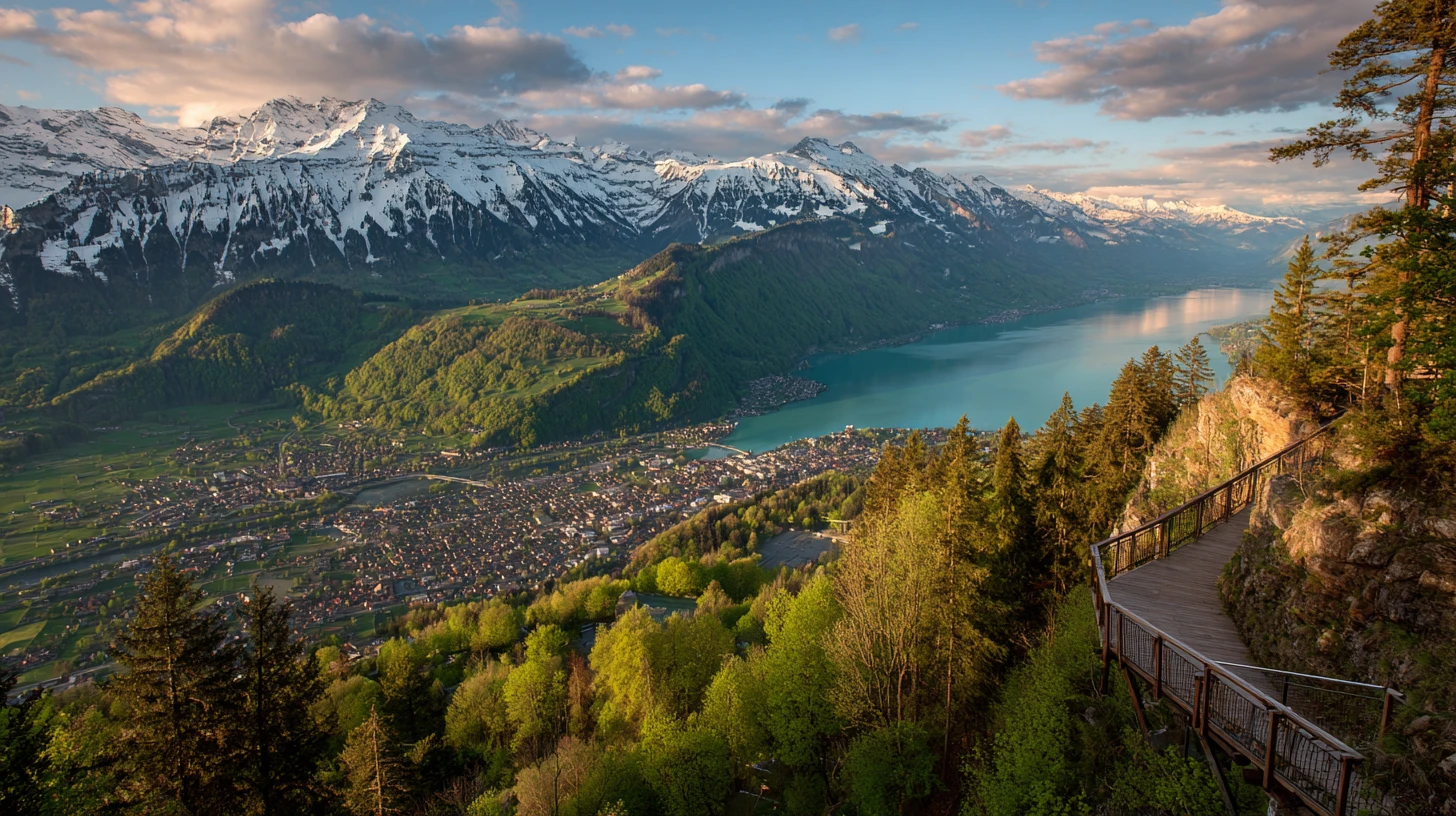
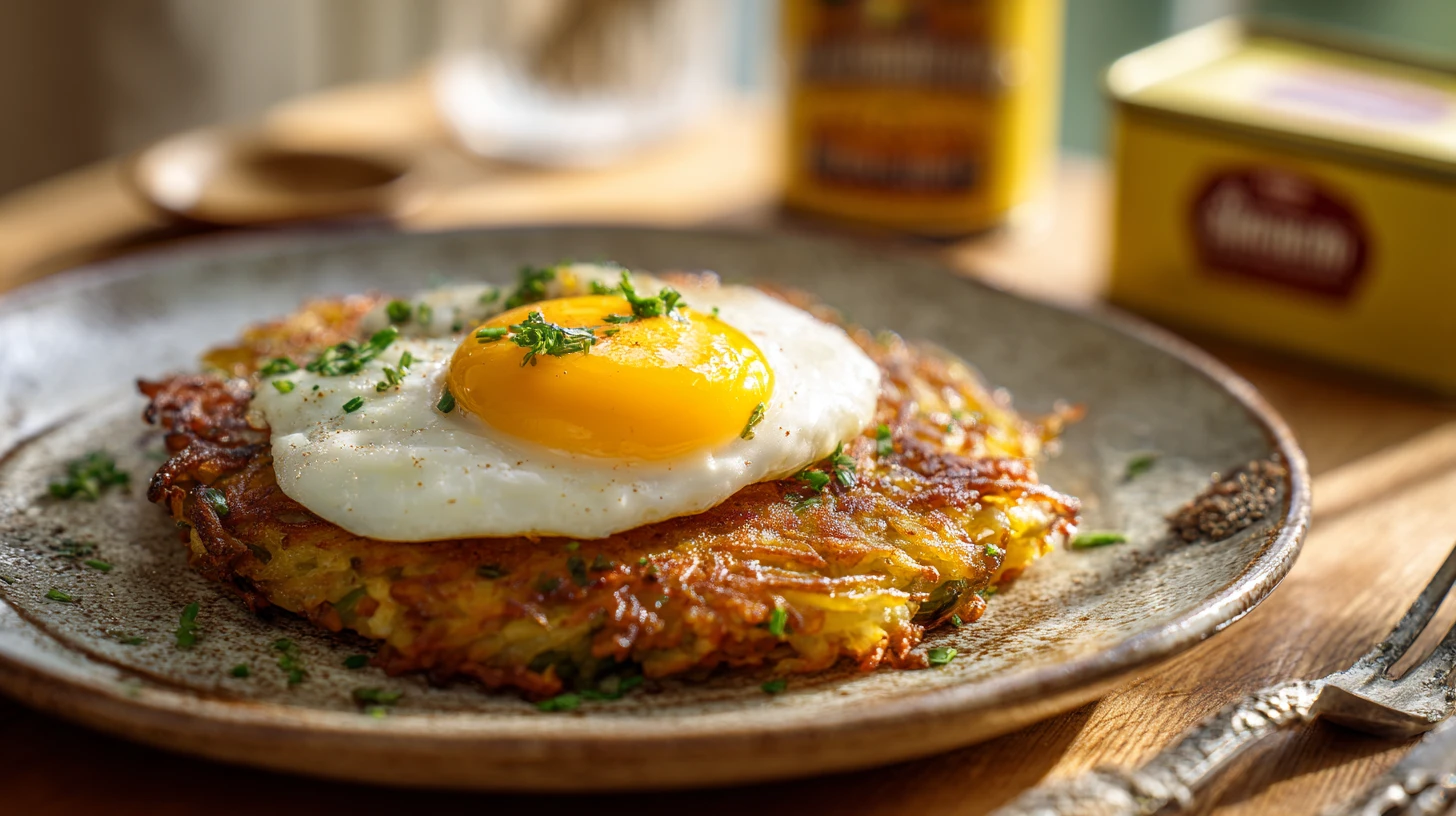
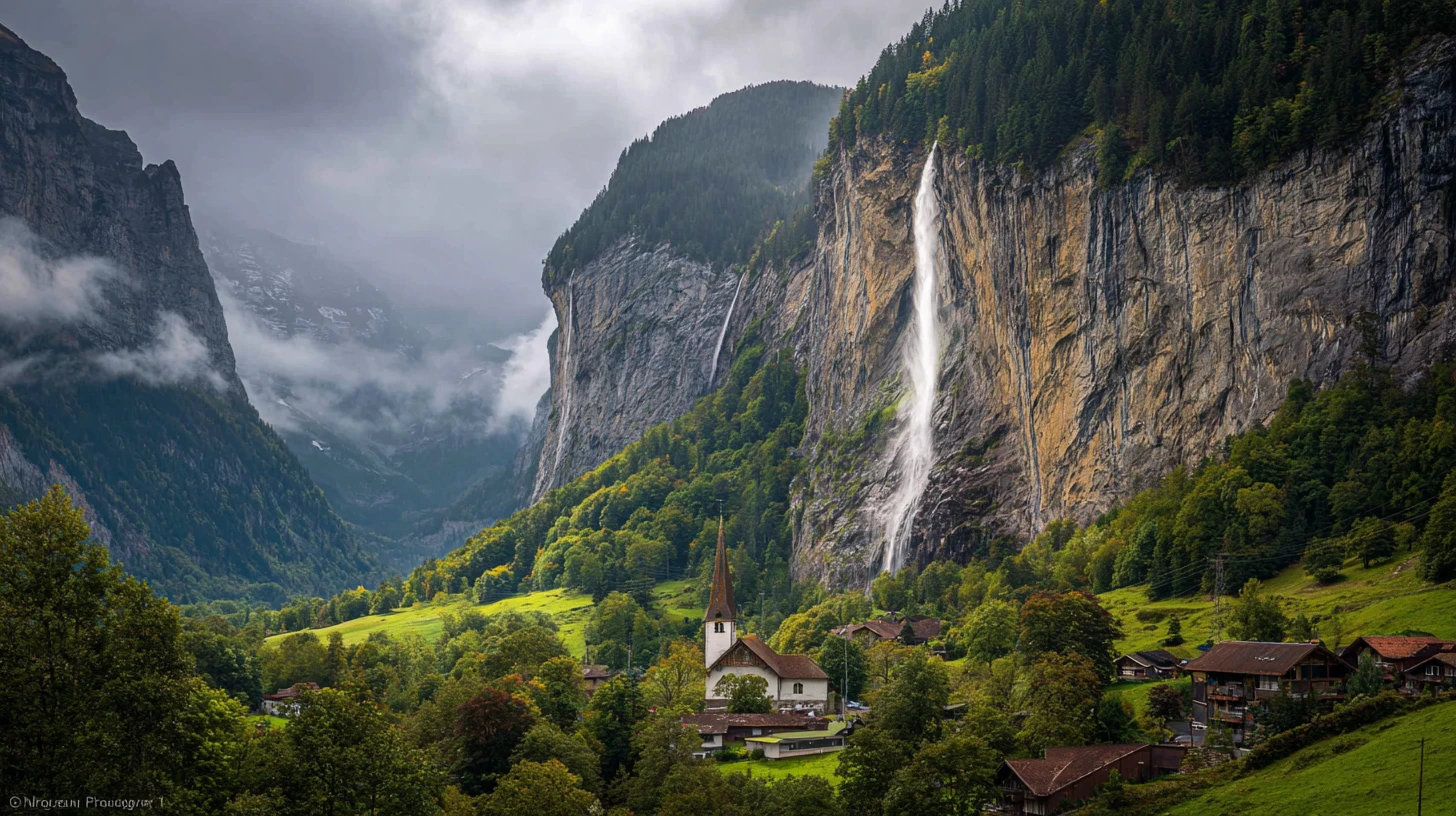
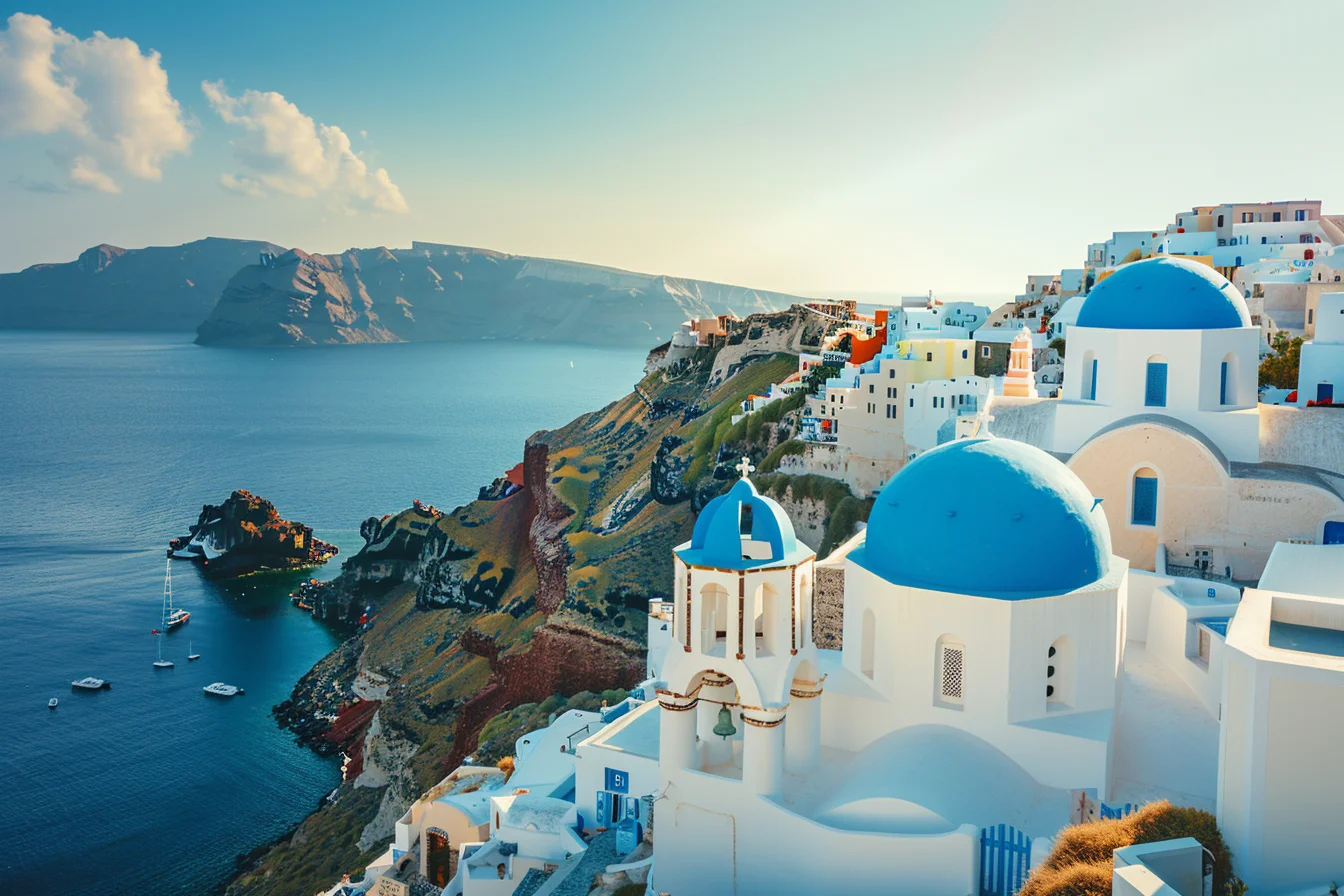
🏔️ Interlaken from Harder Kulm · Tap to read🥔 Rösti & Aromat · Tap to read💦 Staubbach Falls · Tap to read
Geography
Regional Allergen Risk Map
Switzerland’s allergy map splits by language and altitude as much as geography. The German-speaking core (Zürich, Bern) has the best restaurant network and the heaviest Aromat reflex; the Bernese Oberland and Valais are alpine-dairy resort country (fondue, raclette, rösti) and the gateway to fixed-menu mountain huts; Graubünden and the Engadine add the walnut Nusstorte and longer transport times; Ticino leans Italian (polenta, pasta, risotto, less Aromat but more Bouillon and dairy); and French-speaking Romandy uses French allergen terms over the same dairy floor. The constant everywhere is the seasoning layer — Aromat and Bouillon — and the canton decides which language your card needs to be in.
Loading region map…
↑ Hover a region for detail
🏙️
Zürich & the German-speaking core · Zürich / Deutschschweiz
EASIER
Highest restaurant density, strong English, the broadest allergen-aware network — and the heartland of Zürcher Geschnetzeltes (Rahm) and the Aromat reflex. City kitchens adapt well when told before the dish is built. The hidden risk is the seasoning, not the staff.
Interlaken, Lauterbrunnen and the Jungfrau region — the resort gateway to alpine huts and scenic rail. English is strong in the resorts; the food is rösti, fondue and Aromat, and the half-board hotels and SAC huts above run fixed menus. Disclose at booking for anything up the mountain.
The home of raclette and a German-then-French dairy region. Zermatt is car-free, so serious cases are coordinated via 144/REGA and moved toward Visp by ambulance, mountain train or helicopter depending on severity. Structural dairy dominates; Valais wine adds sulfites; air-dried Walliser Trockenfleisch is a cleaner protein.
Graubünden & the Engadine · Graubünden / Engiadina
MODERATE
The Glacier Express interchange (Chur) and St. Moritz country, trilingual (German, Romansh, Italian). Bündnerfleisch is a clean option; Engadiner Nusstorte makes this the tree-nut region; Capuns (chard-wrapped Spätzli) carries wheat, egg and dairy. Remote valleys mean longer transport to specialist care.
Italian-speaking and Italian-leaning: polenta, risotto, pasta and grotto cooking. Less of the Aromat reflex, but more wheat (pasta) and Bouillon-in-risotto, and the dairy floor still applies. Carry an Italian card here, not German.
Geneva, Lausanne and Vaud — strong restaurants and French allergen vocabulary (crème, bouillon, céleri, moutarde). Fondue and papet vaudois (leek-and-sausage stew) anchor the dairy-and-pork local table. Carry a French card; the law and the seasoning risk are identical to the German side.
The Swiss allergen landscape is milk-dense above all, then wheat- and nut-dense, with a hidden-seasoning layer that punches far above its statistical weight: Aromat (lactose) and Bouillon (celery, gluten, soy, milk, mustard) carry allergens into dishes that read as plain. Dairy is structural everywhere — fondue, raclette, Rahm sauces, gratins, Birchermüesli. Tree nuts concentrate in bakeries, chocolate and the Engadine (Nusstorte). Celery and mustard ride in on Bouillon and sausages rather than as visible ingredients. Sulfites carry across Swiss wine and dried fruit. The rows below order by structural supply prevalence across Swiss regional cooking.
Clinical allergen prevalence in Switzerland: Swiss prevalence broadly tracks Central-European averages — cow’s milk and egg dominate paediatric food allergy; tree nuts, peanut and (regionally) celery dominate adult presentations, and celery is a clinically notable allergen in the German-speaking Alpine region. aha! Swiss Allergy Centre (Allergiezentrum Schweiz) publishes patient guidance and a dining-out resource.4
Why these allergens matter more than the numbers suggest: Switzerland’s risk isn’t exotic ingredients — it’s that the everyday ones are added invisibly. Milk, celery, gluten, soy and mustard arrive through Aromat and Bouillon, which a cook applies without thinking of them as ingredients. A dish can be truthfully described as ‘just vegetables’ and still carry several declarable allergens. Formulations vary, so treat Aromat and Bouillon as multi-allergen until the tin or kitchen confirms. Name the vehicles, not only the allergens.2
Languages
Languages Spoken
Switzerland is the opposite of a single-card country: it has four national languages, and the kitchen language follows the canton. German covers the Bernese Oberland (Interlaken, Lauterbrunnen), Zürich, Lucerne, Basel and the Valais (Zermatt); French covers Romandy (Geneva, Lausanne, Neuchâtel); Italian covers Ticino (Lugano, Locarno, Bellinzona). The same allergen carries three official names — milk is Milch / lait / latte. Spoken Swiss German is dialect (Schwiizerdütsch), but menus, packaging and allergen documents are written in Standard German, so a Swiss Standard German card is the right written tool for the German-speaking core. English reaches front-of-house almost everywhere in tourist resorts. Match the card to the region you’re in — one card does not cover all of Switzerland.
~62% of the population. Spoken life is Alemannic dialect (Schwiizerdütsch), which is essentially unwritten; the written kitchen language — menus, allergen documentation, packaging — is Standard German. A Swiss Standard German card reaches the cook across the German-speaking cantons, including the Bernese Oberland and Valais resorts most tourists visit.
Zürich, Bern & the Bernese Oberland (Interlaken, Lauterbrunnen), Lucerne, Basel, Valais (Zermatt), most of Graubünden
~23%. The kitchen language across Romandy (western Switzerland). Allergen terms differ from German: crème (Rahm), bouillon, céleri (Sellerie), moutarde (Senf), fruits à coque (tree nuts). Use a French card in Geneva, Lausanne and the Vaud/Valais French zones.
~8%. The kitchen language of Ticino and the southern Graubünden valleys. Allergen terms: panna (cream), brodo/dado (bouillon), sedano (celery), senape (mustard). Ticinese cooking leans Italian — more wheat (pasta, polenta is corn) and less of the Aromat reflex, but Bouillon and dairy still apply.
A national and (in Graubünden) co-official language with roughly 40,000–60,000 speakers in the Engadine and Surselva. Menus and allergen documentation are written in German, so a Romansh card would not improve kitchen reach — use Swiss German in Romansh-speaking Graubünden.
Near-universal front-of-house in tourist resorts — Zermatt, Interlaken, St. Moritz, Lucerne and Geneva/Zürich city centres are highly English-fluent. But English reaches the waiter, not always the cook, and rarely the seasoning reflex: a server who confirms 'no dairy' in fluent English may not register the Aromat. A written card in the canton's language still outperforms a verbal English request.
Tourist resorts and city centres nationwide; strongest in Zermatt, Interlaken, St. Moritz, Lucerne, Geneva, Zürich
~very high (front-of-house, resorts)
Match the card to the canton: Generate a Swiss German card for the German-speaking core — the Bernese Oberland (Interlaken, Lauterbrunnen), Zürich, Lucerne, Valais (Zermatt) and most of the Glacier Express route. Add a French card for Romandy (Geneva, Lausanne) and an Italian card for Ticino (Lugano). Whatever the language, the card must name Aromat, Bouillon and Rahm explicitly — the generic 'Milch / Gluten' declaration is legally accurate but operationally weaker, because the danger is the seasoning the cook doesn't think to mention.
Reading Labels
Swiss Label & Menu Guide
Switzerland uses the Latin alphabet, so script isn't the barrier — language and vocabulary are. The menu language follows the canton (German, French, Italian), and the highest-risk items aren't foods but seasonings: Aromat and Bouillon. A traveler who reads ‘Rösti’ and assumes 'just potato' misses the Aromat dusted on top; one who reads a clear soup misses the celery, gluten and milk the Bouillon carried in. The cards below give the German terms — with French and Italian for the key vehicles — and where each one hides.
Switzerland is not in the EU, but its allergen rules run parallel: the FDHA Ordinance on Food Information (Lebensmittelinformationsverordnung, LIV, SR 817.022.16) requires the same allergen groups as EU Annex II to be declared in the ingredient list, emphasised by type, style or background colour. The real obstacle is not script — Switzerland uses the Latin alphabet — it is language and vocabulary. The menu language follows the canton: German across the Bernese Oberland, Zürich, Lucerne and Valais (Zermatt); French in Romandy (Geneva, Lausanne); Italian in Ticino. The same allergen carries three official names, and the highest-risk vehicles are not foods at all but seasonings — Aromat and Bouillon — that staff do not think of as allergens. The cards below give the German terms (with French and Italian for the key vehicles) and where each one hides.
AROMAT
Seasoning salt ⚠
The yellow-tin Swiss seasoning shaken onto eggs, potatoes, fries and rösti by reflex. Contains lactose (milk) and flavour enhancers; cooks never call it ‘dairy.’ Some formulations also contain celery and spice extracts and may carry traces of gluten, egg or mustard — check the tin. Name it on the card by brand — staff recognise it instantly.
BOUILLON / BRÜHE
Stock powder ⚠
Powdered or cube stock in soups, sauces, risotto, vegetables and meat dishes. Often carries Sellerie (celery), Gluten, Soja, Milch and Senf (mustard) — treat as multi-allergen until the label or kitchen confirms. FR: bouillon; IT: brodo/dado.
RAHM · NIDEL
Cream ⚠
Rahm (Swiss-German Nidel) is cream — poured into ‘plain’ vegetables, sauces and Zürcher Geschnetzeltes. Milk in disguise. FR: crème; IT: panna.
Wheat-flour roux thickens sauces, gravies and soups; Zürcher Geschnetzeltes rides on it. Gluten is the LIV category; Weizen (wheat), Dinkel (spelt), Hafer (oats) are the cereals.
EI
Egg
Ei (egg). In Spätzli/Knöpfli, Zürcher pastries, meringue (traditionally claimed by Meiringen) and fresh pasta. FR: œuf; IT: uovo.
SCHALENFRÜCHTE
Tree nuts ⚠
LIV term for tree nuts. Baumnuss (walnut), Haselnuss (hazelnut), Mandel (almond), Cashew. High cross-contact in bakeries, chocolate shops and Engadiner Nusstorte. FR: fruits à coque.
ERDNUSS
Peanut ⚠
Separate LIV category from tree nuts. Erdnuss. Less in traditional cooking; appears in chocolate, snacks and Asian-fusion venues. FR: arachide/cacahuète; IT: arachide.
SOJA
Soy ⚠
Soja. In bouillon, sauces, chocolate (soy lecithin), processed meats and vegan alternatives. FR: soja; IT: soia.
SELLERIE
Celery ⚠
Sellerie — a declarable LIV allergen, structural in Bouillon, dressings, sausages and spice blends. Easy to miss because it arrives via stock, not as a visible vegetable. FR: céleri; IT: sedano.
SENF
Mustard ⚠
Senf — declarable under LIV. In dressings, sausages (cervelat, bratwurst), bouillon and spice mixes. FR: moutarde; IT: senape.
SULFITE
Sulfites · SO₂
Declared above 10 mg/kg. ‘Enthält Sulfite’ on wine, dried fruit and some cured meats. Look for ‘SO₂’ on labels. FR: sulfites; IT: solfiti.
How allergens appear on Swiss packaging: The LIV allergens are declared inside the ‘Zutaten:’ (ingredients) list, emphasised by bold, capitals or colour — not always in a separate box. ‘Kann Spuren von … enthalten’ = ‘may contain traces of …’ is regulated, not simply voluntary: for pre-packaged food a trace declaration is required where unintentional allergen presence exceeds the FoodIO threshold (Art. 5) and is voluntary below it; for non-prepacked food it is not mandatory. Absence of a trace statement does not prove absence of cross-contact. On French and Italian labels the same line reads ‘Peut contenir des traces de …’ / ‘Può contenere tracce di …’.
How Aromat and Bouillon hide: Switzerland’s hidden-allergen story is seasoning, not a dish. Aromat (a lactose-bearing seasoning salt) is shaken onto eggs, rösti, fries and vegetables without mention; Bouillon (stock powder) can carry celery, gluten, soy, milk and mustard into soups, risotto, sauces and ‘plain’ vegetables. Rahm (cream), butter and cheese turn up in dishes described as plain, and a Mehlschwitze (wheat roux) thickens many cream sauces, gravies and soups. Ask what was added after cooking, not just what the dish ‘is.’
Cuisine
Dish Allergen Map — 12 Swiss Dishes
Swiss dishes sort into three structural profiles — dairy-built (fondue, raclette, gratin, cream sauces where milk defines the dish), seasoning-carried (rösti, soups and vegetables where Aromat and Bouillon add milk, celery, gluten, soy and mustard invisibly), and regional signatures (Engadine walnut tart, Graubünden air-dried beef, Ticinese polenta). Every dish below is classified STRUCTURAL (the allergen defines the dish), INCIDENTAL (it arrives via seasoning, sauce or variant and may be mitigated), or CROSS-CONTACT. The STRUCTURAL distinction matters because you cannot order Käsefondue ‘without the cheese,’ but you can ask a cook to hold the Aromat and use no Bouillon — if you name them.
Melted cheese is the dish — STRUCTURAL milk, not adaptable. Thickened with cornflour (corn, not wheat) and finished with white wine, often with a shot of Kirsch (cherry brandy). The dipping bread is wheat (INCIDENTAL) — GF bread can substitute, but the cheese remains. White wine carries the sulfites. For a milk allergy, choose another venue.
HIGH
RacletteRaclette · Valais
MILK — STRUCTURAL
Melted cheese scraped over potatoes and pickles — STRUCTURAL milk. The potatoes and gherkins are safe, but the dish is the cheese. Aromat is commonly offered tableside as a potato seasoning — decline it for a milk allergy.
HIGH
Hash-brown potato cakeRösti · German-speaking CH
MILK (Aromat / butter) — INCIDENTALEGG (variant) — INCIDENTALMILK (cheese variant) — INCIDENTALMODIFIABLE — Ask for no Aromat and butter-free preparation.
Grated fried potato — naturally simple, but the trap dish for the Aromat through-line. Aromat (lactose) is dusted on by reflex, and rösti is often fried in butter; cheese and egg versions exist (Rösti mit Käse / mit Spiegelei). Ask explicitly: was Aromat sprinkled on, and is it fried in butter or oil.
Macaroni, potato, cream and cheese, topped with fried onion and served with apple sauce. STRUCTURAL wheat and milk (Rahm + cheese). Not adaptable for milk or wheat allergy.
HIGH
Sliced veal in cream sauceZürcher Geschnetzeltes · Zürich
Veal in a cream-and-white-wine sauce, usually thickened with a Mehlschwitze (wheat roux). STRUCTURAL milk (Rahm); wheat is INCIDENTAL but near-constant. Mushrooms are common. Typically served over rösti — see the Aromat note.
The Swiss breakfast icon — soaked oats, grated apple, cream/milk and nuts. STRUCTURAL oats (gluten-grain category), milk and tree nuts. A multi-allergen bowl; the hotel-buffet default. Treat as nuts-and-dairy unless individually prepared.
HIGH
Air-dried beefBündnerfleisch · Graubünden
BEEF — STRUCTURALSPICES (cure) — INCIDENTAL
Air-dried, spiced beef sliced thin. Among the cleaner Swiss options for milk-, gluten- and egg-allergic travellers — STRUCTURAL beef with a spice cure. Confirm the cure’s spice blend if seeds/spice-allergic; watch shared slicers with cheese in deli settings.
LOW
Grilled sausagesBratwurst & Cervelat · Nationwide
PORK / BEEF — STRUCTURALMUSTARD (served / in mix) — INCIDENTALWHEAT (rusk binder) — INCIDENTALMILK (some recipes) — INCIDENTALMODIFIABLE — Ask for the binder and skip the mustard.
Grilled sausages, a festival and Beizli staple. Served with Senf (mustard) and bread; the forcemeat can carry a wheat-rusk binder and, in some recipes, milk powder. St. Galler Bratwurst is traditionally eaten without mustard, but it’s offered everywhere — flag a mustard allergy explicitly.
A caramel-and-walnut pastry from the Engadine. STRUCTURAL walnut (tree nuts), wheat and milk. The signature sweet of the Glacier Express region and a high-risk bakery item — cross-contact with other nuts is likely.
Sliced potato baked in cream and cheese — STRUCTURAL milk even though it reads as ‘just potatoes.’ A classic example of Rahm hiding in a plain-sounding side. Not adaptable for a milk allergy.
HIGH
PolentaPolenta (Ticinese) · Ticino
CORN (cornmeal) — STRUCTURALMILK (butter/cheese) — INCIDENTALCELERY (Bouillon cooking liquid) — INCIDENTALMODIFIABLE — Ask for water-cooked, no cheese/butter, no Bouillon.
Cornmeal staple of Ticino — naturally gluten-free and a good base, but frequently enriched with butter and cheese (milk) and sometimes cooked in Bouillon rather than water, which adds celery, gluten and more. Ask for water-cooked polenta without cheese or stock.
MEAT — STRUCTURALCELERY (broth Bouillon) — INCIDENTALWHEAT (broth/sauces) — INCIDENTALEGG (mayo-based sauces) — INCIDENTALMUSTARD (sauces) — INCIDENTALMODIFIABLE — Confirm the broth base and that sauces are served separately.
The milk-free alternative to cheese fondue — thin slices cooked in broth (chinoise) or oil (bourguignonne). But the broth is usually a Bouillon (celery, gluten, soy), and the dish lives on dipping sauces (mayonnaise, mustard, tartare). Confirm the broth and have plain oil; ask which sauces to avoid.
MODERATE
Cleanest Swiss options depend on your trigger.Milk-allergic travellers: grilled meat or fish with plain boiled potatoes (confirm no Aromat, no butter), Bündnerfleisch, and water-cooked polenta are the safest paths; avoid fondue, raclette, gratins and cream sauces entirely. Gluten-allergic travellers: raclette (cheese + potato), grilled meats and polenta work, but watch the Mehlschwitze in sauces and the rusk in sausages. The universal move is the seasoning question — ‘wurde Aromat darübergestreut, und ist in der Sauce Bouillon oder Rahm?’
The ‘plain vegetables’ trap: A side of vegetables or a clear soup is rarely just that. Vegetables are often tossed in butter or simmered in Bouillon; a clear soup usually is Bouillon. For milk, celery, gluten, soy or mustard allergies, treat any restaurant vegetable or soup as seasoned until the kitchen confirms otherwise.
Where to Eat
Venue Safety Profile
Swiss venues sort along an axis of how much the kitchen can improvise. City restaurants and chef-driven spots in Zürich, Geneva, Lausanne and Lucerne handle allergies well — written menus, English-fluent staff, allergen awareness. Traditional Beizli / Stube (neighbourhood taverns) are warm but reflexive: Aromat and Bouillon go on without mention, and a card outperforms a verbal request. Fondue & raclette restaurants are dairy halls — structural milk, not a fit for a milk allergy at any severity. Mountain huts (Berghütte) and half-board (Halbpension) hotels cook fixed menus with the least flexibility; disclose at booking. The Glacier Express and panoramic trains serve a set onboard menu — the signature experience with the tightest constraints. Bäckereien and chocolatiers run a parallel tree-nut cross-contact track.
Higher Risk
Most Reliable
🫕Fondue & raclette restaurant
The Swiss dining cliché and a structural dairy hall. Cheese fondue is melted cheese (often finished with Kirsch cherry brandy, rubbed with garlic, thickened with cornflour); raclette is melted cheese over potatoes. Communal pots, shared bread-dipping, cheese-heavy steam and shared utensils make avoidance impractical for many milk-allergic travellers. For a milk allergy this is not adaptable.
Milk-allergic travellers should choose a different venue rather than negotiate the dish. For mixed parties, the meat fondue (fondue chinoise / bourguignonne) is broth- or oil-based — but confirm the broth isn't a celery/gluten Bouillon and that sauces are served separately.
The default local eatery — rösti, sausages (cervelat, bratwurst), Zürcher Geschnetzeltes, älplermagronen, soups. Warm and fast. This is where Aromat and Bouillon are most invisible: the rösti is dusted, the vegetables are simmered in stock, the sauce starts with a Mehlschwitze. Written allergen documentation exists by law but isn't volunteered.
Hand the card naming Aromat, Bouillon, Rahm and Mehlschwitze before ordering. Ask the working question: 'Wurde Aromat darübergestreut, und ist in der Sauce Bouillon oder Rahm?' — was Aromat sprinkled on, and is there bouillon or cream in the sauce.
MOD
🚞Glacier Express & panoramic trains
The signature experience: a fixed multi-course lunch served at your seat as the train climbs, with set timing and a galley that can't rebuild a plate mid-journey. Lovely, and constrained — the menu is decided in advance and the kitchen is the size of a cupboard. Booking is months ahead, which is also the window to arrange food.
Disclose your allergens at booking through Rail Service / the operator, in writing, not on the day. Carry safe food as backup for the leg; at altitude over several hours, 'I'll just skip lunch' is not a plan.
MOD
🥘City restaurant / chef-driven
Zürich, Geneva, Lausanne, Lucerne and Basel have well-run restaurants with written menus, allergen-trained staff and strong English. Small enough to adapt when told before the dish is built; international and modern kitchens are used to allergy guests.
Ask for the chef's recommendation given your card, and still flag the seasoning explicitly — even a good kitchen reaches for Aromat and Bouillon by habit. These kitchens treat the card as professional input.
LOWER
🧀Berghütte & half-board hotel (Halbpension)
SAC mountain huts and demi-pension hotels serve a fixed dinner — one menu, set courses, limited resupply (huts are stocked by cableway or helicopter). Dairy is heavy (älplermagronen, cheese, Rahm sauces) and substitution is minimal. Remote, beautiful, and the least flexible meal you'll eat in Switzerland.
Phone or email the hut warden / hotel at booking with your allergens; many will accommodate with notice but cannot improvise on the night. Confirm again on check-in and carry backup food for huts.
HIGH
🍫Bäckerei & chocolatier
Switzerland's bakeries and chocolate shops are a tree-nut and dairy environment: Baumnuss (walnut), hazelnut, almond and praline run through pastries, Engadiner Nusstorte and filled chocolates, with shared surfaces and utensils. Chocolate also carries soy lecithin and milk. High cross-contact even for items that look nut-free.
Tree-nut and peanut-allergic travellers should assume cross-contact in any bakery or chocolatier and ask 'Werden hier Nüsse verarbeitet?' — are nuts processed here. Sealed, fully-labelled bars from a shop are safer than counter pralines.
MOD
The hotel breakfast-buffet pattern: Swiss hotel breakfasts centre on Birchermüesli (oats, nuts, milk, cream), cheeses, cold cuts, bread and pastries on shared tables with shared tongs. Birchermüesli is a Swiss invention and a multi-allergen bowl. Ask for an individually plated preparation, and treat the muesli as nuts-and-dairy by default.
The wine & cheese tasting pattern: Valais and Vaud cellar tastings and alpine cheese-dairy (Alpkäserei) visits are beverage- and cheese-led — lower kitchen-risk, but the pairing boards are cheese, nuts, dried fruit and cured meat, and the wine carries declarable sulfites. Specify exclusions before the board arrives.
The après-ski / mountain-restaurant pattern: On-mountain self-service restaurants move fast and lean on rösti, sausages, soups and Aromat. Service is loud and quick, written allergen info is thin, and you're at altitude. Hand the card, keep it simple (grilled meat + plain potato, confirm no Aromat), and carry your own snack.
The contextual section
The Glacier Express — the slow train that decides your lunch in advance
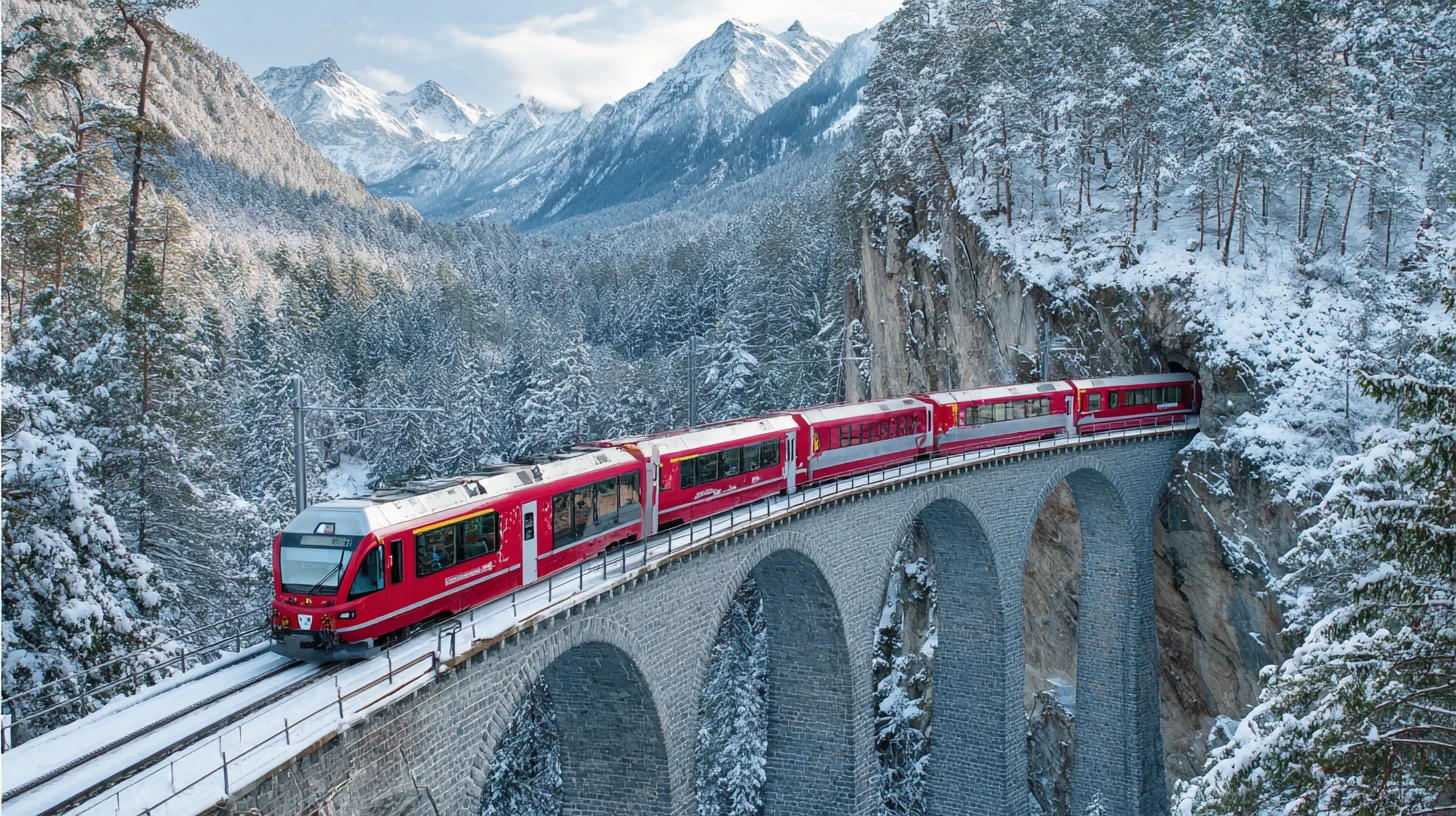
Switzerland’s signature experience for the deliberate traveller isn’t a peak to photograph — it’s the panoramic rail journey you plan a trip around, the Glacier Express from Zermatt to St. Moritz. Its defining feature for an allergic traveller is also its charm: a fixed multi-course lunch served at your seat as the train climbs, with set timing and a galley that can’t rebuild a plate at altitude. The same logic governs the mountain huts and half-board hotels the route feeds into. Every layer carries the Swiss seasoning pattern — Aromat, Bouillon, Rahm — and the one move that works is to put the allergy conversation at the booking, not the table.
The Glacier Express on the Landwasser Viaduct — eight hours of panoramic rail with a fixed multi-course menu served at your seat. The kitchen is a galley; the menu is set before you board.
🚞
The one rule that governs the signature experience
Switzerland’s deliberate-traveller hook is a fixed-menu meal at altitude — the Glacier Express, a mountain hut, a half-board hotel. The kitchen decides the menu before you arrive and can’t improvise once you’re aboard or up the mountain. So the allergy conversation moves to booking: disclose in writing when you reserve, naming Aromat, Bouillon and Rahm, and carry a backup. Verbal disclosure at the table, the move that sometimes works in a city restaurant, fails on a train.
🚞
Book the meal when you book the seat
The Glacier Express lunch is a fixed multi-course menu served at your seat, decided in advance. The galley is the size of a cupboard and can’t rebuild a plate at 2,000 metres. Seats sell out months ahead — the same booking window is when you arrange food. Disclose your allergens in writing to Rail Service / the operator at reservation, not on the day.
🧀
The onboard menu is Swiss comfort food — name the seasonings
Expect Rahm-based sauces, cheese, rösti and dishes built on Bouillon, with Aromat within reach of the galley. A milk, celery, gluten or mustard allergy is exposed here even when the dish reads as simple. Name Aromat, Bouillon and Rahm on your card and confirm them with the onboard team when service starts.
🏔️
Altitude plus hours means carry a backup
The classic Zermatt–St. Moritz run is roughly eight hours. ‘I’ll just skip lunch’ is not a plan across a full day at altitude. Carry safe food you can eat at your seat as a fallback for the leg, in case the kitchen can’t confirm a dish.
🍫
The endpoints are dairy towns
Zermatt and St. Moritz are raclette-and-fondue country, and the Bernese Oberland gateway is rösti-and-Aromat country. The dairy floor doesn’t lift when you step off the train — choose milk-free venues rather than negotiating fondue, and treat bakeries and chocolatiers as tree-nut cross-contact.
Communication norms
Dining Etiquette & Cultural Norms
Swiss service is precise and unhurried, and precision works in your favour: a clearly stated, written allergy is treated as useful information, not a complaint. The allergy-critical move is to raise it in the canton’s language, in writing, at the start — and to ask the one question the menu never answers: was Aromat or Bouillon added. Communal dishes (fondue, raclette) make opting out a normal request, not a slight. Tipping is light: service is included, and rounding up is the norm — it is not a lever for attention.
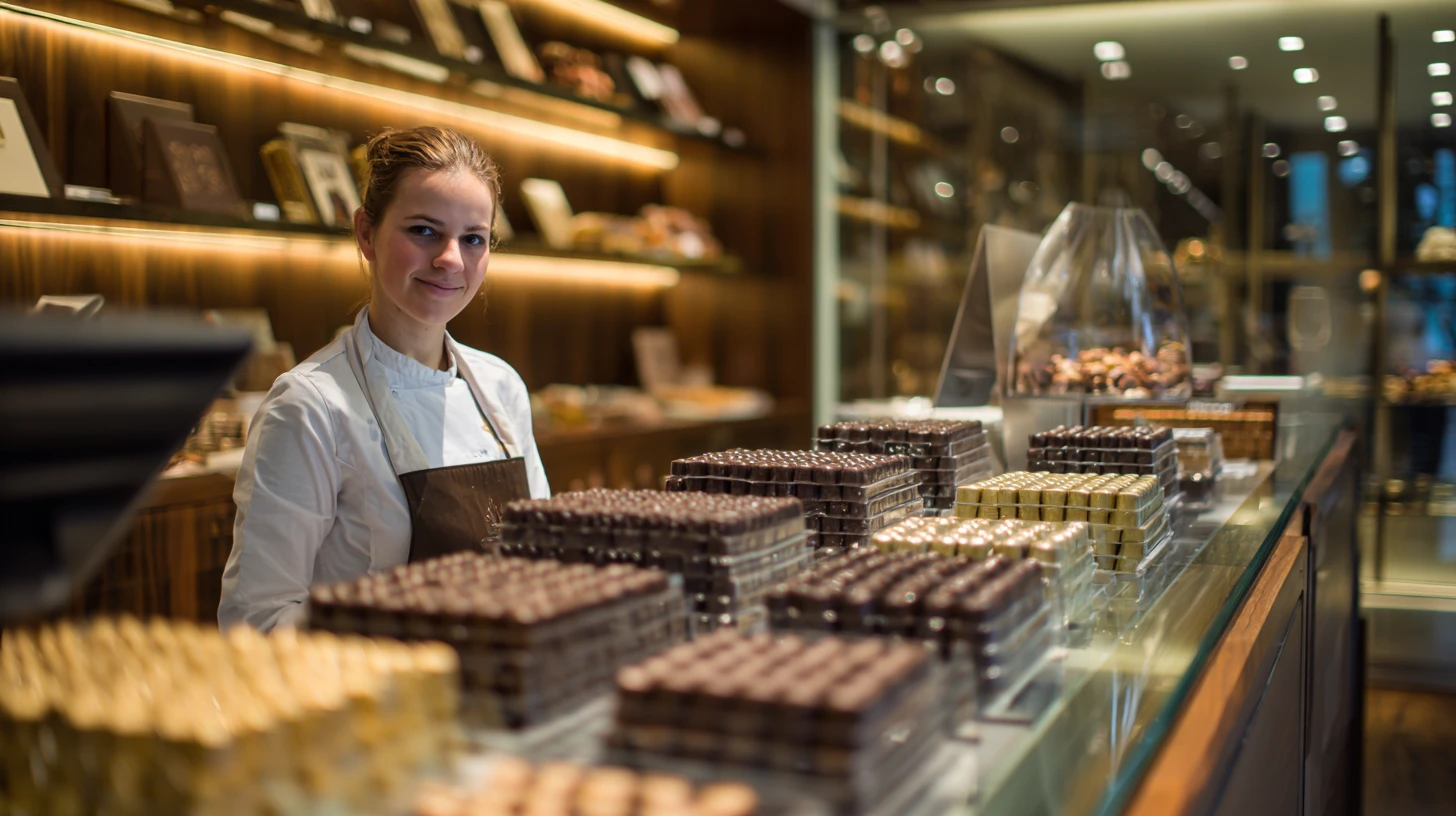
A chocolatier finishing pralines — Swiss chocolate and pastry counters are warm and exact, and also a tree-nut, soy-lecithin and dairy environment where the right question is what shares the surface.
💬
How to raise an allergy in Swiss culture
Direct, polite and written. Greet in the local language — Grüezi (German), Bonjour (French), Buongiorno (Italian) — then hand the card and say schwere Lebensmittelallergie / allergie alimentaire grave. Swiss precision welcomes specificity; naming Aromat and Bouillon reads as competence, not fuss.
🧂
Always ask the seasoning question
The single most useful habit in Switzerland: ask whether Aromat was sprinkled on and whether the sauce or vegetables used Bouillon or Rahm. Cooks don’t volunteer seasonings, so ‘no milk’ can be sincere and wrong. Phrase it as a question about what was added after cooking.
🫕
Communal dishes — opting out is fine
Fondue and raclette are shared, social and structurally dairy. Declining or choosing a meat fondue is socially normal — the Swiss will not press you. For a mixed table, suggest fondue chinoise (broth) and confirm the broth isn’t a celery/gluten Bouillon and that sauces are served on the side.
💴
Tipping & service
Service is included by law; rounding up (or ~5–10% for good service) is generous, not expected. Tipping is not a tool for allergy attention — it changes nothing before or during the meal. Your card and the seasoning question do the work.
The multilingual greeting: Open in the canton’s language — Grüezi in the German-speaking core and Bernese Oberland, Bonjour in Romandy, Buongiorno in Ticino. It signals you know which kitchen you’re in, and it’s the cue to hand the matching card. Carry the card in the right language rather than relying on English even where English is excellent.
Communication
Essential Safety Phrases
Six scenarios cover the working Swiss German an allergic traveller needs. The card carries the formal declaration; these phrases handle the follow-up. The Aromat-and-Bouillon question is the one to drill — 'was it sprinkled on, is it in the sauce' catches the seasonings the menu never mentions. In Romandy and Ticino, switch to the French or Italian equivalents.
Scenario 01
Declaring your allergy
DE
Ich habe eine schwere Lebensmittelallergie. Hier ist meine Karte.
Ich hábe eine schwére Lébensmittel-allergíe. Hier ist méine Kárte.
I have a severe food allergy. Here is my card.
DE
Bitte kein Aromat und keine Bouillon — beide enthalten Allergene.
Bítte kein Áromat und kéine Bujón — béide enthálten Allergéne.
Please no Aromat and no bouillon — both contain allergens.
Scenario 02
Asking about hidden Aromat & Bouillon
DE
Wurde Aromat darübergestreut?
Vúrde Áromat darüber-geströit?
Was Aromat sprinkled on top?
DE
Ist in der Sauce Bouillon oder Rahm?
Ist in der Sóhsse Bujón óder Rahm?
Is there bouillon or cream in the sauce?
DE
Wurde das Gemüse in Bouillon gekocht?
Vúrde das Gemǘse in Bujón gekócht?
Were the vegetables cooked in bouillon?
Scenario 03
Confirming the kitchen understood
DE
Hat die Küche meine Karte gelesen?
Hat die Kǘche méine Kárte gelésen?
Did the kitchen read my card?
DE
Ohne [Rahm / Butter / Käse], bitte.
Óhne [Rahm / Bútter / Kǽse], bítte.
Without [cream / butter / cheese], please.
Scenario 04
Asking about cross-contact
DE
Wird die Fritteuse auch für anderes benutzt?
Vird die Frittȫse auch für ánderes benútzt?
Is the fryer also used for other things?
DE
Werden in der Bäckerei Nüsse verarbeitet?
Vérden in der Béckerei Nǘsse ferárbeitet?
Are nuts processed in the bakery?
Scenario 05
Replacing an EpiPen
DE
Ich brauche einen Adrenalin-Autoinjektor. Ich habe ein Rezept.
Ich bráuche éinen Adrenalín-Áuto-injektor. Ich hábe ein Rezépt.
I need an adrenaline auto-injector. I have a prescription.
Scenario 06
Emergency
DE
Anaphylaxie! Ich habe mein Adrenalin gespritzt. Rufen Sie 144.
Anafylaxíe! Ich hábe mein Adrenalín geshprítzt. Rúfen Sie eins-vier-vier.
Anaphylaxis! I have injected my adrenaline. Call 144.
DE
Ich brauche einen Krankenwagen.
Ich bráuche éinen Kránken-vágen.
I need an ambulance.
Why a card matters in Switzerland: Switzerland has no standardised government allergy-communication tool, and its multilingual menus mean a single language won't reach every kitchen. FoodIO/LIV requires allergen information for non-prepacked food on request (oral disclosure permitted under conditions) but provides no public template, and the real risk — Aromat and Bouillon — is invisible to the cook. A written card in the canton's language, naming those vehicles, fills the gap.
Pre-Trip Preparation
Allergy-Specific Packing List for Switzerland
A standard EU-adjacent packing list with Switzerland-specific additions: a card in the language of the region you're visiting (Swiss German for the Bernese Oberland and Zermatt, French for Romandy, Italian for Ticino) naming Aromat, Bouillon and Rahm; comprehensive travel insurance with medical and repatriation cover (Swiss care is billed upfront and expensive); and backup food for mountain huts, half-board dinners and the Glacier Express, where menus are fixed.
💊 Medical essentials
✓
Two adrenaline auto-injectors (carry on-person, not in checked bags) — Swiss pharmacies dispense EpiPen/Jext by prescription, but same-day replacement is not guaranteed outside cities — carry two.
✓
Doctor's letter on letterhead naming medication, dosage, diagnosis, brand — Needed for a pharmacy refill mid-trip and useful at customs; a German or French translation helps.
✓
Comprehensive travel insurance with medical + repatriation cover — Eligible EHIC/GHIC holders can access necessary state care, but it isn’t travel insurance; ambulance, repatriation and private care are billed upfront and expensive. REGA patronage can waive helicopter costs.
✓
Antihistamines (cetirizine, loratadine) — Available OTC in Swiss Apotheken, but bringing your own avoids brand confusion and language friction.
✓
Asthma inhaler if relevant — Altitude and cold air at ski resorts and on alpine hikes can trigger exercise- and cold-induced symptoms.
🗂️ Communication tools
✓
Allergy card in the region's language naming Aromat, Bouillon, Rahm — The single most useful prep item. Swiss German for the German core; add French (Romandy) or Italian (Ticino) if your route crosses the language border.
✓
Card image saved to phone lockscreen — For fast on-mountain self-service counters and bakeries where you can't get a paper card read in time.
✓
Audio file of your declaration in the right language — For loud après-ski and mountain-restaurant service; play once, then hand the card.
✓
Printed pocket guide for your cantons — Offline reference for hospital addresses, emergency numbers and a safe-venue shortlist — useful where mountain signal drops.
🎯 At-destination habits
✓
Hand the card before ordering, and ask if Aromat or Bouillon was added — The seasoning goes on by reflex; the question 'wurde Aromat darübergestreut?' catches what 'no milk' misses.
✓
Disclose at booking for the Glacier Express, half-board hotels and mountain huts — These serve fixed menus and can't improvise on the day — the booking window is the only window to arrange food.
✓
Treat fondue/raclette venues and Birchermüesli as structural dairy — Choose the venue rather than negotiate the dish; muesli is oats-nuts-milk by default.
✓
Flag nut cross-contact at bakeries and chocolatiers — Baumnuss, hazelnut and praline run through Swiss pastry and chocolate on shared surfaces — sealed labelled bars beat counter pralines.
Emergency
Emergency Infrastructure
Swiss emergency medicine is among the best in the world. 144 reaches ambulance dispatch and 112 is the EU-universal number; the non-profit REGA (1414) provides helicopter rescue across the Alps, which matters when you're hours from a road. Operators commonly handle German, French, Italian and English. Care is excellent but expensive and typically billed upfront to visitors — travel insurance with medical and repatriation cover is essential. For anaphylaxis, say the word — Anaphylaxie — and name your trigger so the receiving team understands the exposure.
144
Ambulance / medical emergency (REGA air rescue: 1414)
144 reaches ambulance dispatch; 112 is the European emergency number and will connect and coordinate help. In the mountains or off-road, call REGA on 1414 for helicopter rescue. Operators handle German, French, Italian and English — say 'Anaphylaxie' and give your location (a ski-piste number, hut name or trail marker if rural).
Other emergency numbers: REGA (Swiss Air-Rescue) (1414): helicopter rescue in the mountains and remote areas; Air-Glaciers (1415) in parts of Valais. Tox Info Suisse (145): 24/7 poison advice. Police (117) · Fire (118) · Medical on-call / find a doctor or pharmacy (varies by canton; 1811 directory).
How the Swiss system works (and costs): There is no single national ambulance service — dispatch is cantonal but reached uniformly via 144/112. Public hospitals treat all emergencies. Switzerland takes part in EU social-security coordination, so eligible EHIC/GHIC holders can access medically necessary state care, but the card is not travel insurance, and ambulance and hospital care are billed and often expensive. Carry comprehensive travel insurance with medical and repatriation cover; REGA also offers a patron scheme that can waive helicopter costs.
Universitätsspital Zürich (USZ)
Rämistrasse 100, 8091 Zürich
Zürich's university hospital — full 24/7 emergency department, anaphylaxis-capable, English-speaking staff common.
Zürich
Inselspital, Universitätsspital Bern
Freiburgstrasse 18, 3010 Bern
Bern's university hospital — full emergency and ICU; the major referral centre for the canton and Bernese Oberland.
Bern
Spital Interlaken (Spitäler fmi AG)
Weissenaustrasse 27, 3800 Unterseen
Regional acute hospital with 24/7 emergency and rescue service for the central and eastern Bernese Oberland (Interlaken, Lauterbrunnen, Jungfrau region).
Interlaken
Spitalzentrum Oberwallis (SZO), Visp
Pflanzettastrasse 8, 3930 Visp
The Upper-Valais acute hospital and nearest emergency department to Zermatt (which is car-free; serious cases are coordinated via 144/REGA and moved by ambulance, mountain train or helicopter depending on severity).
Valais / Zermatt
Hôpitaux Universitaires de Genève (HUG)
Rue Gabrielle-Perret-Gentil 4, 1205 Genève
Switzerland's largest hospital and the reference emergency centre for French-speaking Switzerland.
Geneva
CHUV — Centre hospitalier universitaire vaudois
Rue du Bugnon 46, 1011 Lausanne
Lausanne's university hospital — full emergency department serving Vaud and the Lake Geneva region.
Lausanne
Ospedale Regionale di Lugano, Civico (EOC)
Via Tesserete 46, 6900 Lugano
Ticino's main acute hospital — Italian-speaking region; full emergency department for the south.
Lugano (Ticino)
Kantonsspital Graubünden
Loëstrasse 170, 7000 Chur
Graubünden's cantonal hospital at Chur — the Glacier Express interchange and referral centre for the Engadine / St. Moritz region.
Chur (Graubünden)
Regulation
Allergen Labeling Law
Switzerland implements allergen declaration through the FDHA Ordinance on Food Information (Lebensmittelinformationsverordnung, LIV / FoodIO, SR 817.022.16), parallel to EU Regulation 1169/2011. The same allergen groups as EU Annex II (listed in FoodIO Annex 6) must be declared on pre-packaged food, emphasised in the ingredient list. Restaurants must disclose allergen information on request — orally is permitted, with notice that the information is available. The law names broad categories (Milch, glutenhaltiges Getreide, Sellerie, Senf); it does not flag Aromat or Bouillon as the dairy and multi-allergen vehicles they are. That is the legal-versus-practical gap your card closes.
FDHA Ordinance on Food Information (Lebensmittelinformationsverordnung, LIV / FoodIO, SR 817.022.16) — Switzerland is not in the EU, but its allergen regime runs parallel to EU Regulation 1169/2011. The same allergen groups as EU Annex II (FoodIO Annex 6) must be declared on pre-packaged food, emphasised in the ingredient list. For non-prepacked food (restaurants, bakeries, mountain huts) allergen information must be available on request — it may be given orally by trained staff, with a notice that the information is available. Enforcement is cantonal, under the Federal Food Safety and Veterinary Office (BLV / OSAV).
FoodIO (LIV) Annex allergen, parallel to EU FIC Annex II. Must be declared on all pre-packaged foods and disclosed on request at all food-service venues (Restaurant, Beizli, Bäckerei, Berghütte, Hotel). Taxonomy mapping: wheat.
02. Crustaceans · Krebstiere
FoodIO (LIV) Annex allergen, parallel to EU FIC Annex II. Must be declared on all pre-packaged foods and disclosed on request at all food-service venues (Restaurant, Beizli, Bäckerei, Berghütte, Hotel). Taxonomy mapping: shellfish.
03. Eggs · Eier
FoodIO (LIV) Annex allergen, parallel to EU FIC Annex II. Must be declared on all pre-packaged foods and disclosed on request at all food-service venues (Restaurant, Beizli, Bäckerei, Berghütte, Hotel). Taxonomy mapping: egg.
04. Fish · Fische
FoodIO (LIV) Annex allergen, parallel to EU FIC Annex II. Must be declared on all pre-packaged foods and disclosed on request at all food-service venues (Restaurant, Beizli, Bäckerei, Berghütte, Hotel). Taxonomy mapping: fish.
05. Peanuts · Erdnüsse
FoodIO (LIV) Annex allergen, parallel to EU FIC Annex II. Must be declared on all pre-packaged foods and disclosed on request at all food-service venues (Restaurant, Beizli, Bäckerei, Berghütte, Hotel). Taxonomy mapping: peanut.
06. Soybeans · Sojabohnen
FoodIO (LIV) Annex allergen, parallel to EU FIC Annex II. Must be declared on all pre-packaged foods and disclosed on request at all food-service venues (Restaurant, Beizli, Bäckerei, Berghütte, Hotel). Taxonomy mapping: soy.
FoodIO (LIV) Annex allergen, parallel to EU FIC Annex II. Must be declared on all pre-packaged foods and disclosed on request at all food-service venues (Restaurant, Beizli, Bäckerei, Berghütte, Hotel). Taxonomy mapping: milk.
FoodIO (LIV) Annex allergen, parallel to EU FIC Annex II. Must be declared on all pre-packaged foods and disclosed on request at all food-service venues (Restaurant, Beizli, Bäckerei, Berghütte, Hotel). Taxonomy mapping: tree_nuts.
09. Celery · Sellerie
FoodIO (LIV) Annex allergen, parallel to EU FIC Annex II. Must be declared on all pre-packaged foods and disclosed on request at all food-service venues (Restaurant, Beizli, Bäckerei, Berghütte, Hotel). Taxonomy mapping: fruits_vegetables.
10. Mustard · Senf
FoodIO (LIV) Annex allergen, parallel to EU FIC Annex II. Must be declared on all pre-packaged foods and disclosed on request at all food-service venues (Restaurant, Beizli, Bäckerei, Berghütte, Hotel). Taxonomy mapping: seeds_spices.
11. Sesame seeds · Sesamsamen
FoodIO (LIV) Annex allergen, parallel to EU FIC Annex II. Must be declared on all pre-packaged foods and disclosed on request at all food-service venues (Restaurant, Beizli, Bäckerei, Berghütte, Hotel). Taxonomy mapping: sesame.
12. Sulphur dioxide and sulphites >10mg/kg · Schwefeldioxid und Sulfite
FoodIO (LIV) Annex allergen, parallel to EU FIC Annex II. Must be declared on all pre-packaged foods and disclosed on request at all food-service venues (Restaurant, Beizli, Bäckerei, Berghütte, Hotel). Taxonomy mapping: sulfites.
13. Lupin · Lupinen
FoodIO (LIV) Annex allergen, parallel to EU FIC Annex II. Must be declared on all pre-packaged foods and disclosed on request at all food-service venues (Restaurant, Beizli, Bäckerei, Berghütte, Hotel). Taxonomy mapping: legumes.
14. Molluscs · Weichtiere
FoodIO (LIV) Annex allergen, parallel to EU FIC Annex II. Must be declared on all pre-packaged foods and disclosed on request at all food-service venues (Restaurant, Beizli, Bäckerei, Berghütte, Hotel). Taxonomy mapping: shellfish.
Aromat and Bouillon are not on the label — or the menu: The law names broad categories (Milch, glutenhaltiges Getreide, Sellerie, Senf). It does not flag Aromat (seasoning salt containing lactose) or Bouillon (stock powder that can carry celery, gluten, soy, milk and mustard) as the vehicles they are. In a restaurant a cook may truthfully say a dish contains ‘no milk’ while it has been finished with Aromat. Name both on your card and ask whether either was added.
‘Kann Spuren von … enthalten’ (may contain traces): Precautionary cross-contact labelling is regulated, not simply voluntary: for pre-packaged food a trace declaration is required where unintentional allergen presence exceeds the FoodIO threshold (Art. 5) and voluntary below it, and it is not mandatory for non-prepacked food. Absence of a trace statement does not mean a product is free of cross-contact. French/Italian labels read ‘Peut contenir des traces de …’ / ‘Può contenere tracce di …’.
Fondue, raclette and the dairy floor: Cheese fondue is structurally milk (often finished with Kirsch cherry brandy and rubbed with garlic, and thickened with cornflour); raclette, älplermagronen, gratins and Birchermüesli are dairy-built. For a milk allergy, these are not adaptable — choose the venue, don’t negotiate the dish.
Mountain huts and half-board (Halbpension): SAC huts and many hotels serve a fixed multi-course dinner with no à-la-carte option and limited resupply. The Glacier Express and other panoramic trains serve a set onboard menu. Disclose at booking, not on arrival — these kitchens cannot improvise at the table.
AOP/IGP protected foods — what the label tells you: Switzerland protects many regional foods (Gruyère AOP, Emmentaler AOP, Tête de Moine AOP, Walliser Roggenbrot AOP). AOP/IGP marks guarantee origin and method but do NOT change FoodIO allergen disclosure — the allergens must still appear in the ingredient list.
Medication
EpiPen Import & Local Availability
Adrenaline auto-injectors are permitted into Switzerland with a prescription. Swissmedic is the national medicines authority. EpiPen and Jext have historically both been available in Swiss pharmacies by prescription; stock varies by pharmacy and over time, so same-day replacement outside cities is not guaranteed — verify before travel.
Permitted with prescription: Adrenaline auto-injectors are permitted into Switzerland for personal medical use. Carry the device in its original pharmacy packaging with a doctor’s letter naming the medication, your diagnosis and dosage.
01 📋
Carry both auto-injectors (two devices recommended) in carry-on, not checked baggage.
02 ✉️
Carry a doctor's letter on letterhead naming the medication (epinephrine/adrenaline), dosage, your diagnosis and the brand. English is fine; a German or French translation helps at a pharmacy.
03 🛂
Keep the device in its original pharmacy packaging with the prescription label visible. Switzerland is in the Schengen area but not the EU customs union; personal-use prescribed medication is permitted.
04 💊
Customs rarely inspects personal-use medication, but carry the documentation. Quantities for personal use (typically up to a few months' supply) are accepted; declare if asked.
05 🏥
For mid-trip replacement, a Swiss pharmacy (Apotheke / pharmacie / farmacia) can dispense an auto-injector against a Swiss prescription; some accept a translated foreign prescription, many will not. Plan a clinic or hospital visit if a new prescription is required. Verify current device stock with Swissmedic or a city pharmacy before travel.
Adrenaline auto-injector brand landscape in Switzerland: EpiPen and Jext are the auto-injector brands most associated with the Swiss market, dispensed by prescription. Stocks and authorisations vary by pharmacy and over time. Verify current device, strength and pricing with Swissmedic or by calling a city-centre pharmacy (Apotheke / pharmacie / farmacia) before departure.
Confidence: MEDIUM. Auto-injector brand availability and import-quantity specifics should be verified with Swissmedic or a major Swiss pharmacy before travel. This is a Stage 1 draft field pending fact-check.
Regulatory authority:Swissmedic — Swiss Agency for Therapeutic Products authorises and supervises medicines in Switzerland (the national equivalent of the FDA / EMA), including adrenaline auto-injectors. Food allergen labelling sits separately with the Federal Food Safety and Veterinary Office (BLV / OSAV).
Traveler Reports
Traveler Voices — Community Reports
Illustrative composite scenarios drawn from common Prepared Travel intake patterns and public traveler reports. Initials and locations are stylized; quotes are composite, not first-person verbatim. Replace with verified community testimony once intake-ID-tagged quotes are available.
A plate of rösti and a fried egg in Interlaken seemed like the safest thing on the menu. It had been dusted with Aromat, which I’d never heard of — lactose in a seasoning salt. Now ‘wurde Aromat darübergestreut?’ is the first thing I ask.
Anna M. · Interlaken, Bernese Oberland · 2025 · Milk
I ordered a clear vegetable soup in Lugano thinking it was safe. It was made with Bouillon, and the celery in the stock set off a reaction. I didn’t know stock powder was the risk — I was watching for celery on the plate, not in the broth.
Thomas B. · Lugano, Ticino · 2024 · Celery
The Engadiner Nusstorte was obvious, but it was the bakery itself in St. Moritz that got me — walnut and hazelnut everywhere, shared surfaces. With a tree-nut allergy I stopped buying counter pastries and stuck to sealed, labelled chocolate bars.
Priya S. · St. Moritz, Graubünden · 2025 · Tree Nuts
References & Transparency
Sources, Citations & Data Confidence
View source citations
▼
1
Federal Council / Fedlex. “FDHA Ordinance on Food Information (Lebensmittelinformationsverordnung, LIV / FoodIO), SR 817.022.16.” fedlex.admin.ch — Primary Swiss regulatory source for allergen declaration, parallel to EU FIC 1169/2011 (allergen list in FoodIO Annex 6). HIGH confidence.
2
Federal Food Safety and Veterinary Office (BLV / OSAV / FSVO). “Allergen labelling and food information guidance.” blv.admin.ch — Swiss food-safety authority; cantonal enforcement of FoodIO. HIGH confidence.
3
Swissmedic — Swiss Agency for Therapeutic Products. “Authorisation and supervision of medicines, incl. adrenaline auto-injectors.” swissmedic.ch — National medicines authority. Confirms auto-injector regulatory framework; brand stock varies. MEDIUM confidence on current device availability.
4
aha! Swiss Allergy Centre (Allergiezentrum Schweiz). “Food allergy patient resources, dining and travel guidance.” aha.ch — Swiss national allergy organisation. HIGH confidence.
5
Rega — Swiss Air-Rescue. “Helicopter emergency medical service and alpine rescue (1414).” rega.ch — National air-rescue organisation. HIGH confidence.
6
Tox Info Suisse. “24/7 poison information centre (145).” toxinfo.ch — Official Swiss poison information centre. HIGH confidence.
7
Federal Office of Public Health (BAG / OFSP / FOPH). “Public health information and emergency-number guidance for Switzerland.” bag.admin.ch — Swiss national public-health authority. HIGH confidence.
8
Guide Michelin Suisse. “Michelin Guide Switzerland — chef-tier dining context.” guide.michelin.com/ch — A chef-tier dining reference, not an allergen-safety authority; for restaurant allergen-handling see BLV/OSAV and aha! rather than Michelin. MEDIUM confidence.
9
Prepared Travel community reports. “Zürich, Bernese Oberland, Zermatt, Geneva and Ticino traveller intake notes 2024–2026.” prepared.travel/community — Aggregated allergic-traveller reports on Aromat/Bouillon reflexes, card uptake and mountain-hut handling. MEDIUM confidence.
Data confidence ratings
▼
Data point
Confidence
Notes
Emergency numbers (144 / 112 / REGA 1414)
● HIGH
Verified against official Swiss emergency-services guidance
FoodIO allergen list (14, parallel to EU Annex II)
● HIGH
FoodIO / LIV SR 817.022.16 Annex 6, parallel to Regulation 1169/2011
Restaurant on-request disclosure requirement
● HIGH
FoodIO Art. 5 confirmed — oral disclosure permitted under conditions
This page is a living document. Labelling rules, hospital details and kitchen awareness change over time. Compiled June 2026; regulatory specifics (FoodIO allergen list, emergency numbers, EpiPen import) are drawn from the sources above and remain pending a formal fact-check pass.
Multilingual note: FoodIO (SR 817.022.16) applies identically across all four language regions — the law does not change between Zürich, Geneva, Lugano and the Engadine. What changes is the menu language and therefore the card you should carry, not your legal right to allergen information on request.
You've done the research. Now build your Switzerland allergy card.
The Glacier Express is waiting. Go prepared.
Generate your Switzerland food allergy card in Swiss German — naming Aromat, Bouillon and Rahm directly, the seasonings and creams that hide milk, gluten, celery and mustard in dishes that read as plain. Your Switzerland allergy translation card is ready in two minutes, with French and Italian versions for Romandy and Ticino.